Empty Tanks, Empty Promises
A record $6.29-per-gallon diesel price, a Strategic Petroleum Reserve drained to a forty-four-year low, and a war of choice that keeps widening. The through-line is not bad luck. It is a presidency that has run out of moves — and a governing party still refusing to say so.
Senate Majority Leader John Thune of South Dakota walked into a Capitol scrum on Tuesday and, in an offhand answer to a reporter, floated the once-unthinkable: a federal ban on diesel exports from the United States, the world’s largest supplier. He said he was “open to exploring” the idea. That single sentence — a Republican leader entertaining an intervention that has for decades been the exclusive province of the Democratic left — is the measure of how badly the fuel that powers the American economy has gotten away from the men in charge of it.
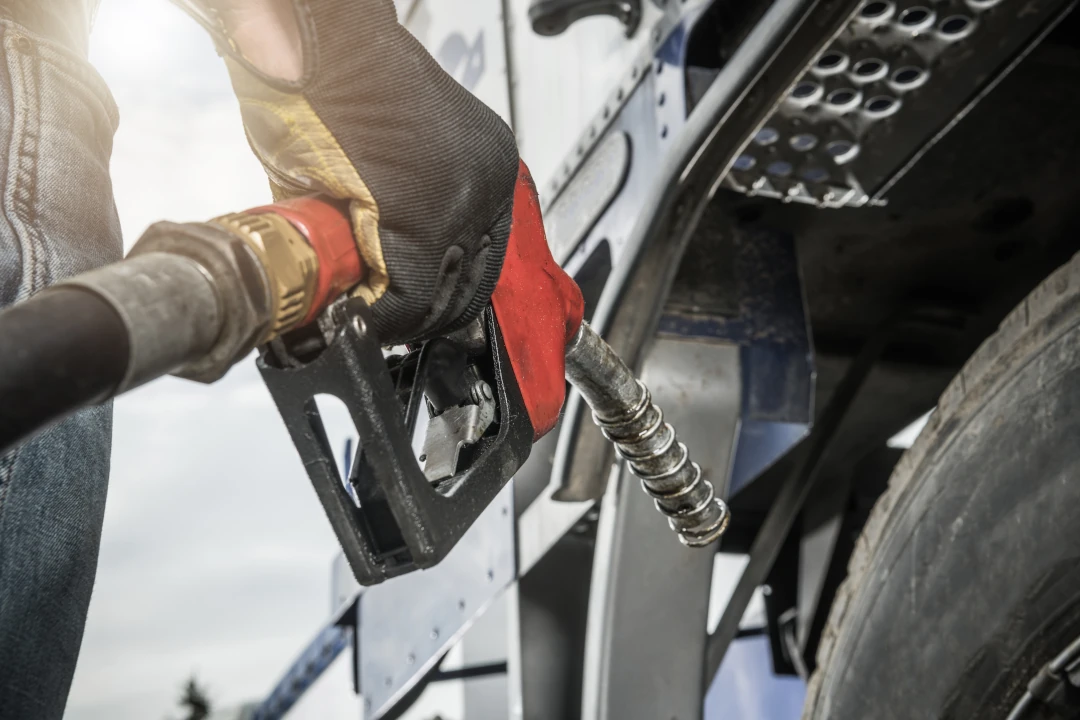
Average national diesel prices have surged past $6 a gallon for the first time in history, according to reporting compiled by Yahoo News, which put the record at $6.29. Patrick De Haan of GasBuddy, one of the most-cited retail-fuel analysts in the country, warned publicly this week that $7 diesel is now plausible in the Great Lakes states — Michigan, Indiana, Ohio, Illinois — “in the days ahead.”
Diesel is not a luxury. It is the fuel that moves food from farm to grocery store, that powers the tractors that plant the wheat, that runs the trucks and trains and container ships that move every physical thing an American touches. When diesel spikes, everything follows: bread, chicken, lumber, drywall, imported electronics, the rent that a warehouse pays. This is the mechanism by which a president’s foreign policy becomes a family’s grocery bill.
I. A Shortage Made in the Oval Office
The proximate causes of this crunch are not mysterious. Ukrainian drones have disabled roughly half of Russia’s top six diesel-producing refineries, according to Reuters, forcing Moscow to extend its own diesel export ban. Iran-backed Iraqi militias last Friday bombed the Saudi Aramco pipeline that had been carrying crude around the Strait of Hormuz — the chokepoint Iran effectively shut earlier this year — and the energy-analysis firm Kpler estimates that closure alone could cut oil supplies by 3.6 million barrels a day, or about 3.6 percent of global demand.
Every one of those triggers connects, directly, to decisions made by Donald Trump.
The Strait of Hormuz did not close itself. It closed because on February 28, 2026, the president launched a preemptive military campaign against Iran without congressional authorization, coordinated with Israel, that his own party’s leader in the House failed to bring to a vote before the first bombs fell. Rep. Judy Chu of California called it “an unlawful war” the same day it began. Rep. Marcy Kaptur of Ohio, a senior appropriator on defense, described it as a “regime change war” deployed “by fiat.” Democratic Leader Hakeem Jeffries reminded the country that the Constitution gives Congress — not the president — “the sole power to declare war.”
Every serious observer of the region had warned exactly what has now come to pass: that a hot war with Iran would spread. It has. Iran-backed militias in Iraq have hit Saudi infrastructure. Iran has weaponized the Strait. Ukrainian belligerents, sensing an opening, have accelerated strikes on Russian energy. The president has since publicly urged Volodymyr Zelensky to stop targeting Russian diesel infrastructure, blaming the Ukrainian leader for the shortage. This is the same president who spent a decade insisting that presidents should not tell foreign leaders what to do.
“Donald Trump has blown past every requirement to be removed from office. And it’s getting worse. His illegal war in Iran is not only driving up prices for American families — it has cost American lives. He’s becoming more unstable by the day.”
— Rep. John B. Larson (D–Conn.), announcing articles of impeachment, April 7, 2026
II. The Reserve He Promised to Fill
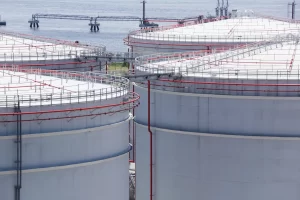
Then there is the Strategic Petroleum Reserve — the emergency stockpile that exists precisely for the kind of crisis the president has now created. On the same day he took the oath, Trump devoted a passage of his inaugural address to a promise: he would fill the reserves “up again right to the top,” as Fortune reported at the time. He has done the opposite.
Following the closure of the Strait of Hormuz, Energy Secretary Chris Wright announced on March 11 that Trump had authorized the release of 172 million barrels from the SPR — a figure so large it required roughly 120 days simply to physically discharge. In mid-May, the reserve posted back-to-back record weekly drawdowns, including a single week of 9.92 million barrels — the largest one-week drain in the reserve’s history. By August 14, the Energy Information Administration confirmed the SPR held just 293.4 million barrels — 59.6 percent below its 2010 peak of 726.6 million, and the lowest level since December 1982.
SPR Level · Aug 14
Barrels remaining — a 44-year low, down from 638M in Jan 2021. Source: NJ Today / EIA
Iran War Cost
Estimated total cost to date; $5.6B in munitions spent in the first 48 hours alone. Source: NJ Today
U.S. Troop Deaths
American service members killed since Feb 28, four in the week of the House vote alone. Source: political.org
Every one of those barrels was a hedge against exactly the kind of shock the president then triggered. He inherited a reserve that could cover 36 days of demand. He is on track to leave one that covers 16. A country that has spent half a century treating its energy stockpile as a national security asset is now approaching, on Trump’s watch, what analysts at the Energy Information Administration project will be the sharpest annual SPR draw since the reserve was created in the aftermath of the 1973 Arab oil embargo.
III. A Congress Beginning to Reassert Itself
On Monday, September 15 — the same day John Thune floated the export ban — the House of Representatives passed a War Powers Resolution 220 to 204 to limit the president’s continued military operations in Iran. Seven Republicans crossed the aisle to vote yes. It is a concurrent resolution and therefore does not go to the president’s desk, but it is the most substantial GOP defection on Trump’s war since the bombing began.
The vote is not happening in a vacuum. Senators Tim Kaine of Virginia, Chuck Schumer of New York, and Adam Schiff of California introduced the Senate’s parallel measure in late February, arguing that Congress “must reassert its war powers, or it risks losing them for good.” The Trump White House has responded with a legal position that Michael Glennon, a professor of constitutional and international law at the Fletcher School at Tufts University, called “a stretch” — namely, that the war “terminated” on April 7, notwithstanding a continuing U.S. naval blockade of Iranian ports and, according to NBC News, a Navy destroyer that has fired on Iranian-flagged cargo shipping since.
Even Trump’s own Interior Secretary, Doug Burgum, has publicly broken with the Senate Majority Leader’s export-ban idea. Burgum told reporters the ban would “probably not work” and would not lower prices. Rep. Ro Khanna, the California Democrat who has been one of the most consistent congressional voices on energy policy, is quoted in a Forbes explainer as raising the same question progressives have been asking for months: how does the country square a president who campaigned on lowering costs with an administration whose signature foreign-policy choice has made the workhorse fuel of the American economy 22 percent more expensive than it was a year ago?
IV. A Timeline of the Choices
Inauguration. Trump declares a “national energy emergency” and pledges to fill the Strategic Petroleum Reserve “right to the top.” (Fortune)
The war begins. The U.S. launches a preemptive military campaign against Iran in coordination with Israel, without congressional authorization. (Rep. Judy Chu)
172 million barrels released. Energy Secretary Chris Wright announces the largest emergency SPR authorization in the reserve’s history. (DOE)
“A whole civilization will die tonight.” Trump posts on Truth Social; within hours, more than seventy lawmakers call for his removal under the 25th Amendment. (TIME)
The 60-day deadline passes. Trump tells Congress the War Powers Act does not apply because a ceasefire has “terminated” hostilities — despite an active U.S. naval blockade. (PBS)
SPR at 293.4M barrels. First time since December 1982 the reserve has fallen this low. (NJ Today / EIA)
Two votes, one day. Thune floats a diesel export ban; House passes the War Powers Resolution 220–204 with seven Republican defections. (political.org)
Get Involved Today
Contribute to our mission and turn your concerns into action.
V. The View from a Kitchen Table
The macroeconomics are legible in prose. A trucking company running a fleet of Class 8 rigs on Great Lakes routes is looking at fuel costs roughly a fifth higher than a year ago, per GasBuddy’s tracking. Grocery chains that operate on razor-thin margins pass those costs to shoppers. Farmers heading into fall harvest are burning the fuel at exactly the moment they need it most, and heating-oil customers in the Northeast — where diesel and home heating oil are chemically almost identical — are already, per Bloomberg, watching prices climb ahead of winter.
An export ban, if Thune actually pursued one, would ripple out immediately. Europe has spent the last three years replacing banned Russian diesel with American supply; the U.S. became “the go-to diesel supplier for the EU/Great Britain when the Strait of Hormuz was disrupted,” in the words of FGE NexantECA’s head of refining, Qilin Tam. Mexico — America’s single largest diesel export destination, receiving roughly 220,000 barrels a day per the EIA — would be hit almost overnight. Brazil, Chile, the Caribbean states that keep the lights on with diesel-fired generation, and the poorest Sub-Saharan African economies would follow.
An American export halt in a market this fragile would not be a technical policy adjustment. It would be a shock delivered to allies and trading partners by a country that spent the last century building its credibility as the reliable supplier of last resort. Expect retaliation. Expect capital flight from Treasuries as major holders — including Japan, one of the largest — would face pressure to raise dollars to fund emergency domestic fuel purchases. Expect the European Union, which has spent the same window building sanctions architecture around Russian and Iranian energy, to begin quietly considering whether the United States is now the counterparty its own contingency planning must guard against. That is the diplomatic reality Thune conjured with one sentence.
“We would consider an export ban if we thought that actually might lower prices, but that’s not the case.”
— Interior Secretary Doug Burgum, breaking publicly with the Senate Majority Leader, September 15
VI. What This Says About the Leadership
Every president inherits a set of constraints. The distinguishing mark of this one is that he has consistently chosen the option that maximizes disruption. He drained the SPR to blunt the price consequences of a war he chose to start, in a region every one of his predecessors — Democrat and Republican — knew would erupt exactly as it has. He alienated Canada, whose crude still constitutes 63.4 percent of U.S. crude imports, while making his energy security more dependent on Canadian goodwill than at any point in a generation. He is now presiding over the highest diesel prices in American history while his own Interior Secretary and his own Senate Majority Leader disagree on live television about what to do about it.
None of this is a policy dispute of ordinary shape. It is the profile of an administration that has run out of usable options because it burned them in the first eight months.
A remedy the framers of 1965 wrote for precisely this failure of judgment.
Section 4 of the 25th Amendment, ratified after the Kennedy assassination, is the mechanism the Constitution provides for a president who is “unable to discharge the powers and duties of his office.” It has never been invoked. Its authors did not anticipate an assassination alone; they anticipated the more mundane, and in some ways more dangerous, possibility that a sitting president might become incapable of the sober judgment the office requires while still physically able to sign orders and post messages.
The lawmakers who invoked it this spring did so in response to concrete conduct. On April 6, the president posted publicly that “a whole civilization will die tonight” if Iran did not meet an ultimatum within roughly ten hours. Within twenty-four hours, Rep. Mike Quigley of Illinois formally called for Cabinet action. Rep. John Larson of Connecticut filed articles of impeachment and simultaneously demanded 25th Amendment invocation. Rep. Raja Krishnamoorthi called the threat evidence of a “dangerous pattern of reckless escalation, erratic decision-making, and general conduct” raising grave questions about the president’s fitness. Rep. Yassamin Ansari of Arizona was joined by Rep. Alexandria Ocasio-Cortez of New York, Rep. Ro Khanna of California, and Rep. Melanie Stansbury of New Mexico, along with more than thirty other House Democrats, in the same call. Senator Ed Markey of Massachusetts and Senator Bernie Sanders of Vermont added their names. Per Forbes’ reporting, so did former Rep. Marjorie Taylor Greene — a Republican.
The constitutional argument is not a political one. It is that a president who threatens to annihilate a civilization by tweet, who drains an emergency reserve to cover the costs of a war he did not ask Congress to authorize, and whose own Cabinet secretaries publicly disagree with his party’s Senate leader about the basic direction of energy policy has demonstrated an inability to reason toward the interests of the nation he was elected to lead.
The Practical Barrier — Honestly Stated
Section 4 requires the vice president and a majority of the Cabinet to certify to Congress that the president cannot discharge his duties. Vice President J.D. Vance was chosen by Trump. The Cabinet was chosen by Trump. The mechanism was written on the assumption that people who serve at the pleasure of a failing president would put the country ahead of the man who appointed them. That assumption is, in the current administration, fanciful. Impeachment faces an equally steep math problem in a Senate the president’s party controls.
Why It Still Matters
The barriers are political. They are not constitutional, and they are not moral. The framers of the 25th Amendment understood that a functioning republic requires officials willing to invoke uncomfortable remedies when the alternative is worse. That the current cabinet will not do so is a fact about the current cabinet, not a fact about whether the remedy applies. The record — a war of choice, a drained reserve, record-shattering fuel prices, and a public threat of civilizational annihilation — is what a 25th Amendment case looks like. The country’s obligation to name it accurately does not disappear because the vote count is bad.
VII. What Is Actually Required
Congress has one obvious next move: pass the Senate version of the War Powers Resolution, formally end the Iran war, and force the administration to seek authorization it should have sought in February. Second, hold hearings — as the Congressional Research Service has recommended — on the SPR’s actual purpose, current level, and refill strategy, and stop letting the executive branch treat the reserve as a political price-control instrument. Third, reject any diesel export ban that comes to the floor without an honest accounting of what it would do to Mexico, the EU, and every diesel-importing developing economy on earth. Fourth: begin the constitutional conversation on presidential fitness in the venue the framers provided, whatever the vote count.
Voters, for their part, are eight weeks away from midterm elections. What they choose to do with those elections is now the operative question.
Editorial Conclusion
A president does not get to start a war of choice, drain the country’s emergency reserves to cover for the price shock he caused, watch diesel hit a record, and then have his own party’s Senate leader publicly float an export ban that would blow up the American energy relationships built over half a century — and then insist, on top of all of it, that the Constitution does not apply.
The Iran war is unauthorized. The reserve is emptying. The price is at a record. The Cabinet is disagreeing with itself on live television. The lawmakers of both parties who have named this what it is are not being alarmist. They are being accurate. What is required now is not more patience. It is the return of a constitutional order in which Congress declares wars, reserves are strategic, and a president who cannot govern is removed by the process the framers wrote for exactly this failure.
Sources & References
- Yahoo News / The Telegraph: US mulls diesel export ban as prices skyrocket
- Bloomberg Law: Thune Says He’s ‘Open’ to Diesel Export Ban as Prices Surge
- Colorado Politics: Thune says he is open to diesel export ban
- Forbes: Explainer: A Diesel Export Ban Is An Idea Whose Time Has Not Come
- Reuters (via Investment Watch): Half of Russia’s top diesel refineries have cut output after drone strikes
- U.S. Energy Information Administration: U.S. exports of major transportation fuels in 2025
- NJ Today / EIA data: America is running on empty as Trump drains oil reserves to 44-year low
- Fortune: U.S. oil reserves only at 60% despite Trump’s promise to refill them
- Yahoo Finance: Trump Promised to Refill America’s Emergency Oil Reserve. Instead, It Just Saw Its Largest Weekly Drain in History.
- Yahoo Finance / SPR analysis: Trump Criticized Biden for Draining America’s Oil Reserves. They’re Now at a 43-Year Low.
- U.S. Department of Energy: United States to Release 172 Million Barrels of Oil From the Strategic Petroleum Reserve
- Congressional Research Service: Strategic Petroleum Reserve: Inventory Outlook and Policy Considerations
- EnergyNow: Canada Supplies 63% of US Crude Imports
- political.org: House Passes War Powers Resolution 220-204 to Limit Trump’s Military Operations in Iran
- PBS NewsHour: Trump says deadline for Congress to approve Iran war doesn’t apply
- NBC News: Trump says he doesn’t need congressional authorization for Iran operations
- Office of Rep. Judy Chu: Rep. Chu Statement on Trump Administration’s War with Iran
- Office of Rep. Marcy Kaptur: Kaptur Statement Following Trump Administration Strikes On Iran
- Office of Sen. Adam Schiff: Kaine, Schumer, and Schiff Push for Vote on Iran War Powers Resolution
- Office of Democratic Leader Hakeem Jeffries: Leader Jeffries Statement on Trump Administration Strikes on Iran
- TIME: What to Know About the 25th Amendment as Lawmakers Call for Trump’s Removal
- Forbes: How The 25th Amendment Could Be Used To Remove Trump—And Who’s Supporting It
- Office of Rep. Mike Quigley: Quigley Calls for Trump’s Removal Under 25th Amendment
- Office of Rep. John Larson: Larson Files Articles of Impeachment, Calls for 25th Amendment
- Office of Rep. Raja Krishnamoorthi: Krishnamoorthi Calls for President Trump’s Removal Under 25th Amendment
- Hydrocarbon Processing: Russia’s diesel export ban deepens global supply crunch
Related News