While Donald Trump posts threats to wipe out an “entire civilization,” his Energy Department is burning through the nation’s emergency oil at nearly nine million barrels a week. The reserve built to shield Americans from hurricanes and cartels is now half empty — and hurricane season has just begun.
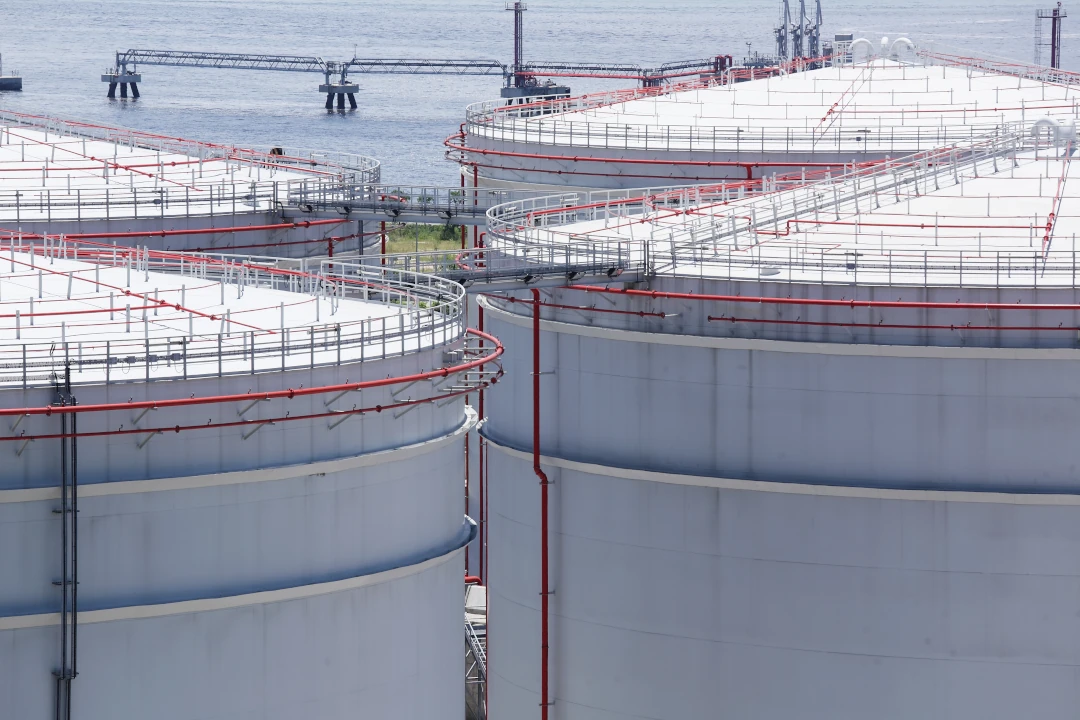
The numbers are not abstract. On Monday, the U.S. Department of Energy reported that the Strategic Petroleum Reserve — the nation’s emergency oil stockpile, built in the long shadow of the 1973 Arab oil embargo — had fallen to 340.3 million barrels. That is the lowest level since July 1983, a time when Ronald Reagan was president, the reserve was still being filled for the first time, and the American economy was a fraction of its current size. In a single week, the Trump administration released another 8.9 million barrels. Since the war with Iran began in late February, roughly 75 million barrels — about 18 percent of the entire reserve — have been pumped out of the salt caverns along the Gulf Coast and into a global market made desperate by a conflict the president himself initiated.
The Strategic Petroleum Reserve was never supposed to be a piggy bank for a president’s foreign-policy mistakes. It was designed as a buffer of last resort — the thing you reach for when a hurricane snaps a Gulf pipeline, when a foreign cartel weaponizes supply, when an unforeseeable shock threatens the American economy. It was emphatically not designed to subsidize the consequences of a war the president chose to start, then could not figure out how to end.
And yet that is what it has become. The reserve, designed to hold up to 714 million barrels, is now less than half full. Industry analysts say weekly drawdowns are accelerating. Energy experts warn that if a major hurricane hits the Gulf this summer — peak season runs through October — the country will have almost no cushion left.
1. The Numbers Tell the Story
To understand what has been done to the Strategic Petroleum Reserve, consider the scale. The reserve peaked at 726.6 million barrels in late 2009. As of this week, it holds 340.3 million. The Biden administration’s controversial 2022 drawdown — which Republicans spent two years denouncing as reckless — brought the reserve to a low of 346.7 million barrels. Donald Trump’s drawdown has now surpassed the Biden-era floor and broken through to depths not seen in more than four decades.
Patrick De Haan, head of petroleum analysis at GasBuddy, told Fortune that the reserve hitting these multi-decade lows is “a pretty monumental number” — and the warning behind it is sharper still. “The longer this goes on, the fewer tools the administration has in dealing with it, and the more risk there is to a slingshot for costs.” Translation: the president has used up the firefighting equipment, and the fire is not out.
2. Who Actually Controls the Spigot
It is worth being precise about authority, because the president and his allies routinely are not. The Strategic Petroleum Reserve is federally owned, administered by the U.S. Department of Energy, and stored across four salt-cavern complexes — Bryan Mound and Big Hill in Texas, West Hackberry and Bayou Choctaw in Louisiana. The day-to-day operation is contracted out, but the strategic decisions are political: under the Energy Policy and Conservation Act of 1975, the president holds broad discretion to order an emergency drawdown, and the Secretary of Energy implements it. As the Council on Foreign Relations explains, “the executive takes the lead on withdrawals” while Congress controls the purse strings for restocking.
In other words: when 75 million barrels of America’s emergency oil disappear from the strategic stockpile, the decision rests with one person. Energy Secretary Chris Wright has dutifully executed the order — announcing in March the release of 172 million barrels as part of a coordinated International Energy Agency action — but the political accountability runs upward, to the Oval Office. Wright has tried to reframe the releases as a “swap” mechanism that will leave the reserve “fuller than when we started,” but the EIA’s weekly inventory data tells a different story. The reserve is not refilling. It is bleeding.
This is the same Chris Wright who, only a year ago, testified before Congress that the Biden administration’s depletion of the SPR had “significantly degraded SPR infrastructure” and “weakened America’s ability to respond to new geopolitical oil market shocks.” A reasonable observer might ask what changed. The answer is: a war that the Trump administration itself initiated.
3. A War of Choice, A Bill for the Public
It is essential to be specific about what happened. On February 28, 2026, the United States and Israel launched coordinated strikes on Iran, including the targeted killing of Iran’s Supreme Leader Ali Khamenei. Tehran retaliated by effectively closing the Strait of Hormuz, the chokepoint through which roughly a fifth of the world’s oil moves each day. Within days, global crude prices spiked toward $120 a barrel and U.S. retail gasoline pushed above $4 for the first time in three years. The administration responded by reaching for the SPR — a reserve built for moments outside any president’s control, now being used to absorb the cost of a conflict the president himself chose.
“A whole civilization will die tonight, never to be brought back again. I don’t want that to happen, but it probably will.”
— Donald Trump, Truth Social post on Iran, April 2026
That language — taken not from a parody account but from the sitting president’s social media feed — is what the SPR is currently being drained to backstop. The 25th Amendment exists for moments when a president is unable to discharge the powers of the office. Whether or not the political path to invoking it is open in a Republican Congress, the question is no longer fringe. It is being asked by senior members of the House Judiciary Committee. And it is being asked because the president’s rhetoric and his policy are converging on something that looks less like governance and more like erratic improvisation with public assets.
Get Involved Today
Contribute to our mission and turn your concerns into action.
4. What This Means at the Kitchen Table
The brutal irony of the SPR drawdown is that it has not actually shielded ordinary Americans from the cost of this war — only blunted it. According to CNBC, citing a Moody’s analysis, the average U.S. household is now paying roughly $450 more per year on gasoline and energy because of the Iran war. That figure more than wipes out the $384 per-household benefit from the tax-cut package Trump signed last year. Goldman Sachs has warned that higher energy prices will continue to “erode” consumer spending power through the rest of 2026, with the heaviest burden falling on lower-income households that spend a larger share of their budgets on food and fuel.
Inflation, which had finally been drifting back toward the Federal Reserve’s 2 percent target, lurched back upward as the war hit. The Bureau of Labor Statistics’ annual rate jumped to 3.3 percent in March, the highest reading since May 2024, with gasoline prices the principal culprit. PBS NewsHour reported that U.S. gasoline prices have climbed roughly 50 percent since the start of the conflict.
And it is about to get worse. Andy Lipow, president of Lipow Oil Associates, told CNN that SPR releases will have to slow once the Trump administration finishes the 172 million-barrel pledge — meaning the price-suppression effect of the drawdown is about to evaporate. If a hurricane strikes the Gulf this summer and shuts down domestic refining capacity, “that buffer would no longer be there,” Lipow warned. The reserve that has been the only thing standing between American consumers and significantly higher prices will be too depleted to do its job.
“This should be very concerning to every American consumer. As those inventories go down and production isn’t increased, you’re going to start seeing a significant impact at the pump.”
— Mike Sommers, President & CEO, American Petroleum Institute
When the head of the American Petroleum Institute — an oil industry lobby, not a progressive watchdog — is “raising alarm bells” about the depletion of the reserve, the political camouflage has officially worn off. This is not a partisan critique. This is the industry that profits most from current policy telling Americans that the safety net is gone.
5. What This Reveals About Priorities and Leadership
Strip away the geopolitics and look at what the policy actually is. The administration started a war that closed a vital global oil chokepoint, then drained the country’s emergency reserves to suppress the resulting price shock. The drawdown is being used not to insulate the American economy from an external supply crisis but to insulate the political class — and the president personally — from the predictable consequences of their own decisions. The reserve is, in effect, being used to hide the bill from voters.
This is the same pattern Energy Secretary Wright once described, when criticizing the Biden administration, as treating the SPR as a “political piggy bank.” That critique was always partly self-serving, but it pointed at a real principle: an emergency reserve should be spent on emergencies that arrive uninvited, not on emergencies the administration itself has summoned. By Wright’s own past standard, the Trump SPR policy is the more egregious violation. Biden drained the reserve to soften the consumer impact of a Russian invasion he did not start. Trump is draining the reserve to soften the consumer impact of a war he did.
And he is doing it in a way that compromises the reserve’s structural integrity. As Wright himself told CNBC last year, draining the salt caverns too quickly causes physical damage to the storage infrastructure — the caverns were designed to withstand a finite number of injection-and-withdrawal cycles. The current pace of withdrawals is not merely depleting the oil; it is degrading the very vault that holds it.
Meanwhile, the man making these decisions is, by an increasing number of accounts, exhibiting public behavior that has alarmed members of his own party in private and members of the opposition in public. The White House declined to release the president’s full medical report in May, breaking with longstanding precedent. The president’s Truth Social posts during the Iran conflict have included threats to bomb Iran “back to the Stone Ages” and the demand to “Open the F***ing Strait, you crazy bastards, or you’ll be living in Hell.” This is the voice making decisions about a finite national-security asset.
The 25th Amendment: Designed Precisely for This
Ratified in 1967, the 25th Amendment to the U.S. Constitution establishes the procedure by which a president may be removed from office if “unable to discharge the powers and duties” of the position. Section 4 — the provision relevant here — empowers the vice president, acting with a majority of the cabinet or “such other body as Congress may by law provide,” to declare the president incapacitated and transfer authority to the vice president as acting president. If the president disputes that finding, a two-thirds majority of both chambers of Congress can sustain the transfer.
The Bill on the Table
On April 14, 2026, Rep. Jamie Raskin (D-MD), ranking member of the House Judiciary Committee, introduced legislation to establish exactly the “other body” the amendment contemplates — a 17-member Commission on Presidential Capacity to Discharge the Powers and Duties of Office. The bill drew 50 Democratic co-sponsors. More than 70 House Democrats publicly called for Trump’s removal in the wake of his Iran threats. Even some right-wing commentators, including Candace Owens, joined the chorus in the days after the “whole civilization will die tonight” post. Progressive lawmakers including Rep. Alexandria Ocasio-Cortez have repeatedly questioned the president’s fitness on the record.
The Constitutional Argument
Raskin’s argument is not merely about temperament. As he put it in his introductory statement: “Public trust in Donald Trump’s ability to meet the duties of his office has dropped to unprecedented lows as he threatens to destroy entire civilizations, unleashes chaos in the Middle East while violating Congressional war powers… We are at a dangerous precipice, and it is now a matter of national security for Congress to fulfill its responsibilities under the 25th Amendment to protect the American people from an increasingly volatile and unstable situation.” The SPR drawdown is, on this view, one symptom among many — a national-security asset being expended to backstop a war the executive launched without proper congressional authorization, while the executive himself shows mounting signs of impaired judgment.
The Practical Barriers
The path to invocation is steep. The 25th Amendment requires the vice president’s affirmative participation, and Vice President JD Vance has shown no inclination to break with the president. The cabinet is composed of Trump loyalists. The House and Senate are both controlled by Republicans, who have dismissed the commission proposal as a partisan stunt. Raskin’s bill faces near-certain defeat on the floor, and even if it passed, a presidential veto would require a two-thirds override to survive.
Why That Doesn’t End the Argument
Constitutional remedies exist independent of their immediate political viability. The 25th Amendment was written precisely because the Framers — and later, the post-Kennedy Congress that ratified it — understood that the country needed an architecture for moments when the man in the office could no longer be trusted to wield it. That architecture is the law of the land whether or not a partisan majority chooses to use it. The argument that a president has lost the capacity to discharge his duties does not become incorrect because his party will not act on it. It simply becomes a question of conscience that the country, and history, will weigh.
The drained reserve is not the case for the 25th Amendment by itself. It is one data point in a pattern. A president who threatens to annihilate a “civilization” on social media at midnight, who orders a war without proper congressional authorization, who refuses to release his full medical records, who burns through finite national-security assets to mask the consequences of his own decisions — that president is no longer governing in any conventional sense. He is improvising, and the country is paying.
Editorial Conclusion
The Strategic Petroleum Reserve was built to protect Americans from things they did not choose: foreign cartels, natural disasters, the violent unpredictability of a global energy market. It was not built to be drained by a president to cover the costs of a war he himself launched, while he posts apocalyptic threats on social media and his administration breaks precedent by hiding his medical records.
The reserve will not be refilled before hurricane season. The price relief it has provided is about to end. The president who emptied it has shown, by his own public conduct, that he is operating outside the norms the office requires. The 25th Amendment exists for exactly this kind of moment — when a president is no longer reliably discharging the powers and duties of office, and when the country’s hard assets are being spent down to camouflage that fact.
Congress has the responsibility to act. The cabinet has the responsibility to consider. And the American people have the right to a government that does not treat the nation’s last lines of defense as political collateral. The vault is nearly empty. The democracy must not be.
Sources & References
- CNN Business “US emergency oil stockpile tumbles to lowest since the Reagan administration.” cnn.com
- Reuters / TradingView “Stocks of oil in US Strategic Petroleum Reserve fall to lowest since 1983.” tradingview.com
- Fortune “America’s emergency oil reserve is about to hit its lowest level since Reagan was in office.” fortune.com
- Fortune “U.S. strategic petroleum reserve is heading toward panic levels.” fortune.com
- Fox Business “Strategic Petroleum Reserve nears Reagan-era lows amid Iran conflict.” foxbusiness.com
- U.S. Department of Energy Strategic Petroleum Reserve official page. energy.gov
- U.S. Department of Energy “United States to Release 172 Million Barrels of Oil From the Strategic Petroleum Reserve.” energy.gov
- Council on Foreign Relations “How Does the U.S. Government Use the Strategic Petroleum Reserve?” cfr.org
- Atlantic Council “Chris Wright: It will take ‘many months’ to get back to normal after this energy crisis.” atlanticcouncil.org
- Britannica “2026 Iran war.” britannica.com
- CBS News “In 8 weeks, the Iran war has dented the U.S. economy. The damage could linger.” cbsnews.com
- CNBC “Iran war cost: Average U.S. household paying $450 more on gas and energy.” cnbc.com
- PBS NewsHour “Iran war hits home as gasoline prices fuel significant U.S. inflation jump.” pbs.org
- Trading Economics “US Inflation Poised to Surge as Iran War Fuels Energy Prices.” tradingeconomics.com
- The Hill “Rep. Jamie Raskin introduces bill to assess president’s fitness under 25th Amendment.” thehill.com
- The Hill (Opinion) “Concerns Grow Over Trump’s Mental Fitness for Presidency.” thehill.com
- Mediaite “House Democrats File Bill to Form 25th Amendment Commission to Assess Trump’s Mental Fitness.” mediaite.com
- CNN Politics “White House breaks from precedent by not releasing Trump’s medical report.” cnn.com
Related News