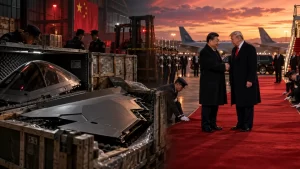
Back to Basics, Forward to Disaster: Hegseth’s Army Abandons the Future of War

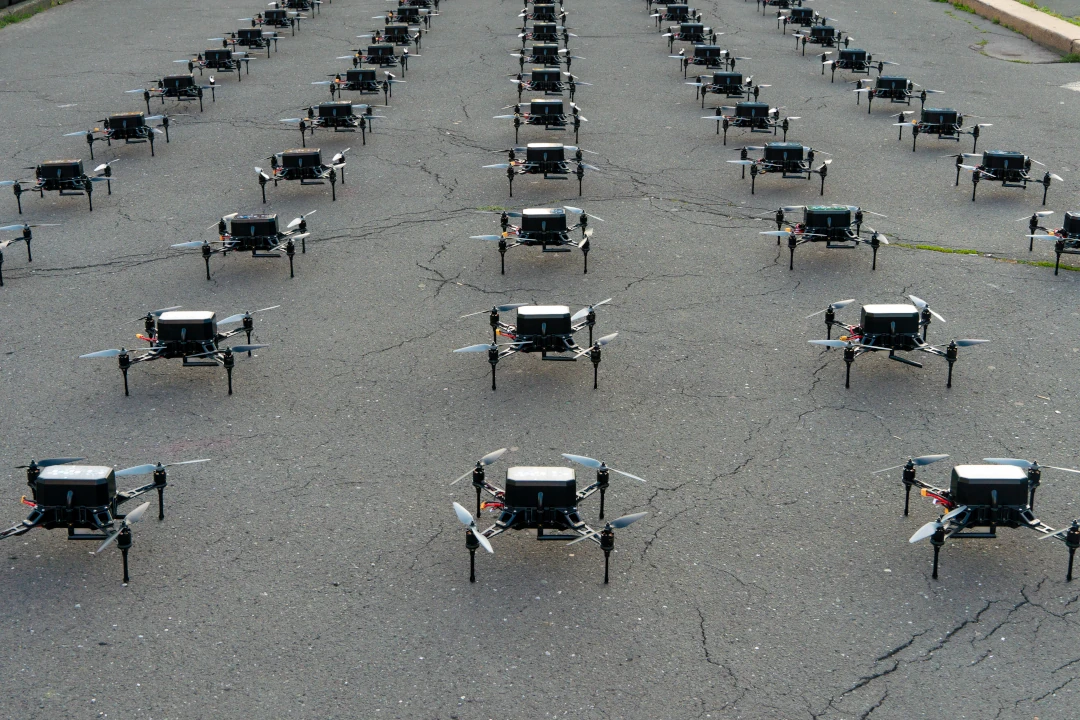
While Russia builds ten secret drone bases within range of Warsaw and China unveils motherships that can birth swarms of a hundred loitering munitions at a time, the acting chief of the U.S. Army has decided the answer is parachutes. This is what happens when loyalty replaces competence at the top of the Pentagon.

The Wall Street Journal broke the news this week, and the reaction from anyone who has been paying attention to the war in Ukraine, to the drones now hitting American service members in the Middle East, or to the Kremlin’s rapidly expanding launch-rail archipelago along the NATO frontier, has been something between disbelief and fury. The U.S. Army will phase out its Unmanned Assault Battalion — the one and only unit purpose-built to metabolize the drone lessons of the twenty-first century — and, per a Pentagon spokesperson, the soldiers will “refocus on their core warfighting tasks as an airborne infantry battalion.” Which is to say: they will go back to jumping out of airplanes.

The battalion, part of the storied 173rd Airborne Brigade, was created as the centerpiece of former Army Chief of Staff Gen. Randy George’s “transformation in contact” initiative — an effort to push emerging drone technology into the hands of frontline troops rather than have it fossilize inside Pentagon procurement offices. Gen. George was fired by Defense Secretary Pete Hegseth in April. His replacement, acting Army chief Gen. Christopher LaNeve — described in reporting as closely aligned with Hegseth and previously his senior military assistant — has now ordered what he calls a “back-to-basics” approach. The signature program of the general Hegseth ousted is being wound down by the general Hegseth elevated.

This is not a mid-course correction. It is a repudiation. And it is happening at precisely the moment history’s evidence about drone warfare has become unignorable.

I. What Actually Happened

The Unmanned Assault Battalion was deployed to Europe in January to run experimental drone operations, learn from Ukrainian and NATO partners, and translate that learning into doctrine for the rest of the force. It is currently participating in a large exercise in Germany that will run through September. After that, according to reporting from the WSJ’s Lara Seligman, the unit will submit its findings, surrender its role as an experimental drone formation, and return to conventional airborne infantry duties.

In a memo to the force obtained by the Journal, LaNeve wrote that Army forces must be prepared to overcome the most complex challenges adversaries can impose in an operational environment that looks fundamentally different from yesterday’s battlefields. Reasonable words. The decision they accompany does the opposite of what they promise. There is no announced plan for how the Army will maintain, let alone accelerate, its drone-warfare development after the battalion’s mission ends. The Army spokesperson declined to say. The Journal reports the Army did not answer the question.

Multiple current and former officials told CBS News there was long-simmering friction between LaNeve and the senior officers who built the unit — a bureaucratic feud that included LaNeve reportedly being “soft relieved” from his prior command at Fort Bragg and, per those officials, quickly pushed out of his house so his successor could move in. That grievance appears to be catching up to American doctrine. The soldiers in the unit are being asked to fold up a mission the Pentagon spent a year building because two generals didn’t get along and one of them now runs the Army.

II. The Russian Warning We’re Choosing to Ignore

Four days before news of the battalion’s dismantling broke, the Telegraph published a satellite-imagery investigation that should have made the LaNeve memo impossible to sign. Using leaked documents and commercial satellite imagery analyzed with the drone-intelligence firm DroneSec, the paper identified at least 59 newly built launch rails across ten Russian bases hugging the borders with Belarus and Ukraine.

Some of the installations are repurposed military airfields. Others were carved out of Russian countryside. A number of them are within striking range of Warsaw. Others place NATO members Poland, Estonia, Lithuania, Latvia, Romania, and Turkey inside the flight envelope of Moscow’s newest long-range kamikaze drones, according to the Kyiv Independent’s summary of the Telegraph investigation. One base alone has storage capacity for more than a thousand long-range drones at a time. European and American intelligence officials, per the Telegraph, are actively planning for the possibility of a Russian armed provocation on Polish soil.

Launch Rails Identified
59+
New drone launch platforms mapped across ten Russian bases along the Belarusian and Ukrainian borders, per Telegraph satellite analysis.
NATO Capitals in Range
6
Poland, Estonia, Lithuania, Latvia, Romania, and Turkey are all reachable from at least one of the new sites, per DroneSec imagery.
Storage at One Site
1,000+
Long-range drones can be housed at a single Russian base, with construction of additional launch rails continuing.
U.S. Drone Battalions
0
After the phase-out of the 173rd Airborne’s Unmanned Assault Battalion, the Army will have no dedicated drone-warfare formation of its kind.

The message from Russia is not subtle. Vladimir Putin is not investing this heavily in the industrial infrastructure of drone warfare because he considers it a passing fad. He is doing it because the war in Ukraine has taught the Kremlin — brutally, and at enormous cost — that cheap unmanned systems have upended the economics of modern combat. The right response to that lesson is to build faster than he does. The Hegseth Pentagon has chosen instead to unbuild.

III. China Is Building the Mothership. We’re Grounding the Kids.

If Russia’s launch rails are the immediate warning, China is the strategic one. Beijing has unveiled the Jiu Tian SS-UAV, an eighty-two-foot-wingspan drone “mothership” capable of releasing swarms of a hundred loitering munitions from internal bays, and the U.S. Navy’s own analysts warn that the platform, when deployed from mainland or South China Sea bases, could threaten American installations at Guam and beyond. The Center for Naval Analyses reports the People’s Liberation Army has already tested launchers capable of releasing swarms of up to two hundred fixed-wing drones at once and is developing autonomous surface, undersea, and aerial swarms designed to overwhelm U.S. and allied defenses through sheer number.

National security analysts writing for The National Interest have been more blunt still, arguing that Chinese drone-swarm development is proceeding faster than U.S. counterparts and that Beijing is advancing the AI systems that control the swarms with markedly less concern for human oversight than the West. Air defense systems built to engage a dozen incoming targets will, in a real Pacific fight, be asked to engage hundreds. That is the strategic environment the Hegseth Pentagon just decided requires less institutional focus on unmanned warfare, not more.

The drone problem is not confined to distant theaters. Iranian drones have already killed Americans this year — six of them, at a base in Kuwait, in a strike that by the Defense Secretary’s own admission slipped past defenses without triggering an alert. In the wake of the strike, Hegseth complained at a Pentagon briefing that when “a few drones get through, or tragic things happen, it’s front-page news.” Six flag-draped coffins. A few tragic things.

IV. What the Experts Are Saying

The reaction from serious defense analysts has been swift and unusually pointed. Michael O’Hanlon, a senior fellow at the Brookings Institution and one of the most sober voices in the American defense establishment, told the WSJ that Ukraine has essentially rewritten the rules of close combat, that Gen. George was beginning to grasp it, and that any setback in the effort would be a serious problem for the United States.

“Ukraine has essentially revolutionized close combat. General George was beginning to understand that, and any setback in what he was doing would be deeply unfortunate and dangerous.”

— Michael O’Hanlon, Brookings Institution, to the Wall Street Journal

The battalion’s own soldiers have been just as direct. U.S. Army Capt. Ronan Sefton, who deployed to Ukraine as part of the Army’s Lessons Learned Task Force before joining the drone unit, told CBS that new technology will not render traditional firepower obsolete, but that the American military will need to adapt urgently to counter the drones being fielded by adversaries. Even Army Secretary Dan Driscoll, who now declines to comment on the phase-out of the unit his own Transformation Initiative helped create, was on record last year saying he had never spoken to anyone who thought the U.S. should not be learning from Ukraine. Apparently he has now met that person, and he works one floor up.

Analysts writing for The Gaze and outlets covering the Ukrainian front note the additional embarrassment that, during recent Combined Resolve exercises, Ukrainian drone units — using tactics developed against a Russian adversary the U.S. is now abandoning the study of — located and destroyed simulated U.S. troop formations and armored vehicles from Fort Hood. American soldiers, in a NATO exercise, were repeatedly killed on the digital battlefield by the very tactics the Unmanned Assault Battalion existed to counter. The battalion is being disbanded anyway.

Get Involved Today

Contribute to our mission and turn your concerns into action.

V. How We Got Here

To understand why this decision has generated such alarm, it helps to see the last eighteen months laid out. This is not an isolated policy choice. It is one step in a pattern.

July 2025
Trump signs Executive Order 14307, titled “Unleashing American Drone Dominance,” directing the Pentagon to accelerate domestic drone production and integration. Hegseth issues an implementing memo pledging force-on-force drone wars in training by 2026.
January 2026
The Unmanned Assault Battalion deploys to Europe as the flagship of Gen. Randy George’s Army Transformation Initiative to run experimental drone operations and integrate lessons from Ukraine.
March 1, 2026
An Iranian one-way attack drone strikes a U.S. facility in Kuwait, killing six American service members. The drone slips past defenses without an alert. Hegseth publicly complains about the media coverage.
April 2026
Hegseth fires Gen. Randy George, the champion of the drone battalion and of the broader Transformation Initiative. Gen. Christopher LaNeve — Hegseth’s former senior military assistant — is elevated to acting Army chief of staff.
April 30, 2026
Thirty-six physicians, including specialists from Harvard, Tufts, Columbia, and George Washington, enter a joint statement into the Congressional Record calling Trump mentally unfit and urging invocation of the 25th Amendment.
Aug 16, 2026
The Telegraph publishes its investigation into ten new Russian drone bases with 59 launch rails within striking range of Warsaw and five other NATO capitals.
Aug 20, 2026
The Wall Street Journal reports the Unmanned Assault Battalion will be phased out at LaNeve’s direction as part of a broader “back-to-basics” approach.

VI. Congress Reacts — and the Democrats Fight the Fight They Can

Congressional Democrats have spent the better part of 2026 trying to force the Hegseth Pentagon into a posture of accountability that its own leadership refuses to adopt. Sen. Elizabeth Warren of Massachusetts and Rep. Pat Ryan of New York, joined by nearly a dozen other House and Senate Democrats, opened an investigation into the Kuwait drone strike that killed six Americans, citing doubts about the objectivity of the military’s internal review and reporting from the Washington Post scrutinizing whether the base had adequate defenses in place.

At April’s House Armed Services Committee hearing on the Pentagon’s record-setting $1.5 trillion budget request, Rep. Salud Carbajal of California told Hegseth to his face that he was incompetent then, incompetent now, and “the gift that keeps on giving when it comes to incompetence”. Rep. Patrick Ryan, an Iraq War veteran like Hegseth, told the Secretary he needed to resign immediately after a heated exchange over whether Pentagon leadership bore responsibility for the deaths in Kuwait. Sen. Tammy Duckworth, a retired Army helicopter pilot who lost both legs in Iraq, said the Secretary of Defense was not capable of the professionalism American service members deserve. Sen. Mark Kelly, a former Navy captain, wrote that there is nothing more sacred than the lives of service members, and they deserve a president and Secretary of Defense who respect their service.

The problem is structural. Democrats do not hold the majority in either chamber. Amendments to condition Pentagon funding on Hegseth’s removal or on classification-policy reform have been rejected by Republican majorities on party-line votes. The Democratic caucus has done what a minority party can do: forced roll-call votes to put Republicans on the record, opened formal investigations, and put together requests for information that the Pentagon has been slow to answer. It is not enough. It is what is available.

The deeper irony is that the drone battalion phase-out puts LaNeve, Hegseth, and the entire administration into open contradiction with President Trump’s own stated defense policy. Trump signed Executive Order 14307 in June 2025 under the banner “Unleashing American Drone Dominance.” Hegseth’s own implementing memo promised force-on-force drone wars in Army training. The Pentagon has consolidated drone oversight under a new office to accelerate development. Elon Musk, who spent much of last year advising the administration, has publicly said drones are the future of warfare and manned aircraft are not. And now, under a chief of staff hand-picked by the same Secretary who signed that memo, the Army is quietly folding its most visible drone unit into an airborne infantry battalion because the acting chief of staff prefers fundamentals to futurism.

Ask yourself which policy is real: the one the President signed with fanfare last summer, or the one the acting Army chief is executing this week. In this administration, that question increasingly does not have an answer.

Constitutional Analysis  ·  25th Amendment, Section 4

When executive incoherence itself becomes a national-security threat.

The 25th Amendment, ratified in 1967 after the assassination of President Kennedy, was designed to answer a question the Constitution had left dangerously open: what happens when the President of the United States is unable to discharge the powers and duties of the office? Section 4 provides the mechanism — the Vice President and a majority of the Cabinet (or another body Congress designates) may transmit a written declaration of incapacity to Congress, and the Vice President immediately becomes Acting President.

The specific decision at issue in this piece — the phase-out of a single Army battalion — is not, standing alone, a basis for invoking that amendment. That is the honest legal answer, and readers should not be told otherwise. But the drone-battalion reversal is not standing alone. It sits inside a pattern of executive behavior that constitutional scholars, thirty-six physicians from Harvard, Tufts, Columbia, and George Washington, and members of Congress including Sens. Sheldon Whitehouse and Jack Reed and Reps. Jamie Raskin and Maxine Waters have publicly cited when raising Section 4 concerns. The physicians’ statement, entered into the Congressional Record on April 30, 2026, described what the doctors called a “rapidly worsening, reality-untethered, increasingly dangerous decline” and concluded that removal should be undertaken with the greatest urgency. Rep. Raskin has introduced legislation to establish an independent commission of the sort Section 4 explicitly contemplates.

The practical barriers are real and severe. As the International Bar Association has noted in its own analysis of the debate, Section 4 requires a majority of a Cabinet composed of Trump loyalists — including Hegseth himself, Attorney General Pam Bondi, and Homeland Secretary Kristi Noem — to sign a declaration that the President cannot perform his duties. The political mechanics of that path are, at present, essentially foreclosed. That reality does not extinguish the constitutional argument; it merely describes why the mechanism the Framers gave us is not, in this moment, likely to be exercised.

But the moral case does not depend on the political forecast. A President whose own Executive Order proclaimed drone dominance and whose Pentagon is now unbuilding drone dominance is a President whose stated policy no longer governs the government he leads. A Defense Secretary who complains that the deaths of six American service members become “front-page news” is a Defense Secretary who has lost the moral standing his office requires. When an administration cannot align its own signature policies across an eighteen-month arc, when the acting service chief overturns the strategic direction the Commander in Chief himself signed, and when the deaths of American troops are treated as a PR inconvenience — the machinery of accountability the Constitution provides is not decoration. It is the answer to exactly this kind of failure.

Editorial Conclusion

The Hegseth Pentagon is disbanding the future of warfare while adversaries build it. Russia has ten new drone bases. China has motherships. Iran has already killed our troops. And the acting chief of staff of the U.S. Army has decided the answer is a memo about fundamentals and a plan to send soldiers back to parachutes. This is not conservatism. It is not caution. It is not a return to warrior tradition. It is a leadership failure at the top of the Department of Defense, executed by a Secretary who serves a President whose own executive orders his subordinates now openly contradict. The Constitution provides remedies for exactly this: elections, oversight, the appropriations power, and, when incapacity itself becomes the threat, Section 4. Every one of those remedies is on the table. The stakes are not partisan. They are whether the American republic can still recognize the difference between competence and loyalty at the top of the institution that is supposed to keep it safe.

Sources & References

  1. CBS NewsU.S. Army moves to end drone battalion set up to absorb lessons from Ukraine war
  2. Wall Street Journal (via Lara Seligman)New Drone Unit to Be Phased Out as Hegseth’s Army Pick Makes His Mark
  3. AOL / Yahoo NewsArmy to nix drone battalion set up to absorb lessons from Ukraine war
  4. The GazeU.S. Army to Scrap Drone Battalion Built to Learn From Ukraine War
  5. SFG MediaU.S. Army Will Shut Down Experimental Strike Drone Unit
  6. Yahoo News (Telegraph investigation)Russia builds secret drone bases in striking distance of NATO
  7. Kyiv IndependentRussia built secret drone bases already hitting Kyiv and could reach NATO countries
  8. Türkiye TodayRussia builds secret drone bases within striking range of NATO: Report
  9. Asia TimesChina’s Jiutian drone carrier targets US Pacific soft underbelly
  10. The National InterestChina’s AI Drone Swarms Should Terrify the United States
  11. Center for Naval AnalysesChina Readies Drone Swarms for Future War
  12. Foreign PolicyDemocrats Grill Hegseth on Trump’s Iran War in House Armed Services Hearing
  13. Military TimesDemocrats slam Hegseth for comments on first US deaths in Iran war
  14. The HillSenate, House Democrats press Pentagon over Iranian drone strike targeting US base in Kuwait
  15. MSNBC / Maddow BlogDemocrats to investigate deadly Iranian attack following dubious claims from Hegseth
  16. International Bar AssociationComment and analysis: President Trump and the 25th Amendment
  17. The Hill (Opinion)Concerns Grow Over Trump’s Mental Fitness for Presidency
  18. Department of DefenseSecretary of Defense Memorandum: Unleashing U.S. Military Drone Dominance

Related News

Scroll to Top