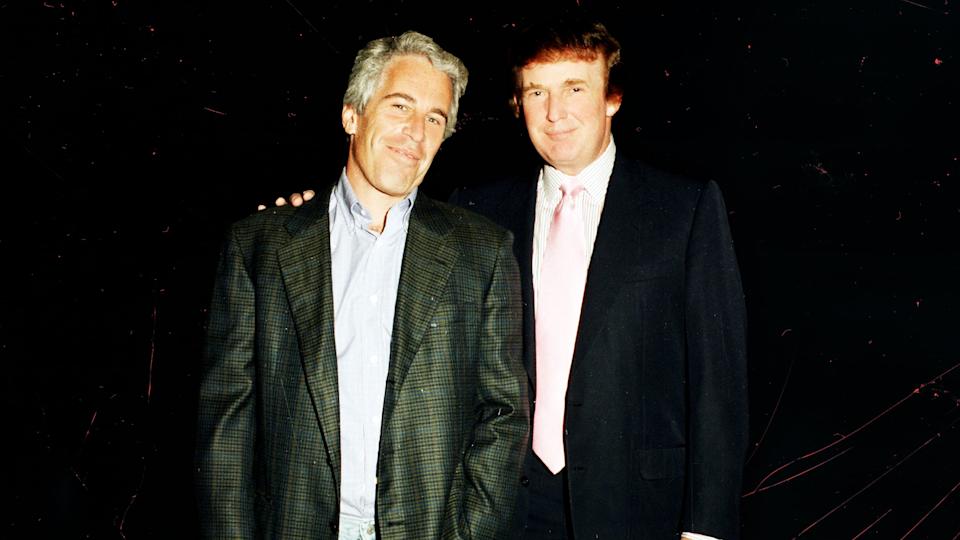
The Patron, the Predator,
and a President Who Won’t Look
J.D. Vance’s ascent to the vice presidency runs through Peter Thiel — and Peter Thiel’s finances ran, in part, through Jeffrey Epstein. As the Trump administration buries, deflects, and manipulates the Epstein files, a pattern of willful blindness reveals a White House that governs not for the American people, but for its billionaire patrons.
In American political life, the question of who made a politician is almost always more revealing than the politician himself. J.D. Vance, the 40th Vice President of the United States, did not rise to power through the ballot box alone. He was, by every documented account, manufactured — intellectually mentored, financially bankrolled, professionally incubated, and politically installed — by Peter Thiel, the PayPal co-founder, Palantir chairman, and venture capitalist whose authoritarian instincts and Silicon Valley billions constitute one of the most consequential private political investments in modern American history. That investment now sits in the West Wing, one heartbeat from the presidency.
What the public is only beginning to fully reckon with — through the 3.5 million pages of Epstein documents released under the Epstein Files Transparency Act — is that Thiel’s world was not separate from Jeffrey Epstein’s. It overlapped with it, financially and socially, for years. And as that overlap comes into clearer view, the Trump administration’s systematic effort to suppress, deflect, and politically weaponize the Epstein investigation takes on a different and more troubling character: not transparency, but protection.
This is a story about the architecture of power — about who built the man who became vice president, about what that builder’s relationship with a convicted sex trafficker reveals about the administration’s true priorities, and about what it means for the constitutional fitness of an executive branch that refuses to look at any of it honestly.
Time since Trump Administration was required to release ALL Epstein documents (H.R. 4405)
As of May 8, 2026, the Department of Justice has released a total of approximately 3.5 million pages out of over 6 million pages of records (58%) under the Epstein Files Transparency Act (H.R. 4405).
1. The Man Behind the Man: Thiel’s Total Investment in Vance
The Thiel-Vance relationship is not incidental or circumstantial. It is, by the documented record, the single most important relationship in Vance’s political life — a patron-protégé bond that moved from intellectual mentorship to professional employment to electoral financing to the vice presidency of the United States.
It began, by Vance’s own account, at Yale Law School, where he attended a talk by Thiel on technological stagnation and the decline of American elites. After graduation, Vance moved to San Francisco, where Thiel hired him to work at his tech fund, Mithril Capital. The professional relationship deepened into something closer to sponsorship: when Vance returned to Ohio and started his own venture capital firm, it was, according to CBS News, heavily backed by Thiel and other elite tech investors.
When Vance formally entered politics in 2021 — pivoting from describing Trump as “potentially America’s Hitler” in a private message to a friend, to becoming one of his most effective defenders — it was Thiel who smoothed the introduction. Thiel brought Vance to his very first meeting with Trump at Mar-a-Lago in February 2021, according to the New York Times. Without Thiel, there is no Vice President Vance.
“Thiel’s interests in having Vance in office are not explicit,” said Anna Massoglia, editorial and investigations manager at OpenSecrets, “but there’s no question he has business interests that could be benefited by having someone like JD Vance in his corner.” The $1.3 billion in Palantir federal contracts since inauguration suggests those interests are ng served with breathtaking efficiency.
“Thiel’s political philosophies are problematic… his views are super-nationalistic, it’s a longing for a sort of more powerful chief executive, or, you know, a dictator, in other words.”
— Max Chafkin, Thiel biographer, via the Revolving Door Project
Thiel’s ideology is not merely eccentric. In 2009, he published an essay arguing that women’s suffrage had been a blow to libertarianism. He has written that he no longer believes “freedom and democracy are compatible.” His philosophical inspiration, the Revolving Door Project has documented, includes Curtis Yarvin — a blogger who advocates for replacing democracy with a techno-authoritarian state modeled on a corporation, with a CEO-president. These are the ideas of the man who built the Vice President of the United States.
Get Involved Today
Contribute to our mission and turn your concerns into action.
2. The Epstein-Thiel Files: What the Documents Reveal
The 3.5 million pages released by the Department of Justice under the Epstein Files Transparency Act have illuminated, among many things, a substantive and multiyear relationship between Jeffrey Epstein and Peter Thiel — the same Peter Thiel who is, to a degree without precedent in American political history, the architect of the current vice presidency.
Documents reviewed by the New York Times and reported by the Stanford Daily show that Epstein referred to Thiel as his “great friend” in communications to associates. The two exchanged emails coordinating in-person meetings several times per year — at Epstein’s New York home, at Thiel’s San Francisco office, and at Thiel’s home — with exchanges continuing into early 2019, years after Epstein’s 2008 guilty plea to soliciting prostitution from a minor.
The financial entanglement is equally documented. According to reporting by the New York Times and confirmed by the SF Standard: Epstein invested approximately $40 million into Valar Ventures, a firm Thiel co-founded, in 2015 and 2016 — money that moved into Thiel’s business ecosystem after Epstein had already been convicted and registered as a sex offender. The Washington Blade, citing documents from the Justice Department release, confirmed additional records reflecting meetings and correspondence, at times arranged through intermediaries, including invitations to Epstein’s Caribbean residence.
To be precise about what the evidence does and does not show: Thiel has not been accused of any criminal wrongdoing in connection with Epstein, and there is, according to the Washington Blade’s review of the files, “no evidence that Thiel was involved in Epstein’s criminal conduct.” What the documents do show is a sustained, financially entangled, personally warm relationship between two men — one of whom was a convicted sex offender operating a trafficking network, the other of whom is the sole architect of the current American vice presidency — that continued long after Epstein’s crimes were public knowledge.
That is not a footnote. That is a fact that demands public accounting. And the administration that houses Thiel’s protégé as its number two officer has shown no interest in providing one.
3. Trump and Epstein: The Files the Administration Tried to Suppress
The Epstein files do not only illuminate the man who built J.D. Vance. They illuminate the man Vance serves. And what they show about Donald Trump’s relationship with Jeffrey Epstein makes the administration’s repeated claims of “full transparency” a sustained exercise in bad faith.
The New York Times, using a proprietary search tool to analyze the Justice Department’s January 2026 release, found more than 5,300 files containing over 38,000 references to Trump, his wife Melania, his Mar-a-Lago club, and related terms. Rep. Jamie Raskin (D-Maryland), after being granted access to the unredacted files, told Axios that a search of Trump’s name yielded results “more than a million times”. Raskin also found documents he says directly contradict Trump’s claim that he banned Epstein from Mar-a-Lago.
Trump’s name appears in the unredacted Epstein files “more than a million times” — and documents in those files appear to directly contradict his claim that he banned Epstein from Mar-a-Lago.
— Rep. Jamie Raskin (D-Maryland), to Axios, February 2026
The timeline of suppression is as telling as the files themselves. Trump spent most of 2025 downplaying the significance of the files, at times lashing out at Republicans who demanded their release, calling them “stupid people.” Then-Attorney General Pam Bondi claimed in February 2025 that an Epstein client list was “sitting on my desk right now to review” — only to have a DOJ memo contradict that statement, saying no such list existed. When the Epstein Files Transparency Act passed Congress 427–1 requiring full release by December 19, 2025, the DOJ failed to comply with the deadline. Trump fired Bondi on April 2, 2026. The DOJ’s own Inspector General has now opened an investigation into the agency’s compliance with the law.
Sen. Jeff Merkley of Oregon, who introduced the Senate version of the Epstein transparency legislation, has been explicit in his assessment: “By illegally disregarding the law, the Trump Administration is cruelly denying ‘equal justice under the law’ to all of Jeffrey Epstein’s victims,” Merkley said in a statement. “This independent investigation is an important step in holding this Administration accountable for siding with the rich and powerful to help cover up the abuse of our most vulnerable.”
4. Vance’s Role: Deflection as a Presidential Duty
J.D. Vance has not been a passive bystander in the administration’s management of the Epstein question. He has been an active participant in its rhetorical strategy — and that strategy has been, from the beginning, to redirect, deflect, and accuse rather than to investigate.
On Fox News in August 2025, Vance declared that “Democrat billionaires and Democrat political leaders went to Epstein island all the time,” without providing evidence. He defended the administration’s approach by attacking the Biden administration. He denied, contra CNN’s reporting, that a White House meeting with the FBI Director and the Attorney General had addressed the Epstein case. When Vance was a senator in 2024, he told a podcast that authorities should “release the Epstein list” — a demand his team quietly retired once he was in a position to act on it.
Now, in April 2026, Vance is telling TPUSA audiences that he is “probably more obsessed with this than most officials” — while simultaneously serving an administration that fired the attorney general responsible for the investigation, missed the legally mandated disclosure deadline, and covered a photograph of the president in the released files with a black redaction box. Vance’s obsession, it turns out, is almost entirely rhetorical.
The vice president’s position is not merely hypocritical. It is structurally compromised. He owes his political existence to a man — Peter Thiel — whose documented financial relationship with Jeffrey Epstein is now a matter of public record. Vance cannot credibly lead or advocate for an investigation that might reflect on his patron’s judgment and associations. That conflict of interest is not a political opinion. It is a fact of arithmetic.
5. What This Administration Chooses Not to See
The through-line of this story is not corruption in the ordinary political sense. It is something more systemic: a governing coalition organized around the protection of its own billionaire network, structured to ensure that accountability flows downward — toward immigrants, toward protesters, toward Democratic opponents — but never upward, toward the men who write the checks.
Consider the geometry. Thiel gave Vance $15 million to become a senator. He lobbied Trump to make Vance vice president. His company, Palantir, has since received $1.3 billion in federal contracts from that administration. The vice president whose patron received $40 million from a convicted sex trafficker is now the face of an administration that has systematically delayed, manipulated, and ultimately failed to fully comply with a law requiring disclosure of that sex trafficker’s files. And the president himself appears in those files more than a million times.
Rep. Ro Khanna of California has been direct: “Concealing the reputations of these powerful men is a blatant violation” of federal law. The government accountability organization American Oversight has filed suit against the DOJ and FBI seeking to compel the release of any interview records of President Trump in connection with the Epstein investigation.
A UMass Amherst poll found that 70 percent of Americans believe Trump is not handling the Epstein case well, and 63 percent believe the administration is actively concealing information. These are not marginal, partisan numbers. They reflect a national intuition — grounded in the observable facts — that something is being protected.
The Question of Fitness: What the Constitution Requires When a President Cannot Act in the Public Interest
The mechanism, plainly stated: Section 4 of the 25th Amendment to the United States Constitution permits the Vice President, together with a majority of the Cabinet, to declare in writing to Congress that the President is “unable to discharge the powers and duties of his office.” Upon that declaration, the Vice President immediately assumes presidential authority. Congress must then convene within 48 hours; if it votes by a two-thirds majority to uphold the declaration, the Vice President becomes Acting President.
Who is calling for it: In April 2026, House Judiciary Committee Ranking Member Rep. Jamie Raskin (D-Maryland) introduced legislation to establish a 17-member commission authorized by Section 4 to conduct a medical examination of the president and assess his fitness for office. More than 85 House and Senate Democrats — including Sen. Ed Markey of Massachusetts, Rep. Ro Khanna of California, Rep. Yassamin Ansari of Arizona, and Rep. Sydney Kamlager-Dove of California — have called for Trump’s removal via the 25th Amendment or impeachment. Anthony Scaramucci, who served as Trump’s White House communications director, has also publicly endorsed invoking the amendment. Multiple Republicans, including former Rep. Joe Walsh, have added their voices.
The legal argument applied here: The incapacity the 25th Amendment addresses need not be physical. The constitutional scholars and lawmakers advancing this argument contend that a president who is constitutionally and ethically unable to investigate his own documented entanglement with a convicted sex trafficker — who systematically weaponizes the investigative apparatus of the state against political enemies while protecting his own associates — has demonstrated a functional incapacity to discharge the impartial duties of the executive. A president who describes the Epstein investigation as “a hoax” while his own name appears in related files more than a million times, and who fires the attorney general tasked with disclosure, is not exercising presidential judgment. He is exercising presidential self-preservation.
The practical barrier: Section 4 requires the Vice President to initiate the declaration. That Vice President is J.D. Vance — a man whose entire political life was underwritten by Peter Thiel, whose financial relationship with Jeffrey Epstein is now documented. The probability of Vance leading a constitutional accountability action against his own president, in a matter that implicates his own patron, is effectively zero. The cabinet majority required is similarly controlled by Trump loyalists. Republicans control Congress, and Trump himself has said the threat of a Democratic majority and impeachment is what he most fears from the 2026 midterms.
Why the barrier does not negate the case: The fact that the 25th Amendment is difficult to invoke does not make its invocation less warranted — it makes the structural capture of the American executive more alarming. The Constitution provides the mechanism precisely for a moment when a president is unable to serve the nation’s interest impartially. The question is not whether Vance will act. The question is whether the American public, in November 2026, will create the conditions — a House Democratic majority, aggressive congressional oversight, sustained legal accountability — that make such accountability structurally possible. The constitutional case is correct. The political path is hard. Those are different things.
6. The Leadership Failure That Cannot Be Explained Away
Leadership, at the most fundamental level, is the capacity to act in the interest of those you govern — even when that action is personally costly. By that standard, what the Trump-Vance administration has demonstrated in its handling of the Epstein matter is not merely a political failure. It is a leadership failure of the most basic constitutional kind.
A president who calls the investigation of a sex trafficking network a “hoax” designed to embarrass him, who directs his attorney general to release only files that implicate Democrats while obscuring his own image in the documentation, who fires the official tasked with compliance when that compliance becomes inconvenient, and who governs alongside a vice president whose political existence is owed to a man with a documented financial relationship with the trafficker — that president is not governing. He is protecting.
And what is being protected is not national security, not the privacy of victims, not the integrity of ongoing investigations. What is being protected is a network: the network of billionaires and power brokers who funded this administration into existence and who now collect $1.3 billion in federal contracts as their return on that investment, while the victims of Jeffrey Epstein’s trafficking ring wait, still, for the full accounting the law requires and justice demands.
Editorial Conclusion
The Vice President of the United States was built by a man whose documented financial relationship with a convicted child sex trafficker now spans years of emails, meetings, and a $40 million investment — all revealed in files the administration he serves has systematically worked to suppress. This is not a coincidence. It is the operating logic of a government organized around the protection of its donors. The victims of Jeffrey Epstein’s trafficking network are owed the full truth — not a truth filtered through the political interests of the men whose fortunes underwrote this administration. The 25th Amendment exists because the framers understood that a president who cannot act impartially in the public interest is not fit to hold the office. Whether the mechanism is invocable today is a political question. Whether it is warranted is a constitutional one. The answer to the second is yes. The American people must make the answer to the first equally clear.
Sources & References
- CBS News — “The billionaire who fueled JD Vance’s rapid rise”
- Revolving Door Project — “Oligarchs and the Trump Admin: Peter Thiel”
- Washington Post — “Inside the powerful Peter Thiel tech network that launched JD Vance”
- Stanford Daily — “Epstein called Peter Thiel J.D. ’92 a ‘great friend'”
- SF Standard — “Inside the extended courtship linking Jeffrey Epstein, Peter Thiel, and Israeli officials”
- Jacobin — “Peter Thiel and Jeffrey Epstein Had a Yearslong Relationship”
- Washington Blade — “Peter Thiel’s expanding power — and his overlap with Jeffrey Epstein”
- Gizmodo — “Top Democrat Calls for Congressional Probe Into Ties Between Epstein and Peter Thiel”
- CNBC — “Epstein Files: Congressional watchdog will probe DOJ’s handling of docs”
- Al Jazeera — “US Department of Justice watchdog to probe release of Epstein files”
- Truthout — “Raskin: Trump Mentioned ‘More Than a Million Times’ in Unredacted Epstein Files”
- Axios — “Trump is in the unredacted Epstein files ‘more than a million times,’ Raskin alleges”
- Boing Boing / NYT — “NYT finds 38,000+ Trump references in released Epstein documents”
- NPR — “With few Epstein files released, conspiracy theories flourish and questions remain”
- TIME — “Trump Kept Epstein Issue at Arm’s Length. His Allies Did Not.”
- Axios — “House Democrats file 25th Amendment bill targeting Trump”
- NBC News — “Dozens of Democrats call for Trump’s removal after his Iran threats”
- American Oversight — “American Oversight v. DOJ and FBI — Trump Interviews in Epstein Investigation”
Related News