The Lines That Bind: Trump’s Mid-Decade Map War and The Unraveling of American Self-Government
A president slipping in the polls ordered four red-state legislatures to redraw their congressional maps to save his House majority. A pliant Supreme Court let him do it. The question now is no longer whether the 2026 election will be fair — it is whether the country still has the institutional muscle to call this what it is.
In American constitutional design, congressional districts are supposed to follow the people. Once a decade, after the census counts who lives where, lawmakers draw lines that reflect a shifted population. That is the textbook story. The story of the past eleven months is the inversion of that principle: a president, watching his approval ratings collapse and his signature legislation curdle in the polls, demanded that Republican-controlled legislatures redraw their maps mid-decade to manufacture seats his party could not win on the merits. The Center for American Progress documented the through-line plainly: Donald Trump’s redistricting demands track directly with his record-low approval and the rising unpopularity of the One Big Beautiful Bill. The maps are not a response to the public. They are a hedge against the public.
What follows is the anatomy of a power grab that has now reshaped the U.S. House before a single 2026 ballot has been cast — and a candid accounting of what this episode reveals about the man directing it from the Oval Office.
1. The Origin: A Phone Call From the West Wing
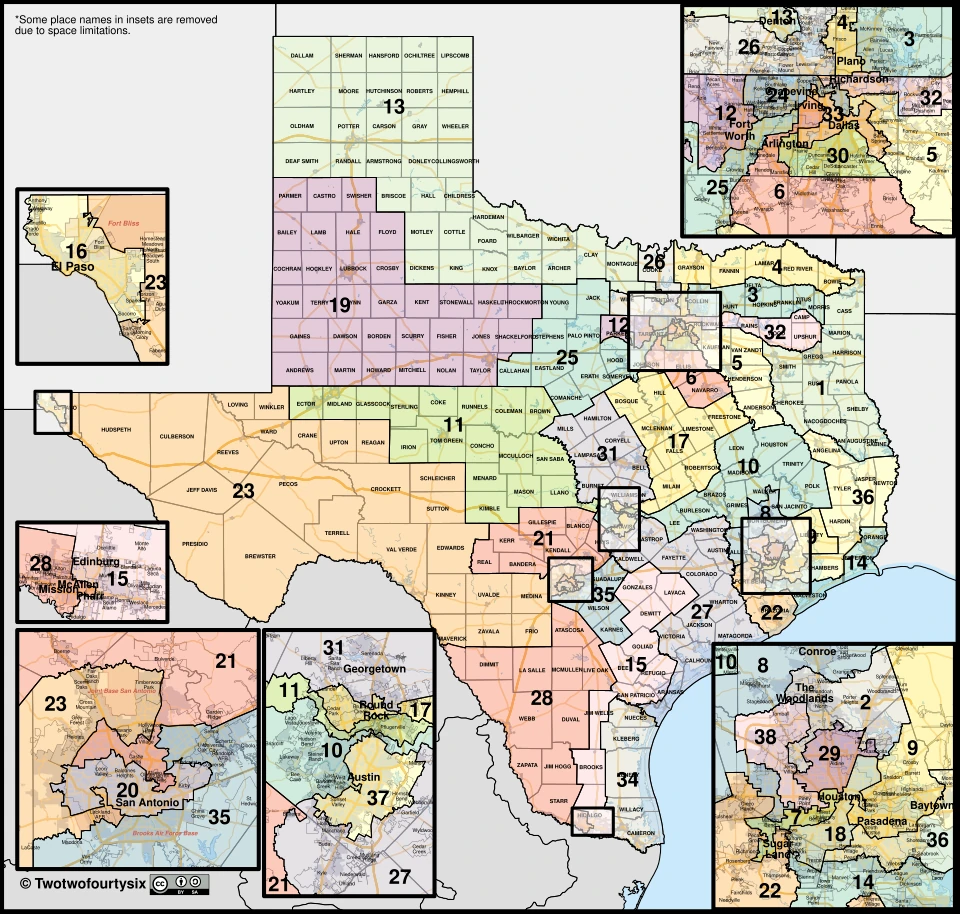
The plan did not begin in Texas. According to extensive reporting later compiled by The New York Times and others, Trump political adviser James Blair began coordinating with Adam Kincaid of the National Republican Redistricting Trust before the inauguration. Blair pitched the idea to Trump in April 2025; the president, eyeing the historical pattern of midterm losses for the party in power, agreed at once. By June, The Texas Tribune was reporting that the administration was pressuring Texas Governor Greg Abbott to redraw the state’s congressional lines and deliver five new Republican seats.
Abbott, by his own staff’s account, was at first skeptical. He was reassured by a call with the president. On July 7, the Department of Justice sent Texas a letter declaring four of its majority-minority districts to be “unconstitutional racial gerrymanders” — a striking pretext given that Texas had spent years denying in federal court that race had played any role in its existing maps. Abbott seized the letter as cover and called a special session of the Texas Legislature for July 9. The justification was civil rights. The objective was five Republican seats.
Texas Democrats, denied procedural recourse in a chamber where they hold neither majority nor leverage, fled the state in August to break quorum, accepting $500-a-day fines and the threat of FBI involvement after Senator John Cornyn requested the bureau intervene. State Representative James Talarico described the moment in unsparing terms: “Trump is trying to rig the midterm elections right before our eyes. But first he’ll have to come through us.” When the Democrats eventually returned, those who reentered the chamber were issued permission forms requiring them to be escorted by Department of Public Safety officers if they wished to leave the building. Representative Nicole Collier refused to sign and was held on the House floor overnight, ultimately filing a habeas corpus petition challenging the legality of her detention. This is not how American legislatures historically conduct themselves. It is, in the most literal sense, a body taking its own members into custody to pass a map drawn at the White House’s behest.
“When Donald Trump says jump, the Republicans simply ask how high — even if that means trying to strip away the voices of their own constituents and undermine the ability for there to be free and fair elections.”
— House Democratic Leader Hakeem Jeffries, ABC News Live, Aug. 7, 2025
2. The Cascade: One State, Then Four, Then a Region
Texas was the proof of concept. What followed was the franchise. Within weeks, Trump publicly named the next targets, telling reporters that “four of them” — that is, four Republican-led states — would redistrict. Missouri Governor Mike Kehoe, after a private meeting with state legislative leaders documented in emails later obtained by The Kansas City Star, called a special session that dismembered Representative Emanuel Cleaver’s Kansas City–anchored Fifth District by splitting Jackson County across three Republican-leaning constituencies. Kehoe signed the map into law on September 28, even as an internal staff report listed opposition to the redraw as the number-one “hot topic” among constituent contacts. Missouri State Senator Barbara Washington, a Kansas City Democrat, was blunt about what was happening to her state: “Appeasing a tyrant is not going to make Missouri better.”
North Carolina was next. State Senator Ralph Hise, who led the redistricting process, dispensed with euphemism in remarks reported by CNN and Salon: “The motivation behind this redraw is simple and singular: drawing a new map that will bring an additional Republican seat to the North Carolina congressional delegation.” Trump made his own contribution to the historical record on Truth Social, urging passage of a map that would provide “the opportunity to elect an additional MAGA Republican in the 2026 Midterm Elections, which would be A HUGE VICTORY for our America First Agenda.” The North Carolina Senate approved the new lines 26–20 on October 21, the House on October 22, by 66–48. Because North Carolina law denies the governor a veto on redistricting, Democratic Governor Josh Stein was a spectator.
Ohio was forced by its own constitution to redraw, having previously enacted maps without bipartisan support. Tennessee Republicans moved against the state’s lone Democratic seat. Then, in late April 2026, the U.S. Supreme Court’s Louisiana v. Callais decision partially overturned Section 2 of the Voting Rights Act of 1965, opening the door for Alabama, Louisiana, and South Carolina to redraw majority-minority districts. PBS NewsHour’s running tally now puts the GOP’s potential redistricting gains as high as 14 seats across Texas, Florida, Missouri, North Carolina, Ohio, and Tennessee. Democracy Docket’s reporting puts the realistic net swing toward Republicans at 10 to 12 House seats, even after Democratic counter-gerrymanders are accounted for.
Five Democrats targeted
Map signed Aug. 29, 2025, targeting Veasey, Casar, Doggett, Julie Johnson, and Al Green. Four are majority-minority districts. NPR coverage.
Kansas City split three ways
Cleaver’s Fifth District dismantled; map signed Sept. 28, 2025. Referendum effort underway; state Supreme Court let the map stand for August 2026 primary. Missouri Independent.
Don Davis drawn out of NC-1
Six counties shifted; Republicans openly stated the goal was an additional seat. Federal court cleared the map for 2026 use. NBC News.
Prop 50 passes by 64.4%
Voters suspended the independent commission through 2030 after Newsom’s $120M campaign. NPR election coverage.
3. The Counter: California, Virginia, and the Cost of Symmetry
The Democratic response has been uneven, slower, and constrained — by design — by the fact that blue states are more likely to have adopted independent redistricting commissions to take partisan map-drawing out of the legislature’s hands. California’s commission, created by voter referendum in 2008 and expanded in 2010, was for fifteen years a flagship of good-government reform. Governor Gavin Newsom, after offering on August 11 to stand down if Texas would too, watched the deadline pass and pivoted to Proposition 50: a constitutional amendment to suspend the commission until 2030 and substitute a Democrat-drawn map. On November 4, 2025, California voters approved the measure by 64.4 percent, on track to deliver up to five new Democratic seats. Newsom’s framing that night was characteristically theatrical and unambiguous: “We can de facto end Donald Trump’s presidency as we know it.”
Virginia attempted a similar move and was blocked on May 8, 2026, when the state Supreme Court invalidated the legislature’s redistricting referendum on procedural grounds — a blow that Democracy Docket described as setting Democrats back by as many as four seats. On May 15th, the United States Supreme Court rejected Virginia Democrats’ request to review that decision. Maryland Governor Wes Moore convened a redistricting advisory commission but has not yet moved a bill. New York and New Jersey, both governed by Democrats but constrained by their own constitutional reforms, have moved slowly and reluctantly. Leader Jeffries told CNN this week that the era of unilateral Democratic disarmament is over, urging blue states to “set aside” their good-government rules until a national détente is possible. He is correct that the alternative is surrender. He is also presiding over a moment in which his party is being forced — by a president’s lawlessness — to dismantle reforms it spent two decades enacting.
That is the deeper damage. The reforms now under pressure were the slow, civic work of a generation. They were popular. A late-April 2026 Economist/YouGov survey found that 71 percent of Americans believe states should not be allowed to draw congressional districts to favor one party — including 74 percent of Democrats, 70 percent of independents, and, notably, 69 percent of Republicans. Only 7 percent affirmatively support partisan gerrymandering. Trump’s redistricting war, in other words, is being prosecuted against the express preference of his own voters.
4. The Court: Six Justices, a Stay, and a Doctrine of Presumed Good Faith
On November 18, 2025, a federal three-judge panel sitting in El Paso ruled 2–1 that the Texas map was an unconstitutional racial gerrymander, ordered the state to revert to its 2021 lines, and stayed the new districts. The majority opinion — authored, notably, by a Trump nominee — pointed directly to the Justice Department’s own letter and to public statements by Abbott and GOP lawmakers as evidence that race had driven the redraw. Three days later, the U.S. Supreme Court, at the state’s emergency request, stayed the panel’s ruling. On December 4, in a 6–3 decision split along ideological lines, the Court formally cleared the map for use in 2026, holding that the lower court “failed to honor the presumption of legislative good faith.” The Court formalized that reversal on April 27, 2026.
Justice Elena Kagan, joined by Justices Sotomayor and Jackson, wrote in dissent that the majority had abandoned the appropriate standard of review, observing that “we are a higher court than the District Court, but we are not a better one when it comes to making such a fact-based decision.” Representative Al Green, whose district was dismantled, was characteristically direct: the combined effect of the redraws, he warned, could mean the loss of “a minimum of 20 African Americans from the Congress, probably about 10 Latinos from the Congress.” Five months later, when the Court issued Louisiana v. Callais and partially gutted Section 2 of the Voting Rights Act, Green’s warning began to read less like prophecy and more like an itinerary.
5. A Year in Eleven Acts
6. The Diagnosis: What This Says About the Man in the Oval Office
It is tempting to treat the redistricting war as ordinary politics, harder-elbowed than usual. That framing misses what is actually on display. A president whose approval rating sits at 34 percent in Pew’s late-April survey — among the lowest of any second-term president at this stage — has organized a coordinated, cross-state effort to engineer the next election in advance, rather than make a public case for his governance and accept the public’s verdict. This is the inversion of accountability. It is, in the most precise sense of the term, a refusal of the democratic feedback loop the Founders designed Congress to provide.
Get Involved Today
Contribute to our mission and turn your concerns into action.
Look at what has accompanied the redistricting push and a pattern comes into view. There is the Easter Sunday Truth Social post in April 2026 threatening to bomb Iranian civilian infrastructure — power plants and bridges — followed by the post warning that “a whole civilization will die tonight, never to be brought back again.” CNBC’s reporting documented the bipartisan alarm that followed; even Marjorie Taylor Greene called the post “evil and madness.” There is the January 2026 text message to Norwegian Prime Minister Jonas Gahr Støre stating that not winning the Nobel Peace Prize had freed him to pursue Greenland more aggressively. There is the public attack on the Pope, the AI-generated image likening himself to Jesus Christ, the firing of the Bureau of Labor Statistics commissioner for releasing jobs numbers that, in the president’s view, were “rigged.” Each item is dismissible in isolation. The accumulation is not.
The redistricting campaign belongs to that same accumulation. It is what a president does when he has decided that he cannot win the next election on the terms the Constitution offers, and so the terms themselves must be changed. As DCCC Chair Suzan DelBene observed after the Supreme Court’s December ruling, “the people of Texas don’t want this map, but it was put in place at the behest of national Republicans who are desperate to cling to their majority in the House of Representatives by decimating minority voting opportunity.” That is leadership inverted: power preserved at the expense of the people who confer it.
When the question of fitness becomes a question of office
The Twenty-fifth Amendment, ratified in 1967 in the wake of the Kennedy assassination, provides in Section 4 that the Vice President, together with a majority of the Cabinet (or of an “other body” designated by Congress), may transmit to Congress a written declaration that the President is “unable to discharge the powers and duties of his office.” Power then transfers to the Vice President as Acting President. If the President contests the declaration, Congress must decide; a two-thirds vote of both chambers is required to keep the President sidelined. Section 4 has never been invoked in American history.
It is being seriously discussed now. On April 14, 2026, Representative Jamie Raskin (D-Md.), the ranking Democrat on the House Judiciary Committee, introduced legislation with fifty co-sponsors to establish a Commission on Presidential Capacity to Discharge the Powers and Duties of Office — the “other body” the Amendment contemplates but Congress has never created. Raskin’s stated rationale: “Public trust in Donald Trump’s ability to meet the duties of his office has dropped to unprecedented lows as he threatens to destroy entire civilizations, unleashes chaos in the Middle East while violating Congressional war powers, aggressively insults the Pope of the Catholic Church and sends out artistic renderings on-line likening himself to Jesus Christ.” Senator Chris Murphy of Connecticut, Senator Ed Markey of Massachusetts, Representative Ro Khanna of California, Representative Melanie Stansbury of New Mexico, and former Speaker Nancy Pelosi have each called publicly for invocation. PBS NewsHour’s reporting on the Murphy statement captures the gravity: “This is completely, utterly unhinged. He’s already killed thousands. He’s going to kill thousands more.”
The constitutional case for considering Section 4 in connection with the redistricting episode is narrower than the Iran statements but not separate from them. The Amendment does not require physical incapacity. It requires inability to discharge the powers and duties of office — and the duties of office include faithful execution of the laws and good-faith stewardship of the constitutional system that conferred the office in the first place. A president who systematically directs the manufacture of congressional seats his party cannot win at the polls is not discharging the duties of office; he is repurposing the office to evade them.
The practical barrier
Section 4 requires the Vice President to initiate the declaration. Vice President JD Vance has shown no daylight from the president on any of these episodes, including the Iran threats; he was on stage in Budapest praising Trump the same week Pelosi called for invocation. A majority of the Cabinet would have to concur, and the Cabinet — selected for loyalty above all else — will not. The path is, in 2026, effectively closed.
Why the barrier does not settle the question
The drafters did not write Section 4 because they expected it to be used easily. They wrote it because they understood that a Constitution that depends entirely on a president’s voluntary departure from office invites the precise scenario the country is now in. That the political class assembled around the president will not act is itself a constitutional failure — not an argument that no failure has occurred. Raskin’s commission bill is unlikely to pass. The argument it forces into the public record is the argument the historical moment requires. When the institutions designed to check a president cease to function, the duty of those who can still speak is to say so plainly.
7. The Public’s Verdict, Already Returned
What is most striking about the past eleven months is how thoroughly the country has rejected the premise on which it has been conducted. Trump’s job approval has slipped to 34 percent in Pew’s polling. NPR’s reporting on the national mood ahead of the midterms documents historic swings against Republicans even among groups that powered Trump’s 2024 coalition: white voters without college degrees, who voted for Trump by 34 points in 2024, now break toward Democratic congressional candidates by 6 points; adults in the South have moved 18 net points away from the president. Seventy-one percent of Americans say partisan gerrymandering should not be allowed. This is not a divided country quietly tolerating a tactical maneuver. It is a country whose preferences are being overridden in plain sight.
The cost is durable. Even if the 2026 midterms produce, as some forecasters now expect, a Democratic House majority despite the redrawn maps, the country will emerge with weakened nonpartisan commissions in California and possibly other blue states, a Supreme Court that has signaled it will presume the good faith of legislatures even where direct evidence of racial intent has been entered into the record, and a Voting Rights Act diminished in its core provision. None of this snaps back on a single election night. The lines being drawn now will outlast the president who demanded them.
Editorial Conclusion
The Texas map. The Missouri map. The North Carolina map. The Department of Justice letter written to fabricate a pretext. The legislators held on the House floor. The Supreme Court’s presumption of good faith offered to lawmakers who said in plain English that their motive was partisan. None of these is a normal feature of American self-government. Each was conducted at the direction, or with the encouragement, of a president whose approval has collapsed and whose response to that collapse has been to rewrite the rules of the next election rather than answer for the last one.
A president who cannot win the country’s consent must seek to govern by it, not around it. That is the standard the office demands. The man who occupies it today is failing that standard daily, and the redistricting war is among the cleanest demonstrations on the record. Whether or not the Twenty-fifth Amendment is ever invoked, the duty of every American who still believes elections should follow voters — and not the other way around — is to say, in November and afterward, exactly what is happening and exactly who is responsible.
Sources & References
- The Texas Tribune — “Texas Republicans target five seats in new congressional map” (July 30, 2025)
- NPR — “Supreme Court lets Texas use gerrymandered map that could give GOP 5 more House seats” (Dec. 4, 2025)
- Houston Public Media — “Texas’s new congressional map will be used in 2026. But what happens afterward?” (Dec. 5, 2025)
- Ballotpedia — “Redistricting in Texas ahead of the 2026 elections”
- NPR — “California voters OK new congressional lines, boosting Democrats” (Nov. 4, 2025)
- CalMatters — “California voters approve Prop. 50, redrawing congressional maps to favor Democrats” (Nov. 4, 2025)
- NBC News — “North Carolina can use GOP-drawn congressional map” (Nov. 27, 2025)
- Salon — “Republican warns NC GOP their redistricting could backfire” (Oct. 23, 2025)
- Missouri Independent — “Missouri Supreme Court upholds gerrymandered map for August primary” (May 12, 2026)
- St. Louis Public Radio — “Kehoe signs Trump-backed congressional map into law” (Sept. 28, 2025)
- Center for American Progress — “Trump Ordered Texas To Gerrymander 5 New Republican-Leaning Congressional Districts”
- Office of Leader Jeffries — “Republicans Are Desperately Trying To Cling On To Power” (Aug. 7, 2025)
- Democracy Docket — “After Callais and Virginia, Republicans are ahead in Trump’s gerrymandering war” (May 2026)
- PBS NewsHour — “A state-by-state guide to the redistricting fight”
- YouGov / The Economist — “Most Americans say partisan gerrymandering should not be allowed” (April 24–27, 2026)
- Pew Research Center — “Trump Loses Ground on Several Personal Traits as Approval Rating Slips” (May 1, 2026)
- PBS NewsHour — “Could the 25th Amendment be invoked against Trump?” (April 2026)
- MSNBC — “Raskin offers bill setting up 25th Amendment process to remove Trump from office” (April 14, 2026)
- CNBC — “Trump faces calls for removal over threats to wipe out ‘whole civilization’ in Iran” (April 7, 2026)
- NPR — “National mood is against Republicans, but redistricting could help prop them up” (May 9, 2026)
Related News