Ottawa Draws the Line: How Trump’s Trade War Just Became America’s Bill
Canada retaliated Tuesday with $20 billion in tariffs on U.S. goods — steel, appliances, farm equipment, food, wood — and doubled the levy on American metals to 50 percent. The bill for Trump’s swagger will land on kitchen tables, construction sites, and factory floors from Maine to Michigan. It will not leave for a generation.
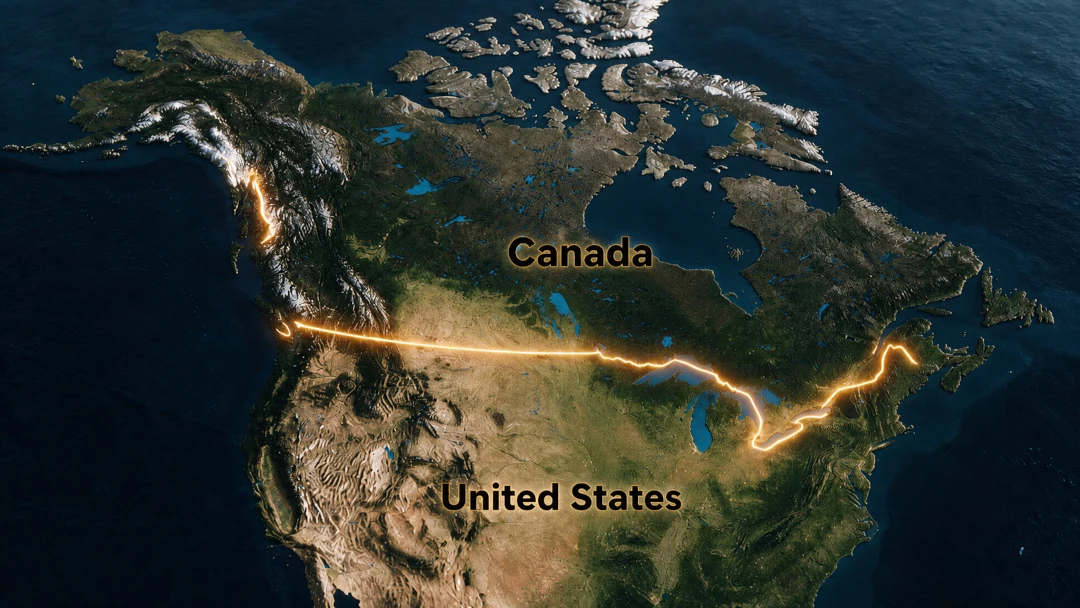
Ottawa did not blink. On Tuesday morning, Canadian Finance Minister François-Philippe Champagne stood before cameras at a roofing company outside Ottawa and announced that Canada will impose tariffs of up to 50 percent on roughly $20 billion in American exports, matching President Donald Trump’s latest levies “dollar for dollar, rate for rate.” The counter-measures — hitting more than 700 U.S. products, from steel and aluminum to dairy, appliances, farm equipment, pulp, paper, electronics, seafood, and clothing — take effect September 8. “When the United States of America asked too much and offered too little,” Champagne said, “we made a choice. We chose Canada.” Prime Minister Mark Carney announced an additional $7.5 billion domestic package to support Canadian workers and industries caught in the crossfire. The message from America’s largest customer and closest ally could not be clearer: the pantomime is over.
This is what a self-inflicted wound looks like in real time. It is Trump’s tariffs — not Canada’s — that broke the North American economy the United States spent forty years building. Ottawa’s retaliation is a mirror. And what it reflects is a president who mistook a continent-sized trading partnership for a wrestling promo, and a country that will now pay for that mistake in kitchens, on job sites, at gas pumps, and in the auto plants of the Rust Belt for years to come.
I. What Ottawa Just Did
The mechanics are straightforward, and they are severe. Canada’s retaliation applies rates of 15, 25, and 50 percent across more than 700 product lines, all set to take effect on September 8. American steel and aluminum are hit hardest: the existing 25 percent Canadian tariff doubles to 50 percent, mirroring the U.S. rate. The countermeasures were engineered, Champagne told reporters, to protect Canadian industry and let Canadian producers compete on their own soil against subsidized American goods.
The action comes 72 hours after trade talks between Washington and Ottawa collapsed on Friday night, and after Trump imposed 50 percent duties on some $28 billion of Canadian imports over the weekend. Prime Minister Carney’s account of the breakdown was blunt: the Americans, he said, “asked too much and offered too little.” Trump’s response was to insult Carney as “Governor Carney,” accuse Canada of “ripping off” the United States, and float, apparently seriously, renaming Lake Ontario “Lake America.” He also announced that on January 1, 2027, tariffs on all Canadian cars, trucks, auto parts, and steel will be raised to 50 percent.
Ontario Premier Doug Ford, whose province exports more to the United States than most sovereign nations, told American media the reply would be simple: Canadian countermeasures would be aimed squarely at “deep red states” so that “America’s economy feels the pain.” He is not bluffing. Maine’s Republican Senator Susan Collins, campaigning at home, called the entire escalation a mistake and named the industries that will be crushed — lobsters, blueberries, lumber, dairy. Her state sits on the border and votes in November.
II. The Home You Can No Longer Afford
Roughly a third of the softwood lumber used to frame American houses comes from Canada. So do enormous shares of the kitchen cabinets, bathroom vanities, and appliances that turn a shell into a home. Every one of those inputs is now more expensive — and about to get worse.
The National Association of Home Builders, hardly a leftist front group, has been sounding this alarm since Trump’s first week back in office. In March, NAHB Chairman Buddy Hughes warned that the administration’s escalating levies would “create additional headwinds for an already challenged housing market by further raising construction and renovation costs.” A Center for American Progress analysis puts numbers on that sentiment: an added $17,500 to the cost of a new home, and 450,000 fewer homes built across the United States by 2030. NAHB chief economist Rob Dietz has estimated that per-home construction costs could jump between $7,500 and $10,000. Every $1,000 increase in the median price of a new home, the trade group’s earlier research found, prices out roughly 106,000 potential buyers.
Compounding the pain, Trump’s separate lumber orders already pushed the combined tariff on Canadian softwood to 45 percent last fall. The scheduled January 1 escalation on furniture, cabinets, and vanities — to 50 percent on cabinets and 30 percent on upholstered furniture — will hit the same American families twice: once when they try to buy the house, again when they try to fill it. As NC State forest economist Rajan Parajuli has observed, restricting imported lumber does not build American mills overnight; it just raises prices for American buyers.
III. The Assembly Line That Runs Through Windsor
No industry embodies the North American trading system Trump is dismantling more completely than the automobile. Under the framework the United States, Canada, and Mexico built over decades, an engine block or wire harness can cross the border six or seven times as a vehicle takes shape. Each crossing was once tariff-free. Under the coming regime, each becomes taxable.
Patrick Anderson, CEO of the Anderson Economic Group in Michigan, called the coming auto escalation a “body blow” to the industry, warning of plant closures on both sides of the border. His firm’s earlier analysis of Trump’s Canada, Mexico, and China tariffs projected car cost increases of up to $12,200 per vehicle. Prices are already moving. A recent Cloud Theory analysis found that automakers raised sticker prices on 2026 model-year vehicles by an average of nearly $2,000 — five times the typical model-year bump. The average American monthly car payment now runs $766, up more than 3 percent from a year ago and climbing. Interest rates remain elevated because inflation, driven in part by these tariffs, refuses to cooperate with the administration’s talking
“When the United States of America asked too much and offered too little, we made a choice. We chose Canada.”
— François-Philippe Champagne · Canadian Finance Minister · Aug. 25, 2026
IV. Cold Homes, Costlier Gas, a Strained Grid
Canadian energy escaped the latest round of American tariffs — a rare concession to physics — but the earlier 10 percent U.S. levy on Canadian crude remains, and the retaliation is now spiraling through a grid that treats the two countries as one system. As Prime Minister Carney reminded reporters this week, Canada supplies roughly 60 percent of American crude oil imports, 85 percent of imported electricity, and 99 percent of imported natural gas. The Midwest and New England refineries that turn Canadian heavy crude into gasoline and heating oil are not built to run on the light domestic grades Trump insists are sufficient.
The Cato Institute — a libertarian think tank, not a liberal one — has documented how U.S. refiners are configured for exactly the heavy crude Canada exports, and warned that Canadian supplier Irving Oil has already flagged coming price hikes for New England households. Andrew Lipow of Lipow Oil Associates has estimated New England gasoline could jump 15 to 25 cents a gallon; heating-oil-dependent homes in the region could face far worse over the winter.
V. A Generation of Wealth, Set on Fire
The short-term arithmetic is grim enough. The Yale Budget Lab, in its most recent assessment, calculates that the current tariff regime will effectively cost the average American household between $780 and $1,338 per year in lost purchasing power. The Tax Foundation, working from a different model, estimates the imposed and scheduled tariffs will reduce long-run U.S. GDP by 0.4 percent and eliminate the equivalent of 345,000 full-time jobs. Q1 2026 GDP came in negative. Consumer confidence has been near thirteen-year lows.
The long-term arithmetic is worse — and it is the arithmetic no White House press release ever addresses. Supply chains, once redirected, do not snap back. The Canadian softwood mills that stop selling into the American market find European or Asian buyers. The Ontario aluminum smelters that lose their U.S. contracts sign new ones in Germany and Japan. The auto plants that close in Windsor and Oshawa do not reopen the following quarter because a president posts a friendlier tweet. Capital flees uncertainty. Investors demand a risk premium to hold American assets. Every basis point on that premium compounds, over years, into hundreds of billions of dollars in lost investment, lost wages, and lost tax revenue.
This is what Wharton MBAs are taught to call “credibility destruction,” and it is the single most expensive thing a great power can do to itself. Legal scholar Ilya Somin, drawing on economist David Hebert’s work, notes that these harms cannot be fully remedied by court decisions: the tariffs “have only served to further destroy the relationships with allies and trading partners that we had previously taken as given. The costs of this will outlast every tariff schedule, court ruling, and this administration.” A generation of Americans just entering the workforce will spend their entire careers absorbing the cost of a trade war they did not vote for and did not benefit from.
Get Involved Today
Contribute to our mission and turn your concerns into action.
VI. The Death of the American Handshake
The self-described greatest dealmaker in history has, in the span of nineteen months, achieved something remarkable: he has made the word of the United States government worth less than it has been at any point since the Second World War. That is not a partisan judgment. It is what our allies are saying, on the record, in their own languages.
Following the Supreme Court’s invalidation of the IEEPA tariffs in February, Trump’s chaotic reintroduction of a global tariff prompted what European officials publicly called “pure tariff chaos” — and pushed the EU to freeze a major U.S. trade deal, accelerate negotiations with Mercosur and ASEAN, and quietly begin drafting contingency plans for a “post-American” trading order. Japan and South Korea, treaty allies of decades’ standing, have signaled in Congressional briefings a sense of betrayal. Brazil’s President Lula dismissed Trump’s threats outright and inked $50 billion in fresh deals with China. India, Switzerland, and the United Kingdom are reassessing every commitment they once considered permanent.
The question every future American negotiator will have to answer, walking into every future room, is the same one: Why should we believe you? There is no good answer. The country that broke USMCA — a trade deal negotiated and signed by this same president in his first term — cannot credibly promise permanence to anyone. Every treaty America now signs will be priced by our counterparties with the assumption that the next occupant of the Oval Office may tear it up on a Sunday afternoon over a perceived slight. That risk premium will be paid, forever, by American workers, American exporters, and American taxpayers.
“Trump’s chaotic trade wars are bleeding the American people dry, and now he’s coming back for more. This nonsense with Canada should have never gone into effect. It must end now.”
— Sen. Chuck Schumer · Senate Minority Leader · Aug. 22, 2026
VII. What This Says About the Man in Charge
Strip away the theater and look at what actually happened this week. A president close to finalizing a deal with America’s largest trading partner blew up the talks on a Friday night, imposed punitive tariffs on Saturday, spent Sunday attacking the Canadian prime minister as a “Governor,” and by Monday was publicly proposing to rename a Great Lake. The retaliation was as predictable as sunrise. Every serious economist in the country warned this would happen. It happened.
This is not the behavior of a dealmaker. It is the behavior of someone who cannot distinguish between negotiation and grievance, between statecraft and personal umbrage. It is the behavior of someone whose impulses — to insult, to escalate, to punish — have become policy, without a functional filter between them. The economic damage now radiating through American supply chains is not, at bottom, the result of a coherent theory of trade. It is the result of a temperament. That is the diagnosis that Democrats in Congress have been offering for months, in increasingly urgent terms, and the tariff spiral is the newest data point in a pattern the country can no longer afford to explain away.
The Framers gave us a mechanism for exactly this kind of executive failure. The country has not yet been willing to use it.
Section 4 of the Twenty-fifth Amendment provides that whenever the Vice President and a majority of the Cabinet transmit to Congress their written declaration that the President is “unable to discharge the powers and duties of his office,” the Vice President immediately assumes those powers as Acting President. If the President contests the declaration, Congress must resolve the question by a two-thirds vote of both chambers within twenty-one days. It was ratified in 1967 for a country that had watched an incapacitated Woodrow Wilson be shielded by his wife and staff for eighteen months. It was designed for moments when a president’s judgment has ceased to function reliably enough to trust with the powers of the office.
The names on the record are not fringe. Rep. Jamie Raskin (D-Md.), the ranking Democrat on the House Judiciary Committee, in April demanded a comprehensive cognitive and neurological evaluation of the President and introduced legislation to establish the bipartisan commission that the Amendment itself contemplates. Rep. Raja Krishnamoorthi (D-Ill.) formally called on Vice President Vance and the Cabinet to invoke Section 4. Sen. Ed Markey (D-Mass.), Reps. Eric Swalwell, Sydney Kamlager-Dove, and Yassamin Ansari have made the same call. In April, Sens. Sheldon Whitehouse (D-R.I.) and Jack Reed (D-R.I.) entered into the Congressional Record a statement by 36 physicians — neurologists, psychiatrists, and specialists in cognitive disorders from Harvard, Tufts, Columbia, and George Washington — warning of what they described as a “rapidly worsening, reality-untethered, increasingly dangerous decline.”
The constitutional argument is not that tariff policy alone is grounds for invocation — policy disputes are what elections are for. The argument is that the pattern of which this week’s Canada blowup is only the newest chapter — the impulsive detonation of years of allied negotiation over a Friday-night grievance, the public fantasies about annexing a sovereign country and rechristening its lake, the threats to civilizations and pontiffs — describes a decision-making process that has become untethered from the deliberative judgment the office requires. The tariff spiral is, in this reading, a symptom, not the disease.
The Honest Barriers
The practical obstacles are real, and they are considerable. Section 4 requires action by Vice President J.D. Vance and a majority of a Cabinet composed almost entirely of loyalists whose careers are tied to the man they would be removing. Even if the initial declaration were made, the President can contest it — and it would then require a two-thirds supermajority in both a Republican-controlled House and Senate to sustain. Neither chamber is remotely close to that threshold. As a matter of near-term political reality, invocation is not going to happen through the constitutional pathway written into the text.
Why the Argument Still Matters
None of that erases the constitutional case, and it does not release the officials named in Section 4 from the duty the Framers assigned them. The mechanism exists because the Framers understood that the mechanisms for choosing a president do not guarantee his continued capacity to serve as one. To decline to invoke Section 4 is a choice — one those officials will one day be asked to defend. The tariff catastrophe now unfolding is the kind of evidence they will be asked to explain. History does not grade on the political convenience of the moment; it grades on the willingness to name what was true when it counted.
Editorial Conclusion
The tariffs Ottawa announced Tuesday are not, in any meaningful sense, Canada’s doing. They are the wholly predictable reflection of a policy manufactured in the Oval Office by a man who broke a trade agreement he himself signed, insulted the leader of a nation that has been our closest friend for a century, and offered no coherent plan for what comes after.
American families will pay the bill in higher rents, higher mortgages, more expensive cars, colder homes this winter, and thinner grocery aisles next spring. American workers will pay it in the auto plants and lumber mills and refineries that go quiet. American children will inherit an economy permanently smaller, an alliance system permanently weaker, and a national word permanently cheaper than it was on the day their parents cast their votes.
The constitutional remedy the Framers wrote is not a metaphor. It exists because they knew, from watching kings, that a country cannot survive a leader whose judgment has stopped serving the country. What Canada has just told the United States is what our own institutions have been too timid to say. It is time for the people constitutionally empowered to act to do their jobs. The republic will not be scored on their loyalty. It will be scored on their courage.
Sources & References
- The Washington PostCanada issues retaliatory tariffs of up to 50 percent on U.S. imports (Aug. 25, 2026)
- CNBCCanada unveils retaliatory tariffs on about $20 billion of U.S. goods (Aug. 25, 2026)
- NPR / OPBCanada hits back at the U.S. with tariffs as the countries’ trade fight escalates (Aug. 25, 2026)
- ABC NewsCanada announces retaliatory tariffs up to 50% against U.S. (Aug. 25, 2026)
- CNBCTrump says U.S. will hike Canada auto tariffs to 50% as trade war escalates (Aug. 24, 2026)
- CNBCAs U.S.-Canada trade talks collapse, Carney says retaliatory tariffs will start Sept. 8 (Aug. 22, 2026)
- FortuneTrump’s Canada tariffs are becoming a political headache for Republicans (Aug. 25, 2026)
- Center for American ProgressTrump Administration Tariffs Could Result in 450,000 Fewer New Homes Through 2030
- NAHBHow Tariffs Impact the Home Building Industry
- NBC NewsHere’s how tariffs will hit the U.S. housing market
- CBS NewsTrump’s tariffs on Canada, Mexico and China could push up car prices by as much as $12,200
- Yahoo / JalopnikTrump’s Tariffs Are Finally Raising Car Prices
- Cato InstituteEleven Charts Showing How Canada/Mexico Tariffs Would Harm the U.S. Energy Industry
- AOL / Yahoo FinanceExpect higher prices after Trump admin’s latest moves on Canada, Iran
- Yale Budget LabState of U.S. Tariffs: April 2, 2026
- Tax FoundationTrump Tariffs Tracker: Rates, Revenue, and Impact
- Reason / The Volokh ConspiracyHow Trump’s Tariffs Undermine U.S. Trustworthiness and Credibility (Ilya Somin)
- Center for American ProgressHow Trump’s Unilateral Foreign Policy Has Eroded American Power
- Benzinga / TradingViewSchumer, Buttigieg, Newsom and Others Blast Trump’s 50% Canada Tariffs
- House Judiciary DemocratsRanking Member Raskin Demands White House Physician Evaluate Trump’s Cognitive Fitness
- Office of Rep. KrishnamoorthiKrishnamoorthi Calls for President Trump’s Removal Under 25th Amendment
- The HillConcerns Grow Over Trump’s Mental Fitness for Presidency
Related News