Mystery Meat: Trump’s Secret Beef Deal Betrays the American Rancher
A 300,000-metric-ton flood of foreign beef. A 25 percent below-market price. A president who won’t say where any of it is coming from — or who agreed to sell it. The ranchers who voted for him are furious. The Constitution provides a remedy for leadership this reckless.
On Friday morning, President Donald Trump climbed onto Truth Social and, in a single post, informed the American cattle industry that he had already made a decision about their livelihoods without them. He wrote that as the country “works to rebuild this herd and help our ranchers, for the next 90 days, the United States will allow up to 300,000 metric tons of product for ground beef to be imported with no out of quota tariff” — and that a “commitment” had been secured for that beef to be sold at 25 percent below current market prices. He did not say who made the commitment. He did not say what country the beef would come from. And when a reporter asked him directly, he refused to answer.
What he offered instead was a shrug and a slogan. This is another entry in what supporters have breathlessly branded “90 deals in 90 days” — the president’s habit of announcing sweeping economic interventions on the social platform he owns, with no legislative process, no consultation with the industries affected, and no public accounting of what has actually been agreed to. It is government by press release. And in this case, the press release is aimed squarely at the wallets, herds, and futures of the American ranchers Trump claims to love.
I. The Announcement, and the Blank Space Where the Details Belong
The White House said an executive order formalizing the tariff waiver on beef trimmings will be signed within two weeks, according to reporting by CNBC. Until then, the country is being asked to trust the outline: 300,000 metric tons is roughly four times the size of the 80,000-ton Argentine quota expansion Trump ordered in February, compressed into a single 90-day window that just happens to end after the November 3 midterm election.
Pressed for basics on Friday afternoon, Trump offered this: “I don’t want to say which countries but there are a few countries” that will be, in his telling, “sending the highest quality beef and it’s something that we need.” The White House would not disclose which foreign exporters made the below-market pricing commitment or in what form — company, government, trade association, or handshake. Even the most basic questions about the deal, as Newsweek’s own reporting laid out, remain unanswered: who signed on, what the United States gave up in exchange, and why any of this needs to be kept from the public in the first place.
“I don’t want to say which countries — but there are a few countries. They’ll be sending the highest quality beef and it’s something that we need.”
— President Donald Trump, August 22, 2026
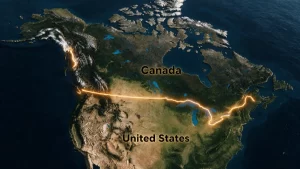
That is the actual sentence, spoken aloud by the President of the United States, about a policy that will reshape a $100-billion American industry. It is the language of a man closing a deal on a used car, not a head of state moving hundreds of thousands of tons of foreign protein through the U.S. food supply. Beef industry publications are already calculating that Brazil, which has been shipping roughly 60,000 tons a month to the United States and is about to fill its China quota, is positioned to be the primary beneficiary of Trump’s mystery arrangement. Australia, Uruguay, New Zealand, and Trump-allied Argentina — whose far-right president Javier Milei received a $20 billion U.S. financial package earlier this year — are all in the mix.
II. The Ranchers Trump Says He Loves Are the Ranchers He Just Undercut
Within hours, cattle futures fell and the industry that produces America’s beef made its position clear. Colin Woodall, chief executive of the National Cattlemen’s Beef Association, said the group is “disappointed” and that “flooding the market with government-subsidized, below-market beef is not the way to rebuild the American cattle herd.” On Fox Business, Woodall was blunter: “The best thing is to stay out of our business.” He noted this is the third time in less than a year Trump has announced an import-driven price fix, and each time, he said, the president is missing the fundamental picture of what actually drives beef prices — consumer demand for a domestic product that Americans have proven willing to pay for.
Ethan Lane, NCBA’s top lobbyist representing 180,000 cattle producers across 44 states, told ABC News there are “a lot of frustrated producers today, a lot of folks that feel like this isn’t what they voted for.” He is describing Trump’s own rural base. Justin Tupper, president of the U.S. Cattlemen’s Association, put it in a single line: “You don’t put America first by putting U.S. cattle producers last.” The American Farm Bureau Federation warned in a statement that short-term measures like this one carry long-term consequences for both consumers and producers.
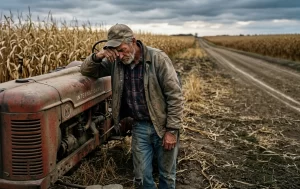
Cattle producers make breeding and retention decisions years in advance. A rancher deciding this fall whether to keep back heifers for herd expansion is making a bet against next year’s prices, feed costs, drought risk, interest rates, and government policy. When the White House suddenly floods the market with cheaper foreign beef, it destroys precisely the price signal ranchers need to justify the risk of rebuilding — and it does so at, as NCBA’s Woodall pointed out, exactly the moment of year when those decisions are being made.
NCBA’s Colin Woodall said consumers have shown they want American beef and are willing to pay for it — a market signal Trump’s imports will now blunt. Fox Business
NCBA lobbyist Ethan Lane said producers across 44 states are frustrated — many of them Trump voters in states like Nebraska, Texas, Montana, and the Dakotas. ABC News
U.S. Cattlemen’s Association President Justin Tupper accused the administration of gambling with market stability and food safety in a single move. DRG News
The American Farm Bureau Federation warned that short-term interventions like this can create long-term negative effects for both consumers and producers. Fox Business
III. A President Who Does Not Understand the Industry He Just Rewrote the Rules For
To understand how ill-fitted this “deal” is to the actual problem, understand the problem. The U.S. cattle herd stands at 86.2 million head — the smallest since 1951, a 75-year low. That contraction is the product of years of drought across the western plains, historically high input costs for feed, fuel, and fertilizer, damage from tariffs on the very supplies ranchers depend on, and a newly detected outbreak of the flesh-eating New World screwworm that has forced border closures with Mexico. High prices are the mechanism through which the market signals producers to rebuild. Cutting that signal off does not rebuild the herd. It punishes the people who would have.
Trump’s answer to this — the answer of a man who has spent his life in real estate and reality television, not agriculture — is to import his way out. He treats a national protein industry the way a landlord treats a supply of cheap tile: order more, from anywhere, at a discount. When ABC News’s cameras rolled Friday, the president told reporters that “the ranchers are great. They’re my people. I love the ranchers”, and in the same breath said they “admit that we need a little help.” The ranchers, in fact, admit no such thing. They have said so repeatedly, publicly, and on the record. He simply is not listening.
IV. A Timeline of Beef “Deals” — and the Warnings Ignored
V. Deals Are Not Policy. Policy Is What a Constitutional Republic Requires.
The Constitution vests the power to “regulate Commerce with foreign Nations” and to “lay and collect… Duties” in Article I. That power belongs to Congress. Presidents have accumulated significant discretion under delegated statutes — the Trade Expansion Act, Section 232, various emergency authorities — but the framers did not envision, and no serious reading of the Constitution supports, a system in which the president posts sweeping trade preferences to a private social media platform he owns, refuses to identify the counterparties, and calls the entire arrangement a “deal.”
A congressional statute would have gone through committee hearings where the National Cattlemen’s Beef Association, the U.S. Cattlemen’s Association, the American Farm Bureau, and the packers themselves could have testified. It would have generated a public economic impact analysis. It would have required disclosure of the countries and firms involved. It would have been amendable, debatable, and — critically — accountable through recorded votes. The 300,000-metric-ton “deal” has none of these features. It is a decree.
This matters far beyond beef. It is the shape of how this administration governs across trade, immigration, defense, and public health: a single man deciding, at speed, without expert input, without disclosure, on the basis of what he saw in a briefing or read in a poll. Republican Senator Mike Rounds of South Dakota — home to roughly 5 percent of the nation’s beef cows — reacted with one word: “This hurts!” Nebraska Senator Deb Fischer, herself a cattle rancher, wrote that flooding the market with foreign beef “hurts our livestock industry and undermines the long-term solution: growing the U.S. cattle herd.” Even Iowa’s Chuck Grassley urged that “USA cattlemen shld always be put 1st through America 1st policies.” These are Trump allies. They are being ignored by the White House they helped build.
VI. What Democrats Are Doing — and What They Must Do More Of
Democrats have moved quickly to seize the political opening, though the structural response is still incomplete. Representative Marcy Kaptur of northwest Ohio called the announcement a “slap in the face to ranchers, producers, and farmers”, noting on X that Trump has now paid Argentina $20 billion to send beef here and is importing another 300,000 metric tons to undercut American cattlemen. In Nebraska, independent Senate candidate Dan Osborn — challenging Republican Pete Ricketts — said flatly that Trump “needs to scrap this deal” and argued that Americans cannot lower beef prices by importing foreign beef at a discount that undermines domestic ranching.
More consequentially, Senate Democrats earlier this year introduced legislation, championed by Minority Leader Chuck Schumer, to break up the concentrated meatpacker industry that captures most of the margin between what ranchers earn and what consumers pay at the grocery store. That is the structural fix — the actual root of the problem — and it is a fix that requires congressional passage rather than a Truth Social post. What is still missing is a coordinated Democratic push to codify country-of-origin labeling for beef (a fight Trump himself has invoked but not delivered on), to require full disclosure of any foreign exporter benefiting from tariff waivers, and to pass the PRIME Act to open up processing capacity for small and mid-sized ranchers. These are the tools of representative government. A president cannot substitute himself for them, and Congress should stop letting him try.
Get Involved Today
Contribute to our mission and turn your concerns into action.
VII. The Grocery Bill, the Empty Shelf, and What Comes Next
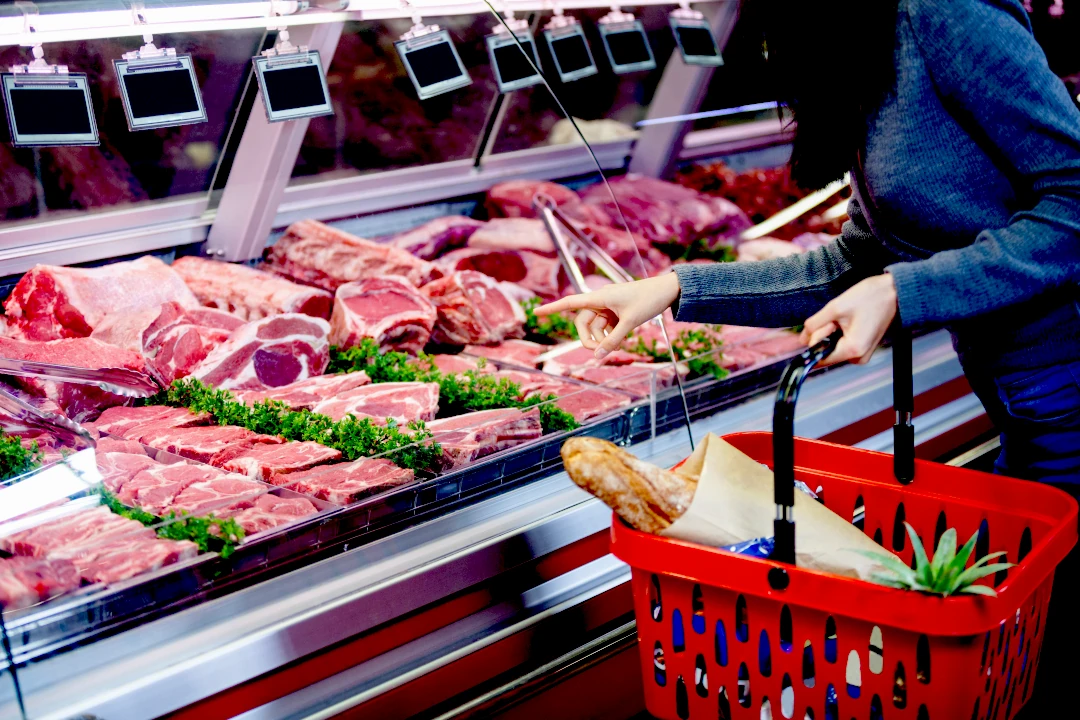
The immediate market effects are already visible. Cattle futures dropped on the morning of the announcement. If the 300,000-ton window is largely filled by Brazilian lean trimmings — the most probable outcome given that Brazil is about to be shut out of the Chinese market — the pricing effect on American ground beef at the retail level will likely be modest. Kansas State University agricultural economist Glynn Tonsor, quoted in industry press, said his immediate assessment was that the deal would not have a large effect on prices. Consumers hoping for a dramatic drop from $6.89-per-pound ground beef are likely to be disappointed. What they will get instead is beef of unknown origin, from producers operating under different food safety and traceability regimes, sold under labels that in most cases will not tell them where it came from.
And in 90 days, when the window closes, the domestic industry will be smaller, more skeptical, less willing to invest in rebuilding — and the underlying supply crisis will still be there. This is the anatomy of a policy that fails everyone it claims to help: ranchers get undercut, consumers get pennies of relief, and American food sovereignty erodes by another quarter-inch. The only clear winner is the president’s ability to say the word “deal” on television for 90 more days.
A pattern of impaired judgment is exactly what the 25th Amendment was written for.
The mechanism, in plain language. The Twenty-Fifth Amendment, ratified in 1967, was written precisely to address a president unable to discharge the powers and duties of the office. Section 4 permits the Vice President, together with a majority of the Cabinet — or a body Congress designates for the purpose — to transmit a written declaration to the President Pro Tempore of the Senate and the Speaker of the House stating that the president is unable to serve. The Vice President then assumes the powers of the office. If the president disputes the finding, Congress must resolve the question, with a two-thirds vote of both chambers required to sustain removal.
Who has called for the mechanism to be used. Representative Jamie Raskin of Maryland, the Democratic ranking member of the House Judiciary Committee, has been the most prominent congressional voice for the past several years arguing that Section 4 requires strengthening and that the current pattern of executive conduct meets its threshold. He has been joined by Representatives Jared Huffman of California, Marcy Kaptur of Ohio — whose own statement on this beef deal is quoted above — and members of the House Judiciary Democratic caucus in demanding that the Cabinet consider its constitutional obligations.
The argument these lawmakers make. The Constitution does not require dementia, incapacity, or medical incident to trigger Section 4. It requires that the president be “unable to discharge the powers and duties” of the office. A president who governs by unilateral social-media decree, who refuses to identify the foreign parties to trade agreements affecting entire American industries, who ignores the unanimous professional judgment of the sector he claims to be helping, who cannot articulate what he is actually agreeing to when asked directly — is a president exhibiting exactly the kind of impaired discharge of duties the amendment was written to address. The beef “deal” is not the disqualifying act. It is one data point in a pattern.
The honest assessment of the barriers. Section 4 has never been invoked. It requires a Vice President — currently J.D. Vance — willing to move against the president who selected him, and a Cabinet handpicked precisely for loyalty. As a matter of political reality, the mechanism is unlikely to be triggered against this president by this Cabinet. The Republican-controlled Congress that would then have to sustain removal by two-thirds vote is even less likely. This is a serious barrier and pretending otherwise is dishonest.
Why the barriers do not negate the argument. The framers did not include Section 4 as a partisan tool. They included it as a constitutional obligation on the executive branch itself. That the current officeholders have made themselves politically incapable of meeting that obligation does not erase the obligation — it indicts the officeholders. Every Cabinet member who watches a president trade away the livelihoods of his own voters via a Truth Social post, without process, without disclosure, without consultation, is a Cabinet member choosing loyalty over the oath they swore. That choice is itself the record. History will read it.
Editorial Conclusion
The 300,000-ton beef deal is not really about beef. It is about whether the United States is still governed by laws, deliberation, and disclosure — or by the impulses of one man broadcasting to his own private platform. American ranchers do not need a rescue from foreign meat. American democracy needs a rescue from unilateral rule. The Constitution names both the disease and the remedy. What is missing is the will to use it.
Sources & References
- ABC News — Trump announces temporary pause of beef import tariffs in effort to lower prices ahead of midterms
- CNBC — Trump to allow import of 300,000 metric tons of ground beef without tariff
- The Hill — Trump defends beef import plan after GOP blowback
- The Hill — GOP backlash grows to Trump’s beef price intervention
- NBC News — GOP lawmakers criticize Trump’s beef import plan amid blowback from ranchers
- Fox Business — Trump allows 300,000 metric tons of tariff-free beef imports; rancher backlash
- Roll Call — Trump creates beef with ranchers over new import plan
- Newsweek — 5 Unanswered Questions About Trump’s Beef Import Deal
- Newsweek — Trump’s Beef Import Plan Sparks Backlash From Republicans
- MeidasTouch — Mystery Meat: Trump Refuses to Say Where His New Flood of Foreign Beef Is Coming From
- NCBA — NCBA Statement on President Trump’s Truth Social Post
- NOTUS — “Disappointed”: Ranchers and Republicans React to Trump’s Beef Import
- Beef Central — Trump announces 90-day tariff-free ground beef imports, designed to curb US meat prices
- Grist — Trump’s beef trade deal is a lose-lose gamble that won’t lower prices
- Investigate Midwest — Argentina rarely sold beef to the US. Now, the country surpasses major trade partners.
- Beef Magazine — Cattle groups react to Trump’s beef import post
- Western Ag Network — Senate Democrats Introduce Legislation to Break Up Meat Packers
Related News