Blood, Soil, and the Constitution He Swore to Defend
A 6-3 Supreme Court ruling that should not have been close reveals a president who tried to unwrite the Fourteenth Amendment by executive fiat — and a White House whose response to losing was to congratulate a foreign dictator on America’s behalf.
On the morning of Tuesday, June 30, the Supreme Court of the United States told the President of the United States that he cannot rewrite the Constitution by signing a piece of paper. That this was in doubt for eighteen months — that this required a 6-to-3 ruling from the highest court in the land — is itself the story. Chief Justice John Roberts, writing for a majority that included Justice Amy Coney Barrett and all three liberal justices, held in Trump v. Barbara that children born on American soil are American citizens, exactly as the plain text of the Fourteenth Amendment has said since 1868. The majority opinion traced the principle from English common law through the abolitionists, and Roberts described citizenship, in a phrase now certain to echo, as the right to have rights. The court kept the promise. The president tried to break it.
The executive order the court struck down was signed on January 20, 2025 — hours after Donald Trump was sworn in for his second term. It purported to bar U.S.-issued citizenship documents for babies born in America if their mothers were undocumented, or if their mothers were here on temporary visas — including student visas, tourist visas, and work visas — unless the father was a citizen or lawful permanent resident. According to the Migration Policy Institute, an estimated 255,000 children born every year would have lost legal status. Every lower court that reviewed the order struck it down. One federal judge called it, in words the ruling should have made unnecessary, blatantly unconstitutional. It never took effect anywhere in the country. And still, the administration fought it all the way to the Supreme Court, where the president himself sat in the gallery in April — the first sitting president in American history to attend oral arguments — and where his own appointees questioned his solicitor general’s reasoning until Trump reportedly left the chamber early.
1. A Ruling That Should Not Have Been This Close
Let us begin with the numbers that matter. Six justices — Roberts, Sotomayor, Kagan, Jackson, Barrett, and, on statutory grounds, Kavanaugh — voted to strike down the executive order. Three justices — Clarence Thomas, Samuel Alito, and Neil Gorsuch — would have let the president rewrite the Citizenship Clause. Justice Thomas produced a 91-page dissent in which, as NPR reported, he embraced the president’s argument that the Fourteenth Amendment applied only to former slaves and their descendants — a reading no court has adopted in more than 125 years, and one that Justice Ketanji Brown Jackson pointedly noted was incompatible with Thomas’s own longstanding endorsement of a colorblind Constitution.
Kica Matos, president of the National Immigration Law Center, said what any honest observer must acknowledge: this decision should never have been close. The 14th Amendment is not ambiguous. Its text is not cryptic. It has been the settled understanding of American citizenship since Reconstruction. That three sitting justices of the Supreme Court were willing to abandon 158 years of constitutional meaning to accommodate a president’s policy preference is a warning that ought to trouble every American, regardless of party.
“This is Donald Trump trying to rewrite the Constitution. The Supreme Court said, ‘You can’t do that.’ That’s a good decision, and we’ll move forward from there. Unfortunately, that’s what Donald Trump has been trying to do — make up his own rules as he goes along.”
— Gov. Maura Healey (D-Mass.), following the ruling
2. What the Fourteenth Amendment Actually Was — And Why
To understand the depth of what the administration attempted, one has to remember what the Fourteenth Amendment was written to do. Ratified in July 1868, in the wake of the Civil War, its Citizenship Clause was drafted with a specific and terrible history in mind: the Supreme Court’s 1857 decision in Dred Scott v. Sandford, which had held that no person of African descent — free or enslaved — could ever be a citizen of the United States. The Reconstruction Congress wrote the first sentence of the Fourteenth Amendment to bury that ruling forever. It reads, in its entirety: “All persons born or naturalized in the United States, and subject to the jurisdiction thereof, are citizens of the United States and of the State wherein they reside.”
The framers of that amendment chose the phrase “all persons” deliberately. As the National Constitution Center notes, they rejected proposed language that would have narrowed citizenship. In 1898, in United States v. Wong Kim Ark, the Supreme Court settled the question for children of noncitizen immigrants. Wong was born in San Francisco to Chinese parents; the government tried to deny him reentry to his own country by declaring him a foreigner. The Court ruled for Wong 6-2, writing that the Fourteenth Amendment affirmed an ancient rule of citizenship by birth within the territory, with narrow exceptions for the children of diplomats and enemy occupiers. That precedent has stood, unbroken, for 128 years. It stood through the Chinese Exclusion Act. It stood while Japanese-American families were interned during World War II — and their newborns were still granted citizenship. It stood through every wave of anti-immigrant panic this country has produced. Until this administration decided it should not.
Written to Bury Dred Scott
The Citizenship Clause was drafted in 1866 and ratified in 1868 to overturn the Court’s ruling that Black Americans could never be citizens. Constitution Center.
Wong Kim Ark, 1898
A 6-2 ruling that children born in the U.S. to noncitizen parents are American citizens. Untouched for 128 years. Justia.
255,000 Children Per Year
The number of American-born babies who would have lost citizenship under the order, per Migration Policy Institute analysis. ABC News.
Six to Three
Roberts, Sotomayor, Kagan, Jackson, and Barrett formed the majority. Kavanaugh concurred on statutory grounds. Thomas, Alito, and Gorsuch dissented. CNBC.
3. The Ideology Behind the Executive Order
It is not incidental — and it is not, by now, controversial to observe — that the policy architect of Trump’s birthright citizenship order is Deputy Chief of Staff Stephen Miller, who has openly endorsed the European far-right theory of “remigration.” That theory, as documented by The New Republic, calls not merely for deportation of undocumented immigrants but for the removal of non-ethnically-European immigrants and their families irrespective of legal status. In April 2025, Miller described birthright citizenship as the biggest scam in financial history, argued without evidence that it enabled foreign espionage, and demanded a 9-0 ruling from the Supreme Court. When he did not get one, he responded on Tuesday by declaring the ruling one of the most destructive decisions in Supreme Court history and asserting that American citizenship is not the birthright of the world.
Read those words carefully. American citizenship, in Miller’s formulation, belongs only to Americans — a tautology that resolves nothing until you ask who counts. The Fourteenth Amendment answered that question in 1868. It said: anyone born here. Miller’s answer, and the president’s answer, is different. Their answer requires the “right kind” of parents. And when a policy’s intellectual scaffolding rests on the premise that some Americans born on American soil are less American than others based on the immigration status of their parents, that policy has a name. Journalists at Lawyers, Guns & Money called it what it is: an attempt to reinterpret the Constitution as a white-supremacist document. So, in more decorous language, did Justice Jackson.
4. The Anti-American Reaction from the White House
How a president responds to losing a Supreme Court case tells the country something about the president. Consider what Donald Trump did on Tuesday afternoon. First, he posted on Truth Social that the ruling was too bad for our country and demanded that Congress begin working on legislation that same day to end birthright citizenship — legislation that, per the very majority opinion he had just lost to, would itself be unconstitutional and would require a constitutional amendment. Legal scholars, including those quoted by Al Jazeera, immediately noted that this is not how the Constitution works.
Then, in a follow-up post, the President of the United States sarcastically congratulated Chinese President Xi Jinping and the “Great Country of China” on their birthright citizenship win. Read that again. The sitting American president, having lost a case in the American Supreme Court about the American Constitution, publicly congratulated a foreign authoritarian on America’s behalf as a form of protest against the American constitutional order. There is a word for the disposition that treats the Constitution as an obstacle and a hostile foreign power as an ally. There are several. None of them is patriotic.
“American citizenship is not the birthright of the world. It belongs only and solely to Americans. No provision of the Constitution can be read to require our national self-obliteration.”
— Stephen Miller, Deputy White House Chief of Staff, June 30, 2026
Meanwhile, House Speaker Mike Johnson told reporters that the ruling posed serious challenges and echoed the president’s complaint about “birthing tourism.” Senator Eric Schmitt of Missouri announced he would attempt to legislate around the ruling using a footnote in Justice Kavanaugh’s concurrence. Governor Ron DeSantis of Florida called for either a constitutional amendment or a future Supreme Court willing to overrule this one — a chillingly candid acknowledgment that the current strategy is to wait for a Court more compliant with the executive’s will. Not one of these men, in the immediate hours after the decision, defended the constitutional principle their oaths of office require them to defend.
Get Involved Today
Contribute to our mission and turn your concerns into action.
5. Timeline of a Constitutional Assault
6. What This Says About the President’s Fitness
It is possible to disagree with a Supreme Court decision. It is possible to advocate for legislative change, or even, through the extraordinary process the Constitution provides, for a constitutional amendment. What is not possible — not without abandoning the basic premise of the American constitutional order — is for the president to publicly deny the legitimacy of a plain constitutional text, to encourage Congress to violate the ruling he just lost, and to align himself rhetorically with a hostile foreign government against the country he leads. Senator Alex Padilla, himself the American-born son of immigrants, put it starkly in a statement following the ruling: this is personal, because he is a proud son of immigrants who was born in the United States. Under the president’s theory, senators like Alex Padilla would not be American at all.
The pattern here is not new. It stretches from Trump’s Easter 2026 Truth Social post threatening the annihilation of an entire civilization in Iran, through his open musings about seizing Greenland, to his attempts to remake the Justice Department and to his continued verbal assaults on federal judges who rule against him. It is in this context — a pattern of impulsive, constitutionally incompatible, and increasingly volatile executive behavior — that the ruling of June 30 must be read.
When a Pattern Becomes Incapacity: The Case for the 25th Amendment
The Twenty-fifth Amendment, ratified in 1967 in the shadow of the Kennedy assassination, provides in Section 4 that the Vice President, together with a majority of the principal officers of the executive departments — or such other body as Congress may by law provide — may declare in writing to the leaders of Congress that the President is unable to discharge the powers and duties of the office. The Vice President then becomes Acting President.
On April 14, 2026, Rep. Jamie Raskin of Maryland, the ranking Democrat on the House Judiciary Committee, introduced legislation to create precisely the “other body” the amendment contemplates: a 17-member Commission on Presidential Capacity, composed of physicians, psychiatrists, and former executive officials, to conduct medical evaluations and report to Congress. Fifty House Democrats co-sponsored the bill. Rep. Alexandria Ocasio-Cortez, Sen. Ed Markey of Massachusetts, and Sen. Chris Murphy of Connecticut have all publicly called for the amendment to be considered following what Raskin described as increasingly volatile and alarming public statements from the president. Sen. Markey previously called for its invocation in response to Trump’s designs on Greenland.
The Constitutional Argument
The case for invoking Section 4 is not, and cannot be, a partisan objection to policy. Political disagreement is not incapacity. But the 25th Amendment does not require physical illness alone — its plain text speaks of being unable to discharge the powers and duties of the office. A president who takes an oath to preserve, protect, and defend a Constitution he then attempts to rewrite by fiat; who denies the plain text of the very document he swore to uphold; who publicly aligns himself with a foreign authoritarian against his own country’s highest court; and whose executive orders are ruled unconstitutional in a pattern rather than as isolated events — that president has arguably placed himself outside the capacity the office requires.
The Practical Barriers Are Real
We should be honest about what invocation of Section 4 would require and why it is unlikely to happen in the near term. Vice President JD Vance is a Trump loyalist. The Cabinet is composed of officials chosen for their fealty. The Raskin bill will not pass a Republican-controlled Congress, and even if it did, Trump would veto it. The Supreme Court’s current majority has shown itself broadly deferential to executive power. The path is closed at every gate the framers built.
Why the Argument Still Matters
And yet the constitutional case must be made publicly, because a democracy that will not name its own crises cannot answer them. The 25th Amendment exists because the framers of the twentieth century understood what the framers of the eighteenth did not fully anticipate: that a president may become dangerous not through death or coma but through incapacity of a different kind — the incapacity to accept the limits of the office. Whether or not Section 4 is invoked in this term, the pattern of behavior it was designed to address is now on public display. The country’s duty is to see it clearly.
7. The Ordinary Americans This Ruling Protects
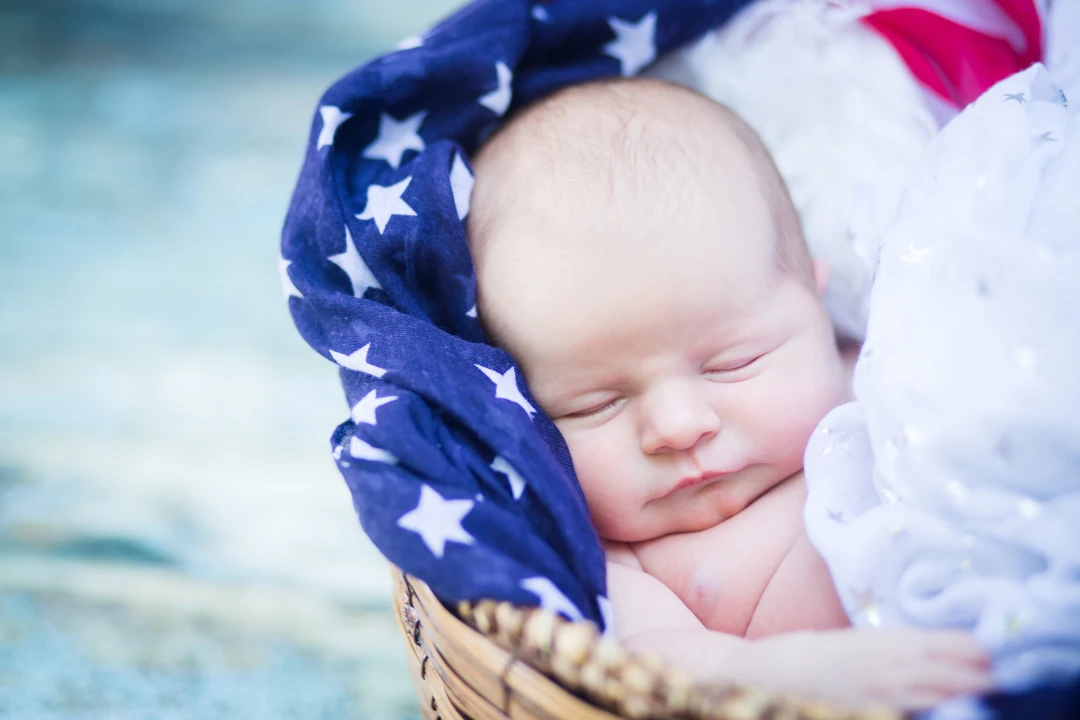
It is easy, when writing about constitutional law, to lose the human stakes in the citations. So let us name them. This ruling means that a baby born tomorrow morning in a hospital in Houston or Fresno or Boston, to a mother here on a student visa or without documentation, is an American — with all the rights and protections American citizenship carries. It means that the older siblings of that baby, who are also American, are not forced to watch their newborn brother or sister become the first person in their family without a country. It means, as Cecillia Wang of the ACLU, herself a birthright citizen born to Chinese parents, put it after arguing the case, that in America we do not punish children for the choices of their parents. Rep. Rosa DeLauro of Connecticut called it what it was: a case brought because the administration wanted to see how far it could take an extreme anti-immigration agenda. Massachusetts Attorney General Andrea Joy Campbell noted that without the Fourteenth Amendment, she herself could not have become the state’s attorney general.
These are the Americans this ruling defends. And it is worth naming, too, the ones the ruling did not have to defend today but may yet have to defend tomorrow — because the intellectual project behind the executive order has not gone away. It has simply been rebuffed once. Justice Alito’s dissent complained that the ruling gives a powerful incentive for illegal entry. Justice Thomas suggested the majority opinion may not stand the test of time. Senators Cotton, Paul, Lee, and Schmitt are already calling for a constitutional amendment. The strategy going forward is patience: wait for a friendlier Court, wait for a friendlier Congress, keep the argument in circulation until the argument becomes law.
Editorial Conclusion
The Constitution held today, but it held by three votes. A president who tried to erase the Fourteenth Amendment by signature — and who, upon losing, congratulated a foreign dictator against the American courts he could not bend — has told the country exactly who he is and what he believes the office to be. The Fourteenth Amendment was written to promise that no American born on American soil would ever again be told they do not belong. That promise is still ours to keep. But the machinery that came for it will come again. The next generation of birthright Americans — and every American whose citizenship rests on that same clause — deserves a Congress, a Court, and a country willing to say, without hedging, that the promise is not up for renegotiation. Not by executive order. Not by legislation. Not by a future justice looking for a majority. Never.
Sources & References
- NPR — Supreme Court upholds birthright citizenship on constitutional grounds
- Washington Post — Supreme Court upholds birthright citizenship, ruling against Trump’s order
- CNBC — Supreme Court upholds birthright citizenship, blocks Trump order
- CNN — Supreme Court upholds birthright citizenship: Live updates
- PBS NewsHour — Supreme Court rejects Trump limits on birthright citizenship
- Al Jazeera — Officials, lawmakers and advocates react to birthright ruling
- Al Jazeera — Supreme Court rules against Trump order
- The Hill — Trump calls on Congress to act after ruling
- The Hill — Speaker Johnson responds to ruling
- The Hill — Court rules Trump’s restrictions unconstitutional
- NBC Boston — Reaction to birthright citizenship ruling
- NBC News — Live updates on Supreme Court rulings
- ABC News — What to know about birthright citizenship
- Newsweek — Wong Kim Ark’s family on the ruling
- Constitution Center — United States v. Wong Kim Ark
- Justia — Wong Kim Ark, 169 U.S. 649 (1898)
- The New Republic — Stephen Miller’s attack on birthright citizenship
- The Hill — Raskin introduces 25th Amendment fitness commission bill
Related News