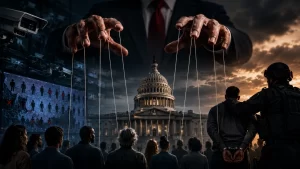
A federal judge gave the Trump administration one job: put it in writing, under penalty of perjury, that the $1.776 billion taxpayer-funded payout machine for the president’s allies is dead. They refused. What that refusal tells us about this presidency — and about the constitutional remedies the country still has — is no longer a matter of speculation.
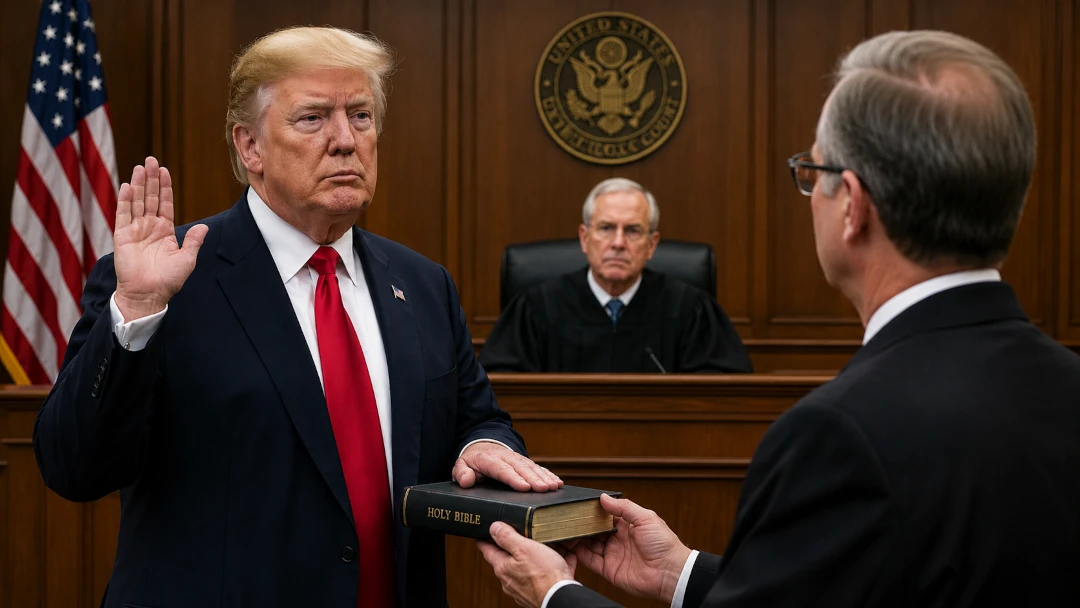
On a Friday in late June, the Trump Justice Department was asked to do one of the most ordinary things any litigant is ever asked to do in federal court: sign a piece of paper. Specifically, Acting Attorney General Todd Blanche, Treasury Secretary Scott Bessent, and Associate Attorney General Stanley Woodward were ordered by U.S. District Judge Leonie Brinkema to file a sworn declaration confirming, under penalty of perjury, that the administration’s nearly $1.776 billion “Anti-Weaponization Fund” would not move forward “in any manner, or under any name.” They did not sign. Instead, the Department of Justice told the court that being asked to put the administration’s word in writing was itself a “serious separation of powers” concern.
Read that again. The Justice Department of the United States believes that being asked to tell the truth, on the record, about whether it is going to spend nearly two billion dollars of public money is an affront to the Constitution. That is not a legal argument. That is a confession.
For an administration whose every move — the lawsuits against his own government, the eleventh-hour “settlements,” the public musings about paying violent January 6 defendants — reads like a slow-motion test of how much law a country will tolerate seeing bent, this is the clarifying moment. A federal judge asked for a signature. The president’s lawyers said no.
1. What the Anti-Weaponization Fund Actually Is
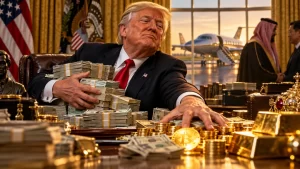
The fund did not arise from a budget, an appropriation, or a vote. It arose from a settlement. Specifically, it was the resolution of a $10 billion lawsuit President Trump and members of his family had filed against the Internal Revenue Service over the leak of his tax returns — a leak for which a federal contractor is already serving a five-year prison sentence. Rather than receiving damages directly, the Trump plaintiffs received a “formal apology” and a liability waiver permanently protecting them from audits and prosecutions. In exchange, the Justice Department agreed to seed a $1.776 billion fund — the number a nod to 1776 — to be paid out to people who claim they were “victims of weaponization and lawfare.”
The money was to come from the federal Judgment Fund, a Treasury account meant to pay out final judgments rendered by federal courts — not, lawmakers from both parties have argued, to be raided as the personal restitution piggy bank of a president who is also a plaintiff against his own government. The five commissioners who would administer the fund would be selected by the Attorney General. The president could remove any of them. Eligibility criteria for payouts were never publicly defined.
The implications were immediately obvious to Rep. Jamie Raskin, the top Democrat on the House Judiciary Committee, who called the fund “nothing but a racket designed to take $1.7 billion of taxpayer dollars out of the Treasury and pour it into a huge slush fund for Trump at DOJ to hand out to his private militia of insurrectionists, rioters, and white supremacists.” Two Capitol Police officers who had defended Congress on January 6, 2021 sued separately, calling the scheme “the most brazen act of presidential corruption this century.”
2. The Bipartisan Brief Nobody Should Have Needed to Write
What followed was a rarity in this Congress: a bipartisan moment with teeth. Sen. Cory Booker, a New Jersey Democrat, and Sen. Bill Cassidy, a Louisiana Republican, jointly filed an amicus brief in the lead lawsuit, Floyd v. Department of Justice, brought by former federal prosecutor Andrew Floyd. The senators did not mince words. The fund, they wrote, presents “an immediate and dire threat to our constitutional order and the authority of Congress.” More damningly, they framed the scheme as “deliberately designed to recast insurrectionists — including those who perpetrated violence against law enforcement officers — as victims.”
“To deliberately deploy public funds, in violation of the Constitution and the laws of this nation, to compensate these perpetrators, is to use the machinery of democratic government to subsidize an attack on that government’s most fundamental processes.”
— Sen. Cory Booker (D-N.J.) and Sen. Bill Cassidy (R-La.), amicus brief in Floyd v. DOJ
Judge Brinkema would later read that exact passage aloud from the bench. It is not every day that a federal judge cites a bipartisan Senate amicus brief while staring down a Justice Department lawyer who has just declined to commit, under oath, to not setting nearly $2 billion on fire.
3. What Happened in Judge Brinkema’s Courtroom
Judge Brinkema — a Clinton appointee who has sat on the Eastern District of Virginia for three decades and presided over the trial of Zacarias Moussaoui — first issued a temporary block on May 29, 2026. On June 12, after a hearing in Alexandria, Virginia, she made that block indefinite. She gave the administration one week to formally swear the fund was dead. That deadline came and went on June 19. The Justice Department’s response was a notice arguing that requiring senior officials to file sworn declarations would “implicate serious separation of powers concerns.”
The exchange that lit up the hearing record was Brinkema’s interrogation of DOJ attorney Andrew Block, who could not explain why Blanche — if he truly intended to abandon the fund — had not simply rescinded the order that created it.
The Question That Hung in the Air
Brinkema asked DOJ attorney Andrew Block why Acting AG Blanche had not simply rescinded the legal documents creating the fund. “Your honor, I don’t” know, Block replied. Brinkema said she “couldn’t believe,” given the case’s significance, that Block had not even attempted to find out. (ABC News)
The President’s Own Words
On NBC’s Meet the Press, President Trump said of the Jan. 6 defendants: “If it was up to me, I’d pay them the kind of money that they deserve. People have been destroyed. Lives have been destroyed.” Brinkema cited the comments as evidence the fund could “rear its head” again. (Common Dreams)
The Attack on the Bench
After Brinkema’s first order, Trump took to Truth Social to attack her personally as a “radical left judge.” Brinkema referenced that attack from the bench, noting that presidential pressure on a sitting judge is itself a part of the record. (MS NOW)
The Application That Arrived by Mail
At one point during the hearing, Brinkema disclosed that someone had mailed an application for fund money directly to the court — evidence, the judge suggested, that the public still believed the fund was alive. (ABC News)
Brinkema rejected the administration’s mootness argument outright. Under Fourth Circuit precedent — Porter v. Clarke — the mere “voluntary cessation” of allegedly illegal conduct is not enough to render a case moot when the government has every incentive to revive the practice. “We don’t have the kind of absolute certainty,” she said, “that this fund wouldn’t rear its head” again. And, summing up the principle in a sentence that should be hung in every law school in the country: “They should not be able to evade judicial review by temporarily altering behavior.”
4. The Timeline of a Refusal
Get Involved Today
Contribute to our mission and turn your concerns into action.
5. What a Refusal to Swear Actually Means
Lawyers tell the truth to courts all the time. They sign declarations every day. The DOJ’s own filings frequently involve sworn statements from cabinet officers; this is unremarkable, the bureaucratic plumbing of a constitutional government. The reason — the only reason — a litigant refuses to sign a routine sworn statement that something is not happening is that the litigant is unwilling to forswear doing it.
That is the entire game. The administration wants to be able to tell the court the fund is dead while leaving itself the option of resurrecting it — quietly, by another name, or by another mechanism — the moment the legal heat dies down. The Atlantic has already reported that DOJ officials have been privately reassuring Trump’s allies that the checks are coming, that the administration simply needs to wait out the litigation. A separate federal judge in Washington, U.S. District Judge Richard Leon, had warning words of his own for the Justice Department: “Don’t play possum with this court.”
This is what the rule of law actually looks like when a government decides it does not feel like complying. It does not arrive as a tank in the street. It arrives as a sentence in a filing — a sentence that says, in effect, that telling a court the truth is a constitutional imposition.
“They should not be able to evade judicial review by temporarily altering behavior.”
— U.S. District Judge Leonie M. Brinkema, June 12, 2026
6. The Stakes for the Separation of Powers
Article I gives the power of the purse to Congress. The Anti-Weaponization Fund attempts to launder $1.776 billion in taxpayer money out of the Treasury and into the hands of the president’s political allies — without a single appropriations vote, without statutory authorization, without the public deliberation the Founders considered the bedrock of any free republic. The senators in the Booker-Cassidy brief put it precisely: Congress is “both victim and the federal government’s sole appropriating authority,” and “has a compelling institutional interest in ensuring that no public fund is converted into a reward for those who laid siege to it.”
Article III gives federal courts the authority to say what the law is. When the Justice Department tells an Article III judge that compliance with a routine evidentiary order is itself a constitutional offense, it is not protecting the separation of powers. It is dismantling it. The separation of powers is not a shield for the executive against the judiciary; it is a structure within which all three branches operate. To invoke it as a reason not to answer a judge’s question is to invert it entirely.
And Article II — the article that gives the president his powers in the first place — vests in him a duty: that the laws be “faithfully executed.” A president who publicly champions a slush fund his own attorney general has sworn off, who attacks the judge blocking it as a “radical leftist,” and whose lawyers will not put their mouths where their press releases are, is not faithfully executing the laws. He is testing them.
“Unable to discharge the powers and duties of his office.”
The relevant text of the 25th Amendment, Section 4 is short. When the Vice President and a majority of the Cabinet transmit to Congress their written declaration that the President is “unable to discharge the powers and duties of his office,” the Vice President becomes Acting President. That is it. That is the mechanism.
The Constitution does not define unable. It does not define inability. Both omissions were deliberate.
The amendment’s principal draftsman, Fordham Law Dean John D. Feerick, has written that Congress left those terms undefined “since cases of inability could take various forms not neatly fitting into a rigid definition.” The Yale Law School Rule of Law Clinic, after reviewing the entire legislative history, concluded that the framers “purposefully set forth a flexible standard intentionally designed to apply to a wide variety of unforeseen emergencies.” Professor Joel K. Goldstein of Saint Louis University, perhaps the leading living scholar of the amendment, has reiterated that “inability” was always understood to encompass both physical and mental incapacity — and, more broadly, any condition or circumstance that prevents the president from discharging his duties.
The drafters did not write “physically ill.” They did not write “medically incapacitated.” They chose unable. And then they chose to leave it open.
What does “unable to discharge the powers and duties” look like in 2026? It looks like a president whose own Justice Department will not affirm, on oath, that it is following the law. It looks like a chief executive who tells a national television audience he would personally pay convicted insurrectionists, while his lawyers tell a federal court the case is moot. It looks like a presidency that treats Article III judges as political enemies and a sworn declaration as a constitutional indignity. A president whose basic duty — faithful execution of the laws — is so visibly degraded that two federal judges, in two separate courthouses, have been forced to remind his Department of Justice not to “play possum” with the bench is, in any honest reading of the constitutional text, a president whose ability to discharge his duties is in question.
The amendment was kept deliberately open precisely so this question could be asked. Drafters like Sen. Birch Bayh, Feerick, and the framers’ working group did not want a rigid medical checklist. They wanted a constitutional safety valve flexible enough to meet emergencies the country had not yet imagined. We are now living in one of those emergencies.
The lawmakers calling for that question to be taken seriously are not fringe figures. Sen. Chris Murphy (D-Conn.) publicly urged Cabinet officials to “spend Easter calling constitutional lawyers about the 25th Amendment” after Trump’s April threats against Iranian civilian infrastructure. More than 70 federal lawmakers have echoed similar calls since. And the legal and historical scholarship is overwhelmingly clear: the threshold is the Vice President plus a majority of the Cabinet, and the standard is whatever those officials, in good faith, conclude the constitutional text means.
An honest assessment of the practical barriers: none of this is going to happen tomorrow. Vice President JD Vance shows no sign of moving. The Cabinet is staffed almost entirely with loyalists. Even if Section 4 were invoked, the president would contest it, and a two-thirds vote of both houses of Congress — the same impossibly high bar that has paralyzed impeachment — would be required to sustain it. The political path is closed, perhaps hopelessly so.
But the political path being closed does not collapse the constitutional argument. The whole point of leaving “inability” undefined was to make sure the question could always be asked — legally, publicly, on the record — even when the political climate made the answer unwelcome. A president who refuses to swear, in court, that he will obey the law is exactly the kind of crisis the drafters had in mind when they refused to write a definition.
7. What This Says About His Priorities
Every presidency reveals itself in what it spends time fighting for. The Trump administration is, at this very moment, fighting in federal court — against a Clinton-appointed judge, against a bipartisan Senate amicus brief, against two officers who defended the Capitol on January 6 — for the right to be able to one day pay $1.776 billion of taxpayer money to its own political allies. Not for health care. Not for child poverty. Not for housing or wages or veterans’ care. For this. For a fund whose entire purpose is to convert the machinery of federal compensation into a reward system for loyalty to the president personally.
That is what is being defended. And the defense is being mounted not by arguing that the fund is legal — the administration has officially said it is not moving forward — but by refusing to say so under oath, so that the option remains live. This is what the administration thinks is worth picking a fight with a federal court over.
The cost of this fight is measured in more than dollars. It is measured in the erosion of every American’s basic expectation that taxpayer money exists to serve the public, not to subsidize a president’s friends. It is measured in the corrosive lesson that the Justice Department now thinks of itself less as a department of justice than as a personal legal team for the executive. And it is measured in the working assumption, increasingly built into our politics, that the rule of law is whatever the president can get away with on any given Friday.
8. What the American People Deserve
The American people pay for the Judgment Fund. The American people fund the Treasury. The American people elected a Congress that has the sole power of the purse, and a federal judiciary that has the duty to enforce the law against any official, however powerful. When all three of those constitutional commitments are insulted at once — by a $1.776 billion settlement no one voted for, by a president who openly says he would pay it out personally if he could, by a Justice Department that will not even confirm its own public statements under oath — what the American people deserve is the truth about who, exactly, is willing to defend the Constitution and who is not.
Judge Brinkema, sitting on the Eastern District of Virginia, has done her job. Sens. Booker and Cassidy, across the political aisle, have done theirs. Andrew Floyd, who once prosecuted Jan. 6 defendants as a federal prosecutor, has done his. Capitol Police officers who defended Congress on January 6, 2021 and now find themselves suing the federal government to stop it from rewarding the people who attacked them — they have done theirs. Democracy Forward attorney Pooja Boisture and her co-counsel have done theirs.
The question is what the rest of the constitutional order is willing to do. The cabinet officials with Section 4 authority under the 25th Amendment, the members of both houses of Congress with subpoena and appropriations and impeachment power, the state attorneys general with parallel enforcement authority, and most of all the American voters who will be asked again, soon enough, what kind of republic they wish to keep — the responsibility now sits with them.
Editorial Conclusion
A presidency that will not swear, in court, that it is obeying the law is a presidency that has answered the constitutional question for us. The 25th Amendment was deliberately written without a definition of inability because its drafters understood that the crises of the future would not be the crises of the past. A president whose Justice Department tells a federal judge that being asked to tell the truth is a separation-of-powers violation is, by any honest reading of Article II, a president failing to discharge the powers and duties of his office.
This is not about an unpopular policy. It is about whether the constitutional structure still binds the person who took an oath to defend it. Judge Brinkema did her duty. The Senate’s bipartisan voices did theirs. The country is now waiting to see who else still believes the oath means something. The answer cannot be silence.
Sources & References
- U.S. Department of Justice — Announcement creating the Anti-Weaponization Fund
- PBS NewsHour — Judge extends block on Trump’s $1.8B Anti-Weaponization Fund
- The Hill — DOJ snubs judge’s demand; cites “separation of powers concerns”
- MS NOW — Trump DOJ refuses to kill fund in sworn court declaration
- Courthouse News Service — Trump officials refuse to sign declaration affirming end of slush fund
- CNN Politics — DOJ rebuffs judge’s request for Blanche declaration
- ABC News — Judge issues injunction blocking the fund
- Common Dreams — Judge orders Trump admin to swear $1.8B slush fund is dead
- All Rise News — Highlights from the Brinkema hearing
- MS NOW (Opinion) — Why a judge indefinitely blocked Trump’s “beautiful” payout fund
- Courthouse News Service — Judge extends block on Trump’s anti-weaponization fund
- The Hill — Cassidy, Booker file bipartisan brief against fund
- MS NOW Deadline: Legal Blog — Booker and Cassidy file bipartisan brief
- New Haven Independent — Judge pauses Trump’s Anti-Weaponization Fund — again
- The Hill — DOJ creates nearly $2 billion fund: what to know
- PBS NewsHour — Why legal experts call the fund unprecedented
- National Constitution Center — Text of the 25th Amendment
- PBS NewsHour — How the 25th Amendment works — and the “inability” question
- Yale Law School — Rule of Law Clinic’s “Reader’s Guide” to the 25th Amendment
- Wikipedia — Twenty-fifth Amendment to the United States Constitution
Related News