In the final stretch before the midterms, the Justice Department charged two former FBI election-security officials, filed a third criminal case against James Comey, and asked a grand jury to indict the young aide whose testimony about January 6 the president has never forgiven. Ordinary citizens on that grand jury said no. The question now is whether voters will finish the job.
For most of the half-century since Watergate, Americans could take one thing about federal law enforcement for granted: the president did not decide whom the Justice Department charged. That norm was never written into the Constitution, and it was never perfectly observed. But it was strong enough that presidents of both parties kept a careful distance from individual cases, and attorneys general who blurred that line paid for it. This past week, the line did not blur. It disappeared.
On Friday, October 23, two former senior FBI officials, Nikki Floris and Bradley Benavides, surrendered on charges that they lied to Congress in 2023 about their roles in the bureau’s Hunter Biden investigations. On Monday, a court filing revealed that James Comey had been charged for the third time since Trump returned to office. And on Tuesday, prosecutors walked into a Washington grand jury room seeking an indictment of Cassidy Hutchinson, the former White House aide whose 2022 testimony placed Donald Trump at the center of the January 6 attack. The grand jury refused.
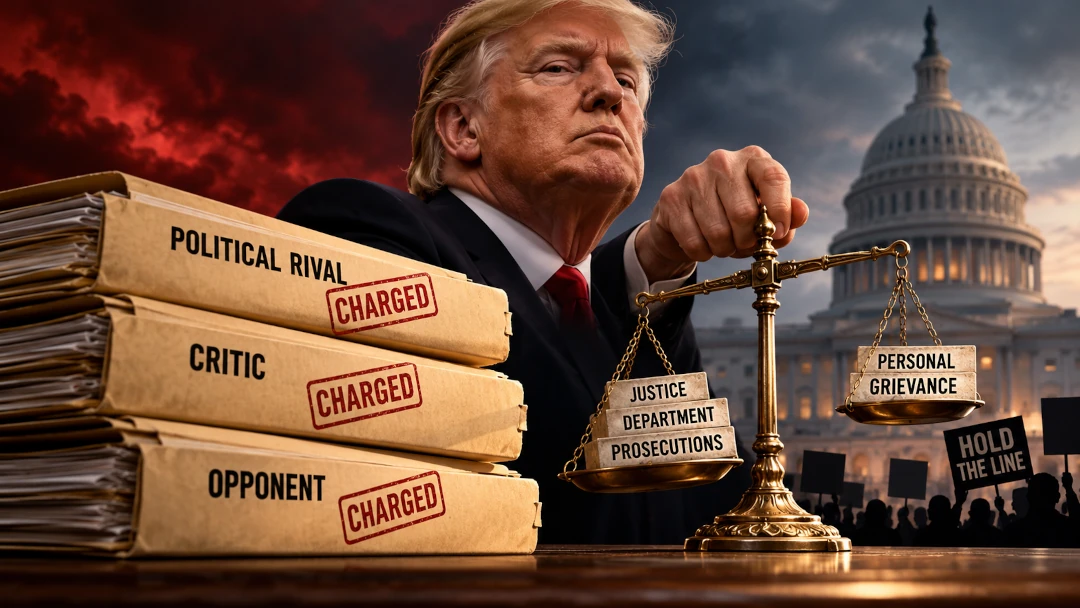
Each case, taken alone, comes dressed in the language of law. Taken together, and placed beside the president’s own words, they describe something else: a Justice Department being used to settle the personal scores of the man it is supposed to be independent from, in the final days before an election that could hand his opponents the power to investigate him.
I. The Week the Mask Came Off
Start with the FBI officials. NBC News reported that Floris, a former deputy assistant director of the FBI’s Counterintelligence Division, and Benavides each face a single count of a rarely charged offense that is notoriously difficult to prove. Both had spent years as targets of Trump allies over their work on the bureau’s Foreign Influence Task Force, the unit that defended the 2020 election from foreign interference. U.S. Attorney Jeanine Pirro announced the case on social media, declaring it time to “bring the hammer of justice down on them.”
That hammer appears to have slipped. According to court records described by Raw Story, Pirro’s prosecutors filed a revised FBI affidavit shortly after midnight on the morning of the defendants’ first hearing, retreating from earlier descriptions of Benavides as the lead agent on the Hunter Biden matters and of Floris as a participant in scores of conversations about it. Floris’s attorneys, as OPB reported, called these “nonsense charges now, years later, on the eve of an election.” It is also worth remembering what this case is ultimately about: a special counsel thoroughly investigated the Republican allegations against Hunter Biden and recommended no charges beyond the gun and tax counts that were already filed.
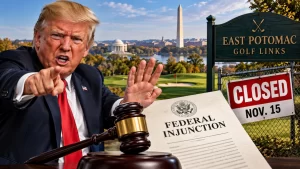
Then came Comey. Axios reported that prosecutors now allege the former FBI director directed the disclosure of national defense information to a reporter through intermediaries in October 2016. Crucially, as UPI noted, the government proceeded by criminal information rather than grand jury indictment, a maneuver designed to stop the statute of limitations clock on conduct that is now a decade old. Comey’s lawyers argue the case is time-barred because the law required a grand jury indictment within ten years, according to NBC News.
The timing was hard to miss. The charges became public the same day a federal judge ruled that the Justice Department unlawfully fired Comey’s daughter, Maurene, a career prosecutor who had handled the Epstein and Maxwell cases. Asked about the new charges, Trump repeated the epithet he has used for years, calling Comey a “dirty cop” while claiming to know nothing about the case.
“I’m still not afraid of these people.”
— Former FBI Director James Comey, responding to his third set of charges, via UPI
And then, Tuesday, the Hutchinson case collapsed before it began. CNN reported that prosecutors tried and failed to obtain an indictment over her January 6 testimony, and that some officials inside the department itself believed the evidence could not support a viable case and worried it would look like one more operation against a Trump enemy. Even Republican Senator Bill Cassidy had called the effort “lawfare” directed by the president. The case began, as UPI reported, with a criminal referral from Republican Rep. Barry Loudermilk, after Trump had demanded her prosecution for years.
II. The Enemies List, Case by Case
This week did not come out of nowhere. Since January 2025, the president’s critics have been investigated, searched, indicted or hauled before grand juries at a pace without modern precedent. What follows is not a complete list. It is the evidence that the pattern is real.
Former FBI Director
James Comey
First indictment dismissed in 2025 after a judge found the prosecutor unlawfully appointed. Indicted again in April over an Instagram photo of seashells spelling “86 47.” Now charged a third time over a 2016 leak. CNBC
Three cases · Pleads innocent
New York Attorney General
Letitia James
Indicted on mortgage charges weeks after Comey; the case was thrown out on the same appointment defect. Two grand juries then declined to re-indict her in December. PBS NewsHour
Dismissed · Twice no-billed
Six Democratic Lawmakers
Kelly, Slotkin, Crow, Houlahan, Goodlander, Deluzio
Investigated over a video reminding troops they must refuse illegal orders, after Trump called it seditious and “punishable by death.” A D.C. grand jury refused to indict in February. KJZZ
Grand jury refused
Jan. 6 Committee Witness
Cassidy Hutchinson
Accused of lying to Congress after a GOP referral. Prosecutors presented evidence in early October; on October 27 the grand jury did not concur. CNN
Grand jury refused
Member of Congress
Rep. Ilhan Omar
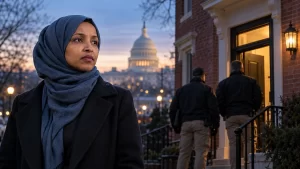
Homeland Security agents searched her Washington home on October 12 over decades-old family immigration paperwork, seizing 17 items including phones and a Somali-language children’s book. AP via ABC11
Under investigation
The Wider Circle
Schiff, Cook, Powell, Brennan
Sen. Adam Schiff, Fed Governor Lisa Cook, former Fed Chair Jerome Powell and former CIA Director John Brennan have all faced investigations after public attacks by the president. The Hill
Probes opened · No convictions
The administration does point to one result: former national security adviser John Bolton, whose classified-documents investigation began under the Biden administration, pleaded guilty in June to illegally retaining sensitive documents. That a case with a pre-existing, independently developed record could succeed only underlines how the others look by comparison: cases that career prosecutors declined, that judges dismissed, or that grand juries of ordinary citizens refused to bless.
III. How We Got Here: A Timeline
- Fall 2025Comey and Letitia James are indicted by Lindsey Halligan, a former White House aide installed as U.S. attorney after her predecessor would not bring the cases. A judge later dismissed both after finding her unlawfully appointed.
- December 2025Two separate grand juries decline to re-indict Letitia James, per ABC News.
- February 10, 2026A D.C. grand jury refuses to indict six Democratic lawmakers over their “illegal orders” video, a rebuke the Washington Post described as one of a string of setbacks for the push to prosecute the president’s foes.
- April 2, 2026Trump ousts Attorney General Pam Bondi amid frustration, sources told CNN, that she had not prosecuted enough of his political opponents. His former criminal defense lawyer, Todd Blanche, takes over the department.
- Late April 2026Comey is indicted a second time in North Carolina, accused of threatening the president with a beach photo of seashells reading “86 47.”
- May 18, 2026DOJ unveils a $1.776 billion “Anti-Weaponization Fund” as part of a settlement of Trump’s own lawsuit against the IRS; amid bipartisan revolt it is withdrawn within weeks, according to Cronkite News.
- October 7 & 15, 2026Trump openly muses about prosecuting Hillary Clinton, Barack Obama and Joe Biden if Democrats win Congress and move to impeach him.
- October 12, 2026Federal agents search Rep. Ilhan Omar’s home before dawn, three weeks before an election in which she is on the ballot.
- October 23–27, 2026Floris and Benavides charged; Comey charged a third time; Hutchinson grand jury refuses to indict.
IV. The Threat of More: “If They Impeach Me”
If anyone doubted that these prosecutions are about the president rather than the law, Trump has spent October removing the doubt. Speaking in the Oval Office on October 7, he was asked why Democrats would impeach him if they won the House. He answered by listing what he said he could have done to Hillary Clinton, Joe Biden and Barack Obama, and then went further.
“I can do whatever I want, if I want.”
— President Donald Trump, Oval Office, October 7, 2026, via Political.org
A week later, in a Newsmax interview reported by The Hill, he said he could still pursue criminal investigations of the Clintons and Obama, and that while he probably would not, another impeachment might change his mind. Read plainly, that is a threat: use your constitutional power to check the president, and the president will use the criminal law against your party’s leaders. Speaker Mike Johnson has meanwhile told voters a Democratic House would impeach Trump almost immediately, framing the midterms as a referendum on the president’s personal legal exposure rather than on the country’s needs.
This is the core of the matter. A Justice Department that prosecutes the president’s critics is dangerous. A president who openly ties future prosecutions to whether Congress exercises its own constitutional powers is attempting to intimidate a coequal branch of government.
V. The Law Trump Is Bending
What the Constitution and federal law say about prosecution by grievance
Fifth Amendment · The Grand Jury Clause
The Constitution requires that serious federal crimes be charged by grand jury indictment. That requirement exists precisely so ordinary citizens can stand between the government and the accused. In Washington alone, grand juries have now refused to indict the six lawmakers, Letitia James (in Virginia) and Cassidy Hutchinson. Charging Comey by information to beat a limitations deadline sidesteps that citizen check, and his lawyers are right to press whether the statute permits it.
Due Process · Vindictive and Selective Prosecution
Courts have long held that prosecuting someone to punish the exercise of a legal right, or singling a person out for an impermissible reason, violates due process. The bar for proving it is deliberately high. But rarely has a defendant had evidence like this: the president’s own public demands that specific people be charged, and a fired attorney general reportedly dismissed for not charging them quickly enough.
18 U.S.C. § 1001 · False Statements
Lying to Congress is a real crime, and no one should pretend otherwise. But the statute requires a knowing, material falsehood. A government that revises its own sworn affidavit at midnight before a hearing, as prosecutors did in the Floris and Benavides case, is not showing the confidence of a strong § 1001 prosecution.
Article I · Speech, Debate and Oversight
Congress’s power to investigate the executive is implied by its power to legislate and impeach. Threatening the opposing party’s leaders with prosecution if they impeach, and investigating sitting lawmakers for urging lawful conduct, strike at that power directly.
DOJ Policy · Election-Season Restraint
Longstanding department practice discourages overt investigative steps involving candidates close to an election. The 175 House Democrats who wrote to the department about the Omar search argue the October raid violated exactly that norm. The norm has never been law. That is the problem Congress must fix.
VI. What Congress and Democrats Are Doing
In the minority, Democrats have limited tools, but they are using them. On October 26, Rep. Pramila Jayapal led 175 House Democrats, joined by Jamie Raskin, Robert Garcia and Bennie Thompson, in a letter to Blanche and Homeland Security Secretary Markwayne Mullin calling the Omar search “unprecedented and unacceptable” and demanding no further overt steps before the election.
When the Justice Department tried to stand up its $1.776 billion “anti-weaponization” fund, Democrats built a bipartisan coalition against it. Sens. Mark Kelly, Adam Schiff and Elissa Slotkin introduced the Drain the Slush Fund Act to bar payouts to the president, his associates and January 6 participants. Rep. Tom Suozzi partnered with Republican Rep. Brian Fitzpatrick on a companion House bill. The fund was dropped. It was a reminder that when abuse becomes visible enough, even this Congress can be moved.
The structural fix has existed for years. Sen. Sheldon Whitehouse‘s Security from Political Interference in Justice Act would require the White House and Justice Department to log case-specific contacts and report them to Congress and the department’s inspector general. A 2007 version passed the Judiciary Committee 14-2 with Republican votes, when Whitehouse warned that the White House is “the greatest hazard to the independence of the Justice Department.” Nearly two decades later, the warning reads like prophecy. Congress should pass it, alongside enforceable limits on presidential direction of individual prosecutions, protections for career prosecutors fired for political reasons, and a statutory version of the election-season restraint policy.
And Democrats are preparing for power. Raskin, who would chair the House Judiciary Committee in a Democratic majority, has promised “aggressive, serious and comprehensive oversight” of what he calls the destruction of the department’s law-enforcement function, and Whitehouse has said the two are already meeting monthly to plan. On Monday, House Judiciary Democrats also called for an independent special counsel on the Epstein files, acknowledging that subpoena power would only come with a majority.
Get Involved Today
Contribute to our mission and turn your concerns into action.
VII. What This Means for You
It is tempting to see this as a feud among the powerful: a former FBI director, a New York attorney general, senators, a cable-news-famous former aide. It is not. The machinery being tested on them is the same machinery that can reach anyone.
When the government can choose its targets by loyalty rather than evidence, every encounter with federal power becomes political. The 25-year-old aide who told Congress what she saw. The career agent who did her job protecting an election. The prosecutor fired because of her last name. The congresswoman whose family’s immigration papers, filled out when she was a child, became grounds for a pre-dawn search. None of them held the presidency. All of them learned what happens when the president decides you are an enemy.
There is a second, quieter cost. A Justice Department consumed with the president’s grievances is a Justice Department not prosecuting fraud against seniors, public corruption or violent crime with its full attention. Raskin has accused the administration of dismantling the department’s anti-corruption architecture and its Public Integrity Section. Every hour spent re-litigating the Hunter Biden laptop is an hour not spent on the cases that actually protect your family.
And there is the good news, which matters: the system’s last line of defense is you. Grand jurors are ordinary residents called for service. Again and again this year they have looked at the government’s evidence and declined to do the president’s bidding. As Sen. Slotkin put it after her own case collapsed, it was “a grand jury of anonymous American citizens who upheld the rule of law.”
VIII. What You Can Do
No individual action will restore an independent Justice Department by itself. Here is an honest account of what ordinary Americans can actually do, and what each step can and cannot achieve.
Vote on November 3, and bring someone with you
Congress is the only institution that can pass binding limits on White House interference, subpoena the department and confirm or reject its leadership. Check your registration and polling place with your state’s official election office today, make a plan for when you’ll vote, and help one other person do the same.
Honest assessment: the single most powerful step available, and the deadline is one week away.
Answer the jury summons
Federal grand juries have been the most effective check on politicized prosecutions all year. If you are summoned for grand or trial jury service, serve. Weigh the evidence honestly, follow the law, and remember that you are not obligated to approve whatever a prosecutor brings you.
Honest assessment: slow and random, but it is exactly how these cases have been stopped.
Call your senators and representative about specific bills
Generic outrage is easy to ignore; specific asks are not. Ask whether they support codifying limits on White House–DOJ contacts (the Security from Political Interference in Justice Act), banning politically directed payout funds, and protecting career prosecutors from political firing. Ask Republican members directly, since Sen. Cassidy and Rep. Fitzpatrick show some will break ranks.
Honest assessment: unlikely to move this Congress, but it shapes the agenda for the next one.
Know your rights if federal agents contact you
You generally have the right to decline a voluntary interview and to speak with a lawyer first; lying to a federal agent is itself a crime, which is why staying silent and calling counsel is safer than improvising. Slotkin and three of her colleagues declined voluntary FBI interviews before their grand jury rejected the case. Civil-liberties organizations such as the ACLU publish free know-your-rights guides; bookmark one now, before you need it.
Honest assessment: this is general information, not legal advice. If you are contacted, call a lawyer.
Support the watchdogs: courts reporting, legal defense, local news
Much of what we know about these cases, including the midnight affidavit revision, came from reporters reading court dockets and from defense lawyers willing to fight. Subscribe to a news outlet that covers federal courts, and consider supporting nonpartisan legal-defense and democracy organizations that represent people targeted for their speech or public service.
Honest assessment: unglamorous, but sunlight is what has made these cases politically costly.
IX. If the GOP Loses the House, the Senate, or Both
Forecasters now consider a Democratic House very likely. Newsweek reported that Nate Silver’s model gives Democrats roughly a 93 percent chance of winning the House and about a 74 percent chance in the Senate; prediction markets tracked by Kalshi showed a similar House picture and a closer Senate. Forecasts are not results, and a week is a long time. But the scenarios are worth understanding.
Democrats win the House
Subpoena power returns. Expect Judiciary and Oversight hearings into the Comey, James and Hutchinson cases, the Bondi firing, and the Epstein files. Expect the White House to stonewall, and the subpoena fight to land in court.
Democrats win both chambers
Add control over confirmations, including the next attorney general and U.S. attorneys, plus the ability to put DOJ-independence legislation on the president's desk and force him to veto it in public.
There is a catch, and Democrats know it. Congress enforces subpoenas largely by referring contempt to the Justice Department, and in Washington that means Jeanine Pirro’s office. As the European Council on Foreign Relations observed, a loyalist U.S. attorney is unlikely to prosecute administration officials for defying Congress. That is why Democratic strategists, as HuffPost reported, are already planning to go to court to enforce subpoenas directly and dismantle privilege claims. Blanche, for his part, told CBS’s Face the Nation on Sunday that the department would comply with subpoenas. The country should hold him to it.
The darker possibility is the one the president himself raised: that an opposition Congress exercising its constitutional duties will be met with a new round of prosecutions aimed at its leaders. That is what “if they impeach me again” means. Voters should cast their ballots understanding that the president has told them, in advance, how he intends to respond to accountability.
X. What This Says About His Priorities
A president facing an election with his party trailing, with Americans worried about prices, health costs and their futures, has chosen to spend the final weeks of the campaign reopening the Hunter Biden laptop, chasing a decade-old leak, and trying to imprison a woman for describing his conduct on January 6. He fired his own attorney general for not doing this fast enough. He has told the country that he can do whatever he wants, and that he might do it to former presidents.
Leadership means placing the country’s needs above your own. What we have seen this month is the opposite: the most powerful law-enforcement apparatus on earth bent toward the injuries, real and imagined, of one man. That grand juries keep refusing to cooperate is a testament to the citizens of this country. It is not a defense of the president.
Editorial Conclusion
An independent Justice Department was never a gift from presidents. It was a promise Americans extracted after Watergate, and it holds only as long as the people insist on it. Donald Trump has broken that promise in the open, turning federal prosecutors into instruments of his grievances and warning Congress that accountability will be met with retaliation.
Grand jurors have done their part. Judges have done theirs. Now it is the voters’ turn. On November 3, Americans can elect a Congress with the power and the will to subpoena, to legislate, and to write into law what decency once guaranteed: that no president chooses who goes to prison. The rule of law is not self-executing. It requires us.
Sources & References
- NBC News — DOJ charges two former top FBI officials who were frequent targets of Trump allies
- NBC News — James Comey charged for a third time by the Trump administration
- CNBC — DOJ grand jury and Cassidy Hutchinson
- CNN — Justice Department fails to indict former White House aide over Jan. 6 testimony
- CNN — DOJ brings criminal charges against FBI officials over Biden investigation
- OPB / NPR — Ex-FBI employees charged with lying to Congress over Hunter Biden inquiries
- Raw Story — Pirro team walks back Hunter Biden claims hours before court hearing
- UPI — Justice Department charges James Comey a third time
- Axios — James Comey charged again by the DOJ
- CNBC — DOJ charges ex-FBI Director James Comey in new case
- UPI — Grand jury reportedly probing ex-White House aide Cassidy Hutchinson
- PBS NewsHour — Trump’s list of targeted opponents grows longer
- The Hill — Trump says he could still go after Clintons, Obama
- Political.org — Trump says he could have done “very bad things” to Clinton, Obama, Biden
- KJZZ — Grand jury refuses to indict Sen. Mark Kelly over “illegal orders” video
- CNN via CP24 — Trump fires Pam Bondi as U.S. attorney general
- AP via ABC11 — Rep. Ilhan Omar says she will move out of D.C. home after federal search
- The Hill — Senate Democrats unveil bill to block Trump’s “anti-weaponization” fund
- Washington Times — Raskin, Whitehouse vow aggressive oversight of DOJ if Democrats retake Congress
- Newsweek — Nate Silver’s forecast changes for Democrats
Additional reporting: House Democrats’ Omar letter; Sen. Whitehouse, Security from Political Interference in Justice Act; Government Executive (2007); CBS News; Cronkite News; NBC News (Epstein special counsel); ECFR; HuffPost; CBS Face the Nation; Kalshi; Washington Post via Minnesota Lawyer; ABC News (Letitia James); JURIST.
Related News