The Venezuela Oil Charade: A Truth Social Post Is Not a Treaty
President Trump declared “THE BIGGEST OIL DEAL IN WORLD HISTORY” on a Friday-night social media post. On closer inspection, it is neither the biggest, nor a deal, nor legally his to make — and the pattern of impulse governance behind it is once again reviving serious constitutional questions the Cabinet refuses to answer.
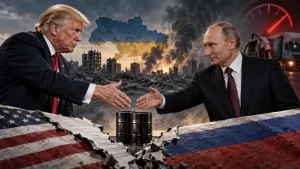
On the evening of Friday, August 28, 2026, with markets closed and reporters largely away from their desks, President Donald Trump published a Truth Social post announcing that the United States had “just entered into an Agreement with the Country of Venezuela on, THE BIGGEST OIL DEAL IN WORLD HISTORY.” According to the president’s post, the deal — negotiated by Secretary of State Marco Rubio, Secretary of War Pete Hegseth, and Venezuelan “Interim President” Delcy Rodríguez — would give U.S. interests “majority control” of more than 65 billion barrels of proven oil reserves, “MORE THAN DOUBLE” American oil holdings, “at no cost to the American Taxpayer,” and, of course, “substantially lower Gas Prices for all Americans.”
It is a magnificent post. It also happens to be almost entirely untethered from reality. The “agreement” is a joint venture with a shell operator whose legal authority to bind Venezuela’s sovereign resources is disputed by economists, opposition leaders, and constitutional scholars in Caracas. The oil sits under a country whose infrastructure the president himself has repeatedly conceded is in ruins. The refineries capable of processing it are limited, mostly on the Gulf Coast, and already busy with heavy crude from Canada. And the timeline for meaningful production is measured, according to industry analysts, not in months but in years — assuming the deal survives its first serious legal test, which is far from assured.
What the announcement did do — instantly, cleanly, and in a way the White House cannot possibly have failed to anticipate — was move the global oil market. That is the story that deserves the sustained attention of Congress, of the press, and of anyone still willing to take the constitutional obligations of the presidency seriously.
I. What Was Actually Announced
Strip away the all-caps and the exclamation points and here is what a senior U.S. official, speaking on background, described to ABC News: the arrangement grants a private, unnamed joint venture a 100-year lease on 17 oil fields in Venezuela with an estimated 65 billion barrels of proven reserves. The United States holds a 55% stake in that venture — split between equity and production — creating what the official called “the second-largest private oil company by reserves in the world.” Delcy Rodríguez, the former Maduro vice president installed by Washington after the U.S. military captured Nicolás Maduro in a January raid, is the signatory on the Venezuelan side.
Rodríguez, for her part, addressed the nation on Saturday and offered a strikingly different framing. The deal, she said, will bring $100 billion in private investment and generate $209 billion in Venezuelan tax revenue over its life. “One thing must be absolutely clear,” she insisted, “Venezuela retains ownership and sovereignty over its resources.” That is a very difficult statement to reconcile with a Truth Social post asserting “majority U.S. control” over 21% of the country’s proven petroleum reserves. Both parties cannot be telling the truth. Neither, notably, has produced a signed document.
“Using our troops for a private oil grab is corruption at epic scale.”
— Sen. Tim Kaine (D-Va.), Senate Foreign Relations Committee
II. The Legitimacy Problem: Who Signed What?
The most immediate objection to the arrangement is that the woman signing it may not have the authority to sign anything. Delcy Rodríguez was sworn in as interim president by her brother, National Assembly head Jorge Rodríguez, in a ceremony conducted after the U.S. military seized her predecessor. She was never elected to the office. The Trump administration has explicitly delayed democratic elections and blocked the return of opposition leader and Nobel Peace Prize laureate María Corina Machado, whose coalition won the country’s last credible vote.
Ricardo Hausmann, the Harvard economist and former Venezuelan cabinet official, put the objection in the plainest possible terms: Rodríguez, he wrote, has “no legitimacy or constitutional power to commit Venezuela to any such deal.” A veteran of the Venezuelan oil industry, speaking anonymously to reporters, was blunter still: banks, he said, will look at any financing request and ask why they should sign paper with “people who have zero legitimacy.” Under the pre-existing Venezuelan constitution, the alienation of hydrocarbon resources requires the assent of an elected National Assembly. The current one was seated in a May election in which the opposition, including Machado’s coalition, refused to participate.
It is worth stating what this means in plain English: the president of the United States is claiming a stake in another nation’s sovereign resources, signed by a leader he installed at gunpoint, whose own countrymen consider her a placeholder. The correct term for this in international law is not “deal.” The correct term is expropriation. And under Article 2(4) of the U.N. Charter and settled principles of permanent sovereignty over natural resources — affirmed by the U.N. General Assembly in Resolution 1803 as early as 1962 — such an arrangement is not enforceable in any court that does not answer to the United States military.
Fewer than half of U.S. refineries can process the crude.
Rebuilding the fields could exceed $100 billion.
“Not overnight, or even in months.”
ExxonMobil’s own CEO called Venezuela “uninvestable.”
III. The Refinery Problem the White House Won’t Discuss
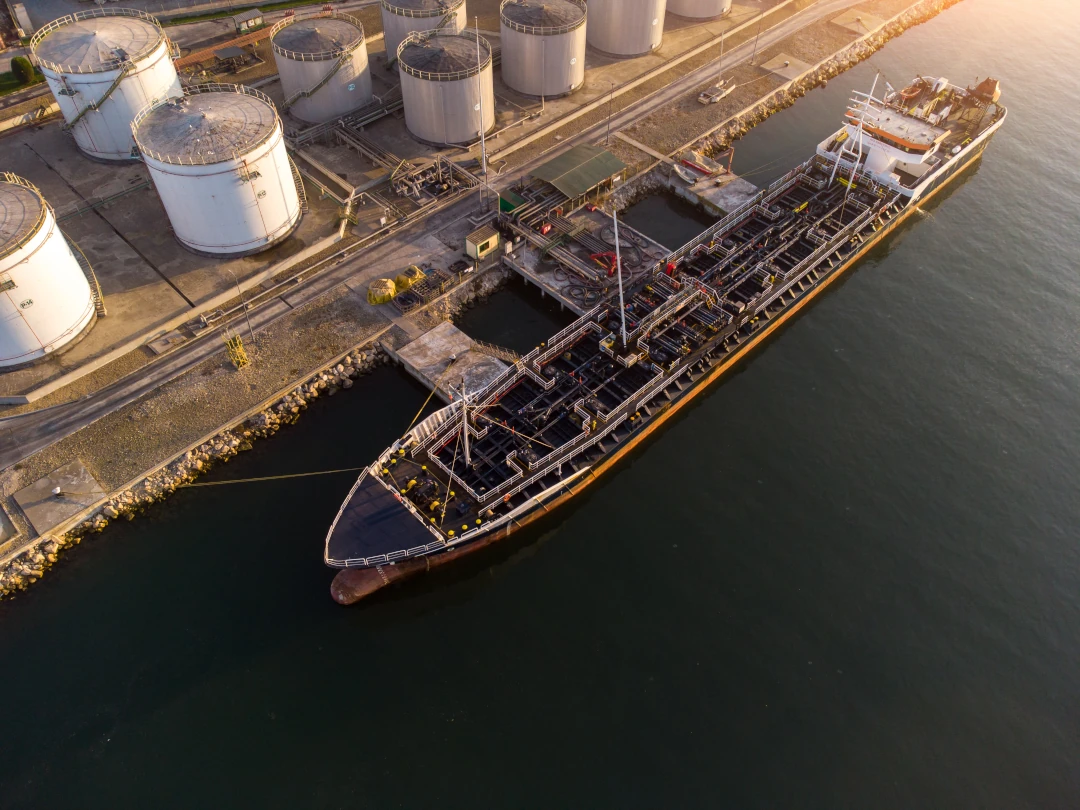
Even if the deal were legitimate, and even if the fields were producing tomorrow, there is a stubborn physical problem the president’s post did not mention. Venezuelan crude — particularly the extra-heavy oil from the Orinoco Belt — is sludgy, sulfurous, and metal-laden. It corrodes equipment, poisons catalysts, and cannot be run through the vast majority of American refineries at all. Refining it requires specialized “coker” units that only a subset of Gulf Coast and East Coast plants possess. As the American Petroleum Institute itself has acknowledged, U.S. refiners have “largely phased out” the use of Venezuelan crude, and pipeline infrastructure has been physically re-routed to flow north-to-south, favoring Canadian oil sands and shale from the American interior.
In other words: the additional Venezuelan barrels the president is promising, even if they materialize, would not so much lower American gasoline prices as reshuffle which foreign heavy grade shows up at Valero’s Corpus Christi complex and Phillips 66’s Sweeny refinery. This is not a supply revolution. This is, at best, a slight tilt in the mix — one that would take, by every analyst estimate, the better part of a decade to build out.
The reserve figure itself deserves scrutiny. “Proven reserves” is an accounting concept, not a produceable inventory. Venezuela’s total 303-billion-barrel figure — of which the announced deal covers roughly 21% — is largely composed of geologically challenging extra-heavy crude that has to be upgraded or blended before it can even move through a pipeline. Doubling America’s “reserves” on paper, as the president’s post claims, is easy. Doubling America’s oil production — much less lowering pump prices — is not the same exercise. And no serious analyst has suggested otherwise.
IV. A Political Ploy, or a Market One?
Timing matters. The president’s Truth Social post landed after the closing bell on a Friday, precisely when a market-moving statement generates maximum opportunity for pre-positioning and maximum inability of reporters and analysts to interrogate it before Monday. Writing in Forbes, energy analyst Robert Rapier laid out — carefully, without making any specific accusation — how “advance knowledge of such market-moving presidential statements creates significant trading advantages,” and why oil is uniquely susceptible to that kind of exploitation. West Texas Intermediate crude had already fallen 4% for the week, the first losing week of the last three; the president’s post is the sort of headline designed to accelerate a slide.
Consider what the president is really pushing back against. Gas prices are, per AAA, up 27% year-over-year. Six months into the Trump-initiated war with Iran, the Strait of Hormuz has been reduced from around 100 crossings per day, according to IMF PortWatch data, to a handful. Midterms are approaching. The Strategic Petroleum Reserve stands at levels not seen since the 1980s. A president facing that political landscape has an unmistakable incentive to conjure a headline that, whatever its underlying legal, technical, or diplomatic infirmities, moves the crude futures curve down and buys him a news cycle. He has done exactly that. Whether the deal itself materializes over the next 60 to 100 years is, from a purely political standpoint, secondary.
“This is proof Trump put our service members at risk to get Venezuelan oil for his billionaire buddies.”
— Sen. Chris Van Hollen (D-Md.)
V. What the U.S. Actually Has the Right to Take
The answer, in short: nothing. There is no provision in international law under which the United States acquires ownership rights to Venezuela’s mineral wealth by virtue of having deposed its previous head of state. The president has, at various points over the past year, falsely asserted that Venezuelan oil was “stolen” from the United States. It was not. Hugo Chávez’s 2007 nationalization did seize American corporate property, and those disputes were adjudicated through international arbitration under the standard tools of the Washington Convention. The remedy for expropriation is compensation, not counter-expropriation.
Nor is the war-powers architecture of the U.S. government indifferent to what has happened. Rep. Sean Casten (D-Ill.) and 12 House Democrats sent letters in January to 21 oil companies warning of the “legal and financial risks” of doing business under the administration’s asserted authority over Venezuelan oil, citing Congress’s constitutional war powers, the U.N. Charter, and limits on the president under the International Emergency Economic Powers Act. Rep. Seth Moulton, a Marine Corps veteran, has introduced the “No Unauthorized War with Venezuela Act.” The point of these efforts is not that a Republican-controlled Congress will vote them into law tomorrow. The point is that the paper trail is being laid — for future litigation, for future arbitration, for future prosecutions, and for the historical record.
Get Involved Today
Contribute to our mission and turn your concerns into action.
How We Got Here: A Timeline
VI. What This Says About Leadership
Every element of this announcement — the venue (a social media post), the timing (Friday after the bell), the scale of the claim (biggest in history), the absence of documentation (there is none), the technical impossibility of the promised benefits (years, not weeks, and only for Gulf Coast complex refiners), the constitutional infirmities (a signatory of doubtful legitimacy, an operation launched without congressional authorization) — points in the same direction. This is not the behavior of a president managing an economy. It is the behavior of a man managing a news cycle, with the full machinery of the American state and the American military as his props.
Progressive commentators are sometimes accused of pattern-hunting. Fine. Here is the pattern. In January, Trump ordered the seizure of a foreign head of state without congressional authorization, then announced an oil transfer that did not exist. In April, he posted profane threats against Iranian civilians so alarming that his own White House physician was formally asked to conduct a cognitive evaluation. In August, he claimed on social media to have doubled American oil reserves through an agreement that no one in his own party can produce on paper. Each incident, taken alone, might be dismissed as bluster. Taken together, they describe a presidency operated on impulse, unmoored from process, and increasingly dependent on the willingness of a compliant Cabinet to translate late-night posts into policy.
The 25th Amendment and the Case That Won’t Go Away
Section 4 of the Twenty-Fifth Amendment permits the Vice President and a majority of the Cabinet to declare the President “unable to discharge the powers and duties of his office,” at which point the Vice President becomes Acting President. It has never been invoked. It was ratified in 1967 after the Kennedy assassination, drafted with the ambiguous case of a president who is technically alive but incapable of governing.
A growing chorus of lawmakers now argues the moment has arrived. On April 10, Rep. Jamie Raskin (D-Md.), ranking member of the House Judiciary Committee, formally requested that White House Physician Capt. Sean Barbabella conduct a “comprehensive cognitive and neurological evaluation” of the president and release the findings. Days later, Raskin introduced legislation with 50 co-sponsors establishing an independent Commission on Presidential Capacity, precisely the body the amendment itself envisions Congress creating. Rep. Raja Krishnamoorthi (D-Ill.) has publicly called for immediate invocation. Sen. Ed Markey (D-Mass.), Reps. Eric Swalwell (D-Calif.), Sydney Kamlager-Dove (D-Calif.), and Yassamin Ansari (D-Ariz.) have joined the call. Thirty-six physicians from Harvard, Tufts, Columbia, and George Washington entered into the Congressional Record a statement describing the president as “mentally unfit” and calling for removal “with the greatest urgency.”
The constitutional argument is that a Truth Social post is a poor substitute for a treaty; that the sale of another nation’s sovereign resources by executive Instagram is not a legitimate exercise of the president’s constitutional foreign-affairs authority; and that a pattern of erratic, impulse-driven governance — captured heads of state announced by post, wars launched without authorization, oil deals signed after market close — is precisely the “inability to discharge the powers and duties” of the office that Section 4 was written to address.
The practical barriers are real and should be named honestly. Section 4 requires the Vice President’s assent, and Vice President JD Vance has shown no willingness to move against the man who placed him in office. A majority of the Cabinet must concur — a Cabinet Trump himself selected for loyalty. Republicans control both chambers of Congress. The Raskin commission bill will not pass this year. This is a mechanism that requires either intra-party political courage or a genuine crisis so severe that partisan calculation collapses.
Those barriers do not negate the constitutional case. They demonstrate why it must be made anyway. The amendment exists precisely so that the country is not left with only the options of impeachment and the next election. A public record — physicians on the Congressional Record, ranking members formally requesting cognitive evaluations, colleagues from both parties naming the pattern — is how a constitutional argument survives long enough to be acted upon when the political calculus shifts. That the Cabinet will not act today does not make it wrong to insist that it should.
VII. The Stakes
It would be a grave mistake to file this Venezuela announcement under “characteristic Trump exaggeration” and move on. What the president has done is announce, on social media, that the United States has acquired majority control over a sovereign nation’s petroleum reserves through a transaction signed by a leader that nation’s own opposition considers illegitimate, using authority that Congress never granted, in a country whose government he removed by military force without congressional authorization. That is a description not of ordinary foreign policy but of an imperial acquisition, dressed up in the vocabulary of commerce and celebrated in the syntax of a real-estate press release.
The gas price the president is promising will not arrive. The reserves he claims to have “doubled” cannot be produced for years. The lawyers reviewing the deal are almost certainly asking whether their clients will one day face arbitration in The Hague. And the political effect the announcement was, transparently, designed to produce — a supportive news cycle, a short-term dip in crude, a distraction from the six-month war with Iran that has driven pump prices up 27% — will fade within the week. What remains is the institutional damage: another norm of foreign-affairs conduct hollowed out, another erosion of Congress’s Article I war powers, another moment in which the machinery of American government was bent to fit the shape of a single man’s Truth Social post.
Editorial Conclusion
Announcing on social media that the United States has “taken control” of another nation’s oil reserves is not statecraft. It is the language of empire, dictated by a man who governs by impulse and answers to no one. The technical case against the deal is overwhelming — the refineries can’t process the crude, the infrastructure doesn’t exist, and any gas-price relief is years away, if it comes at all. The legal case is worse: no signed document, no congressional authorization, no legitimate Venezuelan counterparty. But the constitutional case is the one that ought to keep every American awake. A presidency that manages foreign policy through Truth Social posts, that seizes heads of state without a vote, and that announces market-moving fictions after Friday’s closing bell is not a functioning constitutional office. It is the failure the Twenty-Fifth Amendment was written to name — and the Cabinet’s refusal to name it is now itself a betrayal of the oath every one of its members swore.
Sources & References
- NBC NewsU.S. has entered deal with Venezuela to take control of 65 billion barrels of oil reserves, Trump says
- CNBCTrump announces deal with Venezuela to secure more than 65 billion barrels of oil reserves
- PBS News (AP)Trump says U.S. has entered deal with Venezuela to control 65 billion barrels of its oil reserves
- NPREnergy experts have doubts about Trump’s newly proposed Venezuelan oil deal
- CBS NewsTrump says U.S. now has majority control of over 60 billion barrels of Venezuelan oil reserves
- ABC NewsTrump announces ‘historic’ US-Venezuela oil deal that he says will lower gas prices
- TIMETrump Promises His Venezuela Oil Deal Will Lower Gas Prices. But When?
- NewsweekTrump’s Venezuela Oil Deal May Not Lower Gas Prices Anytime Soon
- ForbesHow To Manipulate The Oil Market For Profit
- The HillDemocrats sound alarm on US-Venezuela oil deal: ‘This isn’t a win’
- Common Dreams‘One Big Military Theft’: Trump Announces Deal for US Control of Venezuelan Oil Fields
- Al JazeeraVenezuela says it retains ‘sovereignty’ following US oil deal
- FortuneVenezuelans bash their government’s deal handing over vast oil reserves to the U.S.
- Havana TimesTrump and Delcy Announce Major USA-Venezuela Oil Deal
- OilPrice.comVenezuelan Oil and the Limits of U.S. Refining Capacity
- American Petroleum InstituteU.S. refiners have largely phased out the use of Venezuelan crude oil
- The Center SquareVenezuela offers opportunities, challenges for U.S. refineries
- Al JazeeraTrump says Venezuela to hand over up to 50 million barrels of oil to US
- Rep. Sean Casten (House.gov)Casten, 12 House Dems Warn Oil Companies of Legal and Civil Risks of Venezuela Markets
- Rep. Jamie Raskin (Judiciary Dems)Raskin Demands White House Physician Immediately Evaluate Donald Trump’s Cognitive Fitness
- Deseret NewsDemocrats introduce Trump fitness bill under 25th Amendment
- Rep. Raja Krishnamoorthi (House.gov)Krishnamoorthi Calls for President Trump’s Removal Under 25th Amendment
- The Hill (Opinion)Concerns Grow Over Trump’s Mental Fitness for Presidency
Related News