The Annihilation Question
A president who has already burned through $43 billion, eighteen American lives, and the arsenal Taiwan may one day depend on now tells Axios he is weighing whether to “annihilate” a country of ninety million people. This is not deliberation. This is drift toward catastrophe — and the Constitution has a mechanism for exactly this moment.
On September 17, President Donald Trump sat with Axios’s Barak Ravid aboard Air Force One and, in the casual grammar of a man ordering off a menu, described what he called a coming choice. He told the reporter he faced a “big decision” — whether, in his phrasing, to “go in and annihilate” the Iranian regime, or not. “Anything could happen with me,” he added. That sentence — anything could happen — is a confession masquerading as bravado. It is also, as we will argue below, a public admission of the very unfitness the drafters of the Twenty-fifth Amendment worried about in 1965: a commander in chief for whom the calamitous and the cautious are indistinguishable options on a napkin.
The remark arrived in the seventh month of a war Trump himself launched on February 28 alongside Israel, a war he had promised would last weeks, and a war whose price tag — now $43.6 billion in the Pentagon’s own accounting — is climbing by roughly $3 billion a month. Eighteen American service members are dead. More than 830 are wounded. Every serious independent assessor — from the Congressional Budget Office to the Center for Strategic and International Studies — now warns that the campaign has eaten so deeply into American munitions stockpiles that the credibility of our commitments in the Western Pacific is, for the first time in a generation, an open question.
And yet the president’s answer to the crater he has made in the American arsenal, the American treasury, and the American constitutional order is to consider making it bigger.
I. The “Big Decision”
The Axios report, followed hours later by confirming accounts in Al Arabiya and The Times of Israel, laid out the choice as senior officials describe it. Trump is weighing a return to full-scale, large-scale strikes. He is meeting Tuesday, on the sidelines of the United Nations General Assembly, with the leaders of Saudi Arabia, the United Arab Emirates, Qatar, Bahrain, Kuwait, and Oman — the six Gulf Cooperation Council partners whose oil and gas infrastructure would be the first casualty of Iranian retaliation. Axios reports that some U.S. officials believe the current holding pattern “cannot continue indefinitely,” and that a full-scale return to combat operations after the November 3 midterms is one live option.
Meanwhile, forces already forward-deployed have been ordered to stay ready. The Hill reported that CENTCOM has maintained more than 50,000 service members across the theater and three carrier strike groups — the first three-carrier deployment to the region in decades. Secretary of Defense Pete Hegseth has told commanders that force levels will remain elevated through the end of the year, “prepared for a possible return to full-scale combat.” U.S. Central Command commander Adm. Brad Cooper, in an April message, told the troops flatly: “we remain present, we remain vigilant and we remain ready if called.” Six months later, they are still waiting on a call that no member of Congress has authorized.
Cost of the War
The Pentagon’s most recent estimate through September 3, according to a CENTCOM breakdown provided to lawmakers this week. The CBO estimates each additional month adds $2–3 billion.
American Casualties
U.S. service members killed and wounded as tracked in the Defense Casualty Analysis System, per the Pentagon’s report to Congress. The figure excludes damage to U.S. bases from Iranian missiles.
Pentagon Ask
The supplemental spending request the Defense Department has now sent to Congress, on top of the operational total — partly to recoup war costs and replace munitions.
Bases Damaged
Kuwait, Bahrain, Qatar, the UAE, Saudi Arabia, Iraq, Oman, and Jordan have all sustained damage to U.S. facilities, per the Pentagon Inspector General’s report released this week.
II. What Escalation Would Actually Cost
Talk of “annihilation” is not, in this White House, a rhetorical flourish; the Pentagon has built out the option. In August, Axios first reported a CENTCOM plan — supported by Hegseth and Chairman of the Joint Chiefs Gen. Dan Caine — to strike Iran periodically to keep tanker traffic moving through the Strait of Hormuz. One senior official memorably described the strategy as “mowing the lawn.” An August 3 planning cycle went further still: Trump told reporters he had approved plans for what he called “the biggest attack since World War II” before pulling back at the request of Saudi Arabia and the UAE, whose leaders warned him that Iranian retaliation would land on their oil terminals.
What the Gulf leaders understood then, and what senior American officers understand now, is the arithmetic of a war of choice against a country of 90 million people with a functioning missile arsenal, a resilient regime, and every incentive to close the world’s most important petroleum chokepoint. The Congressional Research Service, in its September 18 update on the conflict, notes that traffic through the Strait of Hormuz has ebbed and flowed with each cycle of American escalation. A return to full-scale combat means, at minimum: another surge of American ships and aircraft into range of Iranian ballistic missiles, another spike in global energy prices, and another interruption to the fragile Islamabad Memorandum of Understanding that Trump himself signed remotely with Iranian President Masoud Pezeshkian on June 17 and then allowed to collapse.
Fortune Magazine, in a June accounting, put the true cost of the war — factoring in economic damage — closer to $200 billion. The Pentagon at one point requested that entire sum in supplemental funding, House Appropriations Committee Ranking Member Rosa DeLauro confirmed in March. Her assessment then remains the correct one now: the administration has offered “no clear objective, no apparent strategy, and no end in sight.”
III. The Arsenal America Has Emptied
The most sobering costs of Trump’s war are not the ones that appear in the CENTCOM ledger. They are the ones that will be measured, if we are unlucky, in the Taiwan Strait.
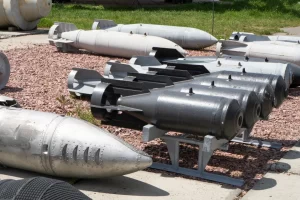
In April, The Wall Street Journal reported — and both CSIS and the Brookings Institution have since corroborated — that American forces have burned through more than a thousand Tomahawk cruise missiles and up to two thousand Patriot and THAAD air-defense interceptors in the Iran campaign. CSIS’s Mark Cancian estimated that the war has consumed roughly 27 percent of the Tomahawk inventory, 23 percent of long-range JASSM missiles, a third of Standard Missile-6 interceptors, nearly half of the SM-3 fleet, more than half of Patriot interceptors, and as much as 80 percent of THAAD interceptors. “It’s going to be years,” Cancian told CSIS, before the United States can rebuild those inventories — six years, by one Pentagon estimate.
The Washington Post reported in August that more than thirty U.S. ships originally scheduled for the Pacific have instead been rerouted to the Middle East. CSIS’s own war-games analysis, released in August, found that the Navy has used over 40 percent of its deployed surface fleet on Iran operations. The think tank’s conclusion is direct: the depleted inventories “have created a window of vulnerability for a potential Western Pacific conflict.”
China has publicly set 2027 as the year by which its military must be capable of taking Taiwan by force. President Xi Jinping is watching a United States military that has spent its precision arsenal, tied up its carrier groups, damaged its Gulf bases, and lost eighteen service members in a war its own Congress has voted twice to end. That is not deterrence. That is a green light.
“Trump promised maximum pressure on Iran. He has delivered maximum confusion, maximum chaos, maximum cost to the American people with his disastrous war.”
— Sen. Chuck Schumer, Senate floor, June 23, 2026
IV. Congress Has Voted. Twice. He Ignored It.
On June 3, the Republican-led House of Representatives — over the objections of its own leadership — passed a war powers resolution directing the president to remove U.S. armed forces from hostilities with Iran. The vote was 215 to 208. Four Republicans crossed the aisle to join every Democrat present: Rep. Thomas Massie of Kentucky, Rep. Warren Davidson of Ohio, Rep. Brian Fitzpatrick of Pennsylvania, and Rep. Tom Barrett of Michigan. On June 23, the Senate followed, 50 to 48, with Republican Sens. Susan Collins of Maine, Lisa Murkowski of Alaska, Bill Cassidy of Louisiana, and Rand Paul of Kentucky joining the Democratic majority. Sen. John Fetterman of Pennsylvania was the sole Democrat who voted against ending the war. In July, the House passed a second, updated version of the same resolution.
These were, in the language of Al Jazeera’s tally, the tenth attempt Congress has made to rein in this war. The Constitution is not ambiguous on this point: Article I, Section 8, vests the power to declare war in the legislative branch, and the 1973 War Powers Resolution codified the procedure Congress used to reclaim that authority. What Trump has done — sneering that the votes are “meaningless” and calling the four House Republicans who supported them “GRANDSTANDERS” in a Truth Social post — is nothing less than the executive branch declaring itself above the Article I authority of a coequal branch of government.
The Democrats have made the case with clarity and repetition. House Democratic Leader Hakeem Jeffries, in a February press conference, warned against “another failed forever foreign war.” Sen. Tim Kaine of Virginia, the Senate’s most consistent voice for congressional war powers, has argued that even during periods of relative calm Congress must vote — precisely so the president “cannot just allow it to start up again without Congress being involved.” Rep. Ro Khanna, Rep. Adam Smith, and Rep. Gregory Meeks have led the House effort alongside Rep. Jamie Raskin. Rep. Jake Auchincloss, a Marine veteran, has correctly called this what it is: “a war of choice” prosecuted “without congressional authorization.”
The bipartisan character of the rebuke matters. It is not partisanship that produced these votes; it is the plain constitutional text and a growing recognition — even among Republicans who have otherwise defended the president — that the war has failed on its own terms.
Get Involved Today
Contribute to our mission and turn your concerns into action.
V. Diplomacy Squandered
What of the peace track? The one Trump has repeatedly claimed to be pursuing?
The record is sobering. The Islamabad Memorandum of Understanding — the June 17 agreement between Trump and Iranian President Pezeshkian — collapsed within weeks, as each side accused the other of violations. Iranian President Pezeshkian has publicly stated Tehran would return to the framework if Washington did the same. The response, from the president of the United States, was to threaten a NATO-adjacent partner. “If Oman gets in the way,” Trump told Fox News in August, “we’ll bomb the shit out of them.” Oman is the mediator. It is the country hosting the back-channel talks. This is the diplomatic strategy: threaten to bomb the referee.
By early September, CNN reported that Trump had returned to publicly floating regime change — the maximalist objective he had disavowed in June — asking on Truth Social when “the Iranian people [are] going to rise up and fight?” Iran’s Foreign Ministry flatly denies that any direct talks are underway. Independent analysts including Ali Vaez of the International Crisis Group have told Time magazine that a maximalist American posture “doesn’t stand a chance of succeeding.”
This is the pattern: a threat, then a partial retreat, then a fresh threat, then a reversal, then an appeal to overthrow. It is not a strategy. It is the mood of one man, ricocheting off the walls of the Oval Office, translated into the movements of aircraft carriers.
A Timeline of Erratic Command
The United States and Israel launch surprise strikes on Iran, targeting a meeting of top leaders. Iran retaliates within hours with drones and missiles against six neighbors.
The House passes the Khanna-Massie War Powers Resolution, 215–208. Trump calls it “meaningless.”
Trump and Pezeshkian sign the Islamabad Memorandum of Understanding, a 60-day framework to negotiate the end of the war.
The Senate passes its own war powers resolution, 50–48. Four Republicans join Democrats. Fetterman is the sole Democratic no.
The Islamabad MoU collapses. Trump threatens to bomb Oman if it “gets in the way.”
Trump returns to publicly demanding regime change in Iran, reversing his June disavowal.
Trump tells Axios he is weighing whether to “annihilate” the Iranian regime. “Anything could happen with me.”
“Do I want to go in and annihilate them or do I not? It’s a big decision. Anything could happen with me.”
— President Donald Trump to Axios, September 17, 2026
VI. A Failure of Priorities, and of Leadership
Ask what a serious commander in chief would be doing this week, and the answer nearly writes itself. He would be at the negotiating table in Muscat, not at rallies in Gastonia. He would be publicly reassuring Taipei and Tokyo of American commitment, not publicly threatening the Gulf mediators keeping the war from spiraling. He would be requesting a congressional Authorization for Use of Military Force — the constitutional predicate for a war of this magnitude — or he would be terminating hostilities in compliance with the two war powers resolutions that his own Congress has already passed. He would be telling the American people what victory looks like, and what it costs, and how much longer it will take.
He is doing none of these things. Instead, he is telling a reporter that “anything could happen.” Instead, the Pentagon is briefing Congress that the war has now cost $43.6 billion and counting, that eighteen American families have received folded flags, and that our capacity to deter China has been degraded for years. Instead, the president’s own diplomatic architecture — the Islamabad MoU he signed himself — has collapsed and he cannot say why.
This is not a policy disagreement. This is a category of unfitness. And there is a constitutional remedy for that.
The Framers Wrote the 25th Amendment for a President Who Told a Reporter “Anything Could Happen.”
Section 4 of the Twenty-fifth Amendment, ratified in 1967, provides a mechanism for the Vice President and a majority of the Cabinet — or the Vice President and “such other body as Congress may by law provide” — to transmit to the House and Senate a written declaration that the president “is unable to discharge the powers and duties of his office.” Upon that transmittal, the Vice President immediately assumes the powers of the presidency as Acting President.
The framers of the amendment, chief among them Sen. Birch Bayh, drafted the “other body” clause precisely because they anticipated an administration in which the Vice President and Cabinet could not be counted on to act. Congress was given the power to create its own commission.
The Legislators Who Have Called For It
On April 14, Rep. Jamie Raskin of Maryland, ranking member of the House Judiciary Committee, introduced legislation — with fifty Democratic co-sponsors — to establish exactly such a body: a seventeen-member Commission on Presidential Capacity, composed of eight former high-ranking executive officials and eight physicians and psychiatrists. Raskin has told Axios there is “tremendous angst in the country about Trump’s deranged threats to commit war crimes,” and that the Twenty-fifth Amendment is “the closest avenue we have for a federal response.”
Rep. Raja Krishnamoorthi of Illinois has formally called on Vice President JD Vance and the Cabinet to invoke Section 4 following Trump’s threat that “a whole civilization will die tonight.” Sen. Ed Markey of Massachusetts, Rep. Eric Swalwell, Rep. Sydney Kamlager-Dove, and Rep. Yassamin Ansari have joined the call. The bipartisan alarm — Rep. Fitzpatrick, Rep. Massie, Sen. Collins, Sen. Murkowski, Sen. Cassidy, Sen. Paul all voting to end the war — is the same alarm, differently expressed.
The Constitutional Argument
The case is not that Trump holds views one disagrees with. The case, made plainly by lawmakers from both parties, is that his conduct in office — publicly threatening to “annihilate” a nation of ninety million people in a menu-ordering tone; casually threatening to bomb Oman while Oman mediates his own peace talks; signing and then breaking his own memorandum of understanding without explanation; oscillating between regime change, negotiation, and annihilation on the same news cycle — meets the constitutional definition of an inability to discharge the powers and duties of the office. The office cannot be discharged by a man who tells a reporter, of a decision to kill tens of thousands, that “anything could happen with me.”
The Practical Barriers — and Why They Do Not Negate the Case
The Twenty-fifth Amendment’s Section 4 pathway is politically nearly impossible in the near term. Vice President Vance shows no sign of transmitting the letter. The Cabinet was hand-selected for loyalty. Raskin’s commission bill has no route through a Republican House and Senate. If contested, a two-thirds vote of both chambers would be required to maintain the transfer of power.
None of this negates the constitutional argument; it merely describes the political landscape in which the argument must be pressed. The framers did not draft Section 4 for easy cases. They drafted it for exactly this one — an executive whose public conduct has become indistinguishable from an emergency, and whose party controls the mechanism designed to check him. The remedy is not made unnecessary by the difficulty of the remedy. The remedy is made necessary by the same evidence that makes the remedy hard.
VII. What Is Actually At Stake
The stakes here are not partisan. They are not about the midterms, which Trump himself refused to tell Axios would even shape his timing. The stakes are these: whether the Article I war-making power of Congress means anything; whether the American arsenal that our Pacific allies depend upon can be spent by one man on a war of choice with no defined objective; whether a president who tells a reporter that “anything could happen” retains, in any meaningful constitutional sense, the capacity to discharge the office he holds.
Sen. Schumer has said the right thing. Rep. Jeffries has said the right thing. Rep. Raskin has said the right thing. Sen. Kaine and Rep. Khanna have been saying the right thing for eight months. Four Republican senators and four Republican House members have voted the right way, at real political cost. The mechanism exists. The case is made. What remains is whether the country will demand that the mechanism be used before, and not after, the annihilation the president has advertised.
Editorial Conclusion
A president who, in the middle of a war he cannot end, tells a reporter he is deciding whether to annihilate a country of ninety million people — and calls the vote of his own Congress “meaningless” — is not exercising presidential judgment. He is exhibiting the exact category of impairment for which Section 4 of the Twenty-fifth Amendment was written.
The votes to end this war have been taken. The costs — $43.6 billion, eighteen dead Americans, an emptied arsenal, and a Pacific alliance system watching Beijing take notes — are documented. The constitutional remedy is on paper, sponsored, and waiting.
The republic does not have the luxury of waiting for the next escalation to make the case for us. Congress must convene Raskin’s commission. The Cabinet must read its oath. And every American who believes the presidency is an office, not a mood, must demand that this decision — whether to annihilate — is not one man’s to make.
Sources & References
- Axios — Trump tells Axios he’s approaching a “big decision” on whether to “annihilate” Iran
- Al Arabiya — Trump weighs renewed major attacks on Iran
- Times of Israel — Trump weighs return to large-scale Iran strikes
- Axios — Trump weighing limited strikes to curb Hormuz attacks
- Washington Times — Iran war’s cost grows to $43.6 billion
- Spokesman-Review — Pentagon’s latest Iran war cost estimate
- CNBC — CBO: Iran war has cost Pentagon $38 billion
- Fortune — The real cost of the Iran war is closer to $200 billion
- House Democratic Appropriations — DeLauro statement on $200 billion Pentagon ask
- CSIS — Is the United States Prepared for a War with China?
- PBS News — U.S. will need years to replenish stockpiles
- Brookings — Why lower munitions stocks won’t undercut deterrence of China
- NPR — House passes war powers resolution on Iran (June 3)
- NPR — Senate passes Iran war powers resolution (June 23)
- NPR — House passes second Iran war powers resolution (July)
- CNN Politics — Senate votes to limit Trump’s Iran war powers
- Al Jazeera — Senate approves Iran war powers resolution — what it means
- CNN Politics — With diplomacy stalled, Trump returns to floating regime change
- Al Jazeera — Trump claims direct talks with Iran: Is diplomacy picking up again?
- Time — Status of U.S.-Iran peace talks
- The Hill — U.S. military to maintain Middle East posture
- The Hill — Iran war puts future US military presence in Middle East in question
- Congress.gov CRS — U.S. Conflict with Iran (Congressional Research Service, September 18, 2026)
- House Judiciary Democrats — Raskin demands cognitive evaluation of Trump
- Axios — House Democratic leadership signals openness to 25th Amendment push
- Rep. Krishnamoorthi — Calls for Trump’s removal under 25th Amendment
- Rep. Jeffries — Democratic leadership announces war powers vote
- House Clerk — Roll Call 199: H. Con. Res. 86 war powers vote
Related News