Cash for Contracts, and the Corruption Probe Trump Let Die
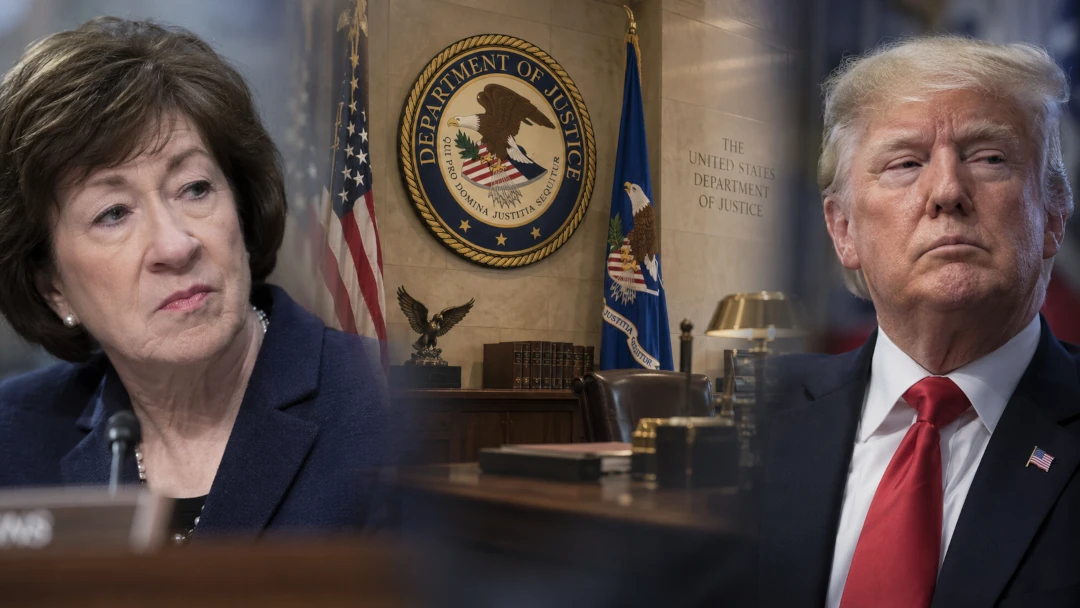
A ProPublica investigation published this morning reveals that FBI agents were preparing a sweeping bribery inquiry that reached toward Sen. Susan Collins and other powerful lawmakers. Then the Trump administration dismantled the teams doing the work. What was lost is not one case, but the government’s willingness to ask the question at all.
Somewhere in the files of a federal anti-corruption squad that no longer meaningfully exists sits a 50-page road map. It was written by Martin Kao, the former chief executive of a Hawaiian defense contractor called Navatek, and according to a ProPublica investigation published this morning, it names dozens of lobbyists, congressional staffers and members of Congress whom Kao says helped him trade campaign money for federal contracts. FBI agents spent years testing his story against hundreds of thousands of seized records. By late 2024 they believed they had enough to seek a sweeping bribery investigation that could reach lawmakers of both parties. They never got the chance. After Donald Trump returned to the White House, the agents were fired or pushed out, the Justice Department’s corruption prosecutors were scattered, and the inquiry, in ProPublica’s telling, simply died.
We want to be precise, because precision is what separates accountability from smear. No one working for Sen. Susan Collins has been charged with anything. Her deputy chief of staff, Annie Clark, called the allegations “categorically false” and noted that the Collins campaign was never a target of the FBI’s original investigation. An FBI spokesperson told ProPublica that the bureau’s earlier review turned up nothing implicating the senator or her campaign. Kao himself is a convicted felon who was trying to shorten a prison sentence. But ProPublica says it independently corroborated much of his account through FBI evidence, internal company emails and dozens of interviews. And the central scandal here does not hinge on whether any single senator would ultimately have been indicted. It is that the question will now never be answered by the people whose job it was to answer it.
I. “The Method”: How a Contractor Bought Its Way Into the Budget
Navatek began as a small Hawaiian engineering shop that thrived for decades on earmarks steered by the late Sen. Daniel Inouye. When Inouye died in 2012 and Congress abandoned earmarks, Kao went looking for replacements. According to ProPublica, the solution was to cultivate a whole stable of patrons on the House and Senate appropriations committees, the lawmakers who can quietly write funding lines into Pentagon budgets that run thousands of pages and are largely drafted out of public view.
The playbook, as former employees and Kao himself described it, was simple. Navatek would invent a research project with a university in a target lawmaker’s home state, Kao would make a large opening donation, and a team of expensive, well-connected lobbyists would secure meetings on Capitol Hill. Committee report language would then describe the project so narrowly that Navatek was the only logical recipient, and congressional staff would lean on Navy contracting officers to award the money. Inside the company, employees had a name for it: “the method.” Kao told the FBI that everyone at the table understood the donations were the price of admission.
Political Money
~$900,000
Donated by Kao and his close associates to dozens of politicians, according to ProPublica’s review of FBI evidence.
Taxpayer Return
$40M+ a year
Government funding Navatek secured as it expanded into roughly half a dozen states, per Forbes’ summary of the investigation.
The Road Map
50 pages
Kao’s written account for prosecutors, naming lawmakers, staffers and lobbyists, which ProPublica says it is still reporting out, according to Spectrum News Maine.
Where It Ended
87 months
Kao’s prison sentence after pleading guilty in two cases, including illegal campaign contributions, as summarized by The Boston Globe.
What did taxpayers get for their money? By the company’s own internal slideshow, none of the technology it developed under Kao had actually been deployed. A 3D-printed boat built with the University of Maine won a Guinness record and a press conference; former employees told ProPublica the Navy never wanted it. Meanwhile, the company’s revenue roughly quadrupled, and in the back half of 2019 alone it spent more than half a million dollars on lobbying firms.
“Oh my God, all of it is for sale. It’s all for sale.”
— Eric Schiff, former Navatek executive, to ProPublica
II.The Maine Connection, and the Cover-Up
Of all the officials Navatek courted, ProPublica identifies Collins, then a senior appropriator and now chair of the Senate Appropriations Committee, as the company’s most important patron. The sequence the reporting lays out, drawn from emails, FBI records and Kao’s own statements, is worth reading in order.
The shell company unraveled quickly. The Campaign Legal Center spotted the odd donation and filed a complaint with the Federal Election Commission, and a Hawaii journalist soon found Kao’s wife’s name on the paperwork. What followed, according to emails released in civil litigation and described by ProPublica, was a damage-control effort involving Kao, Reed and the super PAC’s lawyer, Cleta Mitchell. Mitchell proposed that the sham “society” start awarding scholarships to women in engineering, particularly in Maine where the bad press had landed, so that it would look like a real organization. Kao’s team did exactly that, and steered the scholarships to state universities in places where Navatek wanted contracts. Mitchell, who later became a central figure in Trump’s effort to overturn the 2020 election, did not respond to ProPublica.
Collins’s office says the matter was resolved years ago, when her campaign returned Kao’s illegal contributions, which it says were made without its knowledge. Yet both Reed and Amy Abbott, the campaign finance director who thanked Kao for “ALL the Kao support,” remain in the senator’s inner circle for her 2026 race, ProPublica reports. That is a choice, and voters are entitled to weigh it.
Get Involved Today
Contribute to our mission and turn your concerns into action.
III. The Purge: How Trump’s Justice Department Buried the Case
The agents who took Kao’s confession, Michelle Ball and Kevin Gounaud, worked in CR-15, the FBI’s elite unit for investigating misconduct by elected officials. Under Director Kash Patel, that unit was dismantled agent by agent. Ball, who had also worked on the special counsel investigation of Trump’s attempt to overturn the 2020 election, was fired in October 2025 in a letter accusing her of having “weaponized” the department; she is challenging the firing in court. Gounaud was pushed out early this year, according to The Boston Globe’s account of the reporting.
The prosecutors fared no better. The Justice Department’s Public Integrity Section, created after Watergate to police corruption without fear or favor, imploded in February 2025 when its leaders resigned rather than drop the bribery case against New York Mayor Eric Adams, a Trump ally. Reuters reported that Trump appointees then ordered the remaining lawyers to halt new corruption cases. According to NPR, the section had roughly 40 full-time staff when Trump returned and is now down to two attorneys, with open matters falling from as many as 200 to about 20. The watchdog group Protect Democracy notes it has also been stripped of its power to file new cases or review prosecutions of public officials.
Honesty requires a distinction here. There is no reporting that President Trump or his officials participated in Navatek’s scheme, and ProPublica reporter William Turton told Spectrum News there is no evidence the purge was aimed at this particular case, which he said “just happens to be a casualty.” We do not find that reassuring. A president who deliberately killed one inconvenient investigation would be committing an abuse of power. A president who demolished the government’s entire capacity to investigate congressional bribery, as a side effect of settling personal scores, has done something arguably worse: he has made every such investigation impossible, including ones no one has thought to start yet.
“President Trump has ushered America into a golden age of public corruption.”
— Sen. Sheldon Whitehouse (D-R.I.), to NBC News
IV. Congress: Loud on the Trail, Quiet in the Committee Rooms
So far, the sharpest response has come from the campaign trail rather than from any oversight committee. Collins’s Democratic challenger, former Maine Senate President Troy Jackson, called the revelations “corruption of the highest order,” and told Maine Public that voters “deserve answers about every contract and every conversation” Collins and her team facilitated. The race is 42 days from Election Day and may decide control of the Senate.
Republicans, for their part, are circling the wagons. Former FEC Commissioner Sean Cooksey, who served while the commission examined Navatek, dismissed the story as resting on “self-serving lies from a convicted felon” and said the FEC never found evidence that the super PAC or campaign knew of wrongdoing. That defense deserves to be heard. But notice what it concedes: the FEC is a civil regulator. Bribery is a crime, and the only agencies equipped to investigate it criminally are exactly the ones Trump has hollowed out.
Democrats in Washington have warned about this for more than a year. As early as March 2025, Whitehouse demanded answers from Attorney General Pam Bondi about the dismantling of the Public Integrity Section. Those warnings now have a concrete example. The minimum Congress owes the public is clear: a Senate Ethics Committee review of the Navatek allegations, a Defense Department inspector general audit of every Navy award tied to the company, sworn testimony from the fired agents, and legislation that restores the Public Integrity Section by statute so no president can quietly switch it off again. If the majority refuses, that refusal should be on the record.
V. What This Costs the Average American
It is tempting to treat this as inside-the-Beltway drama. It is not. The money at the center of the Navatek story came from you. Kao told the FBI that the company paid for its lobbyists and political contributions with revenue from government contracts, meaning taxpayers effectively financed the operation that was lobbying to spend more of their money. The research those dollars bought, by the company’s own account, went nowhere. And while Kao was building this machine, he also inflated his payroll to collect about $13 million in pandemic relief loans meant for struggling businesses.
The deeper cost is structural. When contracts flow to whoever writes the right checks, the firms with the best ideas lose to the firms with the best lobbyists, and families pay for weapons and research that serve donors rather than service members. Experts interviewed by NBC News warned that the administration’s changes have created the ripest environment for official corruption in a generation. When no one is watching, bribery stops being a risk and becomes a business strategy.
VI. The White House Response: Silence, and a Pattern
Asked about the investigation, the White House simply referred ProPublica to the FBI. The bureau’s spokesperson repeated that the old inquiry cleared Collins and defended the firings as removals of agents who had “weaponized” law enforcement, but did not answer questions about the new probe agents opened in 2024. There has been no announcement of a review, no pledge to reinstate the case, and no word from the president at all.
Silence would be troubling on its own. Set beside the rest of the record, it looks like policy. The same administration that dropped the Adams case has, NPR reports, pardoned a string of officials convicted of corruption, including a Virginia sheriff who took $75,000 in bribes in exchange for deputy badges. Former Public Integrity Section chief John Keller, who resigned rather than abandon the Adams prosecution, explained to NPR that the section existed precisely to handle the most sensitive cases involving members of Congress. Those cases now have no home.
Leadership is revealed by what a president protects. This one has protected his allies from prosecution, his enemies from nothing, and the public from very little. A chief executive whose first instinct is retribution, and whose second is indifference to corruption that does not touch him, is not faithfully executing the laws. He is choosing which laws exist.
Fitness, Faithful Execution, and the Limits of the 25th Amendment
What the amendment does
Section 4 of the 25th Amendment lets the vice president and a majority of the Cabinet declare in writing that the president is “unable to discharge the powers and duties of his office,” immediately transferring those powers to the vice president. If the president objects, Congress decides, and keeping him sidelined requires a two-thirds vote in both chambers. As Time has noted, Section 4 has never been invoked.
Who has called for it
Calls intensified this spring. Rep. John Larson of Connecticut filed articles of impeachment and urged the Cabinet to act, saying Trump had “blown past every requirement to be removed from office.” Rep. Raja Krishnamoorthi of Illinois called on Vice President JD Vance and the Cabinet to invoke it, and Rep. Yassamin Ansari of Arizona has repeatedly pressed the same demand. According to Axios, more than 85 congressional Democrats urged impeachment or 25th Amendment removal in April, and House Democrats introduced legislation to create a commission to assess the president’s capacity.
The argument this story adds
Those calls centered on erratic threats of war. The Navatek revelations add a different strand to the case for unfitness: a sustained inability, or refusal, to perform the most basic duty of the office, the constitutional command that the president “take care that the laws be faithfully executed.” A president who dismantles the machinery for enforcing bribery laws, pardons convicted bribe-takers and fires career agents for having investigated him is demonstrating, the argument goes, that he cannot separate his personal grievances from the functioning of the government he leads.
The honest barriers
We will not pretend the path is open. The amendment was written with physical or mental incapacity in mind, and most constitutional scholars would say that corruption and abuse of power are the domain of impeachment, not Section 4. The mechanism also depends on a vice president and Cabinet that Trump appointed, and on two-thirds supermajorities that do not exist in this Congress. On current numbers, it will not happen.
Why the case still matters
Constitutional remedies are not only instruments; they are standards. Naming the standard, putting on the record that a president has stopped performing the core functions of his office, is how the public and future Congresses measure what is happening now. The 25th Amendment and impeachment both exist because the framers and their successors understood that a presidency can fail from within. Whether or not the Cabinet ever acts, the question of fitness is legitimate, and the evidence keeps accumulating.
Editorial Conclusion
ProPublica has shown how easily a defense contractor with a checkbook could buy its way into the federal budget, and how close federal agents came to finding out who sold it access. Whether Susan Collins or anyone else broke the law is a question for investigators and, in Maine, for voters. But investigators can no longer ask it, because the president tore down the institutions built to do so.
That is the real verdict of this story. A government that cannot investigate its own lawmakers is not neutral; it is for sale. Congress must restore the Public Integrity Section by law, reopen this inquiry under independent oversight and put every Navatek contract under a microscope. Anything less tells every contractor in America that the auction is open, and tells every citizen that the Republic belongs to whoever bids highest.
Sources & References
- ProPublica — The FBI Anti-Corruption Squad Was Circling Susan Collins — Until Trump Got in the Way
- The Boston Globe — Key takeaways from ProPublica’s report on the FBI anti-corruption squad and Collins
- Maine Public — Democrats accuse Susan Collins of “corruption” following report on alleged pay-to-play scheme
- Bangor Daily News — Troy Jackson accuses Susan Collins of corruption following ProPublica report
- The Hill — Collins opponent says “jig is up”; her aide calls report “categorically false”
- Spectrum News Maine — Democrats pounce on report tying Collins to defense contractor
- Forbes — Susan Collins bribery report throws wrench into razor-thin Senate battle
- RedState — Coverage of former FEC Commissioner Sean Cooksey’s rebuttal
- Reuters — How Trump defanged the Justice Department’s political corruption watchdogs
- NPR — How the Trump administration has undermined the fight against public corruption
- NPR — Legal experts say some of Trump’s actions weakened efforts to combat public corruption
- NBC News — Firings, pardons and policy changes have gutted DOJ anti-corruption efforts, experts say
- Protect Democracy — The Department of Justice: issue overview
- Office of Sen. Sheldon Whitehouse — Whitehouse demands answers on dismantling of Public Integrity Section
- Time — What to know about the 25th Amendment as lawmakers call for Trump’s removal
- Axios — House Democrats file long-shot 25th Amendment bill targeting Trump
- Office of Rep. John Larson — Larson files articles of impeachment, calls for 25th Amendment
- Office of Rep. Raja Krishnamoorthi — Krishnamoorthi calls for President Trump’s removal under 25th Amendment
Related News