Beautiful, Clean, Bankrupt: Trump’s $700 Million Coal Gamble Against Math, Markets, and Medicine
A Cold War statute meant for genuine national emergencies is now propping up the dirtiest, costliest fuel on America’s grid. The bailout enriches a narrow circle of donors, deepens the climate crisis, and adds one more entry to a growing record of presidential decisions detached from any defensible reading of the public interest.
On Thursday, June 4, 2026, President Donald Trump stood in the Oval Office and announced that he would invoke the Defense Production Act — a 1950 Cold War statute that grants the president broad authority to direct domestic industry in service of national security — to commit roughly $700 million in federal money to the U.S. coal industry. Of that, $425 million is earmarked to extend the lives of 13 aging coal plants across ten states, $75 million subsidizes a coal export terminal in Oakland, California, and roughly $200 million is being redirected from clean-energy programs to revive a Maryland plant and help build new coal capacity in Alaska and West Virginia, according to White House materials and contemporaneous coverage.
The president framed the announcement, as he framed every prior gesture toward the industry during his second term, as a rescue of forgotten workers and a strike against high electricity prices. He called the fuel “clean, beautiful coal” and held up China, with its choking northern cities, as an aspirational model. Neither claim survives contact with the most basic public-domain data published by his own government.
1. The Announcement: What the president actually did, in plain language
The Defense Production Act was designed for wartime supply shocks: tanks, masks, ventilators, semiconductors during a chip embargo. Its application to commercial baseload electricity, in peacetime, in a grid with a record-breaking surplus of new generation coming online, is novel — and constitutionally aggressive. Deseret News reported that the DPA portion will be used to subsidize “upgrades that extend their operational life” at 13 plants in West Virginia, Kentucky, North Carolina, Indiana, Tennessee, Arkansas, Arizona, Oklahoma, North Dakota, and Wisconsin.
In other words: an emergency statute is now an industrial subsidy for an industry that the free market — the market this president claims to revere — has been quietly euthanizing for fifteen years. The White House projects the package will “support or create” roughly 14,000 jobs across coal, rail, construction, and maritime. That figure includes existing positions the administration claims would otherwise vanish; new permanent coal jobs are a small fraction of it.
2. The Numbers Don’t Add Up: Coal is the most expensive form of new electricity, not the cheapest
The president sold the bailout as cost relief. The data tell a different story. According to the U.S. Energy Information Administration, coal supplied roughly 17 percent of U.S. electricity generation in 2025, the third-largest source behind natural gas and nuclear. The same agency projects that share will drop further in 2026 as solar continues to lead grid additions. Coal is shrinking because it cannot compete on price.
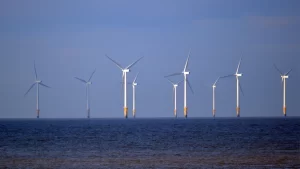
Read that table once and the central deception collapses. Building or even extending a coal plant is, on a levelized basis, between two and four times the cost of a wind farm and roughly double the cost of new gas. The administration is not lowering electricity prices. It is overriding the price signal to subsidize the most expensive option on the menu — and asking ratepayers and taxpayers to absorb the difference.
The economic case has been so weak for so long that Republican-controlled utility commissions have closed coal units in red states by the dozen. As Tina Moffitt of the Oregon Capital Chronicle put it after the announcement, the move is the equivalent of “throwing a lifeline to a ship that has already sunk.”
“Spending $700 million to bail out the coal industry is throwing a lifeline to a ship that has already sunk.”
— Tina Moffitt, Oregon Capital Chronicle, June 4, 2026
3. Who Cashes the Check: A narrow circle of beneficiaries with deep political ties
If the policy doesn’t lower bills, doesn’t fight climate change, and props up a fuel the market has already condemned, who is it for? The answer is short and familiar. American coal production is dominated by a handful of privately-held firms whose owners are among the most generous donors to Republican causes — and to this president personally.
Joe Craft, CEO of Alliance Resource Partners — the largest coal producer in the eastern United States — is a longtime Trump-orbit megadonor whose wife, Kelly Craft, served as Trump’s ambassador to the United Nations during his first term, according to reporting on the couple’s national fundraising roles. The late Robert Murray, founder of what was once the largest privately-held coal company in America, famously handed Trump a deregulatory wish list during his first administration that the White House proceeded to implement nearly line by line, as The Guardian documented at the time.
The pattern in 2026 fits the pattern of 2017–2020: fossil-fuel donors write checks, and the federal government writes them back — except this round, the federal government is using a national-security statute to do it. Oil and gas alone delivered roughly $7.37 million to Trump’s 2024 campaign, dwarfing what they gave his opponent. Coal is a smaller industry, but its political reach inside this White House is wildly disproportionate to its 17 percent share of the grid.
Get Involved Today
Contribute to our mission and turn your concerns into action.
4. The Climate and Health Reckoning: What 17 percent of the grid does to the air, the water, and the future
Coal’s share of U.S. electricity has fallen by more than half since 2008. Its share of the power sector’s carbon dioxide emissions has not. According to federal data assembled by Resources for the Future, coal in 2024 was responsible for about 15 percent of electricity generation but nearly half of all CO₂ emissions from electricity. The EPA’s most recent breakdown shows a similar disparity: coal accounts for the majority of power-sector carbon emissions while generating a steadily shrinking share of the megawatts. Every additional year a coal plant operates is, in carbon terms, a multiplier on the grid’s climate damage.
2025–2026 · A Pollution Reversal
The human cost is not abstract. In a March 2026 release, NRDC policy director Amanda Levin said the administration “gave coal plants a free pass to pollute.” The same release calculated that the six Texas plants that received presidential exemptions from federal mercury and air-toxics standards saw their sulfur-dioxide emissions surge 48 percent in a year — pollution linked to roughly 667 premature deaths and $8.8 billion in health damages. That is not a forecast. That is one year of data from one cluster of plants.
Add the rest of the country’s coal fleet. Now extend its life by another decade. Now refuse to count the bill, because the bill comes due in pediatric asthma wards, in cardiovascular intensive care, in cancer clusters along the Ohio River, and in coastal flooding that the EPA’s own scientists have linked, in decades of peer-reviewed work, to the very greenhouse gases this policy multiplies. That is the actual ledger of “clean, beautiful coal.”
5. A Pattern, Not an Incident: What this decision says about the leadership making it
A single bad policy is a political dispute. A pattern is something else. The coal bailout arrives in a calendar year that has already produced: a January message from the president to the Norwegian Prime Minister citing his failure to win the Nobel Peace Prize as a reason to seize Greenland; an Easter-weekend Truth Social post threatening to wipe out, in Trump’s own phrasing, “a whole civilization” in Iran; a war launched on that country in February; and a parade of senior appointments — including the surprise installation of housing official Bill Pulte as acting Director of National Intelligence — that career national-security officials across both parties have described as unserious.
Each of these incidents has been chronicled by mainstream outlets and met, in turn, with calls from elected officials to invoke the Twenty-Fifth Amendment. The coal decision is not, by itself, the centerpiece of that case. It is something more revealing: a window into the texture of decision-making in this White House — performative, donor-driven, indifferent to its own government’s data, and openly hostile to the cost-benefit reasoning that any competent administration must perform on a $700 million federal commitment.
“These are the ravings of a dangerous and mentally unbalanced individual.”
— Senator Bernie Sanders, on the president’s Easter Iran post, April 5, 2026
The Twenty-Fifth Amendment, Section 4 — what it is, who has invoked it, and why the case keeps growing
Section 4 of the Twenty-Fifth Amendment, ratified in 1967 in the long shadow of the Kennedy assassination, allows the Vice President and a majority of the Cabinet to transmit to Congress a written declaration that the President “is unable to discharge the powers and duties of his office.” Upon transmission, the Vice President assumes those powers immediately. If the President contests the declaration, Congress decides — and a two-thirds vote of both chambers is required to keep the removal in place.
The mechanism was written for incapacity, not policy disagreement. But “incapacity” has never been defined to mean only a coma. Constitutional scholars and the framers’ own drafting history make clear it encompasses cognitive and decisional unfitness as well. That distinction is now the active battleground in American constitutional law.
Over the past five months, more than eighty-five House and Senate Democrats have signed onto formal calls for the president’s removal — by impeachment, by the Twenty-Fifth Amendment, or by both. Senator Chris Murphy of Connecticut said cabinet members should “spend Easter calling constitutional lawyers about the 25th Amendment.” Representative Ro Khanna of California called for invocation directly. Senator Bernie Sanders of Vermont described the president’s Iran threats as the ravings of an unbalanced man. In April 2026, Representative Jamie Raskin of Maryland and dozens of co-sponsors introduced legislation to create a formal commission to assess presidential capacity under Section 4 — a step the amendment itself explicitly authorizes Congress to take.
The honest political reality
The Twenty-Fifth Amendment is structurally biased toward presidential continuity. Removal requires the cooperation of a Vice President and Cabinet personally selected by the very president to be removed. Vice President JD Vance has shown no inclination to break with the administration. Republicans hold both chambers of Congress. None of the procedural locks are about to open on their own.
Why the barriers do not extinguish the case
The constitutional argument and the political path are separate questions. The framers built a mechanism that could be invoked. The fact that today’s officeholders refuse to invoke it does not change what the mechanism is for, nor does it absolve them of the duty to consider it. Each new instance of presidential conduct that observers across the political spectrum describe as impulsive, donor-captured, or unmoored from data adds to a public record that Congress, the courts, the Cabinet, and the voters will eventually have to reckon with. The $700 million coal decision — invoking a war-powers statute to enrich political donors, against the unanimous evidence of his own government’s energy economists — is a single page in that record. It is not the whole book. It is a page.
Editorial Conclusion
The Defense Production Act was written to mobilize America against existential threats. Donald Trump has now invoked it to mobilize America against arithmetic — overriding his own Energy Information Administration, his own EPA’s air-quality data, and the unanimous verdict of every major financial analyst in the country, in order to deliver federal cash to a small circle of fossil-fuel donors whose product is making the planet hotter and Americans sicker.
The question is no longer whether this presidency has the policy judgment its office demands. It is whether the constitutional system designed by men who feared exactly this kind of executive will recover the nerve to use the tools they left us. The $700 million is recoverable. Time is not. And the constitutional case is being built one decision at a time — whether the people building it intend to or not.
Sources & References
- CBS NewsTrump announces $700 million investment in coal plants and California export terminal
- Deseret NewsTrump uses Civil War–era law, Defense Production Act, to invest in coal
- PBS NewsHour / APTrump announces $700M investment in coal plants, exports
- Fox BusinessTrump unveils $700M coal industry support plan using Defense Production Act
- Oregon Capital Chronicle / DailyflyTrump uses DPA to boost coal industry with $700M investment (incl. Moffitt quote)
- Wichita LibertyTrump’s $700M coal announcement: full coverage & fact-check
- LazardLevelized Cost of Energy+ (LCOE+) 2025 Report
- PV Magazine USADespite low gas prices, solar and wind remain cheapest U.S. power sources
- RTO InsiderLazard: solar and wind retain lowest LCOEs for 10th straight year
- U.S. EIAElectricity in the U.S. — 2025 generation mix
- U.S. EIAU.S. set record energy production in 2025
- Industrial Info / EIA STEOEIA: U.S. sets new record for net power generation in 2025
- U.S. EPAElectric Power Sector Emissions — share of CO₂ by fuel
- Resources for the FutureIf/Then: the uncertain future of coal and what it means for climate
- C2ESU.S. emissions — power-sector trends
- NRDCCoal pollution spiked after Trump administration’s “free pass to pollute”
- NRDC / Amanda LevinCoal pollution spikes — analysis of 2025 EPA emissions data
- NRDCThe pollution that causes acid rain is back on the rise
- CNN Politics25th Amendment: Democrats and right-wing voices call for removing Trump
- NBC NewsDozens of Democrats call for Trump’s removal after Iran threats
- AxiosHouse Democrats file 25th Amendment commission bill (Raskin)
- HuffPost / AOLDemocrats ramp up calls for 25th Amendment after Trump’s Easter Iran post
- Fortune / BloombergOil and gas industry support for the 2024 Trump campaign
- The Guardian“Swampy symbiosis”: fossil fuel clout under Trump (background on Murray, Craft)
Related News