A Nation That Puts Toddlers on Trial Has Lost Its Way
In a Texas courtroom, children too small for the chairs are answering to deportation charges, most of them without lawyers. One day later, the Supreme Court again let the administration ship people to countries they have never known. Together, the two stories reveal a presidency that has abandoned the most basic duty of power: protecting the powerless.
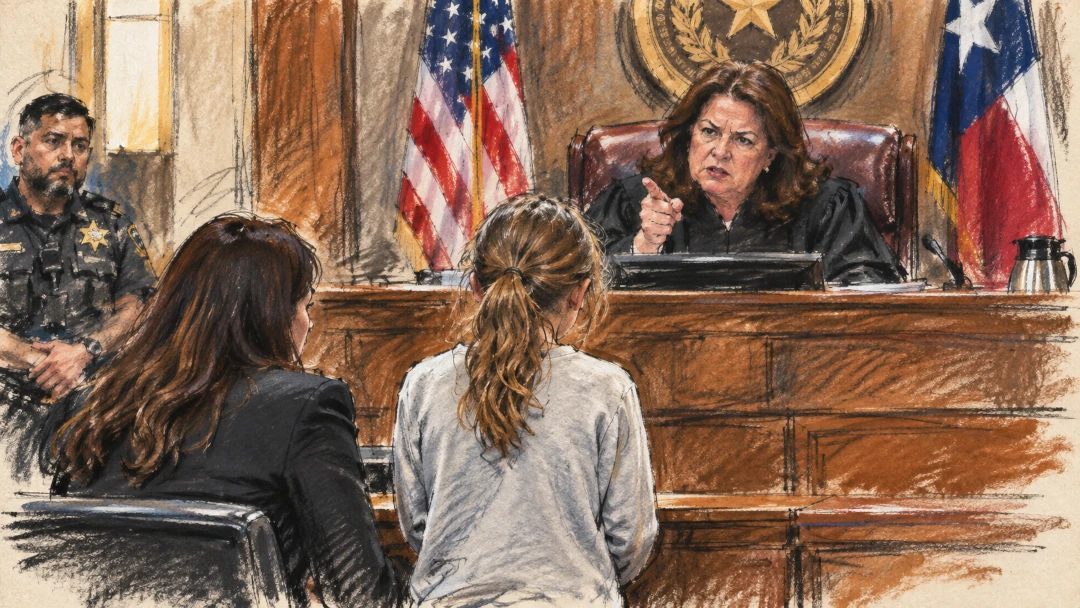
On Monday, twenty-five migrant children sat in the pews of the immigration court in Harlingen, Texas. According to CNN’s exclusive account by Priscilla Alvarez and Norma Galeana, a six-year-old pretended to fly a plane. A three-year-old named Mateo, in a blue jacket and neatly combed hair, played with the microphone at the defense table while the judge addressed his attorney, who appeared by video. A 13-year-old Honduran boy named Angel stood with no lawyer at all. When the judge found he did not qualify for asylum and asked whether he wanted voluntary departure or a removal order, the boy broke down in tears.
This is not a hypothetical. It is the American immigration system in the autumn of 2026, and it is the direct product of choices made by President Donald Trump and those who serve him. It is also what happens when the institutions meant to check a president, Congress and the Supreme Court, decline to do so.
“I have no one. I have nothing.”
Angel, 13, before an immigration judge in Harlingen, Texas, as reported by CNN
I. What Is Actually Happening
The CNN reporting, drawn from more than a dozen lawyers, advocates and current and former officials along with court records and internal memos, describes a children’s court system that has been sped up and stripped of help. Hearings that once unfolded over months now happen within days or weeks. Asylum interviews are rescheduled on as little as 24 hours’ notice. In Harlingen, the judge asked a group of 15 unrepresented minors whether any wanted to leave voluntarily. Across the country, the Department of Homeland Security is dangling a $3,000 stipend to children who agree to go back.
The collapse of legal help is the heart of the matter. On July 31, the administration let lapse the roughly $200-million-a-year contract with the Acacia Center for Justice, which had coordinated nearly 100 nonprofit providers serving more than 20,000 unaccompanied children. Acacia notes that without a lawyer, fewer than 1 percent of immigrant children win relief. NPR reported that Alexa Sendukas of the Galveston-Houston Immigrant Representation Project expected most children forced to represent themselves to be deported.
Lauren Fisher Flores, legal director at ProBar, told CNN that in two decades in the field she had never seen the court strip children of their right to seek protection, and she called what she witnessed an unraveling of long-standing due process safeguards. Shaina Aber, Acacia’s executive director, explained that under the old contract a detained child moving toward the pleading stage was guaranteed representation, so no detained child would be ordered removed without a lawyer. That floor is gone.
Legal help dismantled
20,000+
Unaccompanied children who had received counsel through the Acacia network before the contract lapsed, per Church World Service and Acacia.
The replacement
$20M
What HHS awarded the U.S. Committee for Refugees and Immigrants through December 31. Attorneys told a federal court its lawyers were absent or silent at hearings, CNN reported.
Payments withheld
~$65M
Owed for services already performed since December 2025 and withheld by June 2026, according to the American Immigration Council.
Providers shuttered
13 of 18
Staff laid off when Estrella del Paso closed its children’s program, per a court declaration by director Melissa Mari Lopez, as reported by CNN and the Christian Science Monitor.
The administration’s defense deserves to be stated plainly. HHS spokesperson Emily Hilliard told CNN that the Office of Refugee Resettlement remains committed to giving every child legal representation, and pointed to the USCRI award. The Executive Office for Immigration Review denied that cases are being fast-tracked, saying it only adjusts schedules so cases do not languish. But these assurances are contradicted by what attorneys have sworn to in court and by what reporters saw with their own eyes. A three-year-old who, as Flores described, ended up on the floor putting Band-Aids on the furniture during an asylum interview is not a person receiving due process.
II. A Court That Keeps Saying Yes
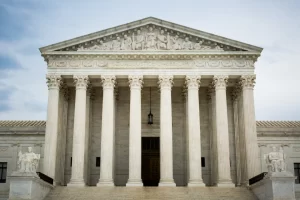
One day after the Harlingen hearing, on September 29, the Supreme Court removed obstacles to the administration’s “third country” deportation policy, NBC News reported, allowing the government to send people to nations where they have no connections. The unsigned order froze a February 2026 ruling by U.S. District Judge Brian Murphy in Massachusetts, which the First Circuit largely affirmed on September 18. As JURIST summarized, Murphy had held that people facing such removal are entitled to meaningful notice and a chance to challenge being sent to a specific country. Justices Sotomayor, Kagan and Jackson dissented. The Court will hear full arguments in December.
This is not the first time. Al Jazeera notes the Court issued a similar unsigned order in June 2025, and UPI counts this as the third time the administration has asked the justices to pause Murphy’s orders. Solicitor General John Sauer called third-country removals an essential enforcement tool, Axios reported. The tool has been used widely. The Migration Policy Institute counts about 15,000 such deportations in 2025, per NBC, and Refugees International and Human Rights First estimate more than 25,000 so far, with at least 35 countries signing agreements. Reuters reports that destinations have included South Sudan, a country the State Department urges Americans to avoid, as well as Uganda, Equatorial Guinea and the Central African Republic. Plaintiffs told the courts that some deportees were beaten, sexually assaulted or disappeared, and others were sent onward to the very countries U.S. judges had already found they needed protection from.
The pattern is the point. Again and again, the Court’s emergency docket gives this administration the benefit of the doubt while the people affected wait months or years for a hearing on the merits. By the time the justices rule in 2027, thousands more will have been removed under procedures that two lower courts found unlawful.
III. The Constitution, Federal and State
At the national level, the Fifth Amendment guarantees due process to every “person,” not every citizen. The Supreme Court itself recognized in Plyler v. Doe (1982), a case born in Texas, that undocumented children are persons under the Constitution’s equal protection guarantee. Congress built on that principle in the bipartisan Trafficking Victims Protection Reauthorization Act of 2008, which requires the government to ensure counsel for unaccompanied children “to the greatest extent practicable,” as the American Immigration Council points out. Immigration proceedings are civil, so there is no general right to a free lawyer. But a process in which a preschooler is expected to plead to charges brought by trained government attorneys cannot be called fair in any meaningful sense of the word.
At the state level, Texas has spent years testing how far it can go on its own. Senate Bill 4, which lets state officers arrest people suspected of crossing the border unlawfully and lets state judges order them out of the country, is now in force. The full Fifth Circuit vacated an injunction in April on standing grounds, and a panel stayed a second injunction in May, as El Paso Matters reported. Cody Wofsy of the ACLU’s Immigrants’ Rights Project stressed to the ACLU of Texas that the ruling was procedural and never reached the merits, where every court to look has found the law unconstitutional because immigration is a federal power. Meanwhile, the Heritage Foundation is urging every state to charge undocumented children school tuition in order to provoke a challenge that could overturn Plyler itself. The strategy is clear: narrow the constitutional personhood of immigrant children one venue at a time.
Get Involved Today
Contribute to our mission and turn your concerns into action.
IV. Why Every American Should Care
It is tempting to believe this affects only people who crossed a border. It does not. Due process is not a benefit for the deserving. It is the rule that the government must prove its case before it takes away your liberty. When that rule is suspended for the weakest people in the system, the precedent does not stay contained. Civil rights groups have warned that SB4 invites profiling of U.S. citizens and lawful residents who happen to look like someone an officer suspects, a concern FWD.us raised the day the Fifth Circuit ruled.
Legal immigrants are exposed too. Plaintiffs in the third-country case described deportations of longtime U.S. residents, many without criminal records, to places they have never lived, Reuters reported. Green-card holders, visa holders and naturalizing families all depend on the same courts and the same notice-and-hearing protections now being hollowed out. And taxpayers are paying for it: HHS moved to award a no-bid contract of roughly $150 million to the Burke Law Group, a small Texas firm founded by a former Trump appointee, before it withdrew under scrutiny, and then turned to Our Rescue, an anti-trafficking group that, lawmakers say, does not list legal services among its main functions, ABC News reported.
V. How the Ground Was Laid
None of this happened by accident. Trump campaigned on what he called the largest deportation operation in American history, and his administration has pursued it through a series of deliberate steps.
- March 2025
The Office of Refugee Resettlement moves to terminate the portion of the Acacia contract funding direct representation for children. A federal judge orders funding restored. - June 2025
The Supreme Court first lets third-country removals proceed in an unsigned emergency order. - December 2025
Payments to children’s lawyers stop. By June 2026, about $65 million in earned fees is withheld. - February 2026
Judge Brian Murphy strikes down the third-country policy, requiring notice and a chance to object. - April–May 2026
The Fifth Circuit clears Texas SB4 to take full effect without deciding whether it is constitutional. - July 31, 2026
The Acacia contract lapses, dismantling a network of nearly 100 legal providers for children. - August 2026
HHS pursues no-bid contracts with firms lacking immigration experience. A 7-year-old appears without a lawyer and is ordered to leave within 30 days, ProBar told a court. - September 28, 2026
Toddlers face a judge in Harlingen. The same day, more than a dozen UN human rights experts urge Washington to halt third-country removals. - September 29, 2026
The Supreme Court again sides with the administration, over three dissents.
Each step, taken alone, can be dressed up as procurement, scheduling or enforcement discretion. Together they describe a single policy: make the process so fast, so confusing and so lonely that children give up. A $3,000 incentive to leave, offered to a child with no lawyer, is not a choice. It is pressure.
VI. How the World Sees Us, and What Congress Is Doing
The world is watching. On September 28, more than a dozen United Nations human rights experts wrote to the U.S. government and to 35 partner countries, Reuters reported, warning that third-country deportations put people at heightened risk of torture and persecution and naming children among those at gravest risk. They cautioned receiving nations that “cooperation does not dilute responsibility,” according to Dawn, and that states assisting such removals may themselves bear legal responsibility. For a country that once led the drafting of the modern refugee protection system, being lectured on the treatment of children is a measure of how far we have fallen. Scripture asks how a society treats the least of these. The world is asking the same question of us, and our answer is a three-year-old at a defense table.
Congress, for its part, has written letters. Reps. Joaquin Castro and Greg Casar of Texas led 61 House Democrats demanding that HHS Secretary Robert F. Kennedy Jr. explain how the children’s legal contracts were awarded. Sens. Catherine Cortez Masto and Alex Padilla asked the HHS Inspector General to investigate whether money Congress appropriated for children’s lawyers is being spent as the law requires. Those are worthy efforts. But the institution as a whole chose delay: after its August recess, the House passed a stopgap on September 1, by a vote of 370 to 48, that simply extends current funding through December 11 and pushes every hard decision past the midterms, NPR reported. Letters are not law. Until Congress writes a binding guarantee of counsel into the December funding bill, the money it set aside for these children will keep flowing wherever this administration chooses to send it.
“Children’s legal protections should never be the currency of political patronage.”
— Letter from Reps. Joaquin Castro, Greg Casar and 59 House Democrats to HHS
Is a President Who Governs This Way Able to Discharge His Duties?
How the mechanism works
Section 4 of the 25th Amendment allows the Vice President and a majority of the Cabinet to declare in writing that the President is “unable to discharge the powers and duties of his office.” The Vice President immediately becomes Acting President. If the President contests the finding, Congress decides, and keeping him sidelined requires a two-thirds vote of both chambers. It has never been used this way.
Who has called for it
Calls for invocation have grown throughout 2026. In January, Sen. Ed Markey and Reps. Eric Swalwell, Sydney Kamlager-Dove and Yassamin Ansari urged it after the President’s messages about Greenland. In April, after Trump’s threats against Iran, Sen. Chris Murphy and Reps. Melanie Stansbury and Ansari renewed the call, according to PBS NewsHour. Rep. Raja Krishnamoorthi called on Vice President JD Vance and the Cabinet to act, describing “a dangerous pattern of reckless escalation, erratic decision-making.”
The argument this crisis adds
The case its advocates make is that fitness is measured by the faithful execution of the laws, which the Constitution makes the President’s core duty. A President who allows a statutory mandate for children’s counsel to collapse, who steers child-welfare money toward politically connected firms, and who presses removals to countries the State Department itself warns against is, in this view, displaying the same erratic disregard for consequences that lawmakers cited over Iran and Greenland. The children’s courtrooms, they would argue, are not a separate issue. They are further evidence of a presidency that cannot or will not perform its basic protective functions.
The honest barriers
The obstacles are enormous. PBS notes that Trump retains the support of Vice President Vance, his Cabinet and most congressional Republicans, which makes invocation highly unlikely. Many constitutional scholars also read Section 4 as designed for incapacity, such as illness or injury, rather than for policies a critic finds cruel; they would say the proper remedies for this conduct are litigation, impeachment and elections. That is a serious objection, and it should be taken seriously.
Why the case still matters
Barriers do not erase obligations. The 25th Amendment exists because the framers of 1965 understood that a nation must have a way to act when its chief executive cannot be trusted to carry out his duties. Every Cabinet secretary who swore an oath to the Constitution is personally responsible for deciding whether this President is able to faithfully execute the laws. Putting that question to them, on the record, is itself an act of accountability, and the images from Harlingen belong in that record.
The measure of a government is not how it treats the powerful or the popular. It is how it treats a frightened 13-year-old who has no one, and a three-year-old who does not know where he is. By that measure, this administration has failed, and the institutions that were supposed to stop it have chosen, for now, to look away.
Editorial Conclusion
No child should face a deportation judge alone. Congress must use the December funding deadline to require guaranteed counsel for every unaccompanied child and to forbid removals to third countries without notice and a hearing. The Supreme Court must remember in December that the Constitution protects every person, not every convenient one. And every official who swore an oath must ask, openly, whether a President who governs this way can faithfully execute the laws. Due process for the least of us is the only guarantee of due process for any of us.
Sources & References
- CNN — Exclusive: Inside the Texas courtroom where toddlers face immigration judges
- NBC News — Supreme Court allows Trump’s ‘third country’ deportation policy
- JURIST — Supreme Court allows Trump administration to resume third-country deportations
- Axios — Supreme Court green-lights Trump’s third-country deportations
- Al Jazeera — US Supreme Court allows Trump to continue third-country deportations
- UPI — Supreme Court allows ‘third-country’ deportations to continue — for now
- Reuters / U.S. News — Supreme Court lets Trump resume third-country deportations
- Reuters / U.S. News — UN experts call for halt to Trump policy of deportations to third countries
- Dawn — US deportations triggering ‘cascade’ of rights abuses: UN experts
- Acacia Center for Justice — Trump administration ends Unaccompanied Children Program contract
- NPR — More than 25,000 children lose previous legal protections as federal contract ends
- American Immigration Council — The Trump administration attacks unaccompanied children’s right to counsel
- ABC News — Democrats press HHS over legal representation of migrant children
- Office of Rep. Joaquin Castro — Castro, Casar lead 60+ Democrats demanding answers on legal representation
- Senate Judiciary Committee Democrats — Senate Democrats sound alarm on attacks on children’s legal representation
- NPR — Congress averts a government shutdown ahead of the midterms
- ACLU of Texas — Fifth Circuit rules SB4 challenge must be dismissed on procedural grounds
- PBS NewsHour — Could the 25th Amendment be invoked against Trump? Here’s how it works
Related News