The Court Cleared the Way. The President Signed the Order. The Bodies Will Follow.
A 6–3 majority handed Donald Trump permission to deport more than 356,000 Haitian and Syrian refugees to countries the State Department itself forbids Americans from visiting. The ruling is not a legal technicality. It is a moral failure dressed in robes — and a referendum on what John Roberts has allowed his court to become.
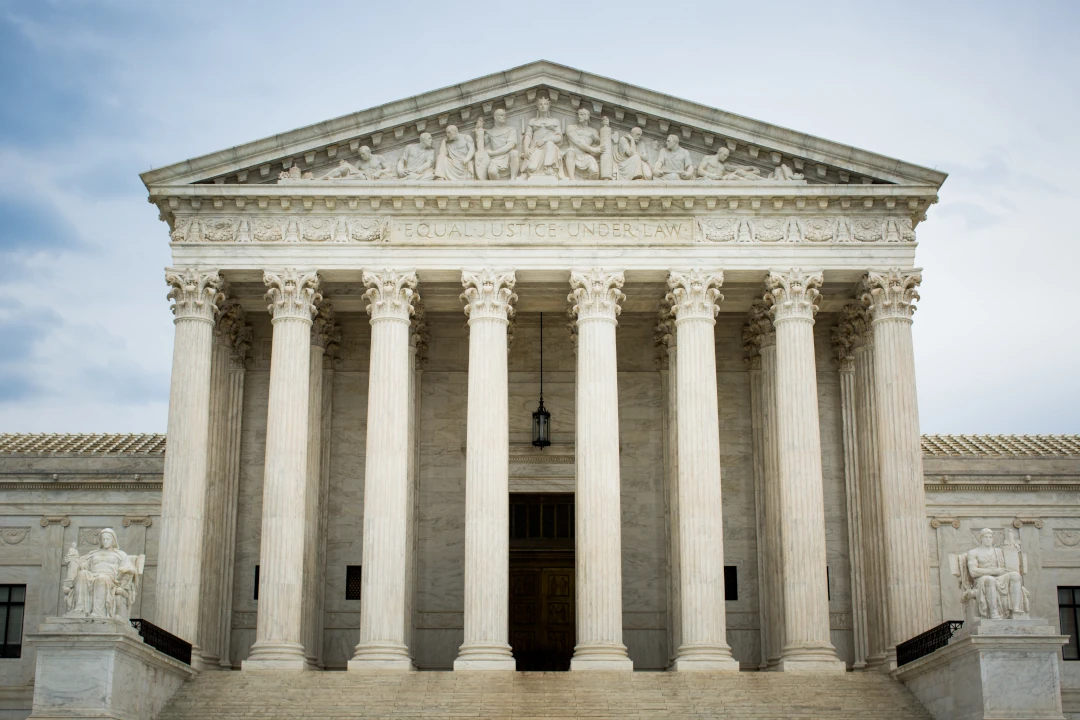
On Thursday morning the Supreme Court of the United States — by a vote split exactly along the ideological lines that have defined every consequential immigration decision of the last eighteen months — gave the Trump administration permission to revoke Temporary Protected Status from approximately 350,000 Haitians and 6,000 Syrians living lawfully in this country. The State Department continues to forbid American citizens from setting foot in either nation. The court ruled, in effect, that the same ground too dangerous for a U.S. tourist is safe enough for a Haitian grandmother who has lived in Miami for fifteen years. Writing for the majority, Justice Samuel Alito declared that federal judges had overstepped their authority by even examining the administration’s reasoning. The law, he wrote, expressly forbids them from looking.
The ruling, reported by NBC News and confirmed in opinions published by CBS News and PBS NewsHour, will likely cascade. The Department of Homeland Security has now revoked TPS for thirteen countries since Trump returned to office in January 2025. Approximately 1.3 million people from seventeen designated nations rely on the program. The legal architecture protecting all of them was just dismantled by six justices in a single morning.
1. The Ruling and Its Reach
Temporary Protected Status is not amnesty. It is not citizenship. It is not a back door. It is a statute Congress passed in 1990, signed by President George H.W. Bush, allowing the executive to shield people who happen to be in the United States when their home countries collapse — by earthquake, by war, by famine, by genocide. Haitians received the designation in 2010 after a quarter-million people died in a single afternoon. Syrians received it in 2012 as Bashar al-Assad’s regime began gassing its own civilians. The protection comes in eighteen-month increments. It can be ended. It has been ended before — under both parties — when conditions genuinely improved.
What happened Thursday was different. According to the slip opinion in Mullin v. Doe, the court did not merely affirm that the executive can terminate TPS. It held that the statutory bar on judicial review reaches almost everything — that lower courts cannot examine whether the Department of Homeland Security followed its own legally required process, cannot demand that the Secretary actually consult with the State Department before declaring a war zone “safe,” cannot weigh evidence that a termination was tainted by overt racial bias. As CBC News reported, this is a sweeping grant of unreviewable executive power.
2. The Cruelty Beneath the Doctrine
Begin with what is documented, not contested. The State Department’s own travel advisory rates Haiti at Level 4 — “Do Not Travel” — citing “the risk of crime, terrorism, kidnapping, unrest, and limited health care.” The United Nations estimates that ninety percent of Port-au-Prince is under the control of criminal organizations the State Department has formally designated as terrorist groups. As of late 2025, displacement inside Haiti reached 1.4 million people — an all-time record. More than 5.7 million Haitians face food insecurity. Famine-level deprivation is present in parts of the country. Hurricane Melissa, a Category 5 storm, devastated already-collapsed infrastructure last year.
The administration’s argument, advanced by former Secretary Kristi Noem, was that conditions had “improved enough” for safe return. Krish O’Mara Vignarajah, president of Global Refuge, captured the contradiction with surgical clarity. As she put it in testimony before the court hearings, the administration is “essentially arguing two things at once: that these countries are too dangerous for American tourists, but safe enough to deport families to.”
This is not an abstraction. Court filings cited by NBC News documented that four Haitian women deported earlier this year were found beheaded and dumped in a river months later. Geoff Pipoly and Andy Tauber, lead counsel for the Haitian plaintiffs, did not soften their assessment of what Thursday’s ruling means.
“Simply put, the Supreme Court’s ruling will directly result in thousands of innocent people dying violent, needless deaths.”
— Geoff Pipoly & Andy Tauber, lead counsel for the Haitian TPS plaintiffs
3. Civil Rights and the Equal Protection Failure
A federal district judge in Washington, Ana Reyes, had previously found that the decision to end TPS for Haitians was “likely motivated in part by racial animus” — a violation of the Fifth Amendment’s guarantee of equal protection. She cited the president’s own documented statements: his 2018 characterization of Haiti as a “shithole country”; his amplification, during the 2024 campaign, of the false and demonstrably racist claim that Haitian immigrants in Springfield, Ohio were eating residents’ pets (a smear that produced bomb threats against an entire American town). She cited Secretary Noem’s own social media posts describing immigrants as “killers and leeches.”
Justice Alito’s majority opinion brushed this evidence aside, concluding that the statements were not “overtly racial” and that the administration could plausibly have terminated TPS for race-neutral policy reasons. The court refused to put Trump’s actual words in print. Justice Elena Kagan, writing in dissent for herself, Sonia Sotomayor, and Ketanji Brown Jackson, did not.
“The statements fairly shout, in their racial undertones and overtones alike, that race entered into the president’s resolve to remove Haitians from this country.”
— Justice Elena Kagan, dissenting
Kagan went further. She accused the majority of soft-pedaling, observing — in language Court-watchers called extraordinary — that Trump’s remarks were so “repellent and racially inflected that the majority declines to put them in print.” Derrick Johnson, president of the NAACP, called the decision a “devastating betrayal of Haitian families who have lived, worked, and contributed to this country for years — only to be cast out based on anti-Black immigration sentiment.” When the Supreme Court of the United States declines, in the year 2026, to put a sitting president’s words on the page because they are too racist to acknowledge, that is not judicial restraint. That is judicial complicity.
Get Involved Today
Contribute to our mission and turn your concerns into action.
4. The Roberts Court in Historical Perspective
Twenty years into John Roberts’ tenure as Chief Justice, the gap between the man’s stated philosophy and his court’s actual record has become impossible to ignore. Roberts told the Senate at his 2005 confirmation hearing that his job was merely to call balls and strikes. He has spent the last decade calling almost every consequential pitch in one direction.
The defining moment was July 1, 2024 — the day Roberts wrote the majority opinion in Trump v. United States, declaring that a former president enjoys absolute immunity for “core” official acts and presumptive immunity for everything within “the outer perimeter” of his duties. Legal scholars and historians have not been kind. As Harvard Magazine documented, the ruling foreclosed any prosecution of Trump for his role in attempting to overturn the 2020 election. As Slate’s Mark Joseph Stern argued, the decision “endorsed a corrupt vision of the presidency” — and the second Trump administration has spent every day since embracing exactly that vision.
CNN’s analysis of Roberts’ twenty-year legacy concluded that what was once described as the Roberts Court has now become, for all practical purposes, the Trump Court. Devon Ombres of the Center for American Progress put it plainly to Courthouse News: “Roberts and his brethren seem to be the largest threat to undermining the courts, more so than anybody on the outside could do.” Consider the pattern.
Place this record against the courts of American memory. The Warren Court ended legal segregation. The Burger Court — conservative, imperfect — nonetheless ordered a sitting president to turn over the Watergate tapes. Even the Rehnquist Court, for all its flaws, in 2004 ruled against the Bush administration’s claim of unreviewable detention authority in Hamdi v. Rumsfeld. Sandra Day O’Connor wrote that “a state of war is not a blank check for the President.” The Roberts Court of 2026 has, in effect, written that blank check, dated it, and signed Roberts’ own name to the bottom. As legal scholar Neil Siegel told Harvard Magazine, when justices insist they do “law, not politics,” they are very often doing politics — and history will be the judge of which.
5. The Cost to America’s Standing
The United States has spent eighty years building, brick by brick, a moral claim on the world’s imagination — the claim that ours is the country that takes the tired, the poor, the huddled masses yearning to breathe free. That claim was always imperfect; America has betrayed it many times. But Thursday’s ruling is something newer and uglier. It is the United States Supreme Court placing its institutional weight behind the proposition that we may legally return refugees to places we ourselves describe as ungovernable. It is the formal abandonment of the principle of non-refoulement — the bedrock of international refugee law since the 1951 Refugee Convention. Other nations are watching. Allies who once looked to American courts for moral leadership now look elsewhere. Adversaries who pointed to American hypocrisy now have, in plain ink, our highest court’s permission slip.
What does this mean for the average American? It means a country in which the courts have been removed as a check on executive power over the most vulnerable people within our borders. It means a country in which 1.3 million neighbors — including long-term care workers, hospital staff, construction crews, and small business owners — now live with the knowledge that their legal existence here can be terminated by a single Cabinet secretary, with no judge empowered to ask why. It means a country whose claim to be a beacon of liberty has been, by formal order of its own Supreme Court, dimmed.
What the Constitution Provides — and Why It Matters Here
The Twenty-Fifth Amendment, ratified in 1967, provides in Section 4 a mechanism for the temporary or permanent transfer of presidential authority when “the President is unable to discharge the powers and duties of his office.” Invocation requires the Vice President and a majority of the Cabinet — or another body designated by Congress — to make that declaration. It was designed for medical incapacitation. It applies equally to a leader whose judgment has become untethered from reality in ways that endanger the country.
The case for invocation is being made — on the record, by named lawmakers — with growing urgency. On April 10, 2026, House Judiciary Ranking Member Rep. Jamie Raskin (D-Md.) formally demanded a comprehensive cognitive evaluation of the President, observing that the country has “indisputably entered the realm of profound medical difficulty and concern.” On April 30, Sens. Sheldon Whitehouse and Jack Reed (D-R.I.) entered into the Congressional Record a statement signed by 36 physicians from Harvard, Tufts, Columbia, and George Washington University warning of the president’s “rapidly worsening, reality-untethered, increasingly dangerous decline.” Sen. Chris Murphy (D-Conn.) and Rep. Maxine Dexter (D-Ore.) have made parallel calls.
Connect this case to Thursday’s ruling. The TPS terminations were driven by a president who, in his own documented statements, referred to Haiti as a “shithole country,” amplified the demonstrably false claim that Haitian immigrants eat household pets, and produced what Justice Kagan called comments so “repellent and racially inflected” that even the conservative majority refused to print them. These are not the words of a leader operating in command of his faculties and judgment. They are the words of someone whose mental state his own former allies — including Tucker Carlson and Candace Owens — have publicly questioned. A president whose policy is driven by racial animus and impulsive cruelty is a president unable to discharge his duties under the Constitution he swore to defend.
The practical barriers are real. Section 4 requires Vice President JD Vance and a Cabinet hand-picked by Trump himself to make the declaration. None of them will. The Raskin proposal — to establish an independent congressional commission under the Amendment’s “such other body as Congress may by law provide” clause — faces a Republican House and Senate. The political mechanism is, for now, closed.
But the moral and constitutional case is not negated by political impossibility. The Twenty-Fifth Amendment exists precisely because the Framers’ descendants understood that fitness for office is not a partisan question. The record being built — by physicians, by lawmakers in both parties, by the president’s own former supporters — is a record history will read. The Roberts Court has now removed one of the constitutional safeguards. The Twenty-Fifth Amendment remains. Whether Congress has the courage to use it is the question of this American moment.
Editorial Conclusion
A Supreme Court that hides a president’s racism from its own pages, a Chief Justice who has spent twenty years building the very throne his court now bows before, and a Congress unwilling to invoke the Constitution’s own remedy for a leader unmoored from judgment — this is not the architecture of a self-governing republic. It is the slow surrender of one. Three hundred and fifty-six thousand human beings will pay the immediate price. Every American will pay the longer one. The hour for measured language has passed. The remedy the Constitution provides must be considered — not because it is easy, but because the document under which we live demands no less.
Sources & References
- NBC News — Supreme Court allows Trump to remove protections from thousands of Haitian and Syrian immigrants
- CBS News — Supreme Court lets Trump strip deportation protections from Syrians and Haitians
- PBS NewsHour — Supreme Court allows Trump administration to end legal protections for Haitians and Syrians
- CBC News — Supreme Court says Trump administration can end legal protections for Haitians, Syrians
- U.S. Supreme Court — Slip Opinion, Mullin v. Doe (June 25, 2026)
- NBC4 Washington — Supreme Court allows Trump to end TPS for Haitians, Syrians
- CNN — Analysis: How the Roberts Court became the Trump Court
- Harvard Magazine — What Trump Means for John Roberts’s Legacy
- Slate — This One SCOTUS Ruling Unleashed the Trump Chaos We’re Living In Now
- Courthouse News — Court watchers give SCOTUS poor marks as Trump bulldozes judiciary in 2025
- Truthout — Right-Wing Supreme Court Rules in Trump’s Favor in 2 Anti-Immigration Cases
- The Hill — Concerns Grow Over Trump’s Mental Fitness for Presidency
- House Judiciary Committee Democrats — Rep. Raskin Demands Cognitive Evaluation of Trump
- Axios — Raskin demands Trump cognitive test in 25th Amendment push
- Mediaite — Democrats Question Trump’s Mental Fitness, Ramp Up 25th Amendment Push
- U.S. State Department — Haiti Travel Advisory (Level 4: Do Not Travel)
- USCRI — USCRI Raises Alarm Over TPS Termination as Haiti Faces Record-Level Displacement
- Global Refuge — Statement: Supreme Court hearing on TPS for Haiti and Syria
- National Immigration Forum — Fact Sheet: Termination of TPS for Haiti
Related News