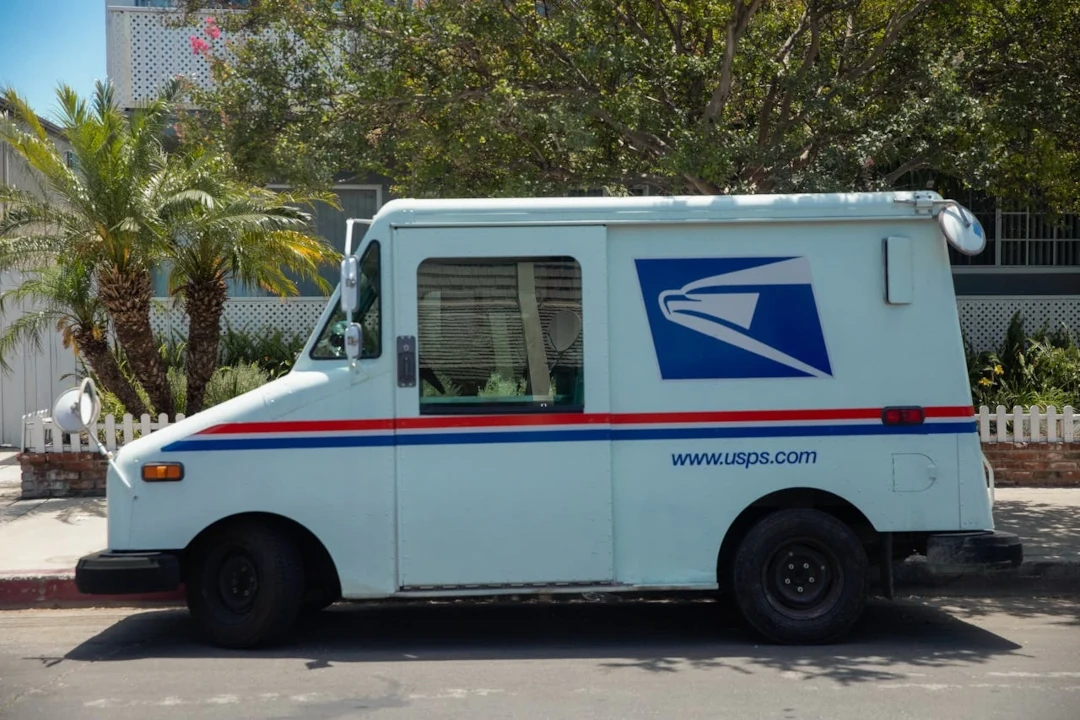
For 99 years, federal law has barred unlicensed Americans from putting concealable handguns in the mail. The Trump administration wants that to end — not by an act of Congress, but by an opinion drafted inside its own Justice Department.
The United States Postal Service was not built to be a firearms dealer. For 99 years, Congress has said as much in statute — flatly prohibiting the mailing of concealable handguns by anyone other than a federally licensed dealer. That law, codified at 18 U.S.C. § 1715, was passed in 1927 during a national reckoning with mail-order crime guns and the violence they fueled. It is one of the older surviving public-safety statutes on the books. And it is now being dismantled, not by the legislature that enacted it, but by an internal memorandum at the Department of Justice.
On April 2, 2026, USPS published a proposed rule that would conform its mailing standards to a January 15 opinion from the DOJ’s Office of Legal Counsel. That opinion declared the 1927 statute unconstitutional under the Second Amendment, urged the Postal Service to update its regulations, and announced that the executive branch would no longer enforce the law against protected firearms. The comment period closed on May 4. USPS is now reviewing what it heard and will decide whether to finalize.
What it heard was overwhelming alarm — from state attorneys general, public-health groups, gun-violence-prevention organizations, and a growing coalition of constitutional scholars who view this maneuver as something more dangerous than a policy disagreement. They see a White House willing to nullify a duly enacted federal statute by fiat. And they see a president whose stewardship of public safety has grown increasingly difficult to defend on the merits.
1. What the Rule Actually Does
The proposal would expand “mailable firearms” under USPS Publication 52 to include pistols, revolvers, and other concealable handguns — categories that have been excluded since the Calvin Coolidge administration. Within a single state, an unlicensed individual could sell a handgun to another unlicensed individual and ship it through the mail. Across state lines, a sender could mail a handgun only to themselves “in the care of another person,” to be opened only by the original sender, ostensibly to assist hunters and competitive shooters traveling for sport.
Those are the guardrails on paper. In practice, as California Attorney General Rob Bonta and his 21 colleagues have warned, there is no plausible enforcement mechanism. USPS does not know what is in its parcels. It cannot confirm that a sender and receiver are the same person. It cannot screen recipients against any background-check system. A felon in Texas, a domestic abuser under a protective order in Michigan, a teenager in Ohio — any of them can receive a working firearm through a mailbox slot, and no licensed dealer, no state regulator, no federal database is in the loop.
By contrast, private carriers like UPS and FedEx still refuse to ship handguns from anyone who is not a federally licensed dealer. The Trump administration is, in effect, proposing that the federal government itself become the most permissive handgun shipper in the country — looser than any private actor in the market.
“Once again, the Trump Administration is recklessly disregarding the safety of the people it is sworn to serve.”
— California Attorney General Rob Bonta, Coalition Letter, May 5, 2026
2. The Safety Stakes Are Not Hypothetical
The 1927 statute was not a theoretical exercise. It was the legislative answer to a documented problem: criminals in one state were ordering guns by mail from another and avoiding any face-to-face transaction, any local oversight, any paper trail. Nearly a century later, the federal Bureau of Alcohol, Tobacco, Firearms and Explosives still tracks thousands of guns lost or stolen in interstate shipment each year. From 2017 through 2021, pistols accounted for nearly half of those missing firearms — a population of weapons that quietly disappears from the legal supply chain and frequently resurfaces at crime scenes.
This is the system the administration is proposing to expand. Not a system in which a regulated dealer ships a tracked weapon to another regulated dealer. A system in which two private parties — neither vetted, neither licensed, neither verified — can transact in concealable lethal weapons through a federal parcel service that has no statutory authority to inspect what they are sending.
Length of the federal prohibition on mailing concealable firearms outside of licensed dealers — enacted in 1927 to curb mail-order crime guns. Background here.
Democratic state attorneys general — led by California’s Bonta and Nevada’s Aaron Ford — formally opposing the rule. Coverage.
Firearms reported stolen or lost in interstate shipment from 2017–2021, per ATF tracking — and pistols already lead the category. Analysis.
UPS and FedEx both restrict handgun shipments to federally licensed dealers — a standard stricter than the one USPS is now proposing to abandon. Details.
Get Involved Today
Contribute to our mission and turn your concerns into action.
3. How We Got Here — A Brief Timeline
4. The Separation-of-Powers Problem
Strip away the gun politics and a deeper constitutional question remains: can a president, acting through his own Department of Justice, simply decline to enforce — and then administratively erase — a federal criminal statute he disagrees with? The attorneys general’s comment letter is explicit on this point: USPS lacks the authority to override a valid federal law, and the Trump administration cannot unilaterally direct it to violate one.
This is not the first time this administration has tested the limits of unilateral executive action, and it will not be the last. But it is a particularly stark example. The 1927 law is on the books. It was passed by Congress. It has been enforced by every administration of both parties for nearly a century. There is no court ruling striking it down. There is only an opinion drafted by political appointees inside the executive branch — and now, an agency rule poised to make that opinion operational. If this maneuver succeeds, it establishes a precedent: any future president can effectively repeal any federal statute by instructing the Justice Department to declare it unconstitutional and instructing the relevant agency to behave as if the law no longer exists.
Nevada Attorney General Aaron Ford, whose state endured the deadliest mass shooting in modern American history at the Mandalay Bay casino in 2017, framed the policy stakes plainly. The rule, he said, would be a “slap in the face to gun violence survivors and law enforcement” in a state that has worked to expand background checks precisely because mail-order anonymity is a known vector for crime guns.
For balance, the National Rifle Association’s John Commerford called the proposal a “key victory for America’s law-abiding gun owners” and argued that USPS’s longstanding handgun prohibition created “needless headaches” for legitimate purchasers. That framing has its own internal logic, but it sidesteps the central question: even if one accepts the premise that the 1927 law is constitutionally vulnerable, the proper forum for testing it is a court, and the proper remedy is a court ruling — not an executive-branch end-run around the legislative process.
5. A Pattern of Reckless Stewardship
The handgun rule does not stand alone. It belongs to a broader pattern of executive decision-making that has alarmed observers across the political spectrum: the same administration that wants felons to be able to receive working pistols through the mail has, in recent months, publicly threatened to extinguish entire foreign civilizations, picked verbal fights with the Pope, circulated AI-generated images comparing the president to Jesus Christ, and posted what Rep. Jamie Raskin characterized as “increasingly volatile, incoherent, and alarming public statements.”
“By turning the U.S. Postal Service into a gun trafficking pipeline, the Trump administration is handing felons, abusers, and straw purchasers a direct line to illegal firearms.”
— John Feinblatt, President, Everytown for Gun Safety
Each individual episode is debatable on its own terms. The pattern is harder to argue with. A presidency cannot be a serious instrument of public safety if its policymaking apparatus is generating, simultaneously, new pathways for prohibited persons to acquire firearms and new reasons for the Pentagon, the State Department, and our allies to wonder which version of the commander-in-chief they will encounter on any given morning.
The Twenty-Fifth Amendment Exists for Moments Like This One
Ratified in 1967 in the wake of the Kennedy assassination, the 25th Amendment provides the Constitution’s answer to the question of what happens when a sitting president can no longer faithfully discharge the office. Section 4 — the operative provision here — authorizes the Vice President, together with either a majority of the Cabinet or “such other body as Congress may by law provide,” to transmit a written declaration that the President is unable to discharge the powers and duties of the office. Upon that declaration, the Vice President immediately assumes those powers as Acting President.
That “other body” is the constitutional opening Rep. Jamie Raskin (D-MD) has moved to fill. On April 14, 2026, Raskin and 50 co-sponsors introduced legislation establishing a 17-member Commission on Presidential Capacity — composed of physicians, psychiatrists, and former high-ranking executive officials appointed by congressional leadership of both parties — empowered to conduct a medical examination of the President and report its findings to Congress. Reps. Alexandria Ocasio-Cortez and dozens of House Democrats have endorsed the underlying premise. Even some figures on the right have called for the amendment’s use.
The constitutional argument is not that any single policy disagreement — including this USPS rule — is itself grounds for invoking Section 4. It is that the rule is one data point in a documented pattern of conduct: open contempt for the legislative branch’s authority, threats of civilizational destruction abroad, the use of federal agencies to nullify duly enacted statutes by memorandum, and a sustained inability or unwillingness to govern within constitutional limits. The framers of the 25th Amendment understood “inability to discharge” as encompassing more than physical incapacity. The question Congress is empowered to ask is whether the totality of presidential conduct constitutes a faithful execution of the office.
The Practical Barriers — and Why They Don’t Negate the Case
The honest assessment is this: the 25th Amendment cannot be invoked over Democratic opposition alone. Section 4 requires the Vice President’s cooperation and either a majority of a Cabinet appointed by the same president or the alternative body Raskin’s bill seeks to create. Neither pathway is realistic in a Republican-controlled Congress whose leadership has, to date, declined to publicly question the President’s capacity. Raskin’s bill will not pass this session.
But the constitutional case is not extinguished by political math. The Constitution’s machinery exists whether or not the political will to use it is currently present. Documenting that the conditions for its use are accumulating — and that responsible legislators in both parties have begun to say so out loud — is itself a form of constitutional stewardship. The USPS handgun rule belongs in that record. A presidency that, in a single month, can threaten extermination abroad and broker the unregulated mail-order distribution of concealable firearms at home is a presidency the 25th Amendment was written to address.
6. What Comes Next
USPS will, in the coming weeks, decide whether to finalize the rule, revise it, or withdraw it. If it finalizes, the rule will almost certainly face immediate litigation from the 22-state attorneys general coalition and from gun-violence-prevention organizations including Everytown for Gun Safety. The likeliest legal vehicle is an Administrative Procedure Act challenge arguing that the executive branch cannot, by rulemaking, authorize conduct that a federal criminal statute prohibits.
Congress, meanwhile, has its own tools — including the Congressional Review Act, appropriations riders, and direct legislation reaffirming the 1927 prohibition. None of these will move in a Republican-controlled chamber whose leadership has so far been content to let the executive branch govern by memorandum. But that political reality is itself the issue. The legislative branch has the constitutional duty to defend the laws it has passed. When it abdicates that duty, the work falls to the states, to the courts, and ultimately to the voters.
Editorial Conclusion
The proposed USPS rule is not, in the end, a debate about the Second Amendment. It is a debate about whether the executive branch may unilaterally rewrite a federal statute that has stood for 99 years — and whether a presidency demonstrably indifferent to the safety of the people it governs may continue to exercise the full powers of the office without constitutional check.
The 1927 law was written because Americans died from mail-order guns. The constitutional architecture being tested here was written because a republic cannot survive the indefinite tolerance of executive conduct that legislators of both parties have begun to describe as volatile and unstable. The stakes are not partisan. They are whether the Constitution still functions as a constraint on power, or has become a document we cite while watching it be ignored.
Sources & References
- Federal Register — Revised Mailing Standards for Firearms (Proposed Rule, April 2, 2026)
- California Office of the Attorney General — Bonta Rebukes Trump Administration for USPS Handgun Proposal
- CBS News — USPS Proposal Would Allow Handguns to Be Sent Through the Mail
- ABC News — USPS Considers Allowing People to Ship Handguns Through the Mail
- The Boston Globe — USPS Considers Allowing People to Ship Handguns Through the Mail
- The Hill — Postal Service Mulls Allowing Handguns to Be Shipped
- KTLA — California AG Pushes Back on USPS Handgun Proposal
- USA Today (via MSN) — USPS Could Soon Allow People to Ship Handguns, Undoing 100-Year-Old Rule
- American Rifleman (NRA) — Will the USPS Allow Handguns to Be Mailed?
- ATF — National Firearms Commerce and Trafficking Assessment: Firearm Thefts
- National Policing Institute — Lost and Stolen Firearms Reporting Research
- The Hill — Raskin Offers Bill Setting Up 25th Amendment Process
- Mediaite — House Democrats File Bill to Form 25th Amendment Commission
- Deseret News — Democrats Want a Medical Check on Trump’s Fitness for Office
- Fox News — Raskin Introduces Bill to Assess Trump’s Fitness for Office
- MS NOW — Raskin Bill: 25th Amendment Process to Remove Trump
Related News