A Law Signed in September, Signed Away in October
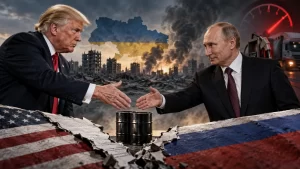
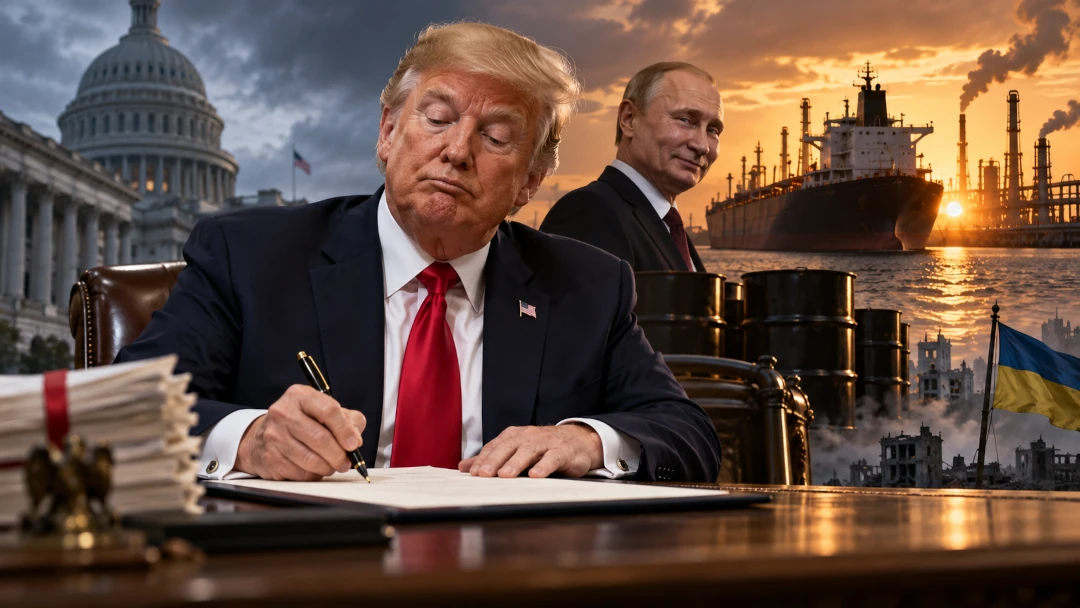
Congress passed the Graham Act 86–11 and 262–159 to choke off the money behind Putin’s war. Twenty-eight days after signing it, President Trump used a national-interest waiver to switch off every operative Russia provision, including the clause that was supposed to keep the sanctions locked until Ukraine had peace. The move was likely legal on paper. That is exactly the problem.
Late Friday night, while most of Washington had gone home, the White House posted an executive order with a dry bureaucratic title: “Implementing the Lindsey O. Graham Sanctioning Russia and Iran Act of 2026.” It implemented nothing. Section by section, it waived the tariffs, the bank sanctions, the investment bans, and the termination safeguards that Congress had spent more than a year negotiating. The only justification offered to the public was a single sentence: the President had certified to Congress that the waiver “is in the national interests of the United States.”
The order landed two days before the law’s measures were set to bite on October 18, and one week after Trump announced a diesel deal with Vladimir Putin that the Associated Press called a stunning reversal of years of U.S. policy. Taken together, the two moves mark the sharpest American retreat from economic pressure on Russia since the full-scale invasion of Ukraine began in 2022. They also raise a question that should trouble every American regardless of party: what is a law worth if the president can sign it and then shelve it within a month?
I. What Happened Friday Night
According to ABC News, the order waives every operative section of the law that deals with Russia: the tariffs of up to 500% on Russian goods, the 100% tariffs on the top five buyers of Russian oil and gas, the 100% tariffs on the top five countries helping Russia dodge oil sanctions, the sanctions on foreign banks doing significant business with Russian state banks, and the bans on buying Russian sovereign debt and on new U.S. investment in Russia. ABC also reported that the order waives the statutory provision that kept existing sanctions in place, clearing the way for the President to unwind those on his own.
There is no end date. The waivers stay in force, the order says, until the President or the Secretary of State decides further action is warranted. Axios noted that by dropping the secondary sanctions, Trump also spares China and India, the two largest buyers of Russian oil, from fresh pressure. Beijing and New Delhi had both objected to the bill, The Moscow Times reported.
The law bears the name of Sen. Lindsey Graham, the South Carolina Republican who championed it and who died suddenly in July. His Texas colleague John Cornyn needed only four words on X to sum up the moment: “Lindsey would be appalled.”
II. What the Graham Act Required, and When
The Act was written to be mandatory. As the law firm Morgan Lewis explained to clients, for most provisions the President had to conduct an initial review and impose sanctions within 30 days of enactment, on or before October 18, 2026. Trump signed the bill on September 18. He waived it on October 16. These were its teeth:
§112 · Russian goods
500%
Tariff increase on all goods from Russia, including oil and gas, per the order’s own text. Waived§113 · Top 5 energy buyers
100%
Tariffs on goods from the five largest importers of Russian crude and gas that kept buying after October 18, a provision aimed at China and India, as PBS NewsHour reported. Waived§113 · Sanctions evaders
100%
Tariffs on goods from the top five countries facilitating Russian oil sanctions evasion, the shadow-fleet enablers, per ABC News. WaivedBanks & capital
Cut off
Sanctions on foreign banks dealing with Russian state banks, plus bans on new U.S. investment in Russia and on buying Russian sovereign debt, per HSF Kramer. Waived§117 · The lock
Peace first
Sanctions could be terminated only after Russia signed a peace agreement accepted by Ukraine and ceased hostilities, followed by a 30-day congressional review, per Paul, Weiss. Waived§115 · The escape hatch
1 letter
The President may waive any sanction or duty by certifying to Congress that doing so serves the national interest and explaining why, per Baker McKenzie. UsedNote the final two cards. Congress built a strong lock in Section 117, requiring a Ukraine-accepted peace and giving itself a vote of disapproval before any sanction could be lifted. Then it left a key under the mat in Section 115. Trump used the key to open the lock.
III. Is It Legal? The Hard Answer
Progressives should be honest here, because honesty is our advantage. On its face, the waiver is very likely lawful. Section 115 authorizes exactly this kind of certification, and the order says the required certification and explanatory report were sent to Congress. Unlike termination, a waiver triggers no congressional review period. The Moscow Times summed up the statute plainly: the President can waive sanctions just by telling Congress he has made that determination.
Democrats saw this coming. When the bill reached the House, Rep. Gregory Meeks of New York and colleagues offered an amendment to allow waivers only when “vital to the national security,” and Rep. Brittany Pettersen of Colorado offered one to strike Section 115 entirely, describing it as open-ended authority with no congressional oversight, according to the House Rules Committee record. Neither change made it into the law. And as far back as June 2025, the Wall Street Journal reported that White House officials were pressing Graham’s office to add presidential waivers and to swap the bill’s “shall” for “may.” The administration got the escape hatch it lobbied for, then used it.
Lawful in form, corrosive in substance
The statute
- Section 115 permits waiver of “any” sanction or duty upon certification and a report. The President followed that procedure, according to the order.
The workaround
- Section 117 says sanctions end only after a Ukraine-accepted peace and a 30-day window for Congress to disapprove. By waiving Section 117 itself, with no expiration, the order achieves the practical effect of termination while skipping the conditions and the congressional vote that termination requires.
Take Care Clause
- Article II, Section 3 requires the President to “take Care that the Laws be faithfully executed.” A blanket waiver of every operative Russia provision, issued before a single one took effect, turns a narrow safety valve into a veto Congress never granted. Courts rarely second-guess national-interest certifications, so this is a question Congress, not the judiciary, will have to answer.
The diesel license
- Sen. Thom Tillis said the diesel deal may be illegal under the 2022 ban on Russian energy imports; Treasury Secretary Scott Bessent countered that no law prohibits it, Reuters reported. The Graham waiver now removes the tariff that would have applied to that diesel.
The report
- The statute requires a report explaining the basis for the certification. ABC News noted the order gave no further detail. The public has not seen the report.
The question is less whether Trump broke the letter of the law than whether a law with a one-letter off-switch was ever really binding. Congress wrote the loophole; Congress can close it.
IV. The Administration’s Case, and Its Critics
The White House argues that it is pursuing peace, not rewarding Putin. Spokesperson Taylor Rogers told ABC News that enforcing the sanctions now would impede U.S. efforts to negotiate a durable peace between Ukraine and Russia, and that the President can reimpose the measures at any time. On diesel, Trump has said the supply goes to a world market that suffered from high prices, as NPR reported, and the pressure is real: diesel prices are up about 70% since the U.S.-Israeli war with Iran began on February 28, Reuters found. Some Republicans agree with the President. Rep. Thomas Massie of Kentucky, one of seven House Republicans to oppose the bill, welcomed the waiver and called the law short-sighted, per ABC.
That case has two weaknesses. First, the leverage argument runs backward. Sanctions are leverage only if the other side believes they will be applied; waiving them before day one hands Moscow the concession for free. Second, the economics don’t hold up. Oil analyst Rory Johnston dismissed the diesel deal’s volumes as trivial relative to what Russia normally exports, according to Reuters, and CSIS energy strategist Clayton Seigle told the AP the deal would not materially lower U.S. prices but would “let Moscow off the hook” on revenue. Energy experts cited by GV Wire estimated the deal could send roughly $4 billion of American money into Russia’s economy.
V. Congress: Outraged, Not Yet Acting
The criticism has been loud and bipartisan. Sen. Richard Blumenthal of Connecticut, the Graham Act’s Democratic co-author, said the diesel decision “makes us complicit in Putin’s war against Ukraine.” On October 13, twelve senators, six from each party, including Republicans Mitch McConnell, Susan Collins, John Cornyn, Lisa Murkowski, Thom Tillis and Alan Armstrong, wrote that the deal is “a gift to our adversary and a betrayal of our allies” and demanded that Trump rescind it and enforce the Graham Act. Three days later he did the opposite. Tillis’s response to the waiver is the sharpest thing any Republican has said:
“It’s unconscionable that this administration is capitulating to a Russian dictator who illegally invaded Ukraine.”
— Sen. Thom Tillis (R-N.C.), via ABC News
Words, though, are not votes. Here is what is actually moving. Rep. Brian Fitzpatrick of Pennsylvania, a Republican, has announced the bipartisan “Ronald Reagan Peace Through Strength Act” to ban purchases of Russian oil and said he will use a discharge petition to force a floor vote over leadership’s objections, Benzinga reported. Meeks introduced a bill on October 16 aimed at blocking the diesel deal, according to Interfax-Ukraine, and his earlier End Russian Oil Windfalls Act (H.R. 8222) would nullify Treasury licenses for Russian oil. Cornyn shared a call for Congress to investigate the waiver, ABC reported.
Here is what is not happening. No bill has been introduced to amend Section 115 so that waivers face the same disapproval vote as terminations. Republican leadership has not scheduled any of the measures above. And the House left Washington on September 16 and will not return until after Election Day, according to CBS News. A Congress that passed this law with veto-proof margins in the Senate has, so far, chosen statements over subpoenas.
Get Involved Today
Contribute to our mission and turn your concerns into action.
VI. What It Means for Ukraine, for You, and for the Country
For Ukraine, the timing was brutal. The diesel deal was announced while Ukrainian negotiators were meeting Trump envoys Steve Witkoff and Jared Kushner in Florida, as the Council on Foreign Relations recounted. Days later Trump said Ukraine should find a new leader, and Ukrainian forces reported that their military-grade Starlink terminals were suddenly throttled, Newsweek reported, hours later, a Russian barrage of 39 ballistic missiles and 128 drones struck Ukraine while their defenses were still throttled, almost as if it were planned. President Volodymyr Zelenskyy said of the waiver that it helps only the Russians and fuels their desire to keep killing, per ABC. Earlier he had put it more simply:
“Gifts to Putin will not bring peace or any benefit to the civilised world.”
— President Volodymyr Zelenskyy, via Kyiv Post
For the average American, the trade is bad on its own terms. Diesel hit $6.28 a gallon nationally, according to AAA figures cited by Benzinga, squeezing truckers, farmers and everyone who buys goods that travel by truck. The twelve senators conceded that energy costs must come down but concluded that Russian diesel offers limited to no relief to Americans. Families get a fleeting dip in futures prices; the Kremlin gets billions and a signal that American sanctions law can be negotiated away over a phone call.
For the country, the cost is credibility. Sanctions work only when adversaries and allies believe Congress and the President mean what they enact. The Graham Act passed the Senate 86–11 and the House 262–159, according to Sullivan & Cromwell. If that kind of consensus can be erased in 28 days without a single public explanation, then every future sanction, treaty commitment and security guarantee carries an asterisk.
VII. The Allies Are Saying It Out Loud
For most of this term, European governments have avoided criticizing Trump by name. That restraint is breaking. At their October 15–16 summit, all 27 EU leaders adopted conclusions stating that the European Council regrets the U.S. decision to lift sanctions on Russian diesel, TVP World reported. That same week the EU adopted its largest Russia sanctions package yet, with nearly 1,600 new listings, according to CFR. French President Emmanuel Macron said the deal “sends a negative message” and would do nothing for global prices. Germany’s government said it stands by its sanctions, GV Wire reported, and Canadian Prime Minister Mark Carney’s office said the deal runs directly against the efforts of Ukraine, Canada and their allies, per Reuters. In London, Prime Minister Andy Burnham hosted Zelenskyy and told Ukrainians Britain is with them for as long as it takes, while Zelenskyy remarked that “now Putin is laughing.”
CFR’s Matthias Matthijs captured the strategic shift: for many EU leaders, the diesel deal is further proof that Europe can no longer rely on the United States to contain Russia. Allies are not leaving America. America is giving them reasons to plan around it.
VIII. A Pattern, Not an Exception
Friday’s waiver is the latest entry in a record that keeps pointing the same direction: warmth and concessions for strongmen, pressure and penalties for democracies.
- Feb 24, 2025
On the war’s third anniversary, the U.S. votes with Russia, North Korea and Belarus against a UN resolution condemning the invasion, bne IntelliNews reported. Sen. Sheldon Whitehouse: “This vote is a disgrace.”
- Mar 3–5, 2025
After the Oval Office confrontation with Zelenskyy, the administration pauses military aid and intelligence sharing with Ukraine, the AP reported.
- Aug 15, 2025
Putin gets a red-carpet welcome in Alaska; the summit ends with no ceasefire, as Al Jazeera reported, after Trump let his own sanctions deadline pass.
- Sep 2025 – Mar 2026
Sanctions relief for Belarus’s Alexander Lukashenko: first the state airline, then potash, then state banks and the Finance Ministry, per the AP, in exchange for prisoner releases.
- Nov 7, 2025
Weeks after sanctioning Rosneft and Lukoil, Trump grants Viktor Orbán’s Hungary a one-year exemption to keep buying Russian oil and gas, E&E News reported.
- Jan 17, 2026
Trump threatens tariffs on eight NATO allies, including Denmark, the U.K., France and Germany, for opposing U.S. control of Greenland, per the AP.
- Oct 9, 2026
Trump announces the Putin diesel deal; Treasury issues a license for Russian diesel lasting through April 7, 2027, the first diesel license longer than the standard 30 days since the war began, per AP.
- Oct 12, 2026
Trump says he does not believe Russia is helping Iran in a war that has killed U.S. troops, despite earlier Washington Post and WSJ reporting that Russia was supplying Iran with targeting data, per Reuters.
- Oct 16, 2026
The Graham Act waiver: every operative Russia provision switched off, indefinitely.
Read the list against the treasury and the public interest. Belarusian potash and Hungarian pipelines got carve-outs. American consumers got tariff threats aimed at their closest trading partners. Ukraine got paused aid, throttled satellites and a demand to change presidents. Putin got a red carpet, a diesel market and, now, a statute’s worth of sanctions waived.
IX. Is This What America Has Become?
Democracies are defined less by the laws they write than by whether those laws bind the powerful. Authoritarian systems keep the vocabulary of law while emptying it of force: statutes on the books, waivers in the drawer, decisions made by one man on the phone with another. When a president negotiates with Putin directly, announces the result on social media, has Treasury rewrite sanctions within minutes, and then nullifies a near-unanimous act of Congress with a one-line certification, the United States is borrowing the methods of the governments it once organized the free world to resist.
That drift is not yet destiny. Twelve senators of both parties put their names on a letter. Republicans like Tillis, Cornyn, Collins, Murkowski and Fitzpatrick have broken publicly with the President. Allies are still at the table and still sanctioning Russia. The institutions are bending, not broken. Whether they hold depends on what Congress, and the citizens who elect it, do next.
X. What You Can Do
Call your two senators and your representative
The Capitol switchboard is (202) 224-3121. Ask them to cosponsor legislation requiring that any Graham Act waiver be subject to the same 30-day congressional disapproval vote that Section 117 already applies to terminations. The Senate passed the Act 86–11; a veto-proof majority is within reach.
Ask House members to sign the discharge petition
Urge your representative to sign Rep. Fitzpatrick’s discharge petition on the Russian oil ban and to cosponsor H.R. 8222. A discharge petition needs 218 signatures and bypasses leadership entirely.
Demand the report be made public
The law required Trump to explain his certification. Ask the Senate Foreign Relations and House Foreign Affairs committees to publish that report and hold hearings with the Secretaries of State and the Treasury. Sen. Cornyn has already amplified calls for an investigation; hold him to it.
Make it a midterm question
Election Day is November 3. Ask every House and Senate candidate on the record: Do you support restoring the Graham Act sanctions, and will you vote to limit the waiver? Share their answers.
Stand with Ukraine and our allies directly
Support established, transparent Ukrainian humanitarian and energy-relief charities as Russia targets the power grid ahead of winter, and amplify allied leaders who are holding the line on sanctions. Public solidarity tells allies that the American people still keep their word.
Editorial Conclusion
Congress told the President, by margins rarely seen in this era, to make Vladimir Putin pay for his war. The President signed that command and then waived it away before it took effect, citing a “national interest” he has not explained to the nation.
This is how laws die in a republic: not by repeal, but by exemption. If the Graham Act’s waiver can erase it, Congress must rewrite the waiver. If Congress will not act, voters must replace the members who won’t. A country that cannot keep its word to its allies, or to its own legislature, will not long be trusted by either. The Graham Act must be enforced, and Section 115 must be closed.
Sources & References
- The White House — Implementing the Lindsey O. Graham Sanctioning Russia and Iran Act of 2026 (Oct. 16, 2026)
- NBC News — Trump suspends new Russia sanctions after diesel deal
- ABC News — Trump signs order waiving Graham Act sanctions on Russia
- Axios — Trump waives new Russia sanctions in the “national interests”
- Sullivan & Cromwell — The Lindsey O. Graham Sanctioning Russia and Iran Act of 2026
- Paul, Weiss — Key Provisions of the Graham Act
- Morgan Lewis — President Signs the Graham Act: Deadlines and Waiver Authority
- House Rules Committee — Senate amendment to H.R. 5334: submitted amendments
- Associated Press (via WFSB) — Trump strikes deal with Putin to get diesel
- NPR (via OPB) — Bipartisan senators call on Trump to rescind Russian diesel deal
- Kyiv Post — Zelensky rebukes Washington over Putin diesel deal
- TVP World — EU leaders unanimously condemn Trump’s easing of sanctions
- Al Jazeera — Trump eases Russia oil sanctions: who benefits?
- Reuters (via Honolulu Star-Advertiser) — Republicans, Democrats want Trump to reverse course on Russia diesel
- Benzinga — Fitzpatrick plans bill to block Russian oil purchases
- Reuters (via The Senior) — Trump says Russia to supply diesel to global markets
- Newsweek — Ukraine’s Starlink slowdown is Putin’s latest windfall
- bne IntelliNews — US sides with Russia against UN resolution on Ukraine
- E&E News / Politico — Trump exempts Hungary from Russian oil sanctions for one year
- Council on Foreign Relations — Trump’s Russian Diesel Deal, Explained
Related News