The Kim Concession: Trump Trades a Democratic Ally for a Dictator’s Applause
On the eve of the largest U.S.–South Korea drills of the year, the president gutted them from his phone — punishing Seoul for refusing to enlist in his failing war with Iran, and gifting Pyongyang a strategic win it could not have won on the battlefield. The reckless act is not an outlier. It is the pattern.
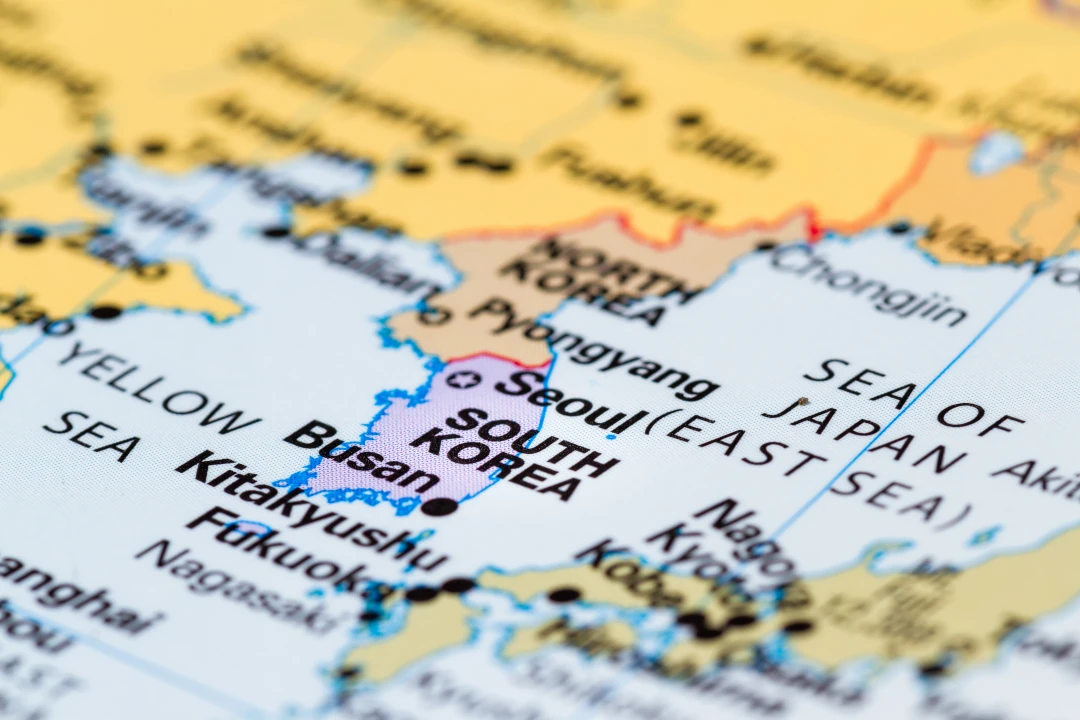
Sometime between the golf cart and the tarmac at Morristown, the President of the United States decided — apparently without consulting the Pentagon, the State Department, the National Security Council, the government of South Korea, or the 28,500 American service members stationed on the peninsula — to hand Kim Jong Un a strategic gift that decades of North Korean provocation could not extract. Hours before the annual Ulchi Freedom Shield exercises were scheduled to begin, Donald Trump posted on Truth Social that he had “instructed Secretary of War, Pete Hegseth, to substantially reduce” the drills, citing his “very good relationship” with the North Korean dictator and, bizarrely, South Korea’s refusal to help denuclearize Iran.
The announcement, first reported by NBC News and confirmed within hours by NPR, CNN, and the Washington Post, blindsided South Korean President Lee Jae Myung’s office, which said only that Seoul was “reviewing” the U.S. president’s social media post while the exercises proceeded as planned. That is the state of the American alliance system in 2026: a treaty partner learns of a unilateral change to seventy years of combined defense posture from a Truth Social feed.
This is not a diplomatic misstep. It is the visible tip of a foreign policy so degraded, so untethered from strategy or process, that senators from both parties spent Monday morning describing the president’s own decisions in language ordinarily reserved for foreign adversaries: “inane,” “haphazard,” “shortsighted,” “dangerous.” What follows is what the president has actually done, what it costs the United States, and why a growing bipartisan coalition — including physicians, former Republican members of Congress, and the ranking Democrat on the House Judiciary Committee — has concluded that the 25th Amendment is no longer a hypothetical.
I. The Announcement, and What It Actually Says
The drills in question, known as Ulchi Freedom Shield, are a defensive exercise that has run in some form since the 1950s. They involve roughly 18,000 South Korean troops training alongside U.S. forces to rehearse the combined defense of the peninsula against a North Korean invasion — the kind of invasion that killed 36,000 Americans between 1950 and 1953 and that the Korean War technically never ended, having concluded only with an armistice. The drills are, in short, a deterrent. They are the reason a nuclear-armed dictatorship of 26 million people has not, for seven decades, marched south.
Trump’s own words in Sunday’s post are worth reading carefully. “Based on my very good relationship with Kim Jong Un, of North Korea,” he wrote on Truth Social, “I am not happy with the fact that the United States has, long ago, agreed to participate in Joint Military Exercises with South Korea.” He described the drills as sending “a signal that is totally inappropriate and hostile” to Pyongyang, which he said “has been unthreatening and respectful” during his time in office. He then added, in a non sequitur he acknowledged in his own parenthesis: “While somewhat unrelated (?), I recently asked the President of South Korea if they would like to join us in the Denuclearization of the Islamic Republic of Iran, and they said, ‘No thanks!'”
Read that again. The commander in chief is publicly downgrading a mutual defense posture with a democratic ally because that ally declined to send troops to an unrelated war on the other side of Asia — a war Trump himself started in February and cannot seem to end. And he is doing so while calling Kim Jong Un, a hereditary dictator whose regime has launched 11 ballistic missile tests this year alone, “unthreatening and respectful.”
“When President Trump cuts military exercises to flatter a dictator or punishes South Korea for declining to join a war he started, all of our allies — and adversaries — think that America’s commitments are negotiable. China and Russia are watching how easily this president abandons America’s allies and they will remember it the next time they test us.”
— Sen. Jack Reed (D-R.I.), Ranking Member, Senate Armed Services Committee
II. The Bipartisan Alarm — and What Congress Is Actually Doing
The response from Capitol Hill was unusually blunt and, for the first time in months, cut across party lines. Sen. Jack Reed of Rhode Island, the top Democrat on the Senate Armed Services Committee, released a written statement calling the move “another inane, haphazard decision by President Trump and his chaotic administration.” Reed pointedly noted that his statement directly contradicted a recent warning from NORTHCOM Deputy Commander Lt. Gen. Joseph Jarrard that Pyongyang has successfully flight-tested intercontinental ballistic missiles with “enough boost to deliver a nuclear payload anywhere in North America.”
Sen. Mark Kelly of Arizona — a retired Navy captain and combat pilot — called the decision “shortsighted and a mistake.” Sen. Andy Kim of New Jersey, the son of Korean immigrants and a former Obama administration Pentagon official, wrote that “decisions about joint exercises need to be made jointly — and not announced unilaterally by social media.” Rep. Pramila Jayapal of Washington called the concession “dangerous,” noting acidly that Trump had chosen to “ditch democracy in South Korea for the authoritarian rules in North Korea that he so admires.”
Most striking was the Republican pushback. Sen. Thom Tillis of North Carolina publicly warned that the reduction gives North Korea more room to funnel weapons and munitions to Russia’s war in Ukraine — an active concern given documented North Korean matériel already appearing on Ukrainian battlefields. Former Rep. Adam Kinzinger, the Republican Air Force veteran who served on the January 6th Committee, put it more starkly: “This is how American alliances get destroyed — and how you convince countries like South Korea and Japan that they may need nuclear weapons of their own.”
What Congress is not yet doing is exercising its constitutional authority. There is no War Powers Resolution vote scheduled. There is no Senate Foreign Relations hearing on the calendar. There is no bill on the floor to require congressional consultation before treaty-alliance modifications. As Tom Nichols observed in a widely shared analysis Monday morning: “At a better moment in American history, an enraged Congress would step in and demand answers about such dangerous idiocy… Those days, at least among legislators of the president’s party, are long past.” The Republican Senate majority, in other words, will condemn on cable and vote nothing.
Called for “close coordination” with Seoul, not unilateral rewrites of joint doctrine “by social media.” The Hill, Aug. 17
Warned the decision hands North Korea leverage to boost weapons support for Russia’s war in Ukraine. Al Jazeera, Aug. 17
“This is how American alliances get destroyed — and how you convince countries like South Korea and Japan that they may need nuclear weapons of their own.” The Hill, Aug. 17
“Our U.S. wannabe authoritarian ruler has decided to ditch democracy in South Korea for the authoritarian rules in North Korea that he so admires.” Al Jazeera, Aug. 17
III. The Overextended Military — a Force Trump Is Breaking
To understand why Trump reached for South Korea specifically, look at what his administration is doing to the rest of the American military. The president is currently prosecuting a war in Iran that began in late February and that, according to reporting from the Washington Post, “stretches the limits of U.S. aircraft carriers.” Two of the Navy’s carriers — the USS Abraham Lincoln and the USS Gerald R. Ford — are in the middle of the longest carrier deployments since the Vietnam War.
The Lincoln has been at sea since November 21, 2025 — more than 260 days as of this writing, with no announced end date. Its deployment was supposed to end in May. Instead, families of the roughly 5,000 sailors and Marines aboard have gone public with accounts of rationed food, broken shipboard systems, and a mental health crisis so acute that a sailor went overboard on August 3 in what the Navy quietly classified as a mental health episode. Trump publicly dismissed the reports, telling a reporter, “No, they’re not,” when told the sailors’ families were worried. Sen. Ruben Gallego has demanded a bipartisan delegation be allowed on board. He has not received one.
Sen. Tim Kaine of Virginia, describing conditions on the USS Gerald R. Ford, was blunt on the Senate floor: “Many of the toilets are inoperable… The Ford is in tough shape and needs to come back to port. Quality of life and morale are in dramatic decline.” The Pentagon has now asked Congress for roughly $87.6 billion in supplemental funding, of which about $67 billion is simply to replenish the munitions and stockpiles burned through in Iran. That is, per Military.com’s reporting, the operational context in which Trump publicly complained that the annual Korea drills are “too costly.” Costly, apparently, is a word reserved for defending democracies.
Get Involved Today
Contribute to our mission and turn your concerns into action.
IV. What This Costs the Average American
It is tempting to file this story under “diplomacy” and move on. That would be a mistake. Alliance decay has a direct cost, and Americans pay it in three currencies: money, safety, and the long-term stability of the country their children will inherit.
Money first. The reason the United States has permanent bases in South Korea, Germany, Japan, and the Philippines is not charity. Forward-deployed forces are cheaper, in dollars and in casualties, than having to fight your way back into a region after you’ve lost it. When Trump undermines the credibility of the Korean alliance, he raises the eventual cost of Pacific deterrence — costs that will be paid in American tax dollars, in the form of the next $87 billion supplemental, and the one after that.
Safety second. Kinzinger’s warning about nuclear proliferation is not hyperbole. South Korea has an advanced civilian nuclear industry and has, for years, quietly debated whether it needs its own nuclear deterrent. Japan is in a similar posture. Every time Washington signals that its extended nuclear umbrella is contingent on the personal moods of the president, Seoul and Tokyo move closer to building their own bombs. A more nuclearized world is a less safe one — for the sailor from Ohio, for the Marine from Alabama, and for the retiree from Florida who has to live in it.
Stability third. The United States derives extraordinary economic and geopolitical advantage from being the country that other democracies trust. Reserve-currency status, favorable trade terms, the ability to attract global capital and talent — all of it depends on a reputation Trump is spending down at a stunning rate. As Sen. Reed noted, adversaries are watching. So are Wall Street, Frankfurt, and Tokyo.
“South Korea is an essential partner in peace and security in a part of the world filled with risk; we should treat them that way instead of venting frustration on social media.”
— Sen. Andy Kim (D-N.J.)
V. The Isolation Doctrine — America Alone, by the President’s Own Hand
The Korea concession does not stand alone. It is the latest installment in an accelerating pattern. The administration has, per NPR’s reporting, publicly attacked NATO allies for insufficient enthusiasm about the Iran war even as those same allies are being asked to help contain an increasingly aggressive Russia in the Baltic. Trade wars with Canada, the EU, and Mexico continue. Traditional intelligence-sharing partners have begun quietly compartmentalizing what they share with Washington. Australia and the Philippines have publicly hedged on AUKUS commitments.
What connects every one of these moves is not a coherent strategy — no serious realist school of foreign policy would advise it — but a personal disposition. Trump admires strongmen and resents the constraints of institutions, treaties, allies, and law. When a democracy tells him no, he punishes it. When a dictator flatters him, he rewards him. This is not statecraft. It is temperament, unbounded by staff and unchecked by his own party.
When Judgment Itself Becomes the National Security Threat
Section 4 of the 25th Amendment, ratified in 1967 after the Kennedy assassination, provides that if the vice president and a majority of the Cabinet (or of another body Congress designates) declare in writing that the president “is unable to discharge the powers and duties of his office,” the vice president immediately assumes those powers as acting president. The president may contest the declaration; if he does, Congress must resolve the dispute, with a two-thirds vote of both chambers required to keep him removed.
The amendment does not require a diagnosis of incapacity in a clinical sense. It requires only that decision-makers with statutory responsibility conclude that the president is unable — for any reason — to safely discharge his duties. Rewriting seventy years of Pacific alliance doctrine by social media, without staff input, in a fit of pique over an unrelated war, is on any honest reading exactly the kind of conduct the drafters had in mind.
Who has already called for this
The record is more substantial than most Americans realize. On April 10, 2026, Rep. Jamie Raskin, ranking Democrat on the House Judiciary Committee, formally demanded a comprehensive cognitive and neurological evaluation of the president by White House Physician Capt. Sean Barbabella. On April 30, Sens. Sheldon Whitehouse and Jack Reed entered into the Congressional Record a statement from 36 physicians — from Harvard, Tufts, Columbia, and George Washington University — warning of a “rapidly worsening, reality-untethered, increasingly dangerous decline” and, citing his access to the nuclear codes, calling explicitly for the 25th Amendment. Reps. Eric Swalwell, Sydney Kamlager-Dove, Yassamin Ansari, and Sen. Ed Markey have all made similar calls this year. Rep. Raskin has introduced legislation to establish the bipartisan commission that Section 4 of the amendment explicitly authorizes Congress to create in lieu of the Cabinet.
The honest assessment of the barriers
The obstacles are real. Section 4 has never been successfully invoked, and it requires a vice president willing to move first. Vice President J.D. Vance is not, by any reading of his public conduct, that man. The Cabinet was selected precisely to guarantee that no such motion would issue from it. A two-thirds majority in both chambers to sustain the removal is arithmetically implausible while Republicans hold the Senate.
Why the barriers do not extinguish the case
A constitutional remedy does not disappear because the politics are hard. It is Congress’s job — a job specifically assigned to it by the Twenty-Fifth Amendment — to build the record, hold the hearings, subpoena the physician, and force the country to look at what is happening in real time. The Raskin commission bill is a first step. Formal invocation votes, even losing ones, create the historical record. Public briefings from the flag officers who are watching the president make these decisions in real time are within Congress’s power today. The alternative is to let the pattern continue until the next social-media post concerns not exercises with an ally but a nuclear order against one.
VI. The Priorities This Reveals
Every presidency reveals what a president actually values by what he protects and what he throws away. In the space of a single Truth Social post, Trump chose to protect his personal relationship with Kim Jong Un — a man whose regime starves its own people and runs concentration camps — and to throw away seventy years of trust with a democratic ally of 51 million people, a top-ten global economy, and a country that has stood with the United States in every conflict from Vietnam to Iraq. He did so, on his own admission, partly out of pique that Seoul would not enlist in his war in Iran.
This is what he values: personal ego, dictatorial approval, and revenge against those who tell him no. This is what he does not value: alliance credibility, military readiness, the safety of American sailors trapped in a 260-day deployment, the constitutional process for altering treaty obligations, and — as the North Korean missile tests of August 6 and August 12 remind us — the actual security of the Korean peninsula and, by extension, of Los Angeles, Seattle, and Honolulu.
Editorial Conclusion
A president who conducts foreign policy by mood, who trades allies for dictators’ compliments, who deploys the Navy until sailors jump overboard, and who cannot be constrained by his own Cabinet or party is not a political problem. He is a constitutional emergency.
The 25th Amendment exists precisely for the moment when the judgment of the officeholder becomes the threat the office was designed to protect us from. That moment has arrived. Congress’s job is not to wait for the next crisis to prove it. Congress’s job — the one the framers of the Twenty-Fifth Amendment specifically assigned it — is to force the record into daylight now. Every day it delays is a day the Kim Jong Uns and Vladimir Putins of the world learn that America’s word is only as good as its president’s mood on a Sunday afternoon.
America has had Enough.
Sources & References
- NBC NewsTrump orders military to ‘substantially reduce’ joint exercises with South Korea (Aug. 17, 2026)
- NPRTrump orders Pentagon to scale back joint exercises with South Korea
- CNNTrump says US will reduce joint military exercises with key ally South Korea
- Washington PostTrump reduces military exercises with South Korea, citing good ties with Kim Jong Un
- CBS NewsTrump orders scale-back of military exercises with South Korea after refusal to help with Iran
- PBS NewsHour / APTrump orders Pentagon to scale back joint exercises with South Korea
- Al JazeeraDemocrats rebuke Trump over scaling back military drills with South Korea
- France24 / AFPBipartisan backlash as Trump scales back US–South Korea drills
- The HillMark Kelly: Trump decision to reduce joint military exercises with South Korea ‘shortsighted and a mistake’
- Military.comTrump Wants Fewer South Korea Military Drills Due to ‘Very Good Relationship with Kim Jong Un’
- CNN PoliticsSailor went overboard from the USS Abraham Lincoln this month as conditions on the ship prompt lawmakers’ demand for answers
- Al JazeeraTrump dismisses mental health concerns on USS Lincoln aircraft carrier
- TIMEWhat to Know About Concerns Over the Long-Deployed USS Abraham Lincoln
- ForbesWhat To Know About The Mental Health Crisis Aboard The USS Abraham Lincoln
- Al JazeeraN Korea launches ballistic missile as S Korea, US plan military drills
- Congressional Research ServiceNorth Korea’s Nuclear Weapons and Missile Programs
- House Judiciary DemocratsRanking Member Raskin Demands White House Physician Immediately Evaluate Donald Trump’s Cognitive Fitness Amid Bipartisan Alarm, Calls to Invoke 25th Amendment
- The Hill (Opinion)Concerns Grow Over Trump’s Mental Fitness for Presidency
- Daily KosTrump orders reduction of military exercises with South Korea (analysis by Tom Nichols, cited)
Related News