Acting Attorney General Todd Blanche formally killed the $1.8 billion “Anti-Weaponization Fund” on Sunday night — after months of stalling, a presidential ultimatum, and a public breakdown of the deal in court. What he did not kill is the parallel memo that shields the president, his sons, and the Trump Organization from years of pending IRS audits. That is not a loophole. That is the point.
On the evening of August 2, 2026, acting Attorney General Todd Blanche posted two documents to X and, with them, brought a months-long standoff over the most brazen self-dealing episode of Donald Trump’s second term to what the president’s allies would like the public to call a conclusion. One document formally rescinded the May 18 order that had established a $1.776 billion “Anti-Weaponization Fund” — a Justice Department pot of money that critics from across the political spectrum called a slush fund for Trump’s political allies and, potentially, for January 6 rioters. The other document did something far narrower: it “clarified” that a companion order, signed the very next day in May, granting Trump and his family sweeping immunity from IRS audits, applied only retroactively and only to the named plaintiffs of Trump’s own lawsuit against the IRS.
Reuters reported that the move cleared Blanche’s path to Senate confirmation as the permanent attorney general, breaking a weeks-long blockade by Republican Sens. John Cornyn of Texas and Thom Tillis of North Carolina. By Monday morning, Cornyn’s office announced he was satisfied. Tillis followed. The Senate Judiciary Committee will now advance the nomination of the man who, in his prior life, was Trump’s personal criminal-defense attorney.
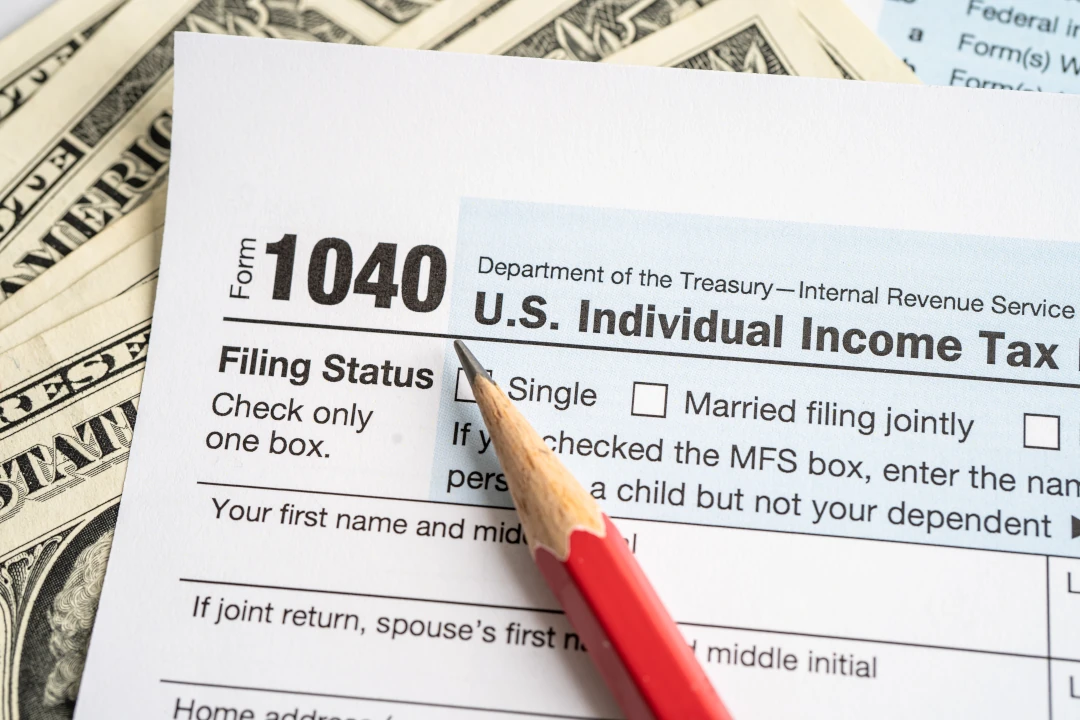
Left almost untouched in this deal: the actual money at stake for Donald Trump personally. A New York Times analysis previously cited by The Hill found that the ongoing IRS audits the president has now effectively voided could have produced a tax bill of up to $100 million. That obligation — to the U.S. Treasury and, therefore, to every American who files an honest return — has quietly evaporated. And almost no one in the Senate, including the two Republicans who claimed the credit for standing up to the White House, chose to fight over it.
This is a “heinously corrupt act.” The Trump family is not above the law, and future administrations should treat this directive as completely invalid.
— Sen. Ron Wyden (D-Ore.), Ranking Member, Senate Finance Committee, via Thomson Reuters Tax
I. How the Fund Died — and Why
To understand what happened Sunday, one has to trace what happened first. On January 29, 2026, Trump, his sons Donald Jr. and Eric, and the Trump Organization filed a $10 billion lawsuit against the IRS and the Treasury Department in federal court in Miami, alleging that the agencies had failed to prevent the 2019–2020 leak of the president’s tax returns by former IRS contractor Charles Littlejohn — who had already pleaded guilty and was serving a five-year federal sentence. The suit was, in the words of U.S. District Judge Kathleen Williams, brought for an “improper purpose”: to manufacture judicial legitimacy for a settlement whose terms could not otherwise be justified in law.
Williams’ ruling in July described a lawsuit in which the plaintiff — the president of the United States — effectively controlled both sides. On May 18, four months after the suit was filed and just two days before a court deadline that would have exposed the case to jurisdictional scrutiny, Trump’s DOJ agreed to a settlement. Trump’s team dropped the suit. In exchange, the Justice Department did two things: it created the $1.776 billion Anti-Weaponization Fund, and, the very next day, it issued the audit-immunity memo. Blanche, then serving as acting attorney general, signed both.
The fund itself was extraordinary — a taxpayer-financed pool that critics warned could compensate January 6 defendants and other Trump allies who claimed to have been “weaponized” against by prior administrations. Senate Democratic Leader Chuck Schumer accused Trump of crafting a scheme to “shake hands with himself” and enrich his own political base with almost $2 billion of public money. Sen. Elizabeth Warren called it an “insane level of corruption.” Sen. Bernie Sanders and Sen. Ron Wyden both denounced it as an outright theft from the Treasury. But the political weight that actually killed the fund came from within Trump’s own party. Sens. Cornyn — a lame duck after losing his primary to Trump-endorsed Ken Paxton — and Tillis, who is not seeking reelection, made clear they would use their seats on the Judiciary Committee to block Blanche’s confirmation unless the fund was rescinded in writing.
For weeks, the administration resisted. Blanche himself, at his July 15 confirmation hearing, refused to formally kill the fund even while insisting it was inoperative. As The New Republic observed, his position was a legal contradiction: the settlement’s amnesty provisions were binding on the government, but its fund provisions were somehow discretionary. On July 26, Trump himself escalated, threatening to keep Blanche in place as acting attorney general indefinitely and, in a Truth Social post reported by Axios, declaring the fund would be “back on the table” if Cornyn and Tillis did not fall in line. He did not get what he wanted. On Sunday night, Blanche folded — on the fund.
II. The Amnesty That Slipped Through
Here is the anatomy of a magic trick. Blanche’s Sunday order does exactly one thing: it declares that his May 18 order creating the fund “is rescinded and shall have no force or effect.” What it does not touch is the May 19 addendum — a separate document that bars the government “forever” from continuing any existing audit, investigation, or enforcement action against Trump, his sons, or the Trump Organization for anything predating the settlement. Blanche did not rescind that memo. He merely “clarified” that it applies only to past tax years and only to the named plaintiffs.
As CNN’s Aaron Blake documented on Monday, both of those “clarifications” were, in fact, already the case. The immunity was always retroactive; it always named those parties. Cornyn’s spokesperson, Natalie Yezbick, told reporters the DOJ had provided a “binding written document” narrowing the scope of the audit settlement — but Blanche’s Sunday note did essentially nothing that had not already been said in his sworn July testimony. It was, in the plainest terms, a document that reassures the senators without meaningfully changing the president’s position.
Even that is only half of the story. Under the terms of the underlying settlement — which remains in force — the agreement may be “modified only with the written agreement of the parties”: the DOJ, the IRS, and Donald J. Trump. Blanche did not obtain Trump’s signature on Sunday. Neither did Cornyn ask for it. Under questioning at his own confirmation hearing, Blanche conceded that the settlement is an “enforceable document” and that Trump’s lawyers could, in theory, sue the DOJ for breach of contract if the fund is not built out. In other words: the fund is dead only for as long as this administration wants it dead. The amnesty, meanwhile, is dead only if this administration ever decides, on its own, to walk away from it. It shows no sign of doing so.
A tax bill of up to $100 million — quietly disappeared
A New York Times analysis of Trump’s returns, cited by The Hill, estimated pending IRS audits could have generated a bill in that range. The immunity memo left intact Sunday functionally erases it.
A federal judge called the lawsuit “improper”
U.S. District Judge Kathleen Williams voided the settlement, ruling Trump had filed the case for an “improper purpose” and that federal courts have a constitutional duty to protect their jurisdiction from precisely this kind of maneuver.
An “unprecedented remedy,” in the ex-Commissioner’s words
Daniel Werfel, who ran the IRS under Biden, warned PBS NewsHour that the arrangement gives the president “a completely different set of rules than everyday taxpayers” and could erode public confidence in the tax system itself.
“A breathtaking abuse of the tax and legal system”
Brandon DeBot, policy director at NYU Law’s Tax Law Center, warned that only Congress can definitively block the immunity — and Congress has been blocked from doing so by Republicans.
III. Congress Averts Its Eyes
The most damning fact of Monday’s political theater is not what Cornyn and Tillis extracted. It is what they did not even ask for. Their signed-and-delivered demand covered the fund. It covered a “clarification” that repeated what everyone already knew about the tax amnesty. It did not cover the amnesty itself. It did not touch the roughly $100 million the president appears set to keep because his own Justice Department instructed the IRS to stop looking. The two senators most willing to break with Trump on this issue chose to accept a written statement about the fund — the piece with public political heat — and to walk away from the piece with the personal financial benefit.
They did so despite knowing better. It was Cornyn himself who, during Blanche’s July hearing, extracted the concession that the underlying settlement remained a contract that Trump could sue to enforce. It was Cornyn who established, on the record, that the government cannot unilaterally rewrite the deal without Trump’s assent. Having demonstrated the problem, he then declared the problem solved.
The Senate’s Democratic minority tried, repeatedly, to force the issue. In June, Sens. Mark Kelly of Arizona, Adam Schiff of California, and Elissa Slotkin of Michigan introduced the Drain the Slush Fund Act, which would have banned by statute any use of taxpayer money to pay the president, his associates, or those convicted of crimes tied to January 6. Sen. Chuck Schumer went to the Senate floor and asked for unanimous consent to abolish both the fund and the audit immunity by law. He was objected to by Sen. Bill Hagerty (R-TN), who acted in place of the entire GOP conference. Every Republican senator who had, in the polite phrasing of a press release, “expressed concerns” — Cotton, Collins, Cassidy, and the rest — allowed the objection to stand.
Rep. Richard Neal (D-Mass.), the ranking Democrat on the House Ways and Means Committee, has been direct about what this pattern means. He called the addition of the tax amnesty language “corruption,” full stop, and warned that Trump’s lawsuit against his own government was “never about justice” but about self-enrichment. On this, Neal is not offering a partisan interpretation. He is describing an observable sequence of events: the president sued the government he runs; the government he runs settled with him; the settlement he wrote handed him personal financial relief that no ordinary American could obtain.
“Trump sued his own government. Trump’s DOJ settled with Trump. And now Trump gets a nearly $2 billion slush fund to reward his own allies.”
— Senate Democratic Leader Chuck Schumer, via The Hill
IV. Two Timelines, One Presidency
Get Involved Today
Contribute to our mission and turn your concerns into action.
V. The American Consequence
This is where the story stops being an inside-Washington scandal about a nominee and starts being about the person reading this article. The single most important fact of the American tax system is that its authority rests on universal application. When the working parent in Tucson lies on Schedule C to shave a few hundred dollars off a return, that person may face an audit, a penalty, and — in serious cases — a criminal referral. The IRS enforces those rules on ordinary Americans in the tens of thousands every year, and the willingness of the country to accept that enforcement depends on the belief that the same rules apply to everyone above them.
That belief is what Blanche’s May 19 memo, still legally in force after Sunday’s cosmetic revision, was drafted to destroy. Werfel, the former IRS commissioner, told PBS that the deal creates for the president “a completely different set of rules than everyday taxpayers.” The Tax Law Center at NYU, in its formal statement on the Blanche nomination, concluded that only congressional legislation can definitively block the arrangement. Congress has now demonstrated, twice, that it will not pass such legislation while Republicans control the chamber.
The concrete result is a working two-tier system. In one tier — the president’s — the ongoing IRS review of whether Trump improperly deducted the same casino-era losses twice, a review that had reportedly progressed toward a nine-figure liability, is simply erased. In the other tier — everyone else’s — a $600 discrepancy on a 1099 can produce a notice within eighteen months. This is not a rhetorical framing. It is a matter of published Justice Department policy, signed and dated, and now blessed by Senate action.
VI. What Comes Next, Legally
The president’s tax exposure will not disappear entirely, and progressives should not pretend that it will. Blanche’s clarified memo, whatever its actual legal force, does concede that the immunity applies only to pre-May 2026 tax years and only to the named plaintiffs. Future tax filings — including the returns Trump will file for 2026, 2027, and 2028 — are not covered. Trump-related entities not named in the original suit are not covered. A future Justice Department could, in theory, argue that the entire settlement was procured by fraud on the court and moved to void it in litigation. The Democracy Forward complaint on which Judge Williams ruled is still on appeal and will likely reach the Eleventh Circuit before it reaches anything else.
But those are the doors that remain unlocked. The doors that have been closed — the pending audits, the enforcement actions, the ordinary machinery of tax accountability applied to a sitting president — are closed for as long as Donald Trump wants them closed. And every doorway the current Justice Department leaves open, a future Justice Department led by an ally of the president can walk back through and shut for good. The lesson of this weekend is that when Trump is given a choice between political embarrassment (the fund) and personal profit (the amnesty), he will consistently sacrifice the first to preserve the second. And when Senate Republicans are given the same choice on his behalf, they will make the same trade.
When self-dealing becomes an argument about capacity to govern.
Section 4 of the 25th Amendment permits the vice president, together with a majority of the Cabinet or “such other body as Congress may by law provide,” to declare a president unable to discharge the powers and duties of the office. In April, Rep. Jamie Raskin (D-Md.), the ranking Democrat on the House Judiciary Committee, filed exactly such a bill — a formal Commission on Presidential Capacity — with fifty House co-sponsors, following a series of public statements by the president that Raskin, Sen. Chris Murphy (D-Conn.), and Sen. Bernie Sanders (I-Vt.) described as evidence of cognitive and judgment failure. Public trust in the president’s ability to meet the duties of his office, Raskin argued in his floor statement, had “dropped to unprecedented lows.”
An honest reading requires an honest concession first: the 25th Amendment was drafted to address incapacity, not corruption. The framers of the 1967 amendment were thinking about a president incapacitated by stroke, dementia, or assassination — not one enriching himself through a coordinated legal settlement with his own Justice Department. The traditional constitutional remedy for the conduct described in this article is impeachment, and no serious constitutional scholar would deny it.
The progressive argument, made by Raskin’s bloc and echoed by figures across the party, is that the two categories have begun to converge. A president who sues his own government to extract a personal tax amnesty, who threatens to keep an acting attorney general in place indefinitely to revive a slush fund for insurrectionists, who publicly reasons about tax policy as a personal grievance owed reparations by the Treasury — this, they argue, is not merely corrupt but demonstrates a disordered relationship between the office of the presidency and the person occupying it that is itself a form of unfitness. The Raskin commission was designed to allow independent medical and psychological examination of that question — precisely so that the country would not have to guess.
The Practical Barriers
The barriers to actual invocation are severe and should be stated plainly. Vice President J.D. Vance and the Trump Cabinet are not going to sign a Section 4 declaration. A Raskin-style commission requires legislation that would have to pass both chambers of a Republican-controlled Congress and survive a presidential veto. Even a successful invocation can be reversed by the president’s own written declaration, forcing a two-thirds vote of both chambers to sustain the removal. The path is, in the near term, effectively closed.
Why That Does Not End the Argument
The barriers do not negate the case. They demonstrate the case. When the constitutional mechanisms designed to check a president become inoperable because the president has captured the very institutions meant to check him — the Justice Department, the Senate majority, the Cabinet — the appropriate response is not to conclude that no accountability is available. It is to conclude that the country’s accountability structures are in crisis, and to name that crisis publicly, in the specific words the Constitution provides. The 25th Amendment is a rhetorical instrument as well as a legal one. Raskin’s bloc is using it correctly.
VII. What This Says About the Presidency Itself
Set aside, for a moment, every question about the amendment and every question about the fund. Ask only this: what does an American president do when given a choice between a $100 million personal tax bill and the ordinary integrity of the office he holds? Donald Trump’s answer, on the public record, is that he chooses the money — and that he uses the Justice Department, the IRS, a federal courthouse in Miami, and the machinery of his own confirmation process to secure it. He does this not in a moment of crisis but as a considered strategy. He does it while publicly threatening senators of his own party. He does it while his acting attorney general, a man he previously employed as personal counsel, signs the papers.
Leadership, in its ordinary constitutional meaning, is the willingness to subordinate personal interest to the office. What this weekend showed the country is a president whose leadership operates in the opposite direction: the office is subordinated, transparently, to the interest. That is not an accusation. It is a description of the events of the last four months, corroborated in reporting by CBS News, NBC News, CNN, and ABC News, and a federal court ruling now under appeal.
Editorial Conclusion
The Anti-Weaponization Fund is dead by written order. The tax amnesty for the president and his family is not. Cornyn and Tillis got the headline they needed. The country got a written record, signed and dated, that the president can sue his own government, settle the case with himself, extract personal financial relief unavailable to any other American, and see the entire arrangement blessed by silence from the majority party in the United States Senate.
This is not the failure of a norm. It is the establishment of a new one: that the president is a class of taxpayer unto himself. That precedent will outlast this administration, this attorney general, and this news cycle. The task of citizens, of the courts still willing to rule as Judge Williams ruled, and of legislators still willing to file bills that will lose — is to refuse to accept it as settled. The Republic does not survive the quiet acceptance of two systems of law.
Sources & References
- CBS News — Acting Attorney General Todd Blanche issues order rescinding “anti-weaponization fund”
- CNN — The major loopholes in Todd Blanche’s concessions to Cornyn and Tillis
- NBC News — Acting AG Todd Blanche reaches deal with holdout senators
- ABC News — Blanche rescinds Trump’s “Anti-Weaponization Fund” amid AG confirmation pressure
- Axios — Blanche rescinds Trump fund amid legal questions
- Reuters (via US News) — Blanche rescinds fund before confirmation vote
- The Hill — Blanche order keeps intact immunity deal barring investigation of Trump and family
- CNBC — Judge blasts Trump lawsuit against IRS as improper
- PBS NewsHour — Experts warn Trump immunity from IRS audit could undermine trust in tax system
- Democracy Forward — Federal court finds Trump v. IRS plaintiffs acted in bad faith
- CNN — New settlement term bars IRS from investigating Trump for past tax issues
- The Hill — Democrats challenge DOJ’s $1.776B “anti-weaponization” fund
- The Hill — Senate Democrats unveil bill to block Trump’s “anti-weaponization” fund
- Center for American Progress — How Trump’s settlement could shield his family and businesses from investigation
- Thomson Reuters Tax — DOJ settlement “forever” bars IRS Trump audits, sparks backlash
- NYU Tax Law Center — Statement on audit immunity & Blanche confirmation
- The New Republic — Senators, here’s how Todd Blanche gave you reasons to vote against him
- House Judiciary Democrats — Raskin demands cognitive evaluation of Trump; 25th Amendment
- Deseret News — Democrats introduce 25th Amendment commission bill
- Senate Democratic Leadership — Republicans block Schumer’s attempt to ban slush fund by law
Related News