The Tariff Tantrum: A President Governing by Grievance — and the Bill Coming Due for Every American Household
In ninety-six hours, Donald Trump moved his justification for a 50% tariff on America’s closest neighbor from “wildfire smoke” to “wine and cheese.” The economy and our alliances, all now hang on the impulses of one man.
On Friday, July 17, President Trump announced that he would punish Canada with new tariffs because wildfire smoke from Ontario had drifted into the American Midwest. On Monday, July 20, he signed three proclamations imposing 50% tariffs on Canadian autos, dairy, wine, spirits, cement, hockey sticks, furniture, plywood, clothing, and swimming pools. When a reporter asked whether the tariffs were about the wildfires, he answered flatly: “No, we’re looking at that separately.” The stated reason had changed. The tariffs had not.
This is not policy. This is a mood swing dressed up in the language of trade law. And Americans — already staggering under an affordability crisis the president has called “a hoax” — are the ones being asked to pay for it.
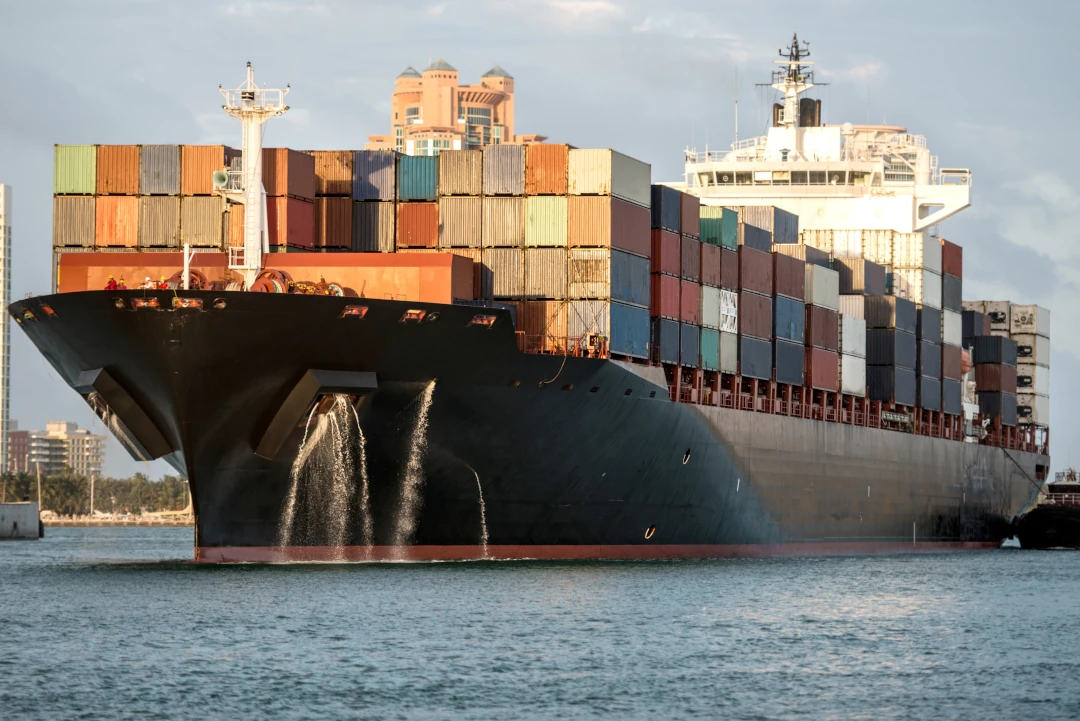
The president invoked Section 338 of the Tariff Act of 1930, a Smoot-Hawley-era provision so obscure that trade lawyers describe this as its first known modern use. That is the tool he selected to blow up the country’s second-largest trading relationship — one that in 2025 alone moved nearly $880 billion in goods and services across the northern border.
I. Two Reasons in Four Days
The instability of a president is measured, in part, by the number of stories he tells about the same decision. Consider the record.
Four days. Two justifications. One tariff. This is what governance-by-impulse looks like on paper. And note the sequence: the wildfire story was launched publicly on a Friday, escalated at a sporting event on Sunday, and then quietly disowned by the president himself on Tuesday — after the tariff had already been signed into effect. The stated reason for a 50% tax on a G7 ally was, by the president’s own admission, not the actual reason.
The pivot to “wine, cheese, and autos” was itself an admission. As NBC News reported, Trump’s own proclamations concede that his real grievance is Canada’s retaliatory actions — Canadian provinces pulling American bourbon and Napa Valley wine from their liquor shelves after he threatened them earlier this year. In other words: he punished them, they responded, and now he is punishing them for responding. NBC noted that Trump’s argument “rests in large part on retaliatory actions taken by Canada after the U.S. president imposed tariffs on Canada under the pretext that it should do more to stop fentanyl smuggling.”
“Your morning coffee. Your kid’s chocolate. Life-saving medical devices. Those are the Canadian goods being hit with tariffs. Americans are paying more for health care and their daily essentials during an affordability crisis, all because of a manufactured emergency and one man’s ego.”
— Rep. Gregory Meeks (D-N.Y.), Ranking Member, House Foreign Affairs Committee
II. The Cascade of Damage — In Real Dollars
Before the July 20 escalation, the earlier round of Trump’s Canada tariffs had already carved out a measurable hole in the American economy. This is not projection. It is the record.
Independent economists have been blunter than any op-ed page could be. Common Dreams, citing multiple studies, reports that Trump’s tariff regime has already cost U.S. businesses and consumers hundreds of billions of dollars, “as importers pass most of the increased costs imposed by the tariffs to consumers in the form of higher prices.” Fortune’s coverage of Monday’s announcement described the Section 338 move as a “nuclear option” that could unleash a new wave of economic chaos and inflation.
Even the president’s own party is flinching. Senate Majority Leader John Thune (R-S.D.) told reporters, “I’m not a huge fan of tariffs as a general rule.” Sen. Mike Rounds (R-S.D.) added, in the same reporting, that “the affordability side of this thing is something that we should all be concerned with.” When Trump’s own Senate majority leader refuses to endorse a signature action of his presidency, that is not a policy dispute. That is a warning light.
Get Involved Today
Contribute to our mission and turn your concerns into action.
III. What This Costs You — At Your Kitchen Table
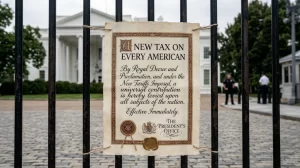
Abstract trade numbers exist for the trade press. For the reader at home, the picture is simpler: this is a tax, and Americans pay it. The Tax Foundation’s analysis is unambiguous — Trump’s tariffs constitute the largest U.S. tax increase as a share of GDP since 1993, an average burden of roughly $1,500 per household in 2026 alone. That figure does not fall on lobbyists, hedge funds, or corporate boards. It falls on the grocery bill, the car payment, the mortgage rate, the utility check.
Rep. Nydia Velázquez (D-N.Y.), among the earliest Democratic voices to warn against the tariffs, put a fine point on who bears the burden: “The burden will fall the heaviest on lower-income families, who already spend a greater share of their income on goods more susceptible to tariffs.” She noted that with 70% of the country’s lumber and gypsum imports coming from Canada and Mexico, construction costs are already climbing, pushing the dream of homeownership further out of reach for millions.
Rep. Meeks, on the House floor in February, catalogued the ordinary items caught in the crossfire: morning coffee, children’s chocolate, and life-saving medical devices. In Ontario alone, Premier Doug Ford has warned that heating and electricity costs — a substantial share of which flow south from Canadian utilities — have been driven up during “one of the coldest winters in modern history.” Every one of those price bumps is a tax the president has effectively signed into your budget without a single vote in Congress.
And every one of them arrives at the worst possible moment. Trump himself has called the affordability crisis “a hoax.” A January 2026 New York Times/Siena poll found that 54% of American voters oppose his tariffs. Prices at the grocery store, the pharmacy, and the hardware store are not partisan phenomena. They are lived facts. The president is legislating against those facts by fiat.
IV. What This Says to the World — And Why the World Is Already Leaving
Nations watch what allies do to allies. Canada is not an adversary. It is the country that fought beside American troops from Vimy Ridge to Kandahar, that sheltered stranded U.S. flights on September 11, that shares the longest undefended border on earth. On Monday, its prime minister — a man Trump had cornered at a soccer match forty-eight hours earlier — responded in the language of grown-ups. Mark Carney’s statement said only that Canada “believes in the benefits of free and fair trade” and would act to protect Canadian workers, farmers, and families.
Meanwhile, Canada has spent the past year quietly rerouting its economy away from the United States. As the Michigan Journal of Economics documented in April, Prime Minister Carney signed a new bilateral trade agreement with Indonesia — the first ever between Canada and an ASEAN member — eliminating tariffs on more than 95% of Canadian exports to the country. He then expanded trade ties with China, raising the annual quota on Chinese electric-vehicle imports to 49,000 vehicles in exchange for Chinese investment in Canadian auto manufacturing. Every one of those deals is a market that used to be American, or could have been. Every dollar of that trade is a dollar that will not return.
Capital Economics estimates that only about 5% of Canadian imports are directly hit by the new 50% tariffs. But as CNN’s business desk warned, the real damage is precedent: “if Trump’s use of Section 338 is upheld by the courts, it could become a useful tool” — a phrase that, translated, means every foreign government must now assume the United States can and will invent a legal rationale for a 50% import tax whenever its president is in a bad mood.
“Each of us has his own responsibility. At the moment, we’re emphasizing investment in clean energy, but in the U.S., there are modes of production which are working against clean energy. Canada is pursuing their efforts on the world scale, whereas the United States is reducing their footprint worldwide.”
— PM Mark Carney, responding to Trump’s wildfire-blame post
That is what a serious head of government sounds like. The contrast — with a U.S. president who blamed Canada for smoke on Friday, blamed them for cheese on Monday, and then said the tariffs and the wildfires were “separate” on Tuesday — is a diplomatic humiliation the country is being made to wear.
“Unable to Discharge the Powers and Duties of His Office” — And Why the Framers Never Defined “Unable”
Section 4 of the Twenty-Fifth Amendment provides that the Vice President and a majority of the Cabinet — or of “such other body as Congress may by law provide” — may transmit to the President pro tempore of the Senate and the Speaker of the House a declaration that the President is “unable to discharge the powers and duties of his office.” That declaration transfers those powers, immediately, to the Vice President as Acting President.
Legal scholars agree the drafters chose that phrasing on purpose. PBS NewsHour reported that “the drafters used intentionally vague and open-ended language… because they recognized they couldn’t predict every scenario in which a president could be deemed disabled.” The word “unable” is not restricted to coma, stroke, or dementia. It is a constitutional standard, and it is a political judgment — a judgment the Constitution assigns to the Cabinet and Congress, not to a physician.
The 25th Amendment does not require a diagnosis. It requires a judgment. And the fact that a president is signing 50% tariffs on America’s closest ally under a shifting series of pretexts — wildfires on Friday, cheese on Monday, “separate issues” by Tuesday — is exactly the kind of judgment the Constitution invites.
Named lawmakers who have already invoked Section 4: Rep. Yassamin Ansari (D-Ariz.) posted in April that “The 25th Amendment exists for a reason” and called Trump a national security threat. Rep. Melanie Stansbury (D-N.M.) wrote, “The emperor has no clothes. Time for the #25thAmendment. Congress and the Cabinet must act.” Illinois Governor JB Pritzker publicly called for its invocation. And Rep. Jamie Raskin (D-Md.), Ranking Member of the House Judiciary Committee, has already introduced legislation to create the “other body” the Amendment explicitly permits — a nonpartisan Commission on Presidential Capacity — so that Section 4 is not held hostage to a Cabinet the president himself appointed.
The constitutional argument: A president who cannot hold a single justification for a major economic decision across four consecutive days, who governs $880 billion trading relationships by grievance, who reaches for a 1930 Depression-era statute to punish a neighbor for pouring his bourbon down the drain, is exercising the powers of the office in a manner the framers of 1967 anticipated when they refused to narrow the word “unable.” Erratic, impulsive, and self-contradicting exercise of Article II authority is itself a form of inability — inability to discharge the office as a rational, constitutional actor.
The honest barriers: Vice President JD Vance has not indicated any interest in invoking Section 4, and a majority of the current Cabinet was appointed by Trump himself. Legal scholar Joel Goldstein has noted, as PBS reported, that the section was “not intended as a means of removing the president simply because he or she makes an unpopular decision.” Those cautions are legitimate.
Why the barriers do not negate the argument: The impossibility of a Cabinet-led Section 4 process does not erase the constitutional standard; it only exposes how urgently Congress must exercise its explicit power to designate an “other body,” as Rep. Raskin has proposed. The moral and constitutional case for scrutinizing this presidency under the Amendment’s own text is independent of the votes required to enforce it. And the record — of shifting pretexts, self-inflicted economic damage, and diplomacy conducted by tantrum — is being built in real time, for history to weigh.
VI. Priorities, Revealed
Every presidency reveals its priorities in what it spends political capital on. In seventy-two hours, this administration chose to spend it on: punishing a neighbor for its liquor-store shelves; invoking a 96-year-old statute never before used in the modern era; imposing what independent economists call the largest U.S. tax hike as a share of GDP in a generation; and doing all of this in the middle of an affordability crisis its own voters cite as their top concern.
Nothing about that sequence was demanded by the American people. Nothing about it was demanded by American workers, whose exports to Canada have already fallen 21%. Nothing about it was demanded by the ranchers, the vintners, the auto workers in Michigan, or the hospitality workers in Las Vegas whose Canadian tourist bookings have collapsed. This was demanded by one man’s mood, on one weekend, at one soccer game.
The country that shrugs at that is not a country in health. And the Constitution the framers wrote — with its deliberately undefined word “unable” — anticipated exactly this moment, whether or not the current Cabinet is willing to say so out loud.
Editorial Conclusion
A 50% tariff imposed on America’s closest ally, under a justification the president himself contradicted within four days, is not trade policy. It is temperament policy — and the American household is footing the bill in the form of a $1,700 tax hike per family, hundreds of billions in higher consumer prices, a collapsed export market, and a fleeing tourist economy.
The Twenty-Fifth Amendment does not require a diagnosis. It requires a judgment about whether a president can discharge the powers of the office. That judgment is Congress’s and the Cabinet’s to make. Rep. Raskin has already offered the legislative vehicle. The economic evidence is now compiling itself, in real time, at every American cash register.
Democracies do not fail because a president is erratic. They fail because the institutions around him choose, at the decisive moment, not to act on what the Constitution’s own words already permit them to do. This is that moment. The framers left the door open for a reason.
Sources & References
- The White House — Fact Sheet: President Donald J. Trump Imposes Additional Tariffs on Canada (July 20, 2026)
- NPR — Trump Imposes 50% Tariffs on Canadian Goods
- NBC News — Trump Hits Canada with 50% Tariffs over Autos, Alcohol and Cheese
- Fortune — Trump to Impose 50% Tariffs Invoking ‘Nuclear Option’
- CNN Business — Trump’s New 50% Tariffs on Canada Risk Igniting a Fresh Trade War
- CNBC — Trump Rips Canada as Wildfire Smoke Spreads, Says U.S. Will Add Pollution Cost to Tariffs
- The Hill — Trump Threatens Canada with Tariffs over Wildfire Smoke, Citing ‘Negligence’
- NBC News — Trump Fumes over Canadian Wildfire Smoke and Issues Tariff Threat
- Common Dreams — Top Finance Committee Democrat Rips Trump’s New Canada Tariffs as ‘Yet Another Shakedown’
- The Hill — GOP Senators Express Concern over Trump’s New 50% Tariffs on Canada Imports
- Capital Press — Dairy Industry Applauds Trump’s 50% Tariff on Canada
- Newsweek — Donald Trump Slaps 50% Tariffs on Canadian Goods: List of Products Impacted
- Tax Foundation — Tracking the Economic Impact of the Trump Tariffs
- CNBC — Tariff Bills Across U.S. States Mount as Affordability and Trump Head for Midterm Elections Showdown
- House Foreign Affairs Committee Democrats — Meeks Urges Republicans to Terminate Trump’s Canada Tariffs
- Rep. Velázquez — Slams Trump’s Tariffs as Direct Attack on U.S. Families and Small Businesses
- NBC News — Ontario Cancels Internet Deal with Musk’s Starlink as Part of U.S. Tariff Fight
- Michigan Journal of Economics — One Year Later: How Have Trump’s Tariffs Affected Canada
- PBS NewsHour — Could the 25th Amendment Be Invoked Against Trump? Here’s How It Works
- House Judiciary Democrats — Raskin Introduces Legislation Establishing Independent Commission on Presidential Capacity
- TIME — What to Know About the 25th Amendment as Lawmakers Call for Its Invocation
- WBEZ Chicago — Gov. Pritzker Wants 25th Amendment Invoked to Remove President Trump
- National Constitution Center — 25th Amendment: Presidential Disability and Succession
- Yahoo Finance — Trump Announces 50% Tariffs Focused on Canadian Autos, Dairy, and Alcohol
Related News