A Flesh-Eating Parasite Crossed the Border. The Administration Cleared Its Path.
The New World screwworm is now in Texas for the first time in nearly six decades. It did not arrive by accident. It arrived after a year of gutted agencies, sidelined scientists, blunt-instrument diplomacy, and a deliberate refusal to acknowledge the warming climate that is widening the door. The bill — measured in billions, and in the price of a pound of ground beef — is about to land on every kitchen table in America.
On June 3, a veterinarian in Zavala County, Texas, found maggots burrowing into the belly of a calf — and the United States Department of Agriculture confirmed what ranchers along the Rio Grande had dreaded for a year. The New World screwworm, a parasite the nation eliminated in 1966, was back on American soil. The larvae of Cochliomyia hominivorax do not feed on the dead. They eat living flesh, rasping wounds open until an untreated animal dies within days. Texas Republican agriculture-commissioner nominee Nate Sheets did not mince words: “It is an agricultural emergency.”
He is right. But an emergency is not the same as an accident, and the distinction is the whole story. For two years the screwworm has marched north — identified in Panama and Costa Rica in 2023, into Mexico by November 2024, and across more than 164,000 reported animal cases as it climbed. The question that matters is not whether the fly was coming. Entomologists said it was. The question is what the people charged with stopping it were doing while it did — and the honest answer is that the Trump administration spent its first year dismantling the very capacity the country would need, then scrambled to rebuild a fraction of it at far greater cost once the threat was at the gate.
1. An Emergency That Was Years in the Making
The screwworm’s defeat in the twentieth century was one of the great triumphs of applied science. The “sterile insect technique” floods a region with irradiated, infertile male flies; females mate only once, so a mating with a sterile male produces no offspring, and the population collapses. The United States and its partners pushed the pest all the way down to a biological barrier in Panama’s Darién Gap and held it there for decades through a shared facility known as COPEG. That barrier was not a wall. It was a program — funded, staffed, and maintained — and programs can be neglected.
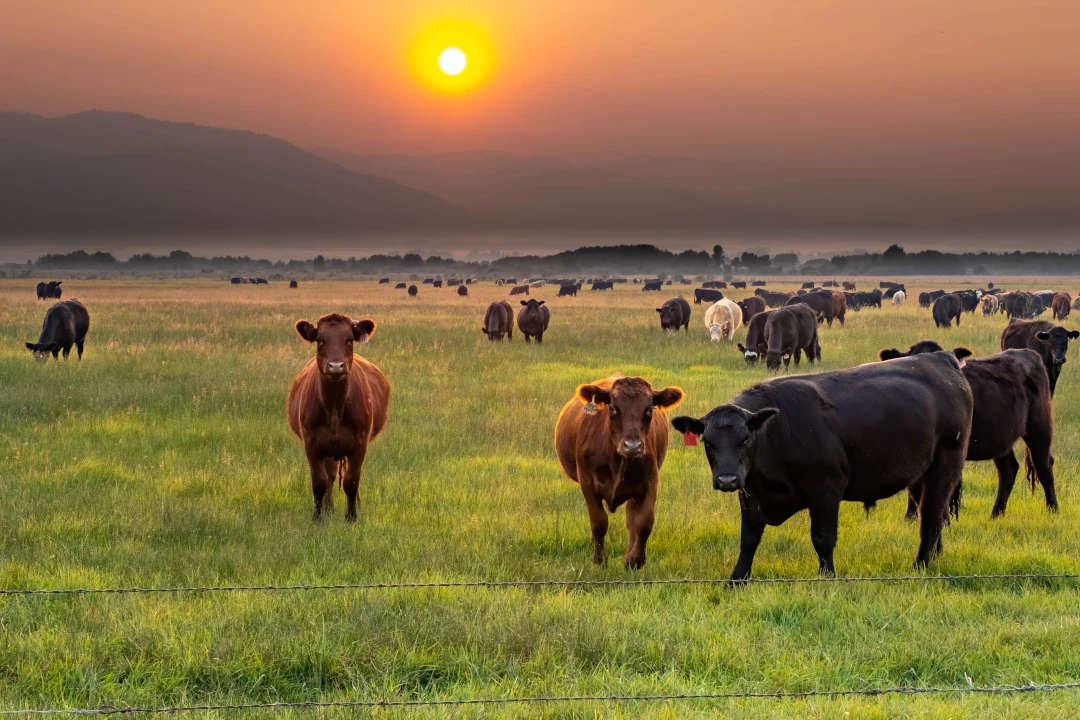
By the spring of 2026 the parasite had breached northern Mexico. On May 28 an infestation was confirmed in a goat in Coahuila, roughly twenty-five miles from the Texas line. Six days later it was in a Texas calf. Texas is not an incidental venue: it is the country’s number-one cattle state, home to roughly $17 billion in cattle. The fly arrived precisely where it could do the most damage, and it arrived after a defense that had been quietly degraded from the inside.
2. A Department Hollowed Out
Begin with the people. The agency responsible for spotting and stopping foreign pests is the Animal and Plant Health Inspection Service — APHIS. In 2025, under the cost-cutting drive branded the Department of Government Efficiency, APHIS lost 2,105 employees — about a quarter of its entire workforce. The Agricultural Research Service, the USDA’s scientific arm, shed 23 percent. Across the department, more than 24,000 workers left, a 27 percent reduction, much of it through a Deferred Resignation Program that paid experienced civil servants to walk out the door. Texas alone lost 21 percent of its USDA staff, including 248 people at APHIS — the inspectors and disease specialists who stand between the border and the herd.
This was not a secret cost. Dale Murden, who leads Texas Citrus Mutual, told reporters that the imaginary line at the Rio Grande does not stop pests and diseases — and that a thinned-out APHIS was exactly the wrong thing to have when a threat like the reemerging screwworm strikes. The administration was warned, in plain language, by the people who would have to live with the consequences. It cut anyway.
“The USDA’s plan, by treating a heat-driven pest as if temperature were a footnote, is in one entomologist’s assessment destined to fall short.”
— Andrew Paul Gutierrez · Professor Emeritus, U.C. Berkeley
3. Diplomacy by Blunt Instrument
The screwworm has always been beaten through cooperation — shared facilities, shared surveillance, sterile flies produced in one country and dispersed across borders in another. The administration’s instinct ran the other way. When the pest advanced, Agriculture Secretary Brooke Rollins suspended live cattle, horse, and bison imports from Mexico in May 2025, citing an “unacceptable northward advancement.” Mexico — which supplied 62 percent of U.S. live cattle imports between 2020 and 2024 — was given the back of the hand. President Claudia Sheinbaum, already absorbing tariff threats from Washington, called the closure “unfair” and noted her government had been working the problem from the first alert.
Closing the border bought time. What it did not do was produce sterile flies. For that, the United States still leaned on the COPEG plant in Panama, which turns out about 100 million flies a week, and on a renovated Mexican facility the USDA itself helped pay for. Only belatedly did the administration concede the country needed production capacity of its own. It announced a $750 million sterile-fly factory at Moore Air Base in Texas, plus a smaller dispersal facility and a $100 million “Screwworm Challenge.” Credit where due: that is real money and a real plan. But the production facility only broke ground in April 2026 — eight weeks before the fly reached Texas. A defense that exists on a construction schedule is not a defense yet. The administration spent the year racing to replace, at three-quarters of a billion dollars, a margin of safety it had spent the previous months giving away.
4. The Climate the Administration Won’t Acknowledge
There is a reason the screwworm’s historic northern limit was a winter map. The larvae cannot develop below roughly 58 degrees, and hard freezes once killed off any flies that wandered too far north. Oklahoma State economist Derrell Peel puts it simply: cold winters set the ceiling on how far the pest could go. As winters across the American South grow milder, that ceiling rises.
This is not fringe speculation. Andrew Paul Gutierrez, a Berkeley entomologist who has studied the screwworm and weather for half a century, has shown the fly rides northward on high-pressure wind systems that warming appears to be intensifying — and he warns that a federal response which sidesteps the role of climate is missing something critical. As Grist reported under a blunt headline, an administration built on climate denial is poorly equipped to fight a pest whose comeback the climate is underwriting. You cannot win a war against an enemy whose primary ally you refuse to acknowledge.
Staffing
Share of the APHIS workforce — 2,105 specialists, including pest and disease experts — lost in 2025 under DOGE. DTN / USDA OIG
Cooperation
Time between breaking ground on the first U.S. sterile-fly factory and the fly’s arrival in Texas. USDA
Climate
Below this, screwworm larvae cannot develop. Warmer Southern winters keep erasing that natural barrier. Grist
The Bill
Sen. John Cornyn’s cited estimate of the broader economic cost of a Texas outbreak; the USDA’s own figure is $1.8 billion. Cornyn / Senate
Get Involved Today
Contribute to our mission and turn your concerns into action.
5. What It Costs — and Who Actually Pays
The USDA estimates that a widespread Texas outbreak would do roughly $1.8 billion in damage to that state’s economy alone, through dead livestock, treatment, and lost labor. Senator Cornyn has cited a broader figure of about $1 billion in losses to producers and $3.7 billion to the general economy. The Dallas Fed has estimated that a repeat of the catastrophic 1972 outbreak — which, in its 1976 Texas iteration, struck more than 1.4 million cattle — could cost the Southwest more than $3 billion. Texas A&M economist David Anderson, who has watched the numbers climb, offered the plainest summary available: this is a pest no one wants back.
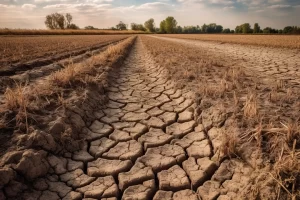
Now follow the money to where it lands. The cattle herd is already the smallest in roughly 75 years after years of drought. Closing the Mexican border tightened supply further and sent cattle futures to record highs. The result is already in the grocery aisle: ground beef averaged $6.90 a pound in April 2026, and the USDA’s own forecast has retail beef prices climbing more than 10 percent this year — possibly as much as 18 percent. Michigan State food economist David Ortega expects no relief soon. A working family does not file a USDA loss report. It just pays more for dinner — the quiet, regressive tax that follows every governing failure downhill until it reaches the people with the least room to absorb it.
This is what “America First” looks like when the policy meets the parasite. The administration cut the inspectors, denied the climate science, picked a fight with the neighbor whose cooperation the fight required, and then asked taxpayers to fund a $750 million emergency to undo the gap its own choices widened. The screwworm did not read the press releases. It read the open door.
6. A Timeline of a Self-Inflicted Wound
The Question of “Inability” — and Why the Drafters Left It Open
The Twenty-Fifth Amendment’s Section 4 allows the Vice President, together with a majority of the Cabinet, to declare that the President is “unable to discharge the powers and duties of his office,” immediately transferring authority to the Vice President. The President can contest it; if he does, Congress decides, and a two-thirds vote in both chambers is required to keep him sidelined. It has never been invoked.
Here is the detail that critics keep returning to: the words “unable” and “inability” are never defined. According to John Feerick of Fordham — the amendment’s principal drafter, still teaching the subject — that silence was “not as the result of an oversight,” but a deliberate choice, on the judgment that a rigid definition would fail to anticipate every form incapacity might take. The drafters, Feerick has said, ultimately understood the question as a political one, to be answered by political actors. They built a door without a fixed lock — and trusted the country to decide when to open it.
Who has raised it — and over what
The mechanism is not hypothetical in today’s politics. In April 2026, after the President threatened to strike Iran’s civilian infrastructure, Senator Chris Murphy and Representatives Yassamin Ansari and Melanie Stansbury publicly urged invoking the Twenty-Fifth Amendment. We should be precise: those calls were about the Iran threat, not the screwworm. No serious figure argues that a single pest crossing the Rio Grande is, by itself, “inability.” The screwworm belongs to a different conversation — about competence and priorities.
Why the debate still matters
None of that makes the question illegitimate. The open language was designed so a self-governing people could ask, in their own moment, whether the person holding the office is meeting its duties — and the ordinary instruments for answering that question are oversight, the appropriations power Senator Cornyn invoked, a free press, and elections. The screwworm at the border is not grounds for removal. It is evidence in the case the public is entitled to weigh: a presidency that fired the watchmen, muzzled the scientists, alienated the allies, and then billed the country for the rescue. The amendment’s drafters left the word undefined precisely so that voters and their representatives — not a chatbot, and not an editorial board — would supply the meaning. Our argument is narrower and harder to dismiss: a leader who manufactures the emergency he later spends billions to contain has already told you what he is able to do, and what he chooses not to.
Editorial Conclusion
A government’s first duty is to protect what its people depend on, and a food supply is about as basic as that gets. This administration inherited a defense that had held the line for sixty years, dismantled the agencies that maintained it, denied the science that predicted the breach, and treated the neighbors it needed as adversaries — and now the parasite is in Texas and the cost is in your grocery cart.
This is not a story about a fly. It is a story about what happens when leadership confuses cruelty for strength and slogans for strategy. The screwworm is a verdict on that governing philosophy, written in the one language no press shop can spin. The remedy the Constitution offers in ordinary times is accountability — through Congress, through the courts, through the ballot. The country should use every one of them, and it should start by refusing to call a self-inflicted wound an act of God.
Sources & References
- CDC — New World Screwworm Situation Summary (confirmation in Texas, June 3, 2026). cdc.gov
- USDA APHIS — Confirms Presence of New World Screwworm in the United States. aphis.usda.gov
- PBS NewsHour — What to know about the screwworm fly and its U.S. reappearance. pbs.org
- CNN — Flesh-eating screwworm detected in Texas calf, signaling threat to food production. cnn.com
- Texas Tribune — Screwworm is in Texas. Here is what to know. texastribune.org
- KCUR / NPR — USDA lost 24,000 workers under Trump, hurting resources for farmers. kcur.org
- DTN / Progressive Farmer — Trump administration dramatically reduced USDA staffing (OIG report; APHIS −25%). dtnpf.com
- USDA — USDA and U.S. Army Corps break ground on Texas sterile-fly production facility. usda.gov
- Farm Progress — USDA to build $750M sterile-fly facility to combat screwworm. farmprogress.com
- National Hog Farmer — USDA gets bipartisan backing for $850M screwworm plan. nationalhogfarmer.com
- Reuters / Investing.com — Cattle futures surge over U.S. halt to Mexican cattle imports. investing.com
- CBS News — U.S. suspends importation of live cattle from Mexico over screwworm. cbsnews.com
- Grist — Trump’s climate denial may help a livestock-killing pest make a comeback. grist.org
- The Invading Sea — Climate change could be helping a livestock-killing pest spread north. theinvadingsea.com
- AgWeb / Drovers — Winter: The secret to slowing the spread of screwworm. agweb.com
- Sen. John Cornyn — Cornyn raises alarm on screwworm threat, previews amendment ($3.7B estimate). cornyn.senate.gov
- CBS News — Beef is getting harder for Americans to afford (USDA 10–18% forecast). cbsnews.com
- FRED / U.S. Bureau of Labor Statistics — Average price, ground beef, U.S. city average. fred.stlouisfed.org
- The American Prospect — Who wrote the 25th Amendment? (Feerick on intentional ambiguity). prospect.org
- PBS NewsHour — Could the 25th Amendment be invoked against Trump? How it works. pbs.org
- PolitiFact — Could the 25th Amendment be invoked? (Murphy, Ansari, Stansbury). politifact.com
- The Executive Functions — The problem with the 25th Amendment, and a partial fix. execfunctions.org
- Moneywise — Screwworm 60 miles from Texas; beef prices and import data. moneywise.com
- The Cattle Site — How screwworm reached the U.S. and why beef prices may rise. thecattlesite.com
Related News