Four Gulf monarchies — Saudi Arabia, Qatar, the UAE, and Kuwait — used airspace, bases, and pointed phone calls to stop a Trump strike on Iran that was on the runway for Tuesday. America did not stop this war. America’s hosts did. That is not foreign policy. That is a presidency under foreign management.
On the evening of Monday, May 18, President Donald Trump posted to Truth Social that the “scheduled attack of Iran tomorrow” — Tuesday, May 19 — would not happen. The reason he gave was not a Cabinet meeting, not a National Security Council assessment, not a war powers consultation with the Congress in which the constitutional authority to declare war exclusively resides. The reason was that three foreign rulers had asked him to wait. Trump named them by name: Qatari Emir Tamim bin Hamad Al Thani, Saudi Crown Prince Mohammed bin Salman, and United Arab Emirates President Mohamed bin Zayed Al Nahyan. He had been told, in the unmistakable language of allies who are losing patience, that the planned strike was unacceptable. He stood down.
This was not diplomacy. This was an intervention. And it was the second in three weeks.
Earlier in May, when the president announced “Project Freedom” — his improvised plan to force open the Iranian-blockaded Strait of Hormuz — Saudi Arabia suspended American access to Prince Sultan Airbase and to Saudi airspace. According to two U.S. officials cited by NBC News, a call between Trump and the Saudi crown prince failed to resolve the rupture. Kuwait, according to a U.S. administration official confirmed by Drop Site News, did the same. The president was forced to halt the operation. As one U.S. official told NBC, “because of geography, you need cooperation from regional partners to utilize their airspace along their borders.” That is a polite way of saying: the world’s strongest military, asked to act on the impulse of the sitting president, cannot leave the hangar without the permission of monarchies that have decided he is too reckless to be trusted.
What is happening here is not normal, and progressives — indeed any American who takes the Constitution seriously — should refuse to let it be normalized. The most consequential vote on whether the United States goes to war this week was not cast in the Senate, where it should have been. It was cast in three palaces, by three unelected rulers, in three Gulf capitals.
1. What the Gulf Allies Actually Said
The Trump administration would like the country to read Monday’s reversal as ordinary statecraft — the president, ever the dealmaker, generously granting his Arab partners “two or three days” to seal a Tehran peace they have been brokering. That framing collapses on the smallest amount of contact with the reporting.
Axios, citing two sources with direct knowledge, reports that the message Trump received in the 24 hours before his Truth Social post was “a unified message from Doha, Abu Dhabi, and Riyadh” — a coordinated diplomatic block whose substance was blunt: “give negotiations a chance because if you hit Iran, we will all pay the price for it.” A second source told Axios that the three Arab leaders had told Trump, in private, that “they don’t want their oil and energy facilities blown up” by the inevitable Iranian retaliation that would follow another American strike.
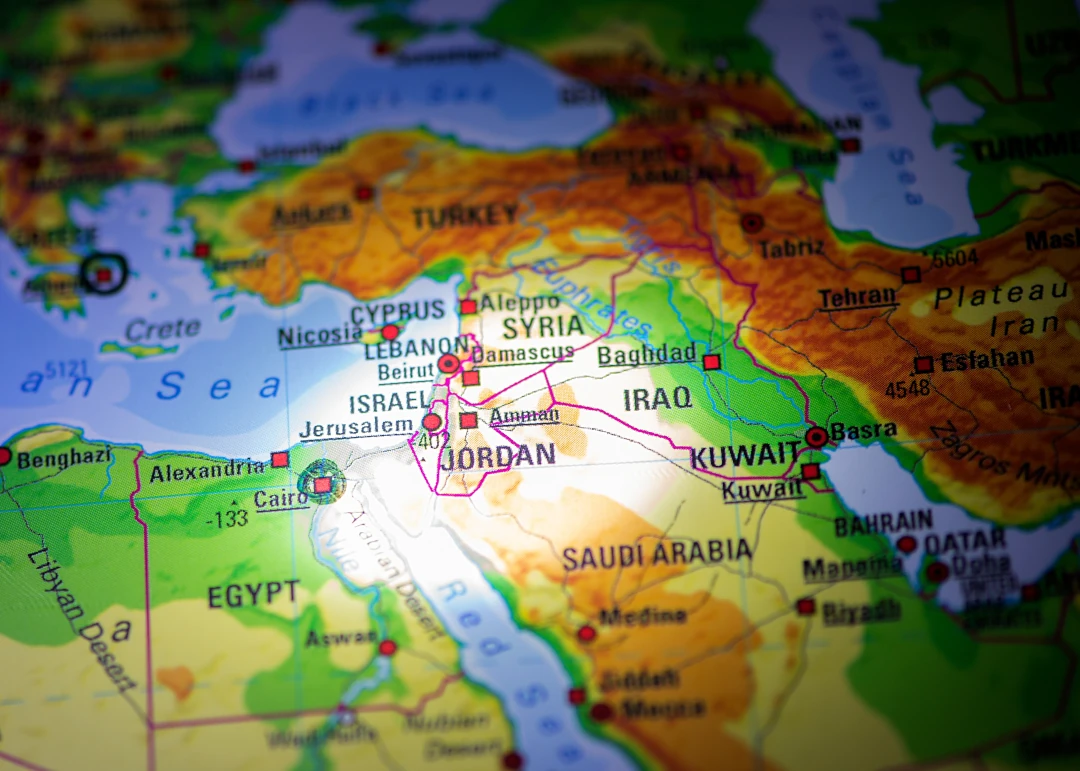
This is not a friendly nudge. This is a hard line. The Gulf states have been on the receiving end of more than four hundred Iranian ballistic missiles and roughly two thousand drones since the war began on February 28. Emirates Global Aluminium’s Al Taweelah facility was knocked offline for what the company estimates may be a year of repairs. A Kuwaiti power-and-desalination plant was hit, killing a worker. Kuwait International Airport’s fuel tanks were set on fire. Qatar’s liquefied natural gas exports have collapsed into force majeure. The Gulf states do not have the luxury of treating an American strike on Iran as a foreign-policy abstraction. For them, every American sortie launched out of Prince Sultan Airbase or Al Udeid is a return address painted on their refineries.
“Give negotiations a chance because if you hit Iran, we will all pay the price for it.”
— Unified message to Trump from Saudi Arabia, Qatar, and the UAE, per U.S. officials cited by Axios, May 18, 2026
And so, after years of careful courtship — after Trump flew to the kingdom in May 2025 and approved long-stalled weapons sales to Riyadh and Doha; after the administration assembled what was supposed to be a wartime coalition of America’s “oil-rich Arab allies” — those allies have responded by closing the door. In April 2025, Saudi Arabia, the UAE, Qatar, and Kuwait had already privately told the United States that none of their territory or airspace would be available as a launchpad against Iran — not even, the official told Middle East Eye, “for refuelling and rescue operations.” The president attacked Iran anyway. A year later, the allies are no longer warning. They are acting.
2. Four Capitals, Four Hard Lines
Saudi Arabia: airspace and Prince Sultan suspended
After Trump’s surprise “Project Freedom” announcement, the kingdom told Washington it would not allow American aircraft to fly from Prince Sultan Airbase or through Saudi airspace in support of the operation. A call between Trump and MBS could not resolve it. The operation was paused.
Kuwait: bases and overflight suspended
A U.S. administration official confirmed to Drop Site News, cited by Middle East Eye, that Kuwait also cut off American access to its bases and airspace. Kuwait is “critical for overflight,” one U.S. official told NBC; without it, “in some cases there is no other way around.”
Qatar: the emir on the phone, before and after
Trump called Emir Tamim bin Hamad Al Thani after Project Freedom had already begun. The Qatari readout emphasized “de-escalation” and “implications for maritime security and global supply chains” — diplomatic language for: stop, and consult.
UAE: presidential intervention to halt the strike
UAE President Mohamed bin Zayed Al Nahyan was among the three rulers Trump named in his Monday Truth Social post as having asked him to “hold off” the May 19 attack. The UAE has absorbed hundreds of missiles and drones since February and has no appetite for a fresh round.
Read those four cards together. This is not the picture of a great power leading a coalition. It is the picture of a great power being managed by a coalition. The instruments of refusal are precisely the instruments a sovereign state is supposed to control: airspace, basing, overflight. The American Constitution gives those decisions — the decision to commit U.S. forces to combat — to the Congress. In May 2026, they are being made in Riyadh and Kuwait City, in advance, by foreign ministries armed with the only veto that has actually worked.
Get Involved Today
Contribute to our mission and turn your concerns into action.
3. What This Tells Us About the War
The war the United States has been prosecuting since the joint U.S.–Israeli strikes of February 28 has now lasted longer than the Twelve-Day War of 2025 by an order of magnitude. Iranian Supreme Leader Ali Khamenei has been killed; Tehran has been evacuated; the Lebanon war has produced more than three thousand deaths, according to Lebanese health officials. Brent crude has crossed $116 per barrel, with American gasoline above $4 a gallon. Hotel occupancy in Dubai has collapsed to ten percent, by Moody’s Analytics’ measure of the regional tourism economy. None of this was a surprise to the Gulf states. They warned, in private and in public, before the war began that this is what regionalizing an Iran conflict would do to their balance sheets and their populations.
The president did not listen. He has not, by every reasonable measure of the past three months, been listening to anyone. Trump has now extended his deadlines and postponed planned attacks on Iran at least half a dozen times, by Axios’s count. He announces operations on Truth Social before allies are briefed. He threatens, then retreats; threatens, then retreats. The pattern is not strategy. The pattern is improvisation by a man who issues commitments his own military cannot execute without the permission of countries he insults the next morning.
That the Gulf monarchies — not exactly a club of liberal humanitarians — have concluded that this presidency is now the dominant source of risk in their neighborhood should be read for what it is. The reason Riyadh, Doha, Abu Dhabi, and Kuwait City said no this week is not that they have suddenly become pacifists. It is that they have run the math. They calculated the cost of one more American strike priced in Iranian retaliation against their oil, their refineries, their airports, and their citizens, and they concluded that the man giving the order does not know what he is doing.
4. A Presidency Conducted on Truth Social
The president’s defenders will say Monday’s announcement was a magnanimous concession to friends. The reporting says otherwise. Per NBC News, the Gulf states were “surprised by Trump’s announcement of Project Freedom on Sunday” — surprised, because the president of the United States rolled out a military operation requiring their airspace and their bases without telling them. The same pattern repeated this weekend. Trump’s national security team was reportedly going to convene in the Situation Room on Tuesday to “discuss military options” — for a strike already announced as imminent.
This is the procedural reality the Constitution was designed to prevent. The drafters, having watched a king commit his subjects to wars on personal whim, vested the war-making power in the Congress. Senator Andy Kim of New Jersey put it plainly: Trump is “not fit to be commander in chief.” Representative Sarah McBride of Delaware, in a statement on X, was sharper: “Threats of war crimes and disregard for human life must be met with accountability under the law. Trump must go.” Even Senator Ron Johnson of Wisconsin, one of the president’s most reliable Republican allies, told the Wall Street Journal that Trump “loses me if he attacks civilian targets” like infrastructure — the very targets the president has, in writing, on his own platform, threatened to obliterate.
“The words and actions of this president have proved that he is unhinged and unwell and has been for some time. … These are not normal times, America.”
— Rep. Madeleine Dean (D-Pa.), House Judiciary Committee, on the steps of the Capitol, April 2026
5. The Timeline of a Presidency Out of Sequence
6. What This Says About His Priorities
The most damning signal in this week’s reporting is not what the Gulf states said. It is what they did not have to argue. They did not, by any account, have to talk Trump out of a war on grounds of human cost, civilian casualties, international law, or the constitutional impropriety of starting a third American war in the Middle East by social-media post. They had to talk him out of it on grounds that their oil and energy facilities would be the ones blown up. That is the argument that landed.
Earlier in the war, Trump told the Financial Times that his “preference would be to take the oil in Iran” — to seize Kharg Island as an American economic asset, “like” the seizure of resources from sovereign foreign nations is something the United States simply does. He has threatened to “completely” obliterate Iran’s electric grid, its oil wells, its civilian infrastructure. Tucker Carlson — Tucker Carlson — said on his show that Trump was threatening “a war crime, a moral crime.” Former Representative Marjorie Taylor Greene, until very recently a Trump stalwart, wrote on X: “25TH AMENDMENT!!! Not a single bomb has dropped on America. We cannot kill an entire civilization.”
When the president’s loudest critics on a question of war crimes include Tucker Carlson and Marjorie Taylor Greene, the political-realignment story has overtaken the partisan one. Something has broken. The priorities of this president are not the priorities of American security. They are the priorities of an erratic individual conducting foreign policy as a series of escalating dares. His own Gulf allies — petro-monarchies with every reason to want Iran cut down — have concluded that those dares are a bigger threat than Tehran’s missiles.
What the Twenty-fifth Amendment was written for, and why this is it.
Section 4 of the Twenty-fifth Amendment, ratified in 1967, provides that whenever the Vice President and a majority of the principal officers of the executive departments transmit to Congress a declaration that the President “is unable to discharge the powers and duties of his office,” the Vice President shall immediately assume those powers as Acting President. The President may dispute the declaration; if he does, the question goes to Congress, where a two-thirds vote of both chambers is required to sustain the removal.
The constitutional question is not psychiatric. It is functional. “Unable to discharge the powers and duties” of the presidency is precisely what Section 4 covers — and the duty being discharged here is the most consequential the office holds: the command of the armed forces. When a president announces military operations without his own Pentagon’s coordination, before his National Security Council has convened, on a platform owned by his own corporation, and is then forced to retract those operations because foreign monarchies have suspended American basing rights to stop him, the functional question answers itself.
Who has already called for invocation
The voices on the record are not at the margins. Rep. Jamie Raskin (D-Md.), former constitutional law professor and ranking Democrat on the House Judiciary Committee, has filed legislation to establish the 17-member commission that Section 4 contemplates, with more than 85 co-sponsors. Sens. Ed Markey (D-Mass.) and Ron Wyden (D-Ore.), Reps. Alexandria Ocasio-Cortez (D-N.Y.), Ayanna Pressley (D-Mass.), Mark Pocan (D-Wis.), Sarah McBride (D-Del.), Madeleine Dean (D-Pa.), and dozens of others have demanded the Cabinet act. Across the aisle, former Rep. Marjorie Taylor Greene, Tucker Carlson, and Anthony Scaramucci have added their voices.
The practical barriers — and why they don’t matter
The practical path is, candidly, closed. Section 4 requires Vice President JD Vance and a majority of a Cabinet selected by Trump for loyalty to declare Trump unfit. They will not. The Republican Senate will not deliver two-thirds. House Minority Leader Hakeem Jeffries has himself acknowledged that Democrats are “in the minority” and that the immediate path is the war powers resolution and the 2026 elections, not removal.
None of which negates the constitutional and moral case. The Twenty-fifth Amendment is not only a procedural mechanism; it is a public standard. To say that this president meets the constitutional definition of inability to discharge the duties of the office — when foreign rulers have replaced the chain of command — is to put on the record the precise nature of the failure the country is living through. The bar Raskin’s bill draws is the bar history will measure this presidency against. The Cabinet’s refusal to act is itself the record of their failure, not the absence of grounds.
7. What Comes Next
The “two or three days” Trump granted his Gulf allies expire within the week. The president has already instructed Defense Secretary Pete Hegseth and Joint Chiefs Chairman Gen. Dan Caine to be “prepared to go forward with a full, large scale assault of Iran, on a moment’s notice.” He has, in his own words, the deal-or-bombs framework that he treats as foreign policy. Iran, mediating through Pakistan, has put a counter-proposal on the table. Whether it survives Trump’s reading of his polls and his cable news between now and Thursday is, at this writing, anyone’s guess.
What is not in doubt is the structural fact this week has surfaced. The American president cannot launch a major Middle East strike without permission slips from the Gulf monarchies that host the airbases, control the overflight corridors, and supply the refueling tracks. Those monarchies have collectively decided that this president, on this question, will not get those permission slips. That is the operational reality. The constitutional question — who in the American system is supposed to be making this decision instead of MBS, MbZ, and Sheikh Tamim — is the question the Congress is statutorily required, by the War Powers Resolution of 1973, to take up. Senate Democrats have a war powers resolution queued for a floor vote. Every senator who declines to support it has to answer, for the rest of their career, why they preferred the judgment of Riyadh to the judgment of the United States Senate.
Editorial Conclusion
A war that the United States Constitution requires the Congress to authorize was, this week, paused by three foreign rulers in three foreign capitals. The American president’s own military could not execute the strike he ordered because America’s hosts had withdrawn their consent. That is not, in any defensible reading of the office, a functioning commander in chief. That is the operational record of a presidency under foreign management.
The Twenty-fifth Amendment was written for precisely this circumstance — a president unable to discharge the powers and duties of his office — and it was written knowing that the political will to invoke it would, in moments of crisis, be insufficient. The amendment is still the standard. The standard has been met. The Cabinet’s refusal to apply it is the indictment of the Cabinet, not the standard.
The question before the country is not whether this presidency has degraded the constitutional command of the armed forces. The Gulf states have already answered that question, and they answered it by closing their airspace. The question is whether the Congress, the Cabinet, and the courts will catch up to what Riyadh and Doha and Abu Dhabi and Kuwait City have already concluded — or whether the next strike, when it comes, will be launched with no one in the chain of command, foreign or domestic, willing to admit who is actually giving the orders.
Sources & References
- Al JazeeraIran war live blog: Trump warns “clock ticking”; Saudi, UAE report drone attacks (May 18, 2026)
- CNBCTrump says he’s postponing “scheduled attack of Iran tomorrow” at Middle East leaders’ request
- AxiosTrump says attack on Iran paused after Gulf states’ requests
- Al ArabiyaTrump says he called off Iran attack at request of Saudi Arabia, Qatar, UAE
- The WeekTrump delays planned strike on Iran after requests from Saudi Arabia, Qatar, UAE
- NBC NewsTrump’s abrupt U-turn on a plan to reopen the Strait of Hormuz came after backlash from allies
- Middle East EyeGulf states derailed Trump’s “Project Freedom” by cutting US access to airspace and bases
- Times of IsraelTrump paused Hormuz op after Saudis denied use of airspace
- The HillDemocrats say Trump’s Iran threat cause for 25th Amendment removal or impeachment
- NBC NewsRepublicans block effort to halt Trump’s war with Iran after “civilization” threat
- AxiosTrump 25th Amendment chatter erupts among Dems over Iran post
- CNN25th Amendment: Democrats and right-wing voices call for removing Trump from office
- The HillDemocrats to try limiting Trump’s Iran war powers during House pro forma session
- The HillDemocrats intensify calls to invoke 25th Amendment, impeach Trump over Iran threats
- Foreign Policy JournalDemocrats file 25th Amendment bill against Trump as Iran war shapes domestic agenda
- Foreign PolicyFour things the Gulf states will expect from the U.S. after Trump’s Iran war
- CNBCTrump reportedly wants to “take the oil” in Iran as Tehran targets Kuwait infrastructure
- CBS NewsTrump says Iran war could wrap up in 2-3 weeks as conflict pushes gas prices over $4 a gallon
Related News