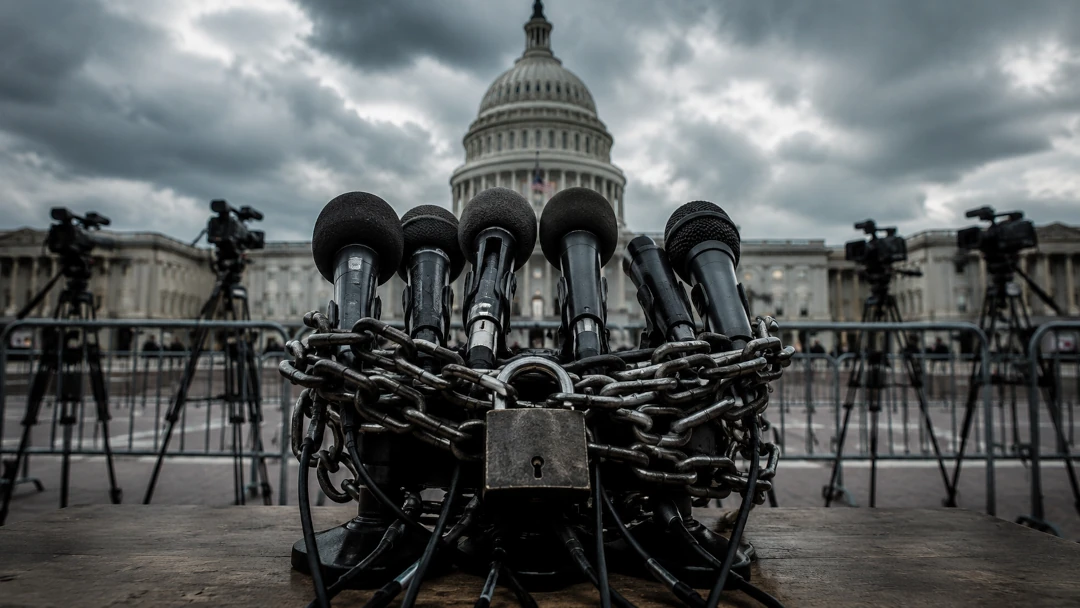
For nearly a year, the Trump administration has used the licensing power of the Federal Communications Commission as a cudgel against broadcasters who displease the president. With a 52-page filing signed by one of the country’s most prominent Supreme Court litigators, Disney has decided that this is where capitulation stops. The stakes are not the future of The View. The stakes are whether a presidency can punish criticism into silence.
The filing landed on May 8 with the kind of force that media-law observers have been waiting for since Donald Trump returned to the White House. In a 52-page submission to the Federal Communications Commission, signed by former Solicitor General Paul Clement, ABC formally accused the Trump administration of violating its First Amendment rights and creating, in the network’s own words, a “chilling effect” on constitutionally protected speech. As NBC News reported, the document is the most pointed legal challenge any major broadcaster has mounted against this administration. It is also, more importantly, the moment a frightened industry began to find its spine.
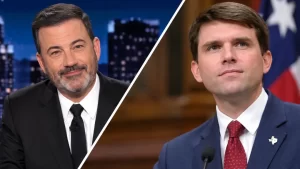
The proximate cause is narrow: an FCC inquiry, opened in February, into whether The View violated “equal time” rules during a primary-season appearance by Texas Democrat James Talarico. The show has operated under a bona fide news exemption granted by the FCC itself in 2002 — an exemption that, as CNN noted in its coverage, had gone unchallenged for nearly a quarter-century. The Commission’s sudden demand that Disney refile for that exemption is, ABC argues, “unprecedented, beyond the Commission’s authority and counterproductive” to the very speech the agency exists to protect.
But the broader cause has nothing to do with daytime talk-show panels. It has everything to do with a pattern.
1. The Filing
That ABC retained Paul Clement — a conservative attorney who served as solicitor general under George W. Bush and remains one of the most experienced Supreme Court litigators in the country — tells you how seriously Disney now takes this fight. Clement’s involvement, first reported by The New York Times and described by CNN as the most aggressive posture any television network has taken toward the administration to date, signals that the company is preparing for a long legal war that could reach the Supreme Court.
The filing’s central argument is constitutional and damning. The FCC, ABC contends, is using regulatory machinery to punish viewpoints the administration finds inconvenient. As NPR reported, the network argues that narrowing the bona fide news exemption now — after decades of consistent practice — “would risk restricting political discourse exactly when it is needed most.” The brief points out, with surgical precision, that the FCC has scrutinized programs critical of the president (The View, Jimmy Kimmel’s monologue) while showing no comparable interest in radio programs run by Trump allies Mark Levin or Glenn Beck.
That asymmetry is not subtle. It is the whole story.
“This is the most egregious action this FCC has taken in violation of the First Amendment to date. The White House called publicly for the silencing of a vocal critic, and this FCC has now answered that call.”
— Anna M. Gomez, FCC Commissioner (D), April 28, 2026
2. A Method Becomes a Pattern
To understand why ABC’s filing matters, you have to understand what preceded it. The Trump administration’s campaign against critical journalism has been systematic, well-documented, and effective. Capitulation has been the rule. Resistance, until now, has been the exception.
In December 2024, before Trump even returned to office, Disney itself settled a defamation suit with the president for roughly $15 million over reporting by ABC News anchor George Stephanopoulos — a case most First Amendment scholars considered meritless. Six months later, CBS’s parent company, Paramount Global, paid Trump $16 million to settle a similarly threadbare lawsuit over the editing of a Kamala Harris interview on 60 Minutes. TIME reported that legal experts overwhelmingly considered the suit frivolous. Senator Elizabeth Warren called the deal “bribery in plain sight”; Senator Ron Wyden condemned the “corporate execs who sold out our democracy.” Paramount was, at the time, awaiting FCC approval for its $8 billion merger with Skydance.
And the pressure was never confined to courtrooms. As the U.S. Press Freedom Tracker has documented, the White House barred Associated Press reporters from the Oval Office, Air Force One, and other restricted spaces because the wire service refused to adopt the president’s preferred name for the Gulf of Mexico. A federal district judge initially called the ban unconstitutional viewpoint discrimination — only to be partially reversed by a Trump-appointed appeals panel.
$15 million paid to Trump’s library, December 2024
Disney settled a Stephanopoulos defamation suit most legal scholars considered unwinnable. FCC Commissioner Gomez later observed that the settlement “did not buy peace. It only bought time.”
$16 million paid by Paramount, July 2025
Paramount settled Trump’s suit over a 60 Minutes edit while seeking FCC approval of the Skydance merger. CBS journalists described it as extortion.
Wire service banned from Oval Office, 2025
The administration excluded Associated Press reporters from pool events for refusing to adopt “Gulf of America” in its style. A district judge found the ban unconstitutional; the appeals court partially reinstated it.
Early renewal demanded on eight stations
On April 28, 2026, the FCC ordered early renewal review of all eight ABC-owned stations — one day after Trump publicly demanded that ABC fire Jimmy Kimmel.
3. The Timeline of Retaliation
The Commission’s own conduct does the prosecution’s work for it. Each escalation has tracked, with uncanny precision, a presidential grievance. The lone Democratic commissioner, Anna M. Gomez, has documented the sequence so methodically that she has taken to delivering it as a “First Amendment Tour” in cities outside Washington.
Chairman Carr’s public explanation — that the license review stems from a year-old investigation into Disney’s diversity, equity, and inclusion practices — has convinced essentially no one. As former FCC official and CNN media analyst Brian Stelter put it on PBS NewsHour, he knew of no FCC or legal experts who found the DEI rationale credible. Seth Stern of the Freedom of the Press Foundation was more direct, telling reporters that Carr “was once a serious communications lawyer” whose decision “to abandon his principles to kiss up to Trump” did not change the law he knows applies. The FCC, Stern added bluntly, is neither the journalism police nor the humor police.
Get Involved Today
Contribute to our mission and turn your concerns into action.
4. What This Says About Leadership
A presidency reveals itself by what it spends its time on. This one has now spent more than a year using federal regulatory power to litigate personal slights — a comedian’s joke about the first lady, an editing decision in a Kamala Harris interview, a wire service’s refusal to adopt a renamed body of water, a panel of women on a daytime show who decline to flatter the president. These are the priorities of an executive who, as The New Republic recently observed, “either can’t or won’t face the music” from a reporter asking why gas prices remain high.
This is not the conduct of a leader engaged with the country’s actual problems. It is the conduct of a man who has converted the machinery of the executive branch into an instrument of personal grievance — and surrounded himself with appointees, like Carr, who execute that grievance with the bureaucratic dressing of “character investigations” and “equal-time inquiries.”
Jane Fonda, speaking through the recently revived Committee for the First Amendment, called the license review a “naked attempt to weaponize government power against dissent” that fit “a deliberate and deeply troubling pattern of authoritarian regimes throughout history.” Jameel Jaffer of the Knight First Amendment Institute at Columbia wrote in The New York Times that each successive media settlement “weakens the democratic freedoms on which these media organizations depend.” Both are correct. Both have been correct for over a year. The administration’s answer has been to escalate.
The pattern is not merely lawless. It is a question of capacity.
The Twenty-Fifth Amendment, ratified in 1967, provides in Section 4 that the Vice President and a majority of the Cabinet — or “such other body as Congress may by law provide” — may declare a sitting president “unable to discharge the powers and duties of his office.” It is a mechanism designed for incapacity, not policy disagreement. That is the threshold its drafters set, and any honest argument for invoking it must meet that threshold.
On April 14, 2026, Representative Jamie Raskin (D-MD), ranking member of the House Judiciary Committee, introduced legislation with 50 Democratic co-sponsors to establish a 17-member Commission on Presidential Capacity to Discharge the Powers and Duties of Office — precisely the “other body” the Amendment contemplates. Four days earlier, Raskin had formally demanded that Captain Sean Barbabella, the White House physician, conduct a comprehensive cognitive and neurological evaluation of the president and brief Congress on the findings.
The pattern Raskin documented in his letter is the pattern the FCC story exemplifies: a president who, in his words, threatens to “extinguish a civilization” on social media, who delivers profane Easter-morning tirades, who weaponizes federal agencies against personal critics. Other lawmakers have joined the call, including Senator Ed Markey (D-MA), Representative Sydney Kamlager-Dove (D-CA), and Representative Yassamin Ansari (D-AZ), who declared that “the 25th Amendment exists for a reason.” The discomfort has crossed ideological lines: even Tucker Carlson and Candace Owens, both 2024 Trump supporters, urged action after the Iran threats.
The practical barriers are real, and we will not pretend otherwise. Republicans control both chambers; Vice President JD Vance and a loyalist Cabinet are exceedingly unlikely to act; even a successful commission report would face a two-thirds vote in both houses. The structural odds are long.
But the constitutional case does not depend on the political probability of removal. It depends on whether a sustained pattern of erratic, retaliatory, and impulsive conduct — using a federal regulator to punish a comedian, threatening a sovereign nation with annihilation by tweet, governing as if personal slight were policy — constitutes a meaningful inability to discharge the duties of the office faithfully. The argument is not that disagreement justifies removal. The argument is that the pattern itself, taken whole, raises a question the Constitution provides a mechanism to answer. Refusing to ask the question because the answer is politically inconvenient is its own form of constitutional abdication.
5. Why Disney’s Stand Matters
Commissioner Gomez’s May 11 letter to Disney CEO Josh D’Amaro — described by NBC News and Common Dreams as extraordinary — lays out the lesson with unusual frankness: capitulation does not work. The 2024 settlement, she wrote to D’Amaro, “did not buy you peace. It only bought you time.” Each surrender has emboldened the next demand. The price always goes up.
That is why this filing — this particular 52-page filing, signed by this particular Republican-pedigreed lawyer, on this particular procedural battlefield — matters out of all proportion to its narrow subject. ABC is testing the proposition that a major American broadcaster can refuse to comply with viewpoint-based regulatory retaliation and survive. If Disney holds the line and prevails, other media companies gain a precedent and a model. If Disney folds, the chilling effect that already shadows every newsroom in the country will deepen into something darker.
Because the last broadcast license to be revoked over programming was in 1969 — a Mississippi station that defended racial segregation on air, as Stelter noted on PBS — it is clear that the FCC’s threshold for taking action is—rightly—extremely high. That this Commission has lowered itself to threatening eight stations over a comedian’s joke is the measure of how far the agency has fallen.
Editorial Conclusion
The fight ABC has now joined is not about The View, and it is not about Jimmy Kimmel, and it is not even, in the end, about Disney. It is about whether the licensing authority of a federal agency can be turned against the speech the First Amendment was written to protect.
A president who treats criticism as a regulatory infraction is a president who has forgotten the difference between the office and the man. A Commission that obeys him in this work has forgotten its statutory purpose. A Congress that watches in silence has forgotten its oath.
Disney did the right thing. The other networks should do the same. And every American who values a press that is free to mock, criticize, and contradict the powerful should understand that this is not someone else’s fight. It is the country’s.
Sources & References
- NBC News — ABC accuses Trump administration of violating free speech rights
- NPR — ABC argues Trump administration is trying to chill free speech
- CNN Business — ABC says Trump’s FCC is threatening free speech in ‘The View’ probe
- The New Republic — ABC Accuses FCC of Violating First Amendment in Blistering Filing
- Philadelphia Inquirer — ABC accuses government of violating First Amendment
- CNN Business — Trump administration challenges ABC station licenses amid Kimmel controversy
- PBS NewsHour — FCC threatens ABC’s licenses as Trump calls for Kimmel’s firing
- Deadline — FCC Commissioner Urges ABC To “Stand Firm” Amid Broadcast License Review
- NBC News — Democratic FCC commissioner tells Disney it’s the target of a ‘censorship’ campaign
- Common Dreams — Democratic Commissioner Anna Gomez Blasts Trump FCC Attack on Disney-ABC in Blistering Letter
- Democracy Now! — “Assault on the First Amendment”: Dem. FCC Commissioner on Megamergers & Trump Targeting Kimmel, ABC
- CNN Business — Paramount settles Trump’s ‘60 Minutes’ lawsuit with $16 million payout
- TIME — What Paramount’s Settlement With Trump Says About Free Press
- NPR — CBS appears poised to settle Trump lawsuit over ‘60 Minutes’
- U.S. Press Freedom Tracker — AP reporters barred from White House events over editorial style policy
- Reporters Committee for Freedom of the Press — RCFP: White House’s AP press access ban violates First Amendment
- House Judiciary Democrats — Ranking Member Raskin Demands White House Physician Evaluate Trump’s Cognitive Fitness
- MSNBC — Raskin offers bill setting up 25th Amendment process to remove Trump from office
Related News