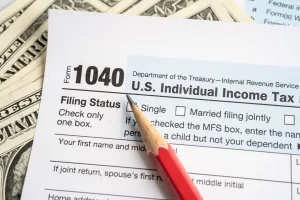
The president filed an OGE Form 278-T this month that reads like a hedge-fund prospectus — 3,642 securities transactions in a single quarter, valued between $220 million and $750 million, in companies his own administration regulates. The numbers are staggering. The pattern is worse. And the constitutional question is no longer hypothetical.
There is a specific kind of document that, once released, redraws the terms of a political moment. The 113-page Form 278-T that the Office of Government Ethics published this week is that kind of document. According to filings released on May 14, President Donald Trump’s portfolio executed 3,642 securities transactions in the first three months of 2026 — an average of roughly 60 trades per U.S. trading day — in a sweep across the very industries his administration is actively regulating, taxing, deregulating, or negotiating over. The cumulative value, expressed in the wide statutory bands that the form permits, falls between $220 million and approximately $750 million.
This is not a routine ethics filing. It is a portrait of a presidency that has dissolved the wall between public office and private enrichment — a wall every modern president since Lyndon B. Johnson has, in some form, accepted as a basic condition of democratic legitimacy. Jimmy Carter sold his peanut farm. Barack Obama held only Treasury notes and broad index funds. Joe Biden used a blind-trust arrangement. As Yahoo News reported in its review of the filing, the current document represents a sharp departure from that decades-long norm of qualified blind trusts.
The White House response, delivered by spokesperson Davis Ingle, is that “there are no conflicts of interest” because the president’s assets are held in a trust managed by his children. That is not what a blind trust is. A blind trust is, by definition, one in which the beneficiary cannot know what is being bought and sold in his name. A trust managed by one’s adult sons — sons who attend state visits, take meetings with foreign leaders, and run a global business empire — is the opposite of blind. It is a trust with daylight pouring in.
1. The Volume Is the Story
Before turning to which stocks were bought and when, the raw volume of activity deserves its own scrutiny. Sitting presidents do not, as a rule, trade. They do not have time. The job is too demanding, the conflicts too obvious, the appearance of impropriety too easy to create. And yet, as Benzinga’s review of the certified filing notes, the document was certified by Trump on May 8 and received by the OGE on May 12 — with a handwritten notation on the cover page reading “Filer paid late fees,” indicating the 30-to-45 day disclosure window set by 5 C.F.R. part 2634 was missed. The president of the United States, with the full apparatus of federal ethics counsel at his disposal, filed his own conflict-of-interest paperwork late.
Securities transactions disclosed across the 113-page Form 278-T for Q1 2026 — averaging about 60 per trading day, per Benzinga’s analysis.
Cumulative transaction value, expressed in the broad statutory bands that the 278-T format permits, according to Reuters.
A handwritten notation on the cover page confirms the filing was submitted outside the federal disclosure window required by ethics regulations.
Trades crossed semiconductors, AI infrastructure, defense, banking, crypto, and consumer tech — every sector his administration touches through policy.
The defense — that the trades were executed by independent brokers using “computer-based model portfolios” — collapses under the weight of its own implausibility. As the financial analysis outlet AInvest observed in its review, modern presidents have historically liquidated single-name equities precisely to avoid this kind of debate. A “model portfolio” that buys seven-figure individual positions in Dell, Nvidia, Boeing, and Oracle is not a blind risk-management strategy. It is a portfolio of bets on specific outcomes — outcomes the trader-in-chief has the power to engineer.
2. The Trades That Cannot Be Explained Away
What turns a volume problem into a corruption problem is the timing. CNBC’s review of the filings, citing reporting by NOTUS, found that “the timing of some of the president’s transactions overlapped with news from the companies whose stock he was buying or selling.” One week after a February 10 purchase of between $1 million and $5 million of Nvidia stock, Nvidia announced a major chip deal with Meta. Another Nvidia purchase preceded a Commerce Department approval of certain Nvidia chip exports. The pattern repeats, sector after sector.
Donald K. Sherman, president of Citizens for Responsibility and Ethics in Washington (CREW), put the matter plainly to Scripps News: rather than avoiding transactions involving industries with business before his administration — as other presidents have done as a matter of basic decency — Trump has prioritized serving himself at the expense of the public. That is not partisan editorializing. That is the assessment of the nation’s leading nonpartisan ethics watchdog, reading the documents the president himself certified.
“Donald Trump’s financial transactions, while staggering, are far from surprising. Rather than avoiding transactions involving industries with business before his administration and assuaging conflict of interest concerns — as other presidents have historically done — Trump has prioritized serving himself at the expense of the public.”
— Donald K. Sherman, President, Citizens for Responsibility and Ethics in Washington
3. The Statutory Loophole — and the Moral One
It is true, and it must be conceded honestly, that under 18 U.S.C. § 208, the president and vice president are statutorily exempt from the conflict-of-interest rules that bind every other federal employee. The legislative logic at the time was practical: a president’s decisions move every market, making any holding a theoretical conflict. The remedy Congress assumed — and that every modern administration accepted — was a norm of voluntary divestment or blind trust. Trump has shattered that norm, then pointed to the absence of a criminal statute as proof that he has done nothing wrong.
This is the corruption of legalism — the argument that whatever is not explicitly forbidden is implicitly permitted, and that the office of the presidency owes the public nothing beyond the bare minimum the U.S. Code can be coerced into specifying. It is the same logic the administration has applied to deals in Saudi Arabia, Qatar, and Vietnam, where the Trump Organization has conducted business in eight foreign countries during the second term while insisting that none of it constitutes a conflict because the deals are with private parties.
The political response has been gathering. House Minority Leader Hakeem Jeffries and Rep. Joe Morelle have launched a House Democratic task force on ethics reform that explicitly contemplates banning stock trading for the executive branch, members of Congress, and federal judges. In the Senate, the bipartisan ETHICS Act — and a companion bill from Republican Sen. Ashley Moody and Democratic Sen. Kirsten Gillibrand — would extend trading restrictions to the president and vice president themselves. Last year, Sens. Adam Schiff, Elizabeth Warren, Chuck Schumer, and Ron Wyden formally asked the SEC to investigate whether Trump and members of his cabinet engaged in market manipulation or insider trading around the April 2025 tariff pause. None of those investigations has produced a public finding. None has produced a divestment.
Get Involved Today
Contribute to our mission and turn your concerns into action.
4. What This Says About Priorities
Read the filing as a single document and a portrait emerges of what the president of the United States spends his time and attention on. The president has, by his own attestation, presided over a portfolio executing sixty trades a day. He has bought into the precise sectors — semiconductors, defense contractors, crypto platforms, big banks — whose fortunes his administration’s policies are moving. He has missed his own federal disclosure deadline and paid the late fee. He has assigned no blind trustee, divested no equity, and recused from no policy decision touching the companies in his portfolio.
What this says about leadership is straightforward, and it is not partisan to say it. A leader whose first instinct upon entering the world’s most powerful office is to position a private portfolio to profit from the powers of that office has, by definition, inverted the relationship between public service and personal interest. The public has become the instrument, and the office has become the means. This is not the rhetoric of opponents; it is the structural reading of the documents the OGE just published.
“Senior White House officials have influence over or become witting of consequential policy decisions that can have market-moving impacts. It is critical that such officials adhere to all applicable ethics, conflict of interest, and disclosure requirements.”
— Sens. Schiff, Warren, Van Hollen, Merkley, and Slotkin, in a letter to White House Chief of Staff Susie Wiles
The administration’s defense rests on a single sentence, repeated by spokespeople Davis Ingle and Anna Kelly across every interview: “President Trump only acts in the best interests of the American public.” It is, on its face, an assertion. It is not evidence, and it is not law. The 278-T is evidence. Eighteen sources, hundreds of named transactions, and a documented timeline of policy decisions overlapping with trade activity are evidence.
When a president treats the office as a portfolio, the Constitution offers a remedy — and Congress must take it seriously.
The 25th Amendment, ratified in 1967, provides in Section 4 that a president may be declared “unable to discharge the powers and duties of his office” by a majority of the Cabinet acting alongside the vice president, or by “such other body as Congress may by law provide.” This second clause is not decorative. It is the Framers of the amendment expressly inviting Congress to construct an independent mechanism for assessing presidential fitness, precisely because they understood that a Cabinet selected for personal loyalty might never act on its own.
That is the mechanism Rep. Jamie Raskin, ranking member of the House Judiciary Committee, has now proposed. On April 14, 2026, Raskin — joined by 50 Democratic co-sponsors — introduced the Commission on Presidential Capacity Act, which would establish a bipartisan 17-member panel of physicians, psychiatrists, and former senior executive officials to evaluate whether a sitting president is mentally or physically capable of executing the office. Raskin argued that “we are at a dangerous precipice” and that congressional action under the 25th Amendment had become “a matter of national security.”
The Raskin commission was proposed in the immediate context of Trump’s behavior surrounding the Iran conflict — his social-media threat that “a whole civilization will die tonight,” the profane outbursts, the rambling remarks at the White House Easter Egg Roll. But the framing is broader, and the OGE filing released this month deepens it. A president who cannot distinguish between the public trust and his private brokerage account, who files his own ethics paperwork late, who appears to use the powers of the office to move markets in which he is personally positioned — that is a question of capacity to discharge the duties of the office. The duty is to act in the public interest. The disclosure documents that he has acted in his own.
The honest assessment of practical barriers
The constitutional path is steep. Section 4 of the 25th Amendment requires action by the vice president and a majority of the Cabinet — both staffed by Trump loyalists who will not move against him. The Raskin commission bill faces a Republican-controlled House and Senate and a certain presidential veto. There is no realistic legislative scenario in which Trump is removed from office by this mechanism in the current Congress, and pretending otherwise would be dishonest.
Why the barriers do not extinguish the case
Constitutional remedies do not exist solely for the moments they are successfully invoked. The 25th Amendment exists to name a category of incapacity that the Republic cannot tolerate — and to force the political branches to declare, on the record, where they stand. A presidency that runs the executive branch as a trading desk is the exact failure of fiduciary capacity the amendment was written to address. That the current Congress will not act does not mean the case is unmade. It means the case will be made to the voters in November, and to the historical record permanently.
5. What Accountability Now Requires
The path forward does not run only through the 25th Amendment. It runs through every institution that still functions. The Securities and Exchange Commission, despite its recent leadership, should answer the demand from Sens. Warren, Schiff, Schumer, and Wyden for an investigation into the trading pattern. The House and Senate ethics committees should determine whether the timing of specific trades — Dell, Nvidia, Boeing, Oracle — warrants formal review. The ETHICS Act and the Restore Trust in Congress Act — bipartisan, popular, and overdue — should be brought to the floor of both chambers. Discharge petitions exist precisely for moments like this.
And the press — which has done its job this week, with rigorous reporting from Reuters, NBC, CNBC, Scripps, and others — must continue to read every line of the 278-T and the forthcoming annual financial disclosure, and to report what it finds without flinching from the conclusion the documents demand.
Editorial Conclusion
A president who treats the executive branch as a brokerage account is not exercising the powers of his office. He is selling them. The OGE filing released this month is not ambiguous. The pattern of trading in regulated industries is not coincidental. The late-filed paperwork is not clerical. These are the documented choices of a man who does not believe the presidency owes the public anything.
The 25th Amendment was written for exactly this category of failure — not only the medical incapacity it is usually associated with, but the moral and constitutional incapacity to discharge the office as a fiduciary duty rather than a personal opportunity. The current Congress will not invoke it. But the case for it has now been filed, in 113 pages, on official Office of Government Ethics letterhead, by the president himself. The question is no longer whether the conflicts exist. The question is whether the Republic still has the institutional courage to name them.
Sources & References
- NBC News — Trump ethics filing reveals thousands of trades tied to U.S. stocks (May 14, 2026)
- CNBC — Trump went big on tech stocks in first quarter of 2026, new filings show (May 15, 2026)
- Benzinga — Trump’s Trading Disclosure Shows Activity In Nvidia, AMD, Microsoft, Oracle (May 14, 2026)
- Scripps News — New ethics reports reveal thousands of stock trades made in President Trump’s name (May 14, 2026)
- Euronews — Stock trade disclosure reveals Trump made massive gains on Big Tech bets (May 15, 2026)
- Reuters via U.S. News — Trump Ethics Filing Reveals Thousands of Trades Tied to US Corporate Securities
- Yahoo Finance — Trump Logs 3,642 Stock Trades in Q1, Breaking Decades of Blind Trust Norms
- AInvest — An Analysis of President Trump’s New Financial Disclosures
- MSNBC Opinion — Trump’s new financial disclosures are rife with conflicts of interest
- House Judiciary Democrats — Raskin Demands Cognitive Evaluation of President Trump (April 10, 2026)
- MSNBC — Raskin offers bill setting up 25th Amendment process (April 14, 2026)
- Common Dreams — Raskin Bill Would Create Commission to Examine President’s Fitness
- Truthout — Raskin Proposes New Health Commission for POTUS Fitness Under 25th Amendment
- Mediaite — House Democrats File Bill to Form 25th Amendment Commission
- PBS NewsHour — House Democrats attempt anti-corruption message against Trump
- Office of Sen. Adam Schiff — Senators Call on SEC to Investigate Trump Tariff Market Manipulation
- ABC News — Democrats press White House over potential insider trading before Trump tariff pause
- Fox News — House Dems unveil bill to examine removing Trump using 25th Amendment
Related News