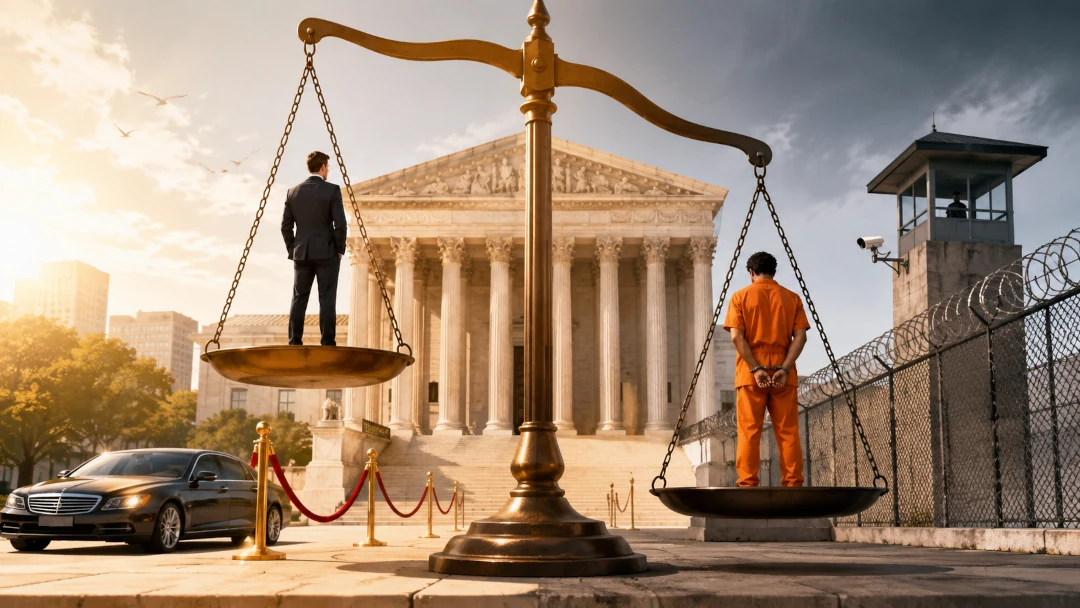
Two Justice Systems, Now Written in Plain English — and the SDNY Just Put It in Writing
On July 15, the Southern District of New York picked up the phone and told New Mexico’s Attorney General that federal prosecutors will not support the only active criminal investigation into Jeffrey Epstein’s crimes at Zorro Ranch. The message beneath the message is unmistakable: powerful men will be shielded, survivors will be left waiting, and the transparency law President Trump himself signed into law will be quietly gutted from within his own Department of Justice.
There is a phone call that took place on Tuesday afternoon that every American who still believes in equal justice under the law needs to understand. According to the New Mexico Department of Justice, prosecutors at the U.S. Attorney’s Office for the Southern District of New York — the very office that indicted Jeffrey Epstein in 2019 — called Attorney General Raúl Torrez to inform him, in plain English, that they will not cooperate with, and will not support, the only active criminal investigation into Epstein’s trafficking operation anywhere in the country. That investigation is being run out of Santa Fe, and its target is Zorro Ranch, the sprawling New Mexico compound where survivors have alleged Epstein and his co-conspirators sexually abused underage girls for years.
The call did not come out of nowhere. It came at the end of a five-month stonewall in which New Mexico’s top prosecutor tried, six separate times, to get the U.S. Department of Justice to hand over the unredacted records the state needs to build its case. It came sixteen days after Torrez sent a scathing eight-page letter to Acting Attorney General Todd Blanche warning that “every day that the USDOJ withholds these records, the foundation upon which a New Mexico prosecution could be built erodes.” And it came at a moment when the president of the United States — whose own name appears throughout the Epstein files, whose former defense attorney is now running the Justice Department, and who signed the very transparency law being violated — has spent the better part of a year attempting to make the entire scandal disappear.
This is what a two-tiered justice system looks like when it stops bothering to hide.
I. The Phone Call That Killed a Prosecution
The facts are not in serious dispute. In February 2026, after reviewing documents released under the Epstein Files Transparency Act, Torrez reopened a New Mexico criminal investigation that had been closed in 2019 at the direct request of the Southern District of New York. The New Mexico Department of Justice announced on February 19 that its special agents would seek “immediate access to the complete, unredacted federal case file,” a step his office has since described as essential to identifying survivors, witnesses, and co-conspirators. In March, state investigators, joined by the New Mexico State Police and Sandoval County Sheriff’s Office, conducted a search of Zorro Ranch itself.
Federal cooperation, Torrez says, was verbally promised. It never arrived. In a June 30 letter to Blanche and Associate Deputy Attorney General Diego Pestana, publicly released on July 9, Torrez laid out the timeline: an initial records request on February 13; five subsequent follow-ups; an attempt to schedule an in-person meeting during a trip to Washington; and, as of that writing, more than 130 days of silence. The letter set a hard deadline of July 31, after which New Mexico would treat the request as denied and pursue “all available legal remedies,” up to and including a state-court subpoena.
On Tuesday, according to the New Mexico Department of Justice, SDNY made its answer official. In a statement posted to social media and confirmed by Axios and KOB-TV, the state said federal prosecutors called to inform them that “they will NOT cooperate and will not support the only active criminal investigation into Jeffrey Epstein.” Read that sentence twice. The Department of Justice of the United States of America, faced with the last remaining criminal investigation into one of the most notorious sex-trafficking rings in modern American history, has decided that its role is to obstruct it.
“Today we sent another letter to the Justice Department, and this afternoon, SDNY called to inform us they will NOT cooperate and will not support the only active criminal investigation into Jeffrey Epstein.”
— New Mexico Department of Justice, July 15, 2026
The DOJ’s public defense — offered to CNN by an unnamed spokesperson — is that the agency “substantively responded” to New Mexico’s requests and stands “ready to provide necessary assistance.” The New Mexico DOJ says it received nothing of the kind, whether by email or by mail. Whichever version is true, the operative fact remains: the state does not have the records it needs, the federal government controls them, and the investigation is stalled by design.
II. The Law Trump Signed — and Broke
The scandal here is not simply that the Justice Department is dragging its feet. It is that the Justice Department is dragging its feet on records the president is legally obligated to make public. On November 19, 2025, after months of resistance, President Trump signed the Epstein Files Transparency Act into law. The bill passed the House 427–1 and cleared the Senate by unanimous consent. Trump proclaimed on Truth Social, in all capital letters, that he had signed it. The law gave Attorney General Pam Bondi 30 days — until December 19, 2025 — to release all unclassified records related to the Epstein and Maxwell prosecutions in a “searchable and downloadable format.”
The December 19 deadline came and went with a partial, heavily redacted release. On January 30, 2026, Deputy Attorney General Blanche announced that the DOJ was releasing 3.5 million of the roughly 6 million pages it had identified as potentially responsive — and that no further material would be forthcoming. The other 2.5 million pages, he said, would remain under seal. A coalition of Epstein survivors immediately blasted the release as “incomplete,” warning that their names and identifying information were being exposed while the men who abused them remained protected.
Republican Rep. Thomas Massie of Kentucky, one of the two authors of the transparency law, put it plainly: the release “grossly fails to comply with both the spirit and the letter of the law.” His Democratic co-author, Rep. Ro Khanna of California, called it “an incomplete release with too many redactions” and said the two were exploring “all options,” including contempt proceedings. By late June, a federal judge — U.S. District Judge Emmet Sullivan — ordered Blanche to unredact a series of specific documents, finding that the acting attorney general “has conceded that he is in violation” of the law he was sworn to enforce.
The Epstein Files Transparency Act passed the House 427–1 on November 18, 2025, with only Rep. Clay Higgins (R-LA) voting no. The Senate passed it by unanimous consent. Trump signed it the next day. Full text.
DOJ has released 3.5 million pages while withholding another 2.5 million. Blanche has offered to show additional material to a judge “in camera” — behind closed doors — not to the public.
Judge Emmet Sullivan ruled on June 25 that Blanche had “likely violated the transparency law” and ordered specific documents unredacted, including FBI notes referring to President Trump.
DOJ fired Maurene Comey — the veteran SDNY prosecutor who worked the original Epstein and Maxwell cases. She has sued the Justice Department over her termination.
What this record establishes is not a slow rollout. It is a pattern of deliberate obstruction, executed by an acting attorney general who was Donald Trump’s personal defense attorney before he was elevated to run the Justice Department, at a moment when the president’s own name is under sworn discussion inside the unreleased files.
III. Two Justice Systems, Written Plain
To understand what has actually happened here, place the current administration’s conduct in the Epstein matter alongside its conduct in the cases it does want to pursue. This is a Justice Department that has moved aggressively to deploy federal prosecutorial power against political adversaries, that has staffed U.S. Attorney’s offices with presidential loyalists, and that has — in the words of Just Security’s ongoing chronology of the Epstein prosecution — a documented history of asking state and local law enforcement to “stand down” from investigating potential co-conspirators in Epstein’s network. New York’s NYPD was told to stand down in 2019. New Mexico’s DOJ was asked to stand down in 2019. Now, in 2026, when New Mexico decides to actually stand back up, it is told that federal cooperation is off the table.
These are not the actions of a Justice Department that treats all Americans equally under law. They are the actions of a Justice Department that has been openly repurposed to serve a single client. When the target is an adversary of the president, resources are unlimited. When the target is a network of wealthy men who moved in the same social orbit as the president, resources evaporate. When state prosecutors try to fill the vacuum, they are told no.
The survivors of Zorro Ranch — the ones Torrez has committed to bringing justice for, the ones whose 2019 anonymous email alleged that two “foreign girls” were buried on the property, the ones like Annie Farmer who testified at Maxwell’s trial that they were abused at the ranch — are not, in this system, the priority. The priority is protecting whoever is named in the withheld 2.5 million pages.
“Survivors are having their names and identifying information exposed, while the men who abused us remain hidden and protected. That is outrageous.”
— Statement from a coalition of Epstein survivors, January 30, 2026
IV. What Actually Gets This President’s Attention
Any honest assessment of leadership begins with priorities. What has the President of the United States prioritized in the year since the Epstein files became a legal, political, and moral crisis? He has sued The Wall Street Journal for reporting on his birthday note to Epstein. He has held a Situation Room meeting to pressure Republican members of Congress to abandon the transparency bill. He has called the entire scandal a “Democrat hoax” — even as his own former defense attorney, now the acting attorney general, is under a court order for violating the very law Trump signed.
He has not, so far as the public record shows, met with a single survivor. He has not directed his Justice Department to cooperate with the New Mexico investigation. He has not explained why federal prosecutors are refusing to hand over unredacted records that Congress explicitly required be made public. He has not addressed the emails released by the House Oversight Committee in which Epstein wrote to author Michael Wolff in 2019 that Trump “knew about the girls.”
A president whose leadership was oriented toward the rule of law would, at minimum, order his Justice Department to comply with the statute he signed. A president whose leadership was oriented toward the victims of one of the worst sex-trafficking rings in American history would, at minimum, direct federal prosecutors to assist the last remaining criminal investigation. That neither of these things has happened is not an accident of governance. It is a choice — and it is a choice that reveals, more clearly than any speech or rally, what this administration believes the Justice Department is for.
Get Involved Today
Contribute to our mission and turn your concerns into action.
V. How We Got Here: A Timeline
When Priorities Themselves Become Evidence of Unfitness
Section 4 of the 25th Amendment permits the Vice President and a majority of principal executive officers — or “such other body as Congress may by law provide” — to declare in writing that the president is “unable to discharge the powers and duties of his office.” The Vice President then assumes those powers as Acting President. It is the only constitutional mechanism, short of impeachment, for removing a sitting president who is not physically or mentally capable of executing the office in trust for the American people.
The mechanism has never been invoked. That is not because it was never meant to be invoked; it is because the political conditions for invoking it are severe. Section 4 requires the loyalty of a president’s own Vice President and a majority of his own Cabinet — the very people he selected, in most cases, precisely for their loyalty.
The moral and constitutional case, however, does not require partisan alignment. It requires only a serious assessment of whether a president is capable of discharging the essential duties of his office, one of which is the faithful execution of the laws — including the laws he himself has signed. On April 10, 2026, House Judiciary Ranking Member Rep. Jamie Raskin (D-MD) wrote the White House physician demanding an immediate cognitive and neurological evaluation of the president. Four days later, Raskin introduced legislation to establish a bipartisan Commission on Presidential Capacity — the “other body” the amendment explicitly contemplates. Rep. Raja Krishnamoorthi (D-IL) has called on Vice President Vance and the Cabinet to invoke Section 4 directly. On April 30, Senators Sheldon Whitehouse and Jack Reed (D-RI) entered into the Congressional Record a statement from 36 physicians from Harvard, Tufts, Columbia, and George Washington warning of a “rapidly worsening, reality-untethered, increasingly dangerous decline.”
What the Epstein episode adds to this record is not a diagnosis. It is evidence of a functional failure of executive priority. A president who signs a transparency law and then refuses to enforce it. A president who publicly claims transparency and privately runs a Justice Department that stonewalls state prosecutors investigating child sex trafficking. A president who has time to sue newspapers and pressure lawmakers but who cannot articulate why federal cooperation with a criminal investigation into his late friend’s estate has been shut down. These are not partisan complaints. They are indicators that the office is not being discharged in the manner the Constitution requires.
The practical barriers to invocation are real. Vice President JD Vance has shown no independent inclination toward the amendment, and the Cabinet was assembled for loyalty above all. But the moral and constitutional case does not depend on whether the barriers can be overcome tomorrow. It depends on whether the record justifies making the case at all. On the evidence — the signed law being violated inside his own DOJ, the phone call to New Mexico, the withheld pages, the pattern of shielding — the record is being made in real time.
VI. What the Survivors Are Owed
Every credible institution in a democracy depends, at bottom, on the public’s belief that the law applies to everyone. Every American who has ever paid a parking ticket, sat for a jury summons, filed an honest tax return, or complied with a subpoena has done so on the faith that the same rules would be applied to the powerful. That faith is not a naive assumption. It is the load-bearing beam of the entire structure. Pull it out, and the building comes down — not immediately, but inevitably.
That is what is being pulled out today. A federal prosecutor’s office is refusing to help a state prosecutor’s office investigate the sexual abuse of children. A Justice Department is withholding millions of pages of records it is legally required to release. A president is refusing to enforce his own signed law. And the survivors of Zorro Ranch — women and girls who were taken to a ranch outside Santa Fe and abused there — are watching the machinery of federal law enforcement decide, publicly and on the record, that their cases are not worth the political cost of pursuing.
New Mexico Attorney General Torrez has said he will pursue “all available legal remedies,” including a state-court subpoena. The state legislature has convened the New Mexico Survivor’s Truth Commission, which has already subpoenaed multiple banks and U.S. Attorney’s offices. Judge Sullivan has ordered specific unredactions. Congress, at least on paper, retains the power to hold Blanche in contempt. And the ballot box, in three months, will return its own verdict on the political party that has permitted this to happen.
None of these remedies bring back the years of silence the survivors have already endured. But they are the tools of a constitutional system that still works, if it is used. The question is whether the American people, and the officials elected to represent them, still have the will to use it.
Editorial Conclusion
A Department of Justice that will not enforce the transparency law the president signed, and that refuses to help a state prosecutor investigate the sexual abuse of children at Jeffrey Epstein’s ranch, is not a Department of Justice at all. It is an instrument of protection for the powerful, operating in plain view. The Constitution provides remedies for exactly this failure — the courts, the Congress, and, if the record continues to justify it, the 25th Amendment. What is required now is not more outrage. It is the political will, in both parties, to use the tools the Founders left us. The survivors of Zorro Ranch have waited long enough. The rule of law cannot wait any longer.
Sources & References
- Axios — “New Mexico attorney general clashes with DOJ over Epstein records” (July 15, 2026)
- KOB-TV — “NMDOJ: Feds in NY will not cooperate with criminal investigation into Epstein” (July 15, 2026)
- CNN Politics — “New Mexico AG says DOJ is withholding ‘critical’ Zorro Ranch information” (July 9, 2026)
- Source New Mexico — “New Mexico AG Torrez says feds impeding criminal Epstein investigation” (July 2026)
- MS NOW — “New Mexico AG says DOJ is impeding Epstein ranch investigation” (July 10, 2026)
- Organ Mountain News — “New Mexico AG demands unredacted Epstein records” (July 2026)
- Fox News / AOL — “New Mexico DOJ announces search of Zorro Ranch” (March 2026)
- Congress.gov — H.R. 4405, Epstein Files Transparency Act (statutory text)
- JURIST — “Trump signs Epstein Files Transparency Act into law” (Nov 20, 2025)
- TIME — “Trump Signs Bill Ordering Release of Epstein Files” (Nov 2025)
- CNBC — “Epstein files: Victims blast DOJ for incomplete release” (Jan 30, 2026)
- Forbes — “Justice Department Ordered To Unredact Epstein Files Details” (June 26, 2026)
- MS NOW — “Judge orders DOJ to produce more unredacted Epstein files” (June 27, 2026)
- Spokesman-Review — “DOJ defends decision to withhold millions of Epstein documents” (July 2, 2026)
- Just Security — “Epstein and His Co-Conspirators’ New York Crimes” (March 2026)
- CNN — “Epstein investigation is latest test for US attorney Jay Clayton” (Nov 2025)
- U.S. House Judiciary Democrats — Raskin 25th Amendment Commission legislation (April 14, 2026)
- Rep. Krishnamoorthi — Statement calling for 25th Amendment invocation (April 7, 2026)
- The Hill — “Concerns grow over Trump’s mental fitness for presidency” (June 2026)
- CBS News — “Epstein said Trump ‘knew about the girls’ in 2019 email” (Nov 2025)
- PBS NewsHour — “7 things to know about the DOJ’s Epstein files” (Nov 2025)
Related News