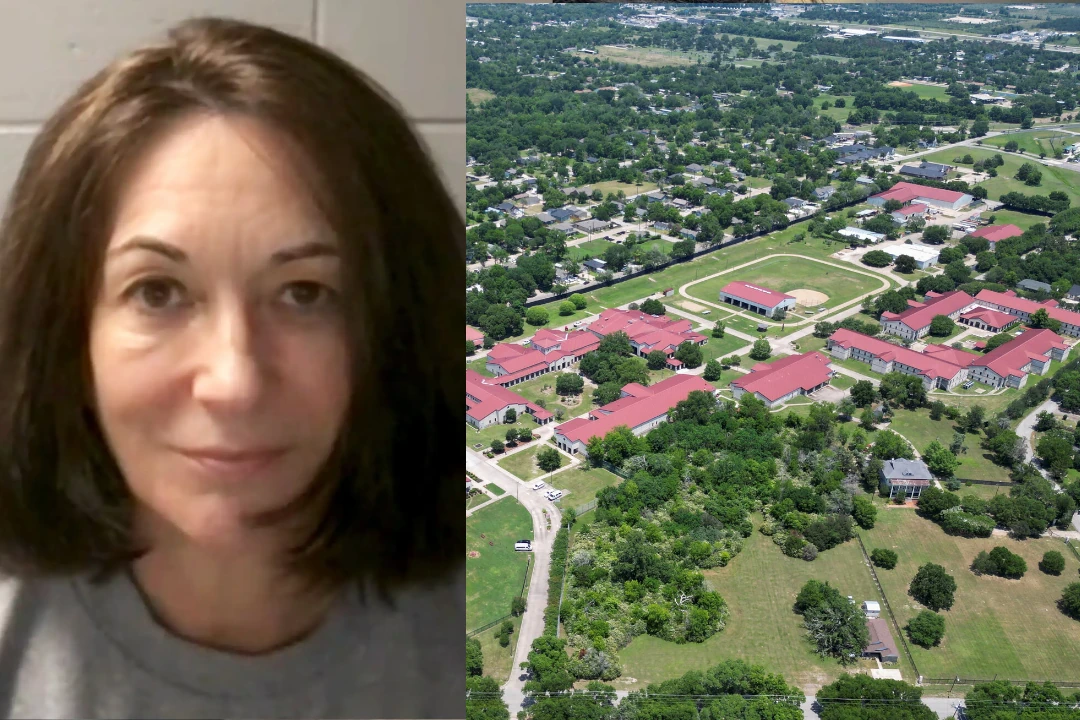
A convicted child sex trafficker receives room service and armed escorts at a minimum-security Texas prison camp. The women who dared speak out were transferred, screamed at, and threatened by the warden. Congress has been stonewalled for months. And the one person who ordered it all is the same man who, in July 2025, personally sent his deputy to coach Maxwell’s testimony before upgrading her accommodations.
On the morning of August 7, 2025, Julie Howell — a first-time nonviolent offender serving a one-year sentence for financial fraud at Federal Prison Camp Bryan in Texas — was handed a formal incident report. Her infraction: speaking to a journalist. She had said, simply, that her fellow inmates weren’t happy about the arrival of Ghislaine Maxwell. Within hours, Howell was transferred to a federal detention center in Houston that houses inmates of varying security levels — a punishing escalation for a woman who, by her account, checked the prison handbook first and found no rule against it.
A second former inmate, speaking to CNN anonymously, described being summoned by prison officials within an hour of speaking to a reporter. She had carefully avoided saying anything directly about Maxwell, yet she found herself before Warden Tanisha Hall, who, the inmate told CNN, accused her of “jeopardising the safety of her staff and interfering with an FBI investigation.” According to accounts published May 8, 2026, the warden informed this woman that she had “ruined her weekend.” For speaking to a reporter. For telling the truth about what she had seen.
This is not a story about prison administration. It is a story about power — who has it, who protects it, and who is crushed when they dare challenge it. The pattern at FPC Bryan is a mirror of the broader pattern governing this administration: preferential treatment flows to those who can protect the president, and punishment flows to those who might expose him.
Time since Trump Administration was required to release ALL Epstein documents (H.R. 4405)
As of May 8, 2026, the Department of Justice has released a total of approximately 3.5 million pages out of over 6 million pages of records (58%) under the Epstein Files Transparency Act (H.R. 4405).
1. The “Queen Bee” of Bryan, Texas
Ghislaine Maxwell is serving a 20-year federal sentence, handed down in 2022, for her role in a years-long scheme with Jeffrey Epstein to groom and sexually abuse underage girls. She is a convicted violent sex offender. Under Bureau of Prisons Programme Statement 5100.08, inmates convicted of sex offenses must be housed in at least a low-security facility — never a minimum-security camp. An additional BOP policy mandates low-security placement for inmates with more than a decade remaining on their sentence. Maxwell’s projected release date is July 2037.
Nonetheless, in early August 2025, Maxwell was transferred from a federal correctional institution in Tallahassee, Florida, to FPC Bryan — a minimum-security camp nicknamed, without irony, “Club Fed,” that houses primarily nonviolent first-time offenders and sits surrounded by live oak trees near a quaint downtown. Sam Mangel, a prison consultant who has reviewed the transfer, told CNN: “To transfer her to a camp, strings had to have been pulled. No question about it.” He added that Maxwell is the first person he is aware of with a sex charge who has been housed in a federal prison camp.
What awaited Maxwell at Bryan was, by multiple inmate accounts, extraordinary. A CNN investigation published May 7, 2026 detailed the specific privileges former inmates say Maxwell received: meals delivered directly to her dormitory, armed escorts to the recreation area for late-night workouts, access to the prison chapel for private visitations with unidentified guests, bottled water with her meals while other inmates drank from the tap, unsupervised laptop access — a “remarkable security risk” under the facility’s own rules — and the ability to watch CNN alone in staff-only areas while other inmates watched communally. In a letter obtained by NBC News, Maxwell wrote to a relative: “I am much much happier here and more importantly safe. So yes everyone can breathe a sigh.”
While other inmates ate communally, Maxwell allegedly had meals and water delivered directly to her dormitory, a courtesy not extended to the general prison population.
Maxwell was reportedly provided armed guard escorts to the recreation area for late-night workouts — exceptional treatment not afforded to ordinary inmates at a minimum-security camp.
A Wall Street Journal investigation found that Maxwell met with “several visitors” in the chapel while other inmates were confined to their dormitories. She returned from one meeting “with a smile on her face,” reporting that “it went really well.”
According to congressional testimony from whistleblowers, Maxwell was permitted to use a laptop unsupervised — a significant violation of the facility’s own rules — while watching cable news alone in staff-only spaces.
Under BOP rules, this transfer required a waiver personally approved by the administrator of the Designation and Sentence Computation Center. No public explanation for that waiver has ever been provided by the DOJ or the BOP.
First-time inmate Julie Howell was formally written up and transferred to a higher-security Houston facility after speaking to a journalist — the same day she spoke. Her attorney said: “Nobody’s going to say anything about Ghislaine Maxwell now.”
2. The Blanche Interview & the Quid Pro Quo Pattern
The proximate cause of Maxwell’s transfer is not in dispute. On July 24 and 25, 2025, Deputy Attorney General Todd Blanche — Donald Trump’s former personal criminal defense attorney — conducted a two-day private meeting with Maxwell at the Tallahassee facility. This is unusual in itself: such interviews are ordinarily conducted by FBI field agents or line prosecutors, not the sitting Deputy Attorney General. Maxwell was transferred to FPC Bryan approximately one week later.
What emerged from that meeting was equally significant. Maxwell told Blanche — on the record — that she had never seen Donald Trump “act in any inappropriate setting in any way.” Her lawyer subsequently told Congress that Maxwell is “prepared to speak fully and honestly if granted clemency by President Trump,” and that both Trump and former President Bill Clinton “are innocent of any wrongdoing.” The implication is clear: her comfort is contingent on her silence, and her silence is contingent on his protection. Both the NBC News reporting on her prison letters and the congressional record indicate Maxwell is acutely aware of the arrangement.
“These circumstances raise serious questions of whether Ms. Maxwell is being given special treatment in exchange for providing favorable information — and whether BOP is being politically pressured into reclassifying a violent felon as a low security risk, which seems to elevate protection of President Trump’s personal reputation above public safety.”
— Sen. Jack Reed (D-RI), Letter to BOP Director William Marshall, August 6, 2025
Maxwell’s attorney David Oscar Markus has since spoken openly about the pardon prospect. In an interview with Politico, Markus said there is “a good chance and for good reason that she would get a pardon.” He described Maxwell as a “scapegoat” — a characterization that, taken seriously, would require the American public to believe that a woman convicted by a jury of her peers of grooming and trafficking children for sexual abuse over more than a decade was somehow wrongly targeted. House Oversight Committee Chair James Comer, a Republican from Kentucky, told Politico that “a lot of people” on the committee were open to clemency. Rep. Anna Paulina Luna pushed back, writing on social media: “NO CLEMENCY. You comply or face punishment. You deserve JUSTICE for what you did you monster.” The fracture within the president’s own party speaks to how nakedly transactional this arrangement has become.
Get Involved Today
Contribute to our mission and turn your concerns into action.
3. A Congressional Wall of Silence
Beginning in August 2025, Congress launched what would become, over the following nine months, a sustained and largely futile effort to extract basic information from the Justice Department and the Bureau of Prisons. The stonewalling has been comprehensive, systematic, and, critics argue, criminal.
Sen. Jack Reed (D-RI) writes to BOP Director William Marshall, demanding all documents related to Maxwell’s transfer, including communications involving Deputy AG Blanche. Reed sets an August 20 deadline. No response is received.
Reps. Jamie Raskin, Jerrold Nadler, and Zoe Lofgren write to AG Pam Bondi and BOP Director Marshall, demanding all documents related to the Blanche interview and Maxwell’s transfer. Deadline of August 26 passes without response.
Sen. Reed sends a second letter to BOP Director Marshall. The Director still does not respond.
Reps. Robert Garcia and others write directly to Warden Tanisha Hall at FPC Bryan, detailing “credible allegations of retaliatory measures” against inmates who reported Maxwell’s treatment. Access to the facility is denied.
Reps. Raskin and Garcia announce a planned oversight visit to FPC Bryan and demand Warden Hall submit to a transcribed interview. Over a dozen whistleblowers have by this point described not only Maxwell’s privileges but endemic sexual abuse of inmates by staff. The DOJ declines to make the warden available.
Maxwell appears by video before the House Oversight Committee for a closed-door deposition. She invokes the Fifth Amendment in response to every question, as her attorney reads a prepared statement: she will testify fully only if granted clemency by President Trump.
CNN publishes its exclusive investigation detailing how at least two former inmates at FPC Bryan were penalized after speaking publicly about Maxwell’s conditions. Correspondent MJ Lee reports on CNN’s “OutFront” that the pattern of treatment and retaliation is “documented, ongoing, and unaddressed.”
Senator Reed ultimately escalated to the DOJ’s Inspector General, asking for a formal investigation into which officials requested the transfer, which rules were waived, and whether Warden Hall had engaged in illegal retaliation against whistleblowers and congressional sources. That request came in December 2025. The IG investigation was eventually launched, but its scope and trajectory remain under scrutiny.
4. The Cover-Up Compounds the Crime
Former Attorney General Pam Bondi’s tenure at the DOJ has been, in relation to the Epstein-Maxwell matter, a prolonged exercise in obstruction dressed up as compliance. Bondi initially teased conservative media with “binders of documents” and promised that a “list of Jeffrey Epstein’s clients” was on her desk. The FBI and DOJ subsequently issued a joint memo concluding that no such list existed and that Epstein had died by suicide. The massive Epstein Files Transparency Act — passed with bipartisan support and signed by Trump — eventually compelled the release of nearly 3.5 million pages of documents, but Democratic lawmakers have consistently accused the department of failing to comply in full.
When the House Oversight Committee subpoenaed Bondi for an April 14, 2026, deposition on the DOJ’s compliance with that law, she did not appear. Trump fired Bondi earlier that month. Rep. Yassamin Ansari (D-AZ) charged that Bondi was “complicit in the most egregious cover-up in American history” and was “breaking the law by refusing to comply with our bipartisan subpoena.” When Bondi testified before the House Judiciary Committee in February 2026, she repeatedly dodged questions about the Epstein files and, in a moment that stunned observers, was photographed after the hearing holding the search history of Rep. Pramila Jayapal — apparently obtained from DOJ monitoring of lawmakers’ access to the secured reading room where unredacted files were available. Rep. Jayapal stated: “Members of Congress should be able to conduct oversight without the Department of Justice spying on us.”
“Ms. Maxwell has been permitted to use a laptop, unsupervised, while at Bryan — a remarkable security risk. While other inmates watch TV communally and drink tap water, Ms. Maxwell has been granted access to staff-only areas to watch CNN by herself, and she has been provided with bottled water with her meals.”
— Rep. Jamie Raskin & Rep. Robert Garcia, Letter to AG Pam Bondi, January 23, 2026
At the same time the DOJ was ignoring congressional letters, it was apparently directing its attention toward prison inmates who dared speak the truth. The anonymous inmate who spoke to CNN after Howell’s transfer described being called in by Warden Hall “within an hour” of her interview with a reporter. “I was diverted to listen to the warden scream at me,” she told CNN. “She basically berated me there and told me that I was jeopardizing the safety of her staff and interfering with an FBI investigation.” This threat — that ordinary speech about prison conditions constitutes interference with a federal investigation — reveals the lengths to which this administration will go to protect Maxwell’s silence.
When a President Can No Longer Distinguish Personal Loyalty from the Public Trust
The Twenty-Fifth Amendment to the United States Constitution, ratified in 1967, provides in Section 4 a mechanism by which the Vice President and a majority of the Cabinet may declare the President “unable to discharge the powers and duties of his office” — transmitting a written declaration to that effect to the President pro tempore of the Senate and the Speaker of the House. If the President contests this finding, Congress must convene to resolve the question, with removal requiring a two-thirds vote in both chambers.
The Twenty-Fifth Amendment was designed primarily for cases of physical or cognitive incapacity. But constitutional scholars and jurists have increasingly engaged with the broader question its language implies: what does it mean to be “unable” to discharge the duties of the office? Sen. Jack Reed, who has written multiple letters demanding answers on the Maxwell matter, has framed the question in precisely constitutional terms — not merely asking whether rules were broken, but whether the executive branch is capable of protecting the public from a president who appears to have subordinated law enforcement to his personal legal exposure.
The Maxwell case presents a paradigmatic scenario for this inquiry. The documented record — a Deputy AG who is the president’s former personal attorney privately coaching a convicted sex trafficker, a subsequent rules-violating prison transfer, months of stonewalled congressional oversight, inmates punished for speaking, and a standing pardon offer contingent on exculpatory testimony — describes not a policy disagreement but a systematic diversion of federal law enforcement resources toward protecting one man’s reputation. Reps. Jamie Raskin (D-MD) and Robert Garcia (D-CA) have argued that the DOJ’s behavior constitutes obstruction of official proceedings. Sen. Reed has argued it elevates “protection of President Trump’s personal reputation above public safety.”
The practical barriers to invoking Section 4 are substantial. It requires the Vice President’s participation — and no sitting Vice President has ever triggered this mechanism. A two-thirds majority in the current Congress is beyond realistic arithmetic for Democrats alone. But the constitutional case does not require immediate operability to be morally and legally valid. The amendment exists precisely because its drafters understood that a president could become unfit not only through illness but through the capture of his office by personal interest. Several constitutional law scholars, including those who testified before the Senate Judiciary Committee on executive accountability in 2026, have noted that the Maxwell pattern — in which the entire executive apparatus of law enforcement appears bent toward silencing witnesses and managing a president’s exposure in a child sex trafficking case — is precisely the kind of governance failure the Twenty-Fifth Amendment was designed to address. That the mechanism remains politically unavailable does not diminish the constitutional argument; it indicts the political system that leaves it so.
5. What This Says About His Priorities
Donald Trump has said publicly that he has not been asked to pardon Maxwell, and that a pardon “is not something he’s considering or thinking about,” according to press secretary Karoline Leavitt. This formulation is careful and narrow. It does not say he will refuse. It does not say the arrangement between his DOJ and Maxwell is appropriate. It says only that no formal request has been submitted. Given that Maxwell’s attorney has said he does not believe “now is the best time” to formally ask — and is instead building toward the ask — the president’s hedge reads not as a refusal but as a timing arrangement.
Meanwhile, Epstein’s victims and their families have been treated to precisely the opposite experience. Family members of the late Virginia Giuffre — one of Maxwell’s most public accusers, who died by suicide in early 2025 — described Maxwell’s transfer with “horror and outrage,” accusing President Trump of sending a message that “pedophiles deserve preferential treatment and their victims do not matter.” The surviving victims who gathered in Washington demanding transparency from Congress, who met with lawmakers and held press conferences, who appeared at the Capitol to plead for accountability — they received stonewalled letters, redacted documents, and a four-computer reading room where staff could not accompany them. Maxwell, meanwhile, received bottled water and cable news.
This is the clearest possible statement of this administration’s values. Not in its rhetoric, but in its resource allocation. Not in what it says, but in who it protects. A government that punishes inmates for speaking truthfully about a convicted child sex trafficker’s luxury accommodations — while refusing to respond to Senate oversight letters for months — has told us, without ambiguity, whose safety it is designed to serve.
Editorial Conclusion
What is unfolding at Federal Prison Camp Bryan is not an administrative anomaly or a bureaucratic failure. It is a portrait of a presidency that has bent the machinery of federal law enforcement — the Bureau of Prisons, the Deputy Attorney General, the stonewalling silence of the DOJ — toward the singular goal of protecting one man from accountability in a child sex trafficking case. Inmates are punished for speaking. Congress is ignored. Victims are denied. And the president’s former personal lawyer sits across a table from a convicted sex trafficker, in a facility she should legally never have entered, in a meeting whose contents have never been disclosed. The Twenty-Fifth Amendment provides a constitutional instrument for a moment when a president can no longer distinguish his personal legal jeopardy from the duties of his office. We are living inside that moment. The case is not only that Donald Trump is incapacitated. The case is also that he is using the full capacity of this office for himself — and that is precisely the incapacity the Constitution was designed to address. His victims, and the nation’s children, are owed better. The Constitution demands it.
Sources & References
- CNN — “Exclusive: Inmates describe being punished for speaking out about Ghislaine Maxwell” (May 7, 2026)
- CNN — “Ghislaine Maxwell moved to federal prison camp in Texas” (Aug. 1, 2025)
- Sen. Jack Reed — “Reed Demands Answers on Special Treatment of Convicted Sex Offender Ghislaine Maxwell” (Aug. 8, 2025)
- Sen. Jack Reed — “Reed Asks DOJ Watchdog to Probe Trump Admin’s Favorable Treatment for Maxwell” (Dec. 2025)
- House Judiciary Democrats — Raskin & Garcia Announce Oversight Visit to FPC Bryan (Jan. 23, 2026)
- House Judiciary Democrats — Letter to AG Bondi and BOP Director Marshall re: Maxwell Transfer (Aug. 12, 2025)
- House Oversight Democrats — Rep. Garcia Letter to Warden Tanisha Hall, FPC Bryan (Oct. 30, 2025)
- NPR — “Ghislaine Maxwell appeals for clemency from Trump as she declines to answer questions” (Feb. 10, 2026)
- NPR — “Epstein files update: AG Bondi dodges questions, spying controversy emerges” (Feb. 14, 2026)
- CNBC — “House panel subpoenas AG Pam Bondi for April 14 deposition on Epstein files” (Mar. 17, 2026)
- Spectrum News — “Lawmakers push back against pardoning Ghislaine Maxwell” (Apr. 24, 2026)
- The Hill — “GOP senators warn Trump, Bondi against Maxwell pardon over Epstein” (Aug. 3, 2025)
- Houston Public Media — “Ghislaine Maxwell was transferred to a Texas prison. Here’s what life is like there.” (Sep. 4, 2025)
- Raw Story / NBC News — “Maxwell gushes over special treatment in prison” (Nov. 8, 2025)
- BTimesOnline — “Maxwell Accused of Receiving ‘Queen Bee’ Treatment; Inmates Face Retaliation” (May 8, 2026)
- Mediaite — “Maxwell’s Fellow Inmates Say They’ve Been Punished for Speaking Out” (May 8, 2026)
- IBTimes UK — “Maxwell’s Unusual Prison Privileges Fuel Claims She Is Being Kept Comfortable to Stay Silent” (May 8, 2026)
- Bureau of Prisons — Programme Statement 5100.08 on Inmate Security Designation and Custody Classification
Related News