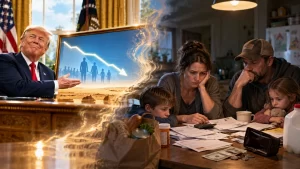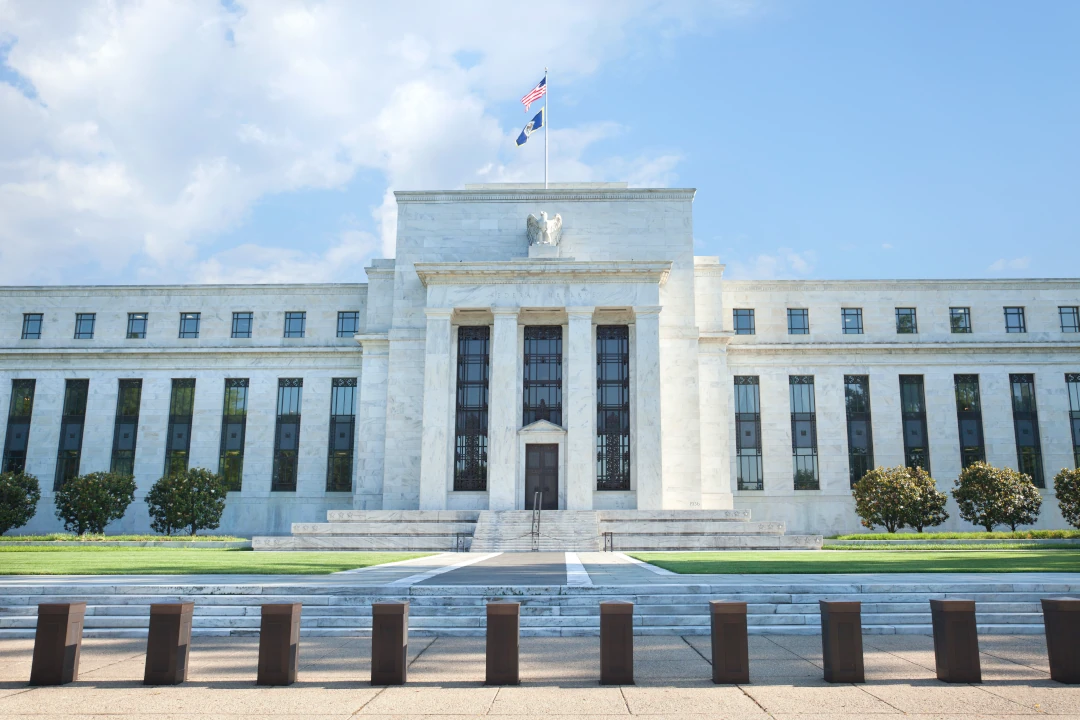
Donald Trump’s nomination of Kevin Warsh to lead the Federal Reserve — achieved through criminal investigations, threats of termination, and relentless political pressure — represents the most sustained assault on monetary independence in American history. What it reveals about his leadership and his priorities should alarm every citizen who has ever paid a mortgage, held a job, or trusted that the dollar in their pocket is worth what it says.
On January 30, 2026, President Donald Trump announced the nomination of Kevin Warsh to chair the Federal Reserve — a choice that arrived not on the merits of monetary theory, but at the end of a year-long campaign of harassment, criminal investigation, public humiliation, and raw political intimidation of the sitting chair. What Trump called a “great” appointment was, in practice, a conquest: the president had broken the Federal Reserve’s independence as a precondition for the nomination, not as an unintended consequence of it. For Americans trying to understand why their mortgages remain expensive, their wages uncertain, and their economic future cloudier than it needs to be, this is the story they deserve to read in full.
Jerome Powell, the 16th chair of the Federal Reserve, served with a durability and integrity that made him the most popular American political official among 13 surveyed in a Gallup poll from late 2025. That popularity was earned through a grueling pandemic response, an aggressive rate-hiking campaign that brought inflation from a 40-year peak back toward normalcy, and a principled refusal to bend monetary policy to the political calendar. For all of this, Trump called him a “disaster,” a “stubborn ox,” and “TOO LATE AND WRONG.” Then Trump tried to have him arrested.
1. The Anatomy of an Institutional Capture
The campaign to subordinate the Federal Reserve to the White House was methodical. Trump’s Department of Justice, under U.S. Attorney Jeanine Pirro, opened a criminal investigation into Powell in January 2026, citing a multi-billion dollar renovation of the Fed’s Washington headquarters as the pretext. Powell disclosed that the DOJ had served the Federal Reserve with grand jury subpoenas — an unprecedented act. In March, U.S. District Judge James Boasberg quashed those subpoenas entirely, writing in a ruling of exceptional clarity that “there is abundant evidence that the subpoenas’ dominant — if not sole — purpose is to harass and pressure Powell either to yield to the president or to resign and make way for a Fed Chair who will.” The court found “no evidence whatsoever that Powell committed any crime other than displeasing the president.”
The DOJ’s investigation served its purpose regardless: it poisoned the confirmation process for Warsh. Republican Senator Thom Tillis of North Carolina, a member of the Banking Committee, announced he would block Warsh’s confirmation until the criminal probe was closed — stating publicly that the investigation had made clear the Trump administration was “actively pushing to end the independence of the Federal Reserve.” Only when the investigation became a political liability did Pirro, on April 24, 2026, abruptly drop the probe — not because justice demanded it, but because the Senate did.
“If there were any remaining doubt whether advisers within the Trump Administration are actively pushing to end the independence of the Federal Reserve, there should now be none.”
— Sen. Thom Tillis (R-NC), Senate Banking Committee
The criminal probe was never the only tool. Trump attempted to fire Fed Governor Lisa Cook — a Black economist and the first Black woman to serve on the Fed’s Board of Governors — on fabricated charges of mortgage fraud she denies. Courts blocked that removal; the Supreme Court is expected to rule on the administration’s authority this year. On April 15, 2026, Trump told Fox Business that if Powell did not vacate his position voluntarily, “I’ll have to fire him.” That same week, the White House press secretary described Powell’s potential removal as the president “restoring competence.” This is the language of authoritarianism dressed in the vocabulary of management.
2. Kevin Warsh: The Man Who Changed His Mind
The nominee himself warrants scrutiny. Kevin Warsh, 56, served on the Fed’s Board of Governors from 2006 to 2011, appointed by President George W. Bush. For most of his public career, he was considered a monetary “hawk” — someone who prioritized fighting inflation over stimulating growth. He was no Trump ally. Then, as Trump’s second term began and Warsh emerged as a leading candidate for the Fed chairmanship, his public positions began to shift conspicuously. In a January 2025 Wall Street Journal column, Warsh praised Trump’s economic policies as “disinflationary” and endorsed the administration’s DOGE spending cuts as inflation-reducing — positions that aligned conveniently with Trump’s desire for lower rates, though they lack the rigor the Fed’s mandate demands.
At his Senate confirmation hearing on April 21, 2026, Warsh called for “regime change” at the Fed, attacked Powell’s record, and — critically — declined to commit to holding press conferences after every Federal Open Market Committee meeting. That practice of transparency, established by current Chair Powell, is a cornerstone of market confidence. When asked whether he would remain independent of White House pressure, Warsh offered a statement that should be read carefully: “I do not believe the operational independence of monetary policy is particularly threatened when elected officials state their views on interest rates.” This is a formulation designed to be reassuring while leaving open exactly the behavior critics fear most.
Senator Elizabeth Warren of Massachusetts, the ranking Democrat on the Senate Banking Committee, put it plainly. She accused Warsh of being a “sock puppet” for Trump, and warned that dropping the DOJ probe was not a clean resolution: “They threatened to restart the bogus criminal investigation into Fed Chair Powell at any time while failing to drop their ridiculous criminal probe against Governor Lisa Cook.” Warren’s conclusion was unambiguous: “The Senate should not proceed with the nomination of Kevin Warsh.”
3. The Economic Stakes: What Happens When the Fed Answers to One Man
The Federal Reserve’s independence is not an abstract constitutional nicety. It is the mechanism by which 335 million Americans are protected from the oldest political temptation in monetary history: the president who wants cheap money before an election, regardless of what cheap money does to everyone who buys groceries, services a mortgage, or carries a credit card balance.
As of this writing, inflation stands at approximately 3.3 percent — still comfortably above the Fed’s 2 percent target, in the fifth consecutive year above that threshold. Cumulative price increases since 2021 have approached 25 percent. The Federal Open Market Committee held rates steady at its March 2026 meeting, with Jerome Powell acknowledging layered uncertainties: a volatile Middle East conflict disrupting energy markets, a labor market softening without collapsing, and data gaps left by the 2025 government shutdown. The Congressional Budget Office does not project inflation returning to the Fed’s 2 percent target until 2030.
Against this backdrop, Trump is demanding rate cuts. Political pressure for lower rates at a moment of above-target inflation is precisely the scenario the Federal Reserve’s structural independence was designed to resist. A CNBC survey of 26 economists, strategists, and analysts — conducted after Warsh’s confirmation hearing — found that only 50 percent believe Warsh will conduct monetary policy mostly or very independently of the White House. Economist Hugh Johnson was direct: “My hope and expectation is that Warsh will preserve an independent position as chair. More hope than expectation, but we will see.”
Columbia Law School professor Lev Menand, an authority on central bank law, cautioned that dropping the criminal probe does not resolve the underlying threat. “I think we would be foolish to conclude from this that the Fed is out of the woods,” Menand told CNBC. “This has been a concerted effort to provide the administration control over Fed policymaking. It’s been ongoing for a year, and the administration has pivoted multiple times to different tactics.”
“I think we would be foolish to conclude from this that the Fed is out of the woods. This has been a concerted effort to provide the administration control over Fed policymaking.”
— Lev Menand, Professor of Law, Columbia University
The longer-term risks are structural. If markets conclude — as many economists already fear — that the Fed’s rate decisions reflect political preference rather than independent analysis of inflation and employment data, bond market participants will demand higher term premiums to hold U.S. Treasury debt. That means higher interest rates in the mortgage market, the auto loan market, and corporate debt markets, regardless of what the Fed does with its policy rate. The economic research is unambiguous: countries with independent central banks have historically achieved stronger growth and more stable prices. That stability is not a technicality. It is the foundation upon which Americans borrow to buy homes, businesses plan for the future, and the dollar retains its role as the world’s reserve currency.
4. A Pattern, Not an Anomaly: What This Reveals About Trump’s Leadership
The assault on the Federal Reserve did not arise in isolation. It is part of a pattern of executive behavior that uses the apparatus of law — subpoenas, criminal referrals, personnel removals — to punish the independent judgment of officials whose conclusions the president dislikes. Federal judges have been targeted. Inspectors general have been fired. The civil service has been hollowed out. And now the one institution whose decisions directly control the cost of money for every American — the institution that, in Jerome Powell’s own description, helped prevent “a second Great Depression” during the COVID pandemic — has been subjected to the same treatment.
The DOJ opened a grand jury investigation into Powell — quashed by Judge Boasberg as an effort to “harass and pressure” rather than pursue legitimate criminal inquiry. Charges: lying about a building renovation.
Trump attempted to fire Fed Governor Lisa Cook — the first Black woman on the Fed board — on charges courts have found without credible basis. The Supreme Court is now weighing whether he had the legal authority.
Trump publicly threatened on April 15, 2026 to fire Powell if he remained in his role after May 15. He told Fox Business: “Then I’ll have to fire him.” The threat alone distorted market expectations.
Warsh is the son-in-law of Ronald Lauder, a longtime Trump donor and confidant. He reversed his hawkish monetary views after emerging as a frontrunner — a change that coincided with Trump’s public expectations for rate cuts.
When Warsh’s nomination was announced on January 30, stocks fell — the Dow down 245 points, the S&P 500 down 0.5%, Nasdaq down 0.9%. Bond yields rose, signaling investor unease about inflation and political interference.
A post-hearing CNBC survey found 50% of economists doubt Warsh will be independent, with 81% saying the Fed should not factor AI productivity assumptions into policy — a Warsh position seen as providing cover for premature rate cuts.
Get Involved Today
Contribute to our mission and turn your concerns into action.
5. A Chronology of Pressure
6. What a Politicized Fed Means for You
For ordinary Americans, the Federal Reserve’s independence translates directly into economic stability. When the Fed is free to make decisions based on data — inflation readings, unemployment figures, credit conditions — it acts as a stabilizing counterweight to the inherently short-term incentives of elected politicians. Trump’s preference for lower rates is not illegitimate as a political position; every president wants cheap money. The problem is the method: using prosecutorial power, firing authority, and public intimidation to achieve a monetary policy outcome is a form of economic corruption, even if no statute uses that exact language.
The St. Louis Federal Reserve’s own economic outlook for 2026 notes that “risks to the labor market and inflation both tilt in unfavorable directions.” Inflation remains above 2 percent. Energy market disruptions from the ongoing Iran conflict are adding upward price pressure. In this environment, premature rate cuts — driven by political pressure rather than economic necessity — risk re-igniting the inflationary spiral that cost American families an estimated $10,000 in cumulative purchasing power since 2021. The Council on Foreign Relations’ Roger Ferguson, a former Fed vice chair, noted plainly: Warsh will “inherit a period of considerable uncertainty,” with “after five consecutive years of inflation above the Fed’s 2 percent target, many Americans continue to feel the strain of an affordability crisis.” Cutting rates for political reasons in that environment does not relieve that crisis — it risks deepening it.
Editorial Conclusion
Donald Trump did not merely nominate a Fed Chair. He dismantled the conditions under which any Fed Chair could be truly independent, then filled the vacancy his campaign created. A criminal investigation invented to produce political compliance, a nominee whose independence half of the nation’s leading economists openly doubt, and a president who has said publicly he will fire anyone who stands in his way — this is not monetary policy. This is the subordination of the nation’s financial architecture to one man’s electoral ambitions. The Federal Reserve was built to be the wall between sound money and political convenience. That wall has been breached. The Senate must refuse to ratify the breach. And Congress — if it retains any institutional self-respect — must use every constitutional tool available to hold this president accountable for a course of conduct that a federal judge has already found, in law, to be an assault on the republic’s independent institutions. What is at stake is not the tenure of one central banker. It is whether American democracy still has the immune system to reject the infection of autocracy before it becomes permanent.
When the Conduct of the President Becomes the Constitutional Question
The Twenty-Fifth Amendment, Section 4, provides a mechanism by which the Vice President and a majority of the Cabinet — or “such other body as Congress may by law provide” — may declare the President “unable to discharge the powers and duties of his office.” It was conceived primarily for incapacity: illness, injury, or cognitive impairment. But constitutional scholars have long observed that its language does not limit its application to medical disability alone. The question the amendment asks is functional: is the president capable of discharging the duties of the office consistent with the constitutional order?
Representative Jamie Raskin of Maryland, the ranking Democrat on the House Judiciary Committee, has formally called on Congress to establish the commission contemplated by the 25th Amendment. In his statement, Raskin cited a pattern of behavior — threatening to “destroy entire civilizations,” violating Congressional war powers, and the sustained institutional assault that has characterized Trump’s second term — as evidence that “it is now a matter of national security for Congress to fulfill its responsibilities under the 25th Amendment.” The legislation calls for a medical examination of the President to assess whether he is mentally or physically unable to discharge his duties.
The Federal Reserve campaign is directly relevant to this analysis. The decision to weaponize a criminal investigation against the nation’s top central banker — not for any documented crime, but to force monetary policy compliance — is not the act of a president operating within the bounds of rational governance. A federal judge found, in writing, that the administration presented “no evidence whatsoever” of criminal conduct, and that the dominant purpose of the subpoenas was executive harassment. The attempted firing of a sitting Fed governor — also blocked by courts — further establishes a pattern. A president who believes his political preferences override the independence of institutions Congress has specifically designed to be insulated from the executive branch is not exercising the lawful powers of the office. He is abusing them.
The practical barriers are formidable. Section 4 requires the Vice President — J.D. Vance — to initiate proceedings, a step he has shown no inclination to take. Republican majorities in both chambers further narrow the political feasibility. And if the mechanism were invoked, Trump could contest it, returning the question to Congress, where a two-thirds supermajority in both chambers would be required to sustain the finding of incapacity.
But the barriers do not negate the constitutional case. The amendment exists precisely because its drafters understood that the presidency could be occupied by someone whose conduct — regardless of its specific cause — rendered the office dangerous to the republic. The sustained, documented, court-rebuked campaign to subordinate the Federal Reserve to personal political control is exactly the kind of institutional danger the amendment’s architects foresaw. That invoking it is politically hard does not mean the moral and constitutional argument is wrong. It means the moral cost of failing to act is borne by every American who depends on a stable, independent central bank — which is every American.
Sources & References
- Al Jazeera — “Trump nominates Kevin Warsh to replace Powell as Fed chair,” Jan. 30, 2026
- CNBC — “DOJ ends Powell probe, lifts hurdle for Trump’s Fed chair nominee Warsh,” Apr. 24, 2026
- Axios — “DOJ drops criminal probe into Fed chair Jerome Powell,” Apr. 24, 2026
- CNN Business — “Kevin Warsh nominated by Trump to be the next Federal Reserve chair,” Jan. 30, 2026
- NBC News — “Trump taps Kevin Warsh to chair Federal Reserve,” Jan. 31, 2026
- PBS NewsHour / AP — “Trump names Kevin Warsh as next Fed chair to replace Powell,” Jan. 30, 2026
- CNBC — “Kevin Warsh hearing takeaways: Fed nominee defends independence,” Apr. 21, 2026
- Al Jazeera — “Trump’s US Fed nominee Warsh vows independence, says he’s no ‘sock puppet’,” Apr. 21, 2026
- CNBC — “Doubts persist about whether Fed chair nominee Warsh will be independent,” Apr. 27, 2026
- Council on Foreign Relations — “A Fed Under Warsh: What the Confirmation Hearing Tells Us,” Roger W. Ferguson Jr., Apr. 22, 2026
- CNBC — “Analysis: The threat to the Fed’s independence isn’t over,” Apr. 24, 2026
- CNN — “Trump says he’ll fire Powell next month if he stays in his role at the Fed,” Apr. 15, 2026
- U.S. News — “How Trump’s Attempts to Fire Powell Hurt the Economy,” Apr. 16, 2026
- Wikipedia — Jerome Powell (comprehensive biography and second-term events), updated Apr. 2026
- Brookings Institution — “Who has to leave the Federal Reserve next?,” David Wessel, Apr. 2026
- The New Republic — “Trump Threatens to Fire Fed Chair Jerome Powell Before His Time Is Up,” Apr. 14, 2026
- Federal Reserve Bank of St. Louis — “The Economic Outlook and Monetary Policy,” Apr. 1, 2026
- Congressional Budget Office — “The Budget and Economic Outlook: 2026 to 2036,” Feb. 2026
- Fortune — “Inside Kevin Warsh’s opening statement: Inflation is a choice,” Apr. 21, 2026
Related News