Show Your Papers: Trump, the SAVE Act, and the Engineered Disenfranchisement of American Voters
S. 1383 would strip ballot access from 21 million eligible citizens, impose a $35 million unfunded burden on a single state, and threaten election workers with criminal liability — all to solve a problem the right’s own data shows barely exists. The president is willing to halt federal lawmaking until it passes.
There is a particular tell when a politician wants to suppress the vote: he calls it security. The Safeguard American Voter Eligibility Act — rebranded this Congress as the SAVE America Act and grafted onto a bipartisan veterans bill that bears the docket number S. 1383 — is the most aggressive piece of voter-suppression legislation Congress has seriously considered in modern memory. It has now passed the House three times. It is being actively debated in the Senate this month. And it is being driven forward, against bipartisan warnings about its real-world consequences, by a president who has openly tied his willingness to sign other laws to its enactment.
The bill would, in plain terms, require every American to present a passport, a certified birth certificate, or a narrow set of other documents in person every time they register or update their voter registration for federal elections. It would also require photo identification at the polls, eliminate most forms of universal mail voting, mandate voter-roll purges every thirty days, and force states to cross-check their voter rolls against a Department of Homeland Security database designed for immigration benefits — not elections. Its supporters call it common sense. Its actual effects, documented in detail by election administrators, voting-rights litigators, and even the conservative Heritage Foundation’s own data, tell a different story.
That story is the subject of this editorial.
1. What S. 1383 Actually Does
The legislative history is itself instructive. The original SAVE Act was introduced as H.R. 22 by Representative Chip Roy of Texas and as S. 128 by Senator Mike Lee of Utah at the start of the 119th Congress. The House passed it in April 2025 by a vote of 220–208. It stalled in the Senate because of widespread public backlash, in particular over its impact on married women whose surnames no longer match their birth certificates. Rather than narrow the bill in response, congressional Republicans rebranded it — as the Center for American Progress detailed, the so-called “SAVE America Act” is more extreme than its predecessor, not less.
The House attached the rewritten bill as an amendment to S. 1383 — originally an unobjectionable measure to establish a Veterans Advisory Committee on Equal Access — and passed it on February 11, 2026. According to a Congressional Research Service overview, this is the legislative vehicle now sitting before the Senate, where Majority Leader John Thune has acknowledged that the votes for passage are not there under current rules.
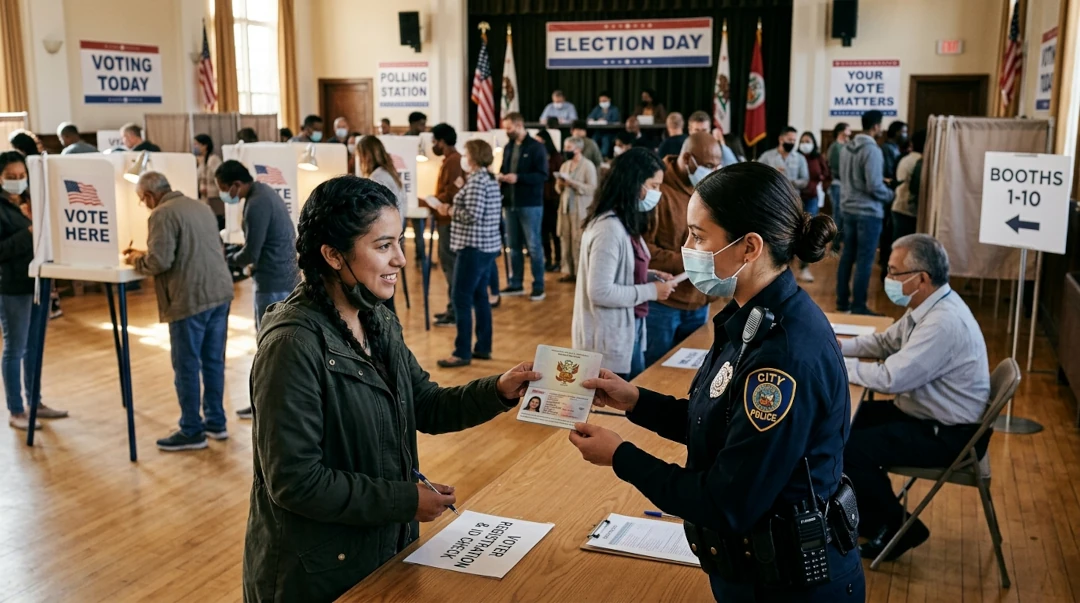
The substance of what the Senate is being asked to enact is unprecedented in the post-Voting Rights Act era. The text of S. 1383, as passed by the House, amends the National Voter Registration Act of 1993 to require “documentary proof of United States citizenship” in person from every applicant. The acceptable documents are narrow: a passport, a REAL ID that indicates citizenship (which most do not), a military ID paired with a service record showing U.S. birth, a tribal identification, or a certified birth certificate together with a government-issued photo ID. A driver’s license alone — even a REAL ID-compliant one — is not enough.
The Brennan Center for Justice, in its formal letter to the Senate opposing S. 1383, characterized the bill as the most restrictive voting legislation Congress has ever seriously considered. The Bipartisan Policy Center, hardly a partisan operation, noted that the bill becomes effective on the date of enactment, with the Election Assistance Commission required to issue implementation guidance within ten days — an administrative timeline election officials describe as functionally impossible.
“I, as President, will not sign other Bills until this is passed, AND NOT THE WATERED DOWN VERSION — GO FOR THE GOLD.”
— President Donald Trump · Truth Social, March 8, 2026
2. Twenty-One Million Citizens, And Counting
The most exhaustively documented fact about this bill is also the most damning. Research conducted jointly by the Brennan Center for Justice, the voter assistance organization VoteRiders, and the University of Maryland’s Center for Democracy and Civic Engagement found that more than 21 million American citizens of voting age lack ready access to documentary proof of citizenship. Roughly half of all Americans do not hold a passport. Millions cannot easily produce a paper copy of their birth certificate. An additional 2.6 million Americans, per the same researchers, possess no government-issued photo ID of any kind.
The burden does not fall evenly. The Center for American Progress, in its analysis of the SAVE Act’s documented effects, observed that only one in four Americans with a high school degree or less holds a valid passport, and only one in five Americans earning under $50,000 a year. Younger voters and voters of color are disproportionately affected — nearly half of Black Americans under thirty lack ID with their current name and address, and many older Black Americans, born in the pre-civil-rights South, were never issued a birth certificate at all. The vote-protection organization Vote.org has documented these disparities in detail, along with the bill’s distinct effects on transgender Americans and on military members and citizens stationed abroad.
None of this is hidden. It has been on the record of every committee hearing, every floor debate, every public comment. The Senate is not being asked to vote on this bill in the absence of information about its consequences. It is being asked to vote on it in spite of that information.
American citizens of voting age lack ready access to a passport or birth certificate. Brennan Center, VoteRiders & U. Maryland
American women whose current legal name does not appear on their birth certificate after marriage. Center for American Progress
Americans who possess no form of government-issued photo identification of any kind. CNBC / Brennan Center
Of Americans do not have a valid passport. Among those earning under $50,000, only 1 in 5 do. Center for American Progress
Estimated cost to Washington State and its 39 counties for the 2026 midterms alone — entirely unfunded. Sen. Cantwell / WA SOS
Total suspected noncitizen voting cases identified by the conservative Heritage Foundation database since the year 2000. Fair Elections Center
3. A Direct Tax on Married Women
The bill’s effect on married women deserves particular attention, because it is the clearest illustration of a piece of legislation whose authors either did not understand or did not care about how American citizens actually live. A 2023 Pew Research Center study, as documented in the Center for American Progress analysis, found that 79 percent of American women in opposite-sex marriages have taken their husband’s surname. Another 5 percent have hyphenated. That means roughly 84 percent of married women carry a legal name that does not appear on their original birth certificate.
Applied to the population of women aged 15 and older who are or have been married, this works out to approximately 69 million American women whose birth certificate alone cannot prove their citizenship under S. 1383. The bill does not specify, anywhere in its text, that a marriage certificate may be presented to bridge the gap. It is silent on change-of-name documentation altogether. It places that judgment in the hands of individual local election officials, who under the same bill face civil and criminal penalties for getting it wrong.
Defenders of the legislation have countered that election workers will be reasonable. Representative Hillary Scholten of Michigan, in a House floor exchange documented by Fox News, raised the name-mismatch issue directly. A senior Republican staffer’s response was that “every married woman should have their marriage license.” That is not what the bill says. It is what its sponsors would prefer voters believe it says. The text governs; the staff talking points do not.
Where this kind of regime has actually been implemented at the state level, the results are not theoretical. The Tenth Circuit Court of Appeals struck down Kansas’s analogous proof-of-citizenship law in 2021 after more than 31,000 Kansans had their voter registration suspended or blocked. The SAVE America Act would extend that regime nationwide, after first immunizing it from the federal-law objections that doomed Kansas’s version.
4. The Solution to a Phantom Crisis
The justification offered for any of this is that noncitizens are voting in American federal elections. This claim, repeated by the president, by House Speaker Mike Johnson, and by the bill’s sponsors, deserves to be examined against the evidence. The most reliable database of voter fraud allegations in the country is maintained by the Heritage Foundation — the same organization that authored the Project 2025 policy blueprint and that has campaigned in favor of the SAVE Act for years. By Heritage’s own count, the database identifies approximately 99 suspected noncitizen voting cases nationwide since the year 2000. A subsequent Brennan Center analysis of the same dataset found only 41 cases involving noncitizens over five decades.
An independent American Immigration Council review documented 68 total proven cases of noncitizen voting in the Heritage database going back to the 1980s — less than five percent of the database’s overall entries. A 2017 Brennan Center analysis of 42 U.S. jurisdictions that tabulated 23.5 million votes in the 2016 election identified 30 cases of suspected noncitizen voting. That is 0.0001 percent of votes cast.
The most recent and most rigorous state-level review confirmed the pattern. Utah, hardly a permissive blue state, conducted what is believed to be the most comprehensive citizenship audit ever attempted by a U.S. state, examining more than 2 million registered voters. It produced one confirmed instance of a noncitizen registration and zero confirmed instances of a noncitizen actually casting a ballot.
This is the crisis for which the Senate is being asked to disenfranchise 21 million citizens.
Get Involved Today
Contribute to our mission and turn your concerns into action.
5. Sabotaging the Workers Who Run Our Elections
One of the bill’s least-discussed but most consequential provisions is its treatment of the people who actually administer American elections. Under S. 1383, a local election official who registers a voter without sufficient documentary proof of citizenship — even an honest paperwork error — would be exposed to civil penalty and, in certain cases, criminal liability. The Brennan Center has called this provision a massive unfunded burden that places nonpartisan public servants at legal risk for performing their statutory duties.
Five Democratic secretaries of state — Steve Hobbs of Washington, Steve Simon of Minnesota, Jocelyn Benson of Michigan, Stephanie Thomas of Connecticut, alongside Senator Alex Padilla of California — convened a joint press briefing in March to lay out what passage would mean operationally. Hobbs, whose office produced the most detailed cost estimate yet released, was blunt: in Washington State alone, the SAVE Act would impose between $35.7 million and $39.3 million in one-time costs for the 2026 midterms, with another $20 million required to overhaul the state voter database and $3.6 million for emergency public education. Ongoing operational costs would run between $9.5 million and $14.65 million per year. The bill provides not one dollar of federal funding to offset any of it.
Senator Maria Cantwell of Washington’s office, in a formal report on the legislation, called the bill an unfunded mandate that would expose nonpartisan elections staff to “an unprecedented threat of jail time.” Minnesota Secretary of State Steve Simon, speaking to Votebeat, described the bill as a nightmare for election administrators — saying many officials had told him implementation by the midterms was simply not possible.
This is the practical record. It is the testimony of the people whose job it is, in both red and blue states, to actually run elections.
A Timeline of Pressure
House passes the original SAVE Act (H.R. 22) by a vote of 220–208. Bill stalls in the Senate due to broad public opposition.
Senator Mike Lee (R-UT) introduces the SAVE America Act as S. 3752; Rep. Chip Roy (R-TX) introduces a companion measure (H.R. 7296) one day later.
House attaches the SAVE America Act as an amendment to S. 1383, a bipartisan veterans bill, and passes it on a near-party-line vote.
President Trump tells reporters he will issue an executive order on voter ID if the Senate fails to pass the bill.
Trump posts on Truth Social that he will refuse to sign any other legislation until the Senate passes the SAVE America Act.
Senate votes 53–47 to table S. 1383 — a procedural setback that does not end the bill but does reflect the lack of 60-vote support.
Following a two-week Senate recess, debate resumes on S. 1383; Trump publicly demands the addition of mail-in ballot restrictions and unrelated anti-trans provisions.
Senate continues active consideration; Florida, South Dakota, and Utah enact state-level versions mirroring the SAVE Act’s framework.
6. Why the President Wants This Bill
To understand the urgency the president has assigned to this legislation, it is necessary to acknowledge a fact that he has not bothered to disguise. Speaking to House Republicans gathered in Florida in March, as reported by The Hill, the president told them passage of the SAVE Act “will guarantee the midterms. If you don’t get it, big trouble.” A Washington Post analysis noted that the bill has been positioned by the White House as the single most important piece of pre-midterm legislation on the agenda. The president himself, speaking at the White House in April, said of Senate Majority Leader Thune: “He’s got to be a leader. If he’s a leader, he’s got to get them.”
The political logic is not subtle. The Americans most likely to be turned away under S. 1383 — younger voters, voters of color, lower-income voters, women who changed their names at marriage, naturalized citizens — vote disproportionately for Democrats. The voters most likely to possess a current passport and a matching birth certificate, on hand and ready to produce in person, skew older, whiter, wealthier, and male. A nominally neutral documentation requirement, applied across the entire federal electorate, produces a partisan outcome on the order of millions of votes. The bill does not need to disenfranchise everyone to determine an election. It only needs to disenfranchise enough.
The president has explicitly framed the bill in these terms. He has tied his cooperation on every other element of federal lawmaking to its passage. He has, as 19th News reported, demanded the addition of unrelated anti-transgender provisions in real time, on a bill already on the Senate floor — provisions that, as 19th News also noted, are not in the bill the House passed and have no operational relationship to election administration. This is not the conduct of a leader pursuing election integrity. It is the conduct of a politician using the legislative process to bend the conditions under which he and his party will face the voters in November.
The Twenty-Fifth Amendment, and the Question of Fitness
The Twenty-Fifth Amendment, ratified in 1967, provides a constitutional mechanism for addressing the inability of a sitting president to discharge the powers and duties of the office. Under Section 4, the Vice President and a majority of the Cabinet — or alternatively, a body that Congress may by law designate — may transmit to congressional leadership a written declaration that the President is unable to so discharge those duties. The Vice President then assumes the powers of the office as Acting President.
This is a deliberately high bar. It has never been invoked in American history. But its existence in the Constitution exists precisely to address situations in which the conduct of a sitting president raises legitimate, sustained questions about cognitive capacity, judgment, and the ability to govern within constitutional norms. It is a check, not a tantrum.
Lawmakers Who Have Invoked It
In recent months, a growing number of members of Congress have raised the question publicly. Representative Jamie Raskin of Maryland, ranking member of the House Judiciary Committee, formally demanded a cognitive evaluation by the White House physician in April, citing what he called increasingly incoherent and volatile public statements. Senator Edward Markey of Massachusetts, Representative Eric Swalwell of California, Representative Sydney Kamlager-Dove of California, and Representative Yassamin Ansari of Arizona have each publicly called for the Twenty-Fifth Amendment to be invoked. Representative Raja Krishnamoorthi of Illinois did the same in a formal statement on April 7. Senators Sheldon Whitehouse and Jack Reed entered into the Congressional Record a letter from mental health professionals warning that the president was unfit for office.
The Connection to S. 1383
The SAVE Act is not, in itself, a basis for invoking the Twenty-Fifth Amendment. But the manner of the president’s pursuit of it speaks to the same concerns these lawmakers have raised. A president who openly conditions his signature on all other federal legislation upon the passage of a single voter-suppression bill, who threatens to issue an executive order overriding Congress if it does not comply, who publicly demands the addition of unrelated provisions on transgender Americans in the middle of an active Senate debate, and who candidly tells his own caucus that the bill “will guarantee the midterms” — that president has substituted personal political survival for the constitutional duty to faithfully execute the laws.
This is not a policy disagreement. It is a category of conduct that the framers of the Twenty-Fifth Amendment specifically anticipated: a president whose erratic and self-interested decision-making places the constitutional order itself under strain.
The Honest Barriers, and Why They Don’t Matter
The practical obstacles to invoking Section 4 are real and should be named clearly. Vice President JD Vance and the current Cabinet, hand-picked for loyalty, are unlikely to act. Congress has not designated an alternative body of its own. Federal courts have historically treated the Amendment as a political question. None of that, however, negates the constitutional argument. The Twenty-Fifth Amendment exists in the Constitution whether or not the people empowered to invoke it find it politically convenient. Its moral and legal logic does not evaporate because a sitting Cabinet refuses to act. The fact that a remedy is unlikely to be exercised is an indictment of those refusing to exercise it — not of the remedy itself.
7. What This Says About His Leadership
Strip away the partisan framing, the rebranding, the procedural maneuvers, and what remains is a portrait of the priorities of an administration. A president confronting genuine national problems — inflation, the war powers question raised by recent military action against Iran, infrastructure decay, an aging social safety net — has chosen instead to make his defining legislative cause a bill that, by every credible projection, will disenfranchise more eligible American citizens than any single law in the post-Voting Rights Act era. He has chosen this as the bill on which to halt the rest of the federal government’s lawmaking. He has chosen this as the bill on which to publicly humiliate his own Senate majority leader.
This is what his priorities look like. Not the cost of groceries. Not the wars. Not the practical questions of governance that affect the daily lives of the citizens he ostensibly serves. The mechanism by which those citizens choose their representatives — that is the bill he will not let go of. That is the bill for which he is willing to break the legislative machinery of the federal government.
And he is doing this, by his own admission, to win an election. He said so. To House Republicans in Florida, on the record. “It will guarantee the midterms.” That is not the voice of a leader concerned with election integrity. It is the voice of a politician who has openly stated that his goal is to shape the electorate.
This is the standard by which leadership must be judged: not the rhetoric, but the priorities revealed under pressure. By that standard, the conduct on display here is a failure of the office.
“In recent days, the country has watched President Trump’s public statements and outbursts turn increasingly incoherent, volatile, profane, deranged, and threatening.”
— Rep. Jamie Raskin · Letter to the White House Physician, April 10, 2026
Editorial Conclusion
The Senate is being asked to enact, in S. 1383, the most restrictive voting bill Congress has ever seriously considered — to solve a problem its own conservative researchers concede barely exists, at the cost of disenfranchising 21 million eligible citizens, 69 million married women, and the practical capacity of state and local election officials to administer fair elections.
It is being asked to do this by a president who has openly tied his cooperation on every other piece of federal lawmaking to the bill’s passage, who has admitted on the record that his purpose is to “guarantee the midterms,” and whose escalating conduct has produced bipartisan calls — formally entered into the Congressional Record — for evaluation of his fitness for office under the Twenty-Fifth Amendment.
The Senate must reject S. 1383. The forty-one senators who can sustain a filibuster have a constitutional obligation to do so. The right to vote — equally, freely, without the production of papers most Americans do not carry — is not negotiable, and it is not a midterm strategy. It is the foundation on which everything else in the American system rests. There is no compromise version of that principle worth signing.
Sources & References
- Congress.gov — S. 1383 Bill Text119th Congress; the SAVE America Act as passed by the House. congress.gov/bill/119th-congress/senate-bill/1383/text
- Congressional Research Service — In Focus IF12902SAVE America Act and Federal Voter Registration Policy. congress.gov/crs-product/IF12902
- Congress.gov — H.R. 22 (Original SAVE Act)Original 119th Congress House bill, passed April 10, 2025. congress.gov/bill/119th-congress/house-bill/22
- Brennan Center — Letter to the Senate Opposing S. 1383Formal opposition letter from Michael Waldman, March 2026. brennancenter.org/…/letter-senate-opposing-save-america-act
- Brennan Center — The Anti-Voter SAVE Act Must Be StoppedWendy Weiser, April 2026. brennancenter.org/…/anti-voter-save-act-must-be-stopped
- Brennan Center — New SAVE Act Bills Would Still Block MillionsDetailed legal and administrative critique. brennancenter.org/…/new-save-act-bills-would-still-block-millions
- Brennan Center — House Passes New Version of the SAVE ActStatement on February 11, 2026 passage. brennancenter.org/…/house-passes-new-version-save-act
- Center for American Progress — SAVE Act Disenfranchisement AnalysisState-by-state estimate of married women affected. americanprogress.org/…/save-act-would-disenfranchise-millions
- Center for American Progress — SAVE Act Overview and FactsDemographic and socioeconomic impact analysis. americanprogress.org/…/save-act-overview-and-facts
- Center for American Progress — SAVE America Act ExplainedComparison of S. 1383 to the original SAVE Act. americanprogress.org/…/save-america-act-explained
- Vote.org — The SAVE Act: What Every American Voter Needs to KnowVoter-facing impact summary. vote.org/save-act
- Sen. Maria Cantwell — Unfunded Mandate ReportWA Secretary of State / County Auditors cost analysis. cantwell.senate.gov/…/save_america_act_unfunded_mandate.pdf
- Fox 13 Seattle — WA Officials Say SAVE Act Will Cost $40MJoint briefing of five secretaries of state, March 2026. fox13seattle.com/news/wa-save-america-act-impacts-voters
- Votebeat — How the SAVE America Act Would Affect 2026 ElectionsElection administrator perspective. votebeat.org/…/save-america-act-passes-house
- The Hill — Trump Insists Thune Find VotesWhite House remarks on Senate leadership and the SAVE Act. thehill.com / Trump insists Thune find votes
- The Hill — Trump Threatens to Veto Bills Until SAVE Act PassesTruth Social posts and Senate pressure campaign. thehill.com/…/trump-save-act-senate-pressure
- The 19th — Trump Adds Pressure with Anti-Trans ProvisionsMid-debate demands for unrelated provisions. 19thnews.org/2026/03/trump-save-america-act-senators
- Washington Post — Trump’s Push Could Hurt RepublicansPolitical dynamics of the Senate fight. washingtonpost.com/…/save-america-act-trump-voting-republicans
- Al Jazeera — What is Trump-Backed SAVE America Act?Pre-recess context on the Senate debate. aljazeera.com/…/trump-backed-save-america-act
- CNBC — Everything to Know About the SAVE America ActImplementation mechanics and DHS database cross-checks. cnbc.com/2026/03/17/save-america-act-voter-id-trump-senate
- Fair Elections Center — Voting by Noncitizens is a Non-IssueHeritage Foundation database analysis. fairelectionscenter.org/voting-by-noncitizens-is-a-non-issue
- American Immigration Council — Heritage’s Own DataLong-term analysis of proven noncitizen voting cases. americanimmigrationcouncil.org/…/myths-about-noncitizen-voting
- Brennan Center — Heritage Fraud Database AssessmentIndependent review of voter fraud claims. brennancenter.org/…/heritage-foundations-database
- House Judiciary Democrats — Raskin Letter on Cognitive EvaluationApril 10, 2026 formal demand to White House physician. democrats-judiciary.house.gov/…/raskin-demands-cognitive-fitness
- CNN — Raskin Calls for Cognitive Test of TrumpCoverage of the 25th Amendment briefing for House Democrats. cnn.com/2026/04/10/politics/raskin-trump-cognitive-test
- Rep. Krishnamoorthi — Statement Calling for 25th AmendmentApril 7, 2026 formal congressional statement. krishnamoorthi.house.gov/…/25th-amendment
- Bipartisan Policy Center — Five Things to Know About the SAVE ActImplementation timeline and administrative concerns. bipartisanpolicy.org/article/five-things-to-know-about-the-save-act
- The Regulatory Review — Consequences of the SAVE America ActLegal-academic analysis of implementation effects. theregreview.org/…/consequences-of-the-save-america-act
Related News