At a Palm Beach gala, the president casually announced the United States would “take over” Cuba “almost immediately” — then signed an executive order to back it up. What looked like an offhand remark is, in fact, the latest symptom of a presidency operating without restraint, without law, and increasingly without reason.
It began, as so many of this administration’s most consequential declarations do, as an aside — wedged between praise for a Palm Beach architect and a digression about fishing regulations. Speaking Friday evening, May 1, at the Kravis Center before the Forum Club of the Palm Beaches in West Palm Beach, Florida, President Donald Trump told the assembled crowd something that would have ended most political careers and triggered emergency Cabinet meetings in any previous administration. He said the United States would be “taking over” Cuba “almost immediately.” He was not joking — or rather, the joke had already become policy. On the same evening, he signed an executive order expanding sanctions targeting Cuba’s energy, defense, finance, and mining sectors.
The full transcript of Trump’s remarks, published by The Singju Post, makes the casual imperialism breathtaking in its specificity. After acknowledging the Cuban heritage of architect Rick Gonzalez, Trump said: “He comes from, originally, a place called Cuba, which we will be taking over almost immediately.” He then outlined a military scenario in which the USS Abraham Lincoln aircraft carrier — currently deployed near Iran — would stop 100 yards offshore and force the island’s surrender. “They’ll say, ‘Thank you very much. We give up.'” This was not stream-of-consciousness rambling. In the days that followed, when pressed to clarify at a briefing, Trump did not soften his position, stating multiple options remained on the table — and adding, with striking directness: “Whether I free it or take it, I think I can do anything I want with it, to be honest.”
“I can do anything I want with it.” This is the operating doctrine of the second Trump term, now stripped of pretense. What this statement reveals — about the president’s understanding of his office, international law, and the separation of powers — is not a policy disagreement. It is a constitutional emergency.
1. The Context They’re Not Telling You
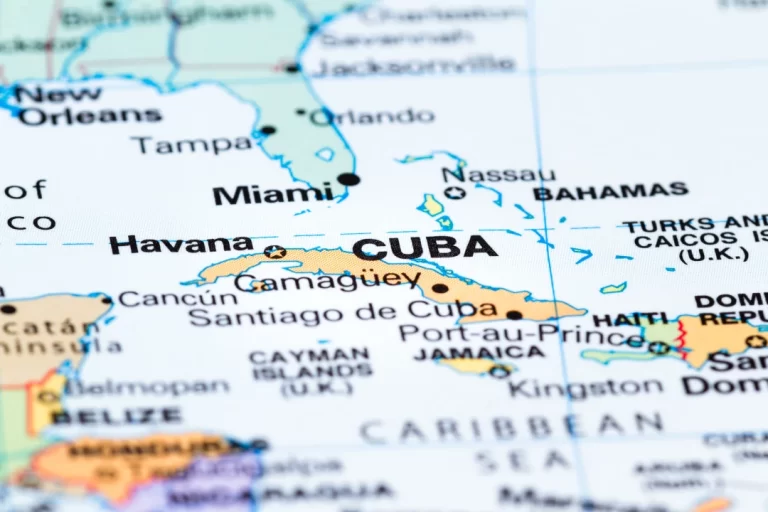
To understand what Trump said Friday night, you must understand what preceded it. The Cuba crisis did not begin with a throwaway line at a Palm Beach dinner. It has been building since January 2026, when Trump’s administration declared Cuba an “unusual and extraordinary threat” to national security and began systematically strangling the island’s economy. After U.S. forces ousted Venezuelan President Nicolás Maduro in a January raid — cutting off Cuba’s primary oil supply — the Trump administration moved to block all replacement oil shipments, threatening tariffs against any country attempting to supply the island. The New York Times called it the first effective blockade of Cuba since the Cuban Missile Crisis.
The human consequences have been immediate and catastrophic. Cuba’s Deputy Foreign Minister Carlos Fernández de Cossío reported that more than 96,000 Cubans require surgery, with hospitals forced to suspend procedures as electricity fails and supplies of syringes and antibiotics run out. An estimated 11,000 children are awaiting surgery. Power blackouts now extend beyond 20 hours daily. Food prices have soared beyond the reach of ordinary wages. Uncollected garbage spreads disease through Havana’s streets.
“Whether I free it or take it, I think I can do anything I want with it, to be honest.”
— President Donald J. Trump, briefing remarks, May 2026
The United Nations has not been silent. UN Secretary-General António Guterres stated that he is “extremely concerned about the humanitarian situation in Cuba,” warning it will “worsen if not collapse” if oil needs go unmet. UN human rights experts went further, calling the U.S. fuel blockade “a serious violation of international law and a grave threat to a democratic and equitable international order.” They described it as “extreme unilateral economic coercion with extraterritorial effects” that may amount to collective punishment under international human rights law. The White House has ignored every word.
2. A Gala Pronouncement, Not a Policy Process
The manner in which Trump announced the potential conquest of a sovereign nation is at least as alarming as the substance. There was no National Security Council briefing. No consultation with Senate leaders. No formal address from the Oval Office. No constitutional authorization. There was a Palm Beach gala audience, a mention of an architect’s heritage, and a throwaway line that redrew the map of American foreign policy in the Western Hemisphere.
Trump declared the US would be “taking over” Cuba “almost immediately” in remarks at the Forum Club of the Palm Beaches, May 1, 2026 — without prior notice to Congress or the public.
Trump signed a sweeping executive order on May 1 targeting Cuba’s energy, defense, mining, and financial sectors — and threatening foreign banks doing business with Havana.
May 1 was also the 60-day deadline under the War Powers Resolution Act for Trump to seek congressional authorization for the Iran war — a deadline he appeared to treat as irrelevant, per Stars and Stripes reporting.
Trump described deploying the USS Abraham Lincoln carrier group — currently in action near Iran — to stop “100 yards offshore” Cuba, according to RealClearPolitics video of the remarks, expecting instant Cuban capitulation.
Senate Republicans voted 51–47 to block a war powers resolution introduced by Sen. Tim Kaine (D-Va.) that would have required congressional approval before any U.S. military action against Cuba.
Cuba’s Foreign Minister Bruno Eduardo Rodríguez Parrilla condemned the new sanctions as “collective punishment,” while multiple Latin American governments issued formal objections to Washington’s escalating pressure campaign.
3. Congress: What Resistance Looks Like — and Why It Falls Short
The legislative response to Trump’s Cuba posture has been both principled and politically inadequate. Sen. Tim Kaine (D-Va.), joined by Sens. Ruben Gallego (D-Ariz.) and Adam Schiff (D-Calif.), introduced a war powers resolution invoking the War Powers Act of 1973 and Article I of the Constitution, which reserves the power to declare war for Congress. It never reached the floor. Republican Sen. Rick Scott of Florida moved to block it, and succeeded.
Senate Minority Leader Chuck Schumer (D-N.Y.) stated plainly on the Senate floor: “The last thing working Americans need right now is another war, let alone one that’s 90 miles south of the United States.” Sen. Kaine was more specific about the constitutional stakes, arguing before colleagues that the oil blockade — which has canceled medical procedures for children, shut down municipal water supplies, and caused nationwide blackouts — would be considered an act of war if another country imposed it on the United States.
The vote was 51–47 to kill the resolution. Among the notable exceptions: Sens. Susan Collins (R-Maine) and Rand Paul (R-Ky.) joined Democrats — a notable but insufficient break. Sen. John Fetterman (D-Pa.) voted with the Republican majority to dismiss it. The pattern is by now familiar: the president acts unilaterally, Democrats mount principled procedural opposition, and a compliant Republican majority ensures that nothing changes.
4. A Pattern of Escalation — The Timeline of Unilateral Action
5. What Kind of Leader Announces an Invasion as Dinner Party Banter?
The question of presidential fitness is not, at this point, a partisan talking point. It is a substantive inquiry demanded by the observable record. Consider the pattern assembled above: wars begun without congressional authorization; ultimatums threatening to “wipe out a whole civilization” posted to social media on Easter morning; a casual declaration at a fundraising dinner that the United States would “take over” a sovereign nation while a carrier group finishes work in Iran; and a reflexive assertion that the president “can do anything I want” with a neighboring country. These are not the statements of a leader operating within constitutional norms. They are the statements of someone who has ceased to recognize that constitutional norms apply to him.
“Some may think this isn’t a necessary concern, but to quote the president of the United States, our commander in chief: ‘Cuba’s next.'”
— Sen. Tim Kaine (D-Va.), Senate floor remarks, April 28, 2026
The Cuba announcement is particularly revealing because of its complete detachment from process. As Euronews reported, Trump raised the prospect of yet another military conflict even as the 60-day Iran war-powers deadline loomed — and even as at least three Republican senators publicly stated they would not extend that conflict. His stated rationale for Cuba was not geopolitical strategy. It was narrative momentum: “I like to finish a job.” This is not foreign policy. It is the logic of a man with impulse control problems and a carrier group at his disposal.
Get Involved Today
Contribute to our mission and turn your concerns into action.
The Mechanism the Founders Built for This Moment
What Section 4 of the 25th Amendment says: Ratified in 1967 and passed by Congress on July 6, 1965, the 25th Amendment establishes procedures for presidential succession and incapacity. Section 4 — the provision now most often cited — allows the vice president and a majority of the Cabinet to transmit a written declaration to congressional leaders stating that the president “is unable to discharge the powers and duties of his office.” The vice president then immediately assumes those powers as acting president. If the president contests the declaration, Congress must convene and vote within 21 days; removal requires a two-thirds supermajority of both chambers.
Who has called for its invocation: Rep. Alexandria Ocasio-Cortez (D-N.Y.) posted publicly that the president’s “mental faculties are collapsing and cannot be trusted.” Rep. Ro Khanna (D-Calif.) stated that “every member of Congress and senator must be calling for Trump’s removal today based on the 25th Amendment.” Former Speaker Nancy Pelosi (D-Calif.) declared that if the Cabinet would not invoke it, Republicans must reconvene Congress to end the Iran war. Rep. Jamie Raskin (D-Md.) introduced legislation to establish a formal Commission on Presidential Capacity — a 17-member body empowered to conduct a medical examination within 72 hours of adoption. It was introduced with 50 Democratic co-sponsors. Former Rep. Joe Walsh and former White House communications director Anthony Scaramucci have each publicly demanded invocation. Iran’s own embassies urged the world to “seriously think about the 25th Amendment, Section 4.”
The legal and constitutional argument: As PolitiFact’s legal analysis notes, the amendment’s congressional record includes statements from Rep. Richard Poff (R-Va.) that Section 4 applies not only to physical incapacitation but also when “the President, by reason of mental debility, is unable or unwilling to make any rational decision.” The amendment’s language — “unable to discharge the powers and duties of his office” — was intentionally vague to account for scenarios the founders could not predict. A president who casually announces the conquest of a neighboring nation while managing two active military conflicts, who threatens to “wipe out a whole civilization” on social media, and who declares he “can do anything I want” with sovereign states, presents precisely the kind of judgment failure the amendment’s framers contemplated.
The practical barriers: Section 4 has never been invoked to end a presidency. It would require Vice President J.D. Vance — who has publicly lauded Trump throughout this period from Budapest — and a majority of the Cabinet to act. Republicans control Congress; a two-thirds supermajority for removal is implausible in the current political configuration. Trump would almost certainly contest any declaration, triggering the full congressional process.
Why the barriers do not negate the constitutional case: The difficulty of invoking Section 4 does not make invocation less warranted — it makes the Republican Party’s complicity more damning. The mechanism exists precisely because the founders understood that democratic norms alone cannot constrain a president who refuses to observe them. The Cabinet’s silence, the Senate majority’s willingness to block war powers resolutions, and the vice president’s enthusiastic support from a foreign capital are not evidence that Trump is fit for office. They are evidence that the constitutional guardrails are being deliberately ignored by those with the clearest obligation to engage them.
6. The Stakes: Empire, Humanitarian Catastrophe, and Democratic Survival
The Cuba gambit is not happening in isolation. It is the culmination of an arc that began with the unilateral seizure of Maduro, proceeded through an undeclared war in Iran, and has now arrived at the casual announcement of the next conquest — all while a U.S.-imposed blockade starves a neighboring population. The Nation’s reporting from inside Cuba describes a population living on less than one meal a day, with surgeries canceled and garbage accumulating in streets darkened for 20 hours. These are real people. They are not abstractions in a foreign policy debate. They are the direct consequence of American executive action — taken without a declaration of war, without congressional authorization, and, now, without even the pretense of a diplomatic rationale beyond “I like to finish a job.”
The UN General Assembly has called for an end to the U.S. embargo on Cuba for more than three decades — a fact the Secretary-General’s spokesperson pointedly noted when issuing the humanitarian warning in February. The world is watching an American president conduct what is, by any reasonable definition, economic warfare against a civilian population, while cheerfully announcing plans for military conquest at a Palm Beach dinner party. The reputational and legal consequences for this country — when they arrive — will be severe and lasting.
There is also a domestic dimension that must not be overlooked. A president who believes he “can do anything I want” with foreign nations has already told us everything we need to know about how he views the limits of executive power at home. The impulse that drives the Cuba gambit — the conviction that desire equals authority, that wanting something is sufficient justification for taking it — is the same impulse that drives the attacks on the courts, the defiance of congressional oversight, and the steady erosion of every institutional check on presidential power. Cuba is not a foreign policy story. It is a democracy story.
Editorial Conclusion
A president who announces the military conquest of a sovereign nation between compliments to a Palm Beach architect — and signs executive orders to back up the boast on the same evening — has revealed the full dimensions of his contempt for constitutional government. The 25th Amendment exists not as a partisan tool but as the drafters’ acknowledgment that power, left unchecked, will eventually be wielded by someone who believes they can do anything they want with it. That moment is not approaching. It has arrived. The Cabinet knows it. The Republican Senate majority knows it. What remains to be seen is whether the weight of that knowledge — and the weight of history — will prove heavier than political convenience. If it does not, the republic will have answered the question of whether it can survive a president who openly declares himself above the law. The answer will be written in the ruins of every institution left standing.
Sources & References
- Newsweek — “Donald Trump Says US Will Take Over Cuba ‘Almost Immediately'”
- The Singju Post — Full Transcript: Trump Remarks at Forum Club of the Palm Beaches
- Daily Voice — “Trump Outlines How US Will ‘Take Over’ Cuba ‘Almost Immediately'”
- RealClearPolitics — Video: Trump on Cuba Takeover “After Iran”
- Euronews — “Trump Jokes That US Navy Will Takeover Cuba ‘Almost Immediately'”
- MEAWW — “Trump Remarks on Taking Over Cuba: ‘Whether I Free It or Take It, I Can Do Anything I Want'”
- White House — Executive Order: Sanctions on Cuba, May 1, 2026
- Fox News — “Dem Plot to Limit Trump War Powers on Cuba Fails as GOP Falls in Line”
- PBS NewsHour — “Senate Republicans Reject Attempt to End Trump’s Blockade of Cuba”
- Stars and Stripes — “Republicans Block War Powers Bid on Cuba”
- CiberCuba — Senate Rejects Cuba War Powers Resolution 51-47
- UN News — “Cuba: UN Warns of Possible Humanitarian ‘Collapse’ as Oil Supplies Dwindle”
- UN OHCHR — “UN Experts Condemn US Executive Order Imposing Fuel Blockade on Cuba”
- Al Jazeera — “UN Warns of Humanitarian Collapse in Cuba as US Seeks to Block Oil Supplies”
- Democracy Now! — “Cuba Says US Oil Blockade Has Caused Massive Disruptions to Healthcare System”
- The Nation — “Cuba Hunkers Down as a US Oil Blockade Brings a Humanitarian Crisis”
- The New Humanitarian — “In Cuba, Government Mismanagement and US Oil Moves Tell in Human Suffering”
- TIME — “What to Know About the 25th Amendment as Lawmakers Call for Trump’s Removal”
- CNBC — “Trump Faces Calls for Removal Over Threats to Wipe Out ‘Whole Civilization’ in Iran”
- Mississippi Now / NBC News — “Raskin Offers Bill Setting Up 25th Amendment Process to Remove Trump”
- PolitiFact — “Following Trump’s Iran Social Media Post, Could the 25th Amendment Be Invoked Against Him?”
- Wikipedia — “2026 Cuban Crisis” (overview of the blockade and its origins)
Related News