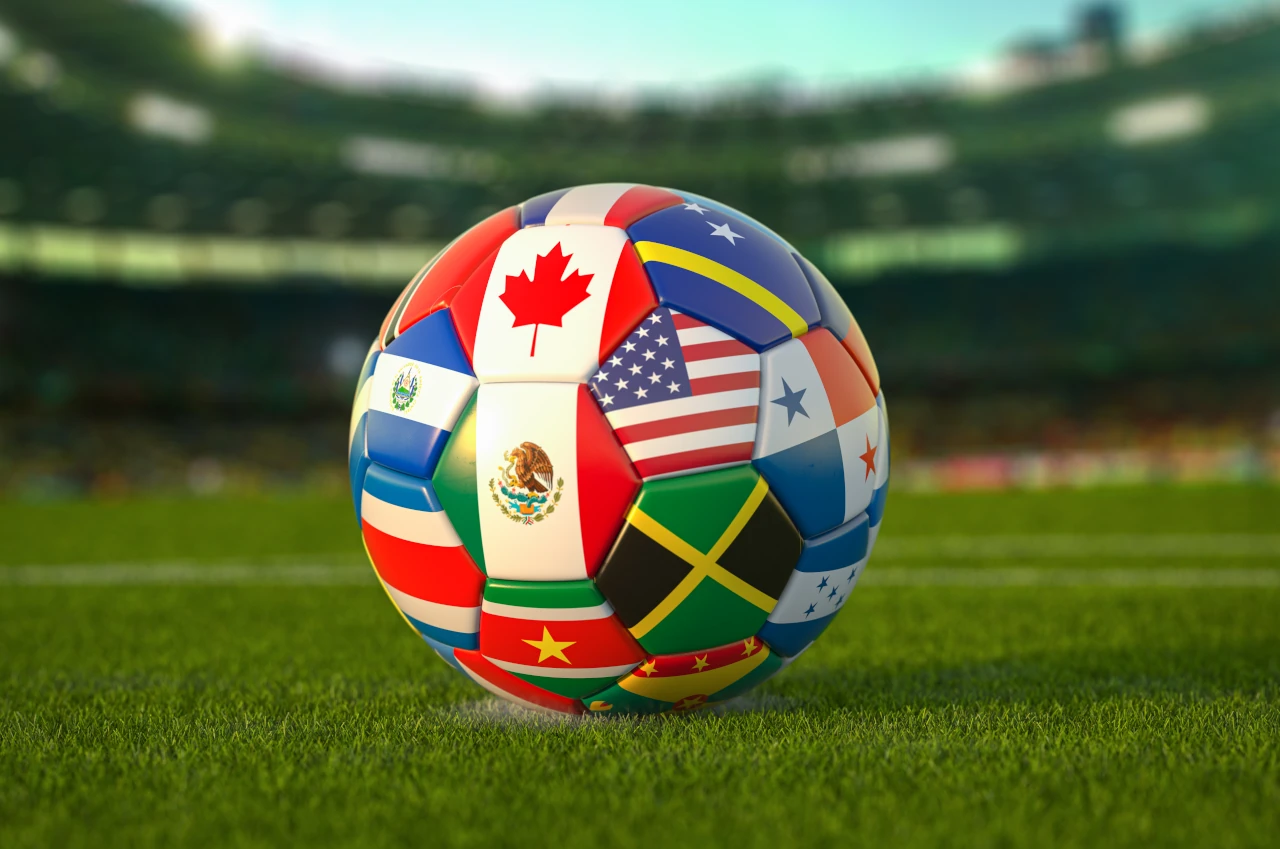
The 2026 FIFA World Cup — a once-in-a-generation economic and diplomatic opportunity — is being systematically undermined by the Trump administration’s immigration crackdowns, travel bans, erratic foreign policy, and authoritarian drift. What is unfolding is not merely a sporting embarrassment. It is a constitutional crisis playing out on a global field.
The summer of 2026 was supposed to announce America’s return to the world — not as a belligerent superpower demanding fealty, but as a generous, open host of the planet’s most-watched sporting event. FIFA awarded the 48-team men’s World Cup to the United States, Canada, and Mexico on the strength of a bid that promised precisely that: 6.5 million fans streaming into eleven American cities, yielding a projected $30.5 billion economic impact on the U.S. alone. That was the promise. What the Trump administration has delivered instead is a masterclass in self-sabotage — a systematic dismantling of the goodwill, openness, and global standing that made that promise credible in the first place.
This is not hyperbole. It is the documented verdict of economists, immigration lawyers, civil rights organizations, foreign governments, and even the governing body of world soccer itself. The Trump administration’s immigration crackdowns, travel bans targeting World Cup nations, diplomatic belligerence, reckless military adventurism in Iran, and an unprecedented erosion of constitutional norms have combined to produce what analysts are now calling a “Trump slump” — a measurable collapse of international confidence in the United States as a safe and welcoming destination. The World Cup, which should have been the crowning symbol of America’s soft power, has instead become a mirror held up to its deterioration.
1. The Economics of Self-Destruction
Let us begin where the damage is most quantifiable: money. A study published jointly by FIFA and the World Trade Organization projected the tournament would bring 6.5 million fans to the United States, generating $30.5 billion in economic activity for just $11.1 billion in expenditures. For a nation whose tourism infrastructure was already straining, this was supposed to be a bonanza — for hotels, restaurants, transit systems, and the hundreds of thousands of service-sector workers who depend on visitor spending. Instead, a cascade of Trump administration policies has ensured that the windfall will be substantially smaller than promised — and in some cases, may not materialize at all.
The numbers are stark. While global international tourism grew by 4% in 2025, the United States experienced a 5.4% decline in foreign visitors — a steeper drop than during any period outside the COVID-19 pandemic. Canadian tourism collapsed by 28% in January 2025, and European arrivals from France and Germany also fell. By January 2026, travelers from Europe were 5.2% lower year-on-year, a trend that tourism analysts say has not been reversed by the prospect of the World Cup. Hotel bookings in New York City for World Cup dates are trending 2% below the same period last year, when no major event was scheduled. Visit Seattle reports a 17% drop in expected international World Cup visitors. The silence of absent tourists is as loud as any stadium chant.
$30.5B Promise, Shrinking Returns
The projected World Cup windfall assumed open borders and global goodwill. Both have been shredded. The NYC Comptroller warned the city may still lose money on the event due to policing costs even at peak attendance.
5.4% Decline as the World Grew 4%
While global tourism expanded in 2025, the U.S. shed international visitors at a rate unseen outside the pandemic. Canadian arrivals alone fell 28% in January 2025, representing the loss of an estimated 140,000 American jobs in border economies.
New Fees Punish Fans Before They Arrive
Trump’s “One Big Beautiful Bill” doubled the ESTA fee for Europeans to $40 and added a $250 “visa integrity fee,” bringing tourist visa costs for Brazilian and Mexican fans to $435 per person — a direct tax on the global enthusiasm the World Cup requires.
Air Fares Surge; Transit Unfunded
Jet fuel costs have nearly doubled since the onset of the Iran war, driving intercontinental airfares up 148% to $414 by mid-March. Meanwhile, New Jersey Transit faces a $48 million unfunded bill to move fans safely — while FIFA pockets $11 billion.
2. The Human Cost: Travel Bans, ICE, and Fear
Beyond the spreadsheets lies a human catastrophe in the making. The Trump administration’s travel bans, immigration enforcement apparatus, and climate of fear have rendered the World Cup not merely expensive to attend, but genuinely dangerous for millions of would-be visitors. The American Immigration Council reports that fans from Côte d’Ivoire, Haiti, Iran, and Senegal — all nations that have qualified for the tournament — are subject to the travel ban and cannot attend U.S. matches. As of April 2026, a further five World Cup nations, including Algeria, Cabo Verde, and Tunisia, are subject to a “Visa Bond Program” requiring citizens to post bonds of up to $15,000 before entering the United States.
The chilling effect extends far beyond the banned nations. U.S. Customs and Border Protection agents conducted over 55,000 searches of travelers’ phones at ports of entry in fiscal year 2025 alone — including searches of social media activity. ICE agents attended matches at last summer’s Club World Cup, which was explicitly framed as a “dress rehearsal” for 2026. Stadium workers and vendors — many of them immigrants who form the operational backbone of major American sporting events — are demanding that immigration agents be barred from World Cup venues.
“It is really sad because a lot of these fans, they’re the backbone of growing the beautiful game here in the U.S., and now they might not feel comfortable participating in this global celebration.”
— Juan Avilez, Policy Associate, American Immigration Council
A coalition of more than 120 civil society organizations, including the ACLU and Amnesty International USA, issued a formal travel advisory in April 2026 — warning fans, journalists, and players that the United States poses risks of civil and human rights violations. Amnesty International USA’s Americas advocacy director, Daniel Noroña, said the U.S. presented a “deeply troubling human rights landscape, shaped by the Trump administration’s racist immigration policies, mass detention and deportation, and attacks on freedom of expression and peaceful protest.” ACLU human rights program director Jamil Dakwar accused FIFA of “paying lip service to human rights while cozying up with the Trump administration, putting millions of people at risk.”
3. The Geopolitical Catastrophe: Iran, Boycotts, and America’s Reputation
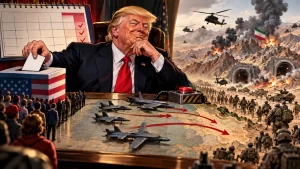
Then there is the matter of Iran. The United States is currently engaged in an active military conflict with Iran — a conflict the president initiated without Congressional declaration or consent, and which has killed thousands of Iranian civilians, including hundreds of children. Iran has qualified for the 2026 World Cup and has been assigned group-stage matches in Los Angeles and Seattle. The Iranian football federation formally requested that FIFA relocate its matches to Mexico. FIFA refused. President Trump, for his part, posted on Truth Social that Iran’s players should skip the tournament “for their own life and safety” — a statement that reads less like diplomatic advice than a veiled threat from a head of state to athletes of a nation his country is bombing.
The geopolitical fallout has triggered boycott movements of historic breadth. In the Netherlands, over 174,000 citizens signed a petition urging the Dutch national team to withdraw from the World Cup over “aggressive U.S. military intervention.” The Facebook group “Boycott FIFA World Cup 2026 in USA” has surpassed 27,000 followers. Oke Göttlich, president of FC St. Pauli and a vice president of the German Football Association, said publicly that it was time to “seriously consider and discuss” a boycott — noting that the Qatar World Cup was considered “too political,” while the current American one has been treated as if it exists in a values-free vacuum. Even former FIFA president Sepp Blatter has endorsed calls for fans to stay away.
“A boycott would not be directed against the people of the United States, but against the government. It would be a form of protest toward those in power and an action in defense of human rights and the rule of law.”
— Oke Göttlich, President, FC St. Pauli & Vice President, German Football Association
4. A Chronology of Damage
The erosion of America’s World Cup credibility did not happen overnight. It is the product of deliberate, documented policy choices made by this administration across the last sixteen months. The timeline below records the sequence of decisions — each one a compounding injury to the nation’s ability to host the world.
Get Involved Today
Contribute to our mission and turn your concerns into action.
Trump’s second administration begins. Canadian tourism falls 28% within months as Trump threatens annexation and imposes tariffs. Border economies begin showing stress. The “Trump slump” begins.
The administration issues two proclamations restricting entry from 39 countries. Côte d’Ivoire, Haiti, Iran, and Senegal — all 2026 World Cup qualifiers — are barred from the U.S. ICE agents attend Club World Cup matches in what FIFA describes as a security arrangement.
FIFA presents Trump with its inaugural “FIFA Peace Prize” at the World Cup draw ceremony in Washington, D.C. – in January, FIFA president Gianni Infantino had attended Trump’s inauguration. The symbiosis between an authoritarian political movement and a corruption-plagued sports organization becomes official.
The “One Big Beautiful Bill” doubles the ESTA fee and introduces a $250 “visa integrity fee,” raising the effective cost of visiting the United States for fans from Brazil, Mexico, and dozens of other nations to $435 per person. European arrivals fall 5.2% in January.
The State Department expands its Visa Bond Program to 50 countries, requiring up to $15,000 deposits from nationals of affected nations, including five World Cup qualifiers, before they may travel to the United States for tourism or business.
Trump posts on Truth Social that “a whole civilization will die tonight, never to be brought back again” as a deadline to Iran regarding the Strait of Hormuz. Over 70 Democratic lawmakers call for his removal. The NAACP, in its 117-year history, calls for the invocation of the 25th Amendment for the first time.
More than 120 organizations, including the ACLU and Amnesty International, issue a formal travel advisory for the World Cup, warning visitors of human rights violations. Rep. Jamie Raskin introduces legislation to establish a Commission on Presidential Capacity with 50 co-sponsors.
5. Leadership Failure as Policy
What the World Cup crisis reveals, with almost clinical precision, is not merely a set of bad policy choices, but a fundamental incapacity for the kind of governance that responsible stewardship of a major national undertaking requires. Hosting the World Cup demands sustained institutional coordination across dozens of federal agencies, diplomatic sensitivity toward 47 other participating nations, a functional immigration system capable of distinguishing fans from threats, and a head of state who understands that sometimes the job of leadership is to get out of the way and let America be welcoming. Donald Trump has failed on every count.
The administration’s own gutting of federal institutions — part of its DOGE-driven campaign to slash government capacity — has left the U.S. air travel system structurally unprepared for the surge in travelers expected for the World Cup and the 2028 Olympics. DHS Secretary Markwayne Mullin threatened to halt processing of international travelers at airports in “sanctuary cities” — a move that would have constituted a self-imposed catastrophe for the tournament. The Department of Homeland Security itself has been operating under its longest-ever shutdown as funding battles paralyze the agencies responsible for ensuring safe international travel.
Andrew Woods, director of the Centre for Business and Economic Research at the University of Nevada, told The National that geopolitical tension tied to the Iran conflict and rising gas prices are already “hurting discretionary spending.” Aran Ryan, Director of Industry Studies at Tourism Economics, acknowledged that “negative U.S. sentiment and concerns around border and immigration policies” represent “stiff headwinds” that will not be “reversed by the World Cup alone.” These are not partisan assessments. They are professional ones, issued by analysts whose job is to follow the money — and the money is saying that the world does not feel welcome in Donald Trump’s America.
When the Stadium Lights Reveal a Darker Incapacity
The Twenty-Fifth Amendment to the United States Constitution, ratified in 1967 following the Kennedy assassination, provides a mechanism for addressing presidential incapacity that goes beyond death or resignation. Section 4 — its most consequential and never-invoked provision — allows the Vice President and a majority of the Cabinet, or such other body as Congress may by law provide, to declare in writing that the President is “unable to discharge the powers and duties of his office.” If the President contests the declaration, Congress must then decide the question within 21 days.
The mechanism has never been triggered. But the conduct that surrounds the World Cup crisis — when viewed alongside the broader pattern of the Trump administration’s behavior in 2026 — has prompted the most sustained, bipartisan conversation about Section 4 in American history.
On April 10, 2026, Rep. Jamie Raskin (D-MD), the ranking member of the House Judiciary Committee and a constitutional law professor, formally wrote to White House Physician Captain Sean Barbabella demanding a comprehensive cognitive and neurological evaluation of the President — and full public disclosure of the findings. The request followed Trump’s Truth Social post warning that “a whole civilization will die tonight, never to be brought back again.” Raskin’s letter noted that “even several of the President’s longtime allies and supporters have publicly denounced his conduct and raised questions about his fitness for office.”
On April 14, 2026, Raskin introduced legislation to establish an independent Commission on Presidential Capacity — the body explicitly authorized by Section 4 — co-sponsored by 50 Democratic House members. The NAACP — in its 117-year history, never before calling for a president’s removal — issued a formal statement calling for invocation of the Twenty-Fifth Amendment, citing Trump’s Easter Sunday Truth Social post as evidence of behavior that “has called many to question his sanity.” Over 70 Democratic lawmakers had, by April 10, called for the president’s removal either through impeachment or the Amendment.
The legal argument: Section 4 does not require a diagnosis of physical illness. Constitutional scholars, including Raskin himself, have long argued that the amendment’s language — “unable to discharge the powers and duties of his office” — encompasses cognitive deterioration, gross misjudgment, and reckless decision-making that renders a president functionally incapable of responsible governance. A commander-in-chief who wages unauthorized war, threatens to extinguish a civilization on social media, presides over the systematic destruction of a once-in-a-generation national opportunity, and issues veiled threats to foreign athletes attending a sporting event on American soil is not discharging the duties of his office. He is endangering them.
The practical barriers: Section 4 requires the Vice President and a Cabinet majority to act — and JD Vance has shown no disposition to do so. Republicans control both chambers of Congress. The legislation Raskin introduced has virtually no chance of passage in its current form.
Why barriers do not negate the constitutional case: The framers built the Twenty-Fifth Amendment as a last-resort mechanism precisely because they understood that the structures of self-interest — a complicit Cabinet, a loyalist legislature — would ordinarily prevent its use. As Raskin argued in a Time magazine interview: “The framers had no concept of nuclear weapons and what a president could do with them. And I don’t think they ever anticipated that somebody would act in the ways that Donald Trump has been acting in office.” The constitutional architecture exists. The moral obligation to invoke it — or at minimum to demand its invocation — exists with equal force. Political impracticality is not a constitutional argument. It is an excuse.
6. What This Moment Demands
The 2026 FIFA World Cup was always going to be more than a soccer tournament. It was going to be a statement — about what kind of country the United States chooses to be, about whether the world’s largest democracy can still function as the world’s host. That statement is being written now, in real time, in the declining hotel bookings and the travel advisories and the boycott petitions and the Iranian federation’s desperate plea to be moved somewhere — anywhere — safe.
The citizens of this country — and the workers who will serve the fans, the immigrant vendors who will fill the stadium concourses, the athletes who will compete regardless of the politics swirling around them — deserve a government capable of rising to this moment. Instead, they have an administration that views the World Cup as a propaganda machine — a venue for Trump to bask in stadium ceremonies, claim symbolic victories, and turn football into another front in the culture wars.
Jennifer Li, who leads Dignity 2026, a national coalition working with grassroots groups in host cities, put it plainly: “The specter of immigration enforcement this summer has become the leading concern among grassroots organizations across host cities. With less than two months to go, we are still waiting for public commitments from FIFA and host city organizers about plans to protect residents, workers, and visitors. The silence has been deafening.”
That silence is the sound of leadership abdicated. It echoes from the Oval Office.
Editorial Conclusion
The 2026 FIFA World Cup is not just a tournament being mismanaged — it is a diagnostic. What it reveals is an administration incapable of governing in the national interest, one that has converted every platform of American openness into a theater of exclusion, intimidation, and self-promotion. The economic damage is real and mounting. The diplomatic damage is historic. The human damage — to immigrant workers, to banned fans, to athletes who may play in the shadow of American bombers — is unconscionable. The Twenty-Fifth Amendment exists for precisely this species of presidential failure: not merely physical incapacity, but the demonstrated inability to discharge the duties of the office with the judgment, stability, and constitutional fidelity that the American people and the watching world have the right to demand. Congress must act. The Cabinet must be pressed to account. And the American people — who will fill those stadiums or stay home, who will welcome the world or frighten it away — must name, clearly, what kind of country they intend to be when the whistle blows.
Sources & References
- The National — “The Trump Factor: Will MAGA Politics and War with Iran Taint the 2026 FIFA World Cup?”
- Common Dreams — “Groups Issue World Cup Travel Advisory Over ‘Deeply Troubling Human Rights Landscape’ in US”
- Newsweek — “Travel Warning About US Issued Ahead of FIFA World Cup: ‘Serious Risk'”
- Play the Game — “How Trump Has Made the 2026 FIFA World Cup About America First”
- Fortune — “The World Cup Is Supposed to Be an Economic Windfall. But ‘You’re Seeing a Number of Headwinds’ Now”
- Euronews Travel — “Can the FIFA World Cup Stop the US Tourism ‘Trump Slump’?”
- The Conversation — “Will a ‘Trump Slump’ Continue to Hit US Tourism in 2026 — and Even Keep World Cup Fans Away?”
- American Immigration Council — “50 Days Until the World Cup: Travel Bans, ICE, and Iran Cause Uncertainty for Players and Fans”
- The Travel — “U.S. Tourism Faces More Travel Boycotts Ahead of the FIFA World Cup 2026”
- Travel and Tour World — “Canada, Europe, and Mexico Among Countries Impacted as US Faces Tourism Decline”
- House Judiciary Committee Democrats — “Ranking Member Raskin Demands White House Physician Evaluate Trump’s Cognitive Fitness”
- Deseret News — “A Medical Check for the Commander-in-Chief? Democrats Introduce Trump Fitness Bill”
- TIME Magazine — “Jamie Raskin on Trump, the 25th Amendment and Impeachment”
- News Directory 3 — “Trump’s Mental Fitness and Calls for the 25th Amendment”
- Scope Weekly — “NAACP Calls for Trump’s Removal Under 25th Amendment in Historic First”
- International Bar Association — “Comment and Analysis: President Trump and the 25th Amendment”
- WLRN / The Conversation — “Will a ‘Trump Slump’ Continue to Hit US Tourism in 2026?”
Related News