Eleven days after resigning amid revelations of an affair with a woman U.S. intelligence links to China’s spy service, Jensen Huang is back atop the world’s most important AI company. He didn’t get there on the board’s judgment alone. The President of the United States dialed in, offered “assurances,” and took the credit. Now the rest of us are left holding the risk.
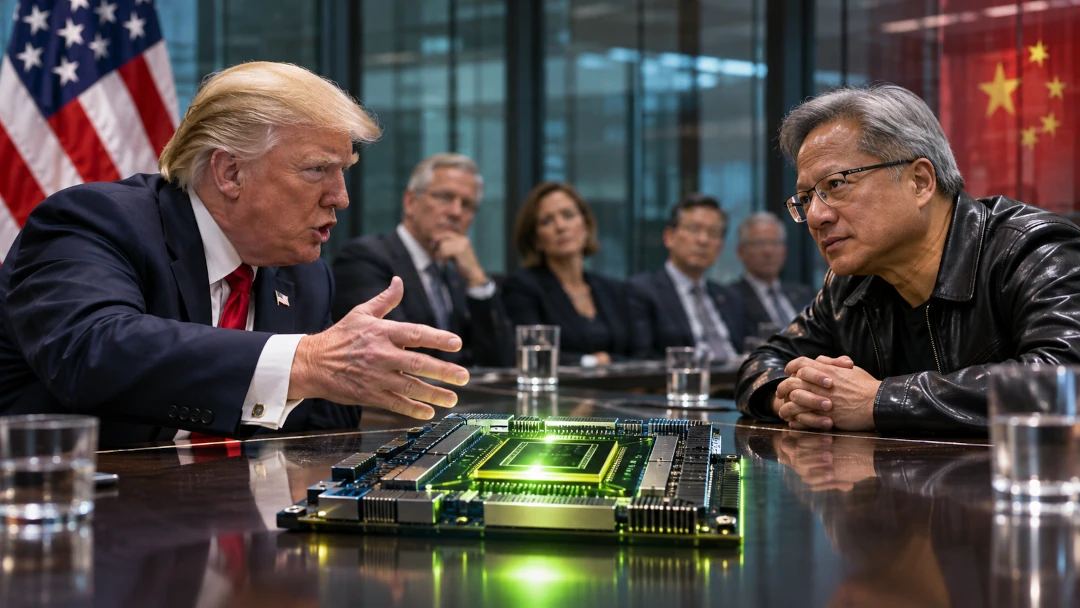
On November 12, Nvidia’s board accepted Jensen Huang’s resignation and named CFO Colette Kress interim chief executive, launching a search for a permanent replacement, according to the company’s own SEC filing. Five days later, board chair Harvey Jones told investors the board did not intend to bring him back. Then, on Sunday night, the President of the United States joined the board’s meeting. By Monday morning, Huang had his job back, and the company’s 8-K announcement said, with remarkable candor, that the unanimous decision came after “input from senior levels of the United States government.”
The backstory matters. Huang admitted in an email to staff that he had an affair with a businesswoman whom intelligence agencies identify as a Chinese spy, and the board opened an independent investigation, CNBC reported. That woman, Alice Huang (no relation), is tied to Megaspeed, an Nvidia customer accused of helping restricted Chinese companies get Nvidia’s AI chips. Further reporting described affairs with two Nvidia employees as well, including a direct report, according to TechCrunch. None of this has been resolved. The company’s internal investigation is still open. Congress hasn’t heard a word of testimony. But the man at the center of it is back in charge, because Donald Trump wanted him there.
I. Eleven Days: From Resignation to Restoration
II. “I Convinced Them”: The President in the Boardroom
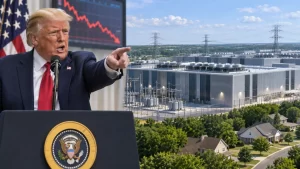
Nvidia’s statement never named Trump. Trump named himself. Semafor broke the news that he joined the board’s Sunday meeting to argue for Huang’s return, and that by Monday the company was openly crediting White House “input.” Within hours, the President was on the phone with CNBC’s Eamon Javers, saying he had worked on the board “directly and indirectly.” The board had asked for reassurance about the national security threat, he said, and he gave it. He then described calling Huang once “the deal was finished.”
He was more candid still with other outlets. Trump said it was “a lot easier to convince them yesterday than it was a week ago”. That is the President of the United States describing a public company’s board changing its mind under his personal pressure. Asked whether Huang would have returned without him, Trump told CNBC his intervention was “very important,” NBC News reported. White House communications director Steven Cheung went further, telling Fortune that Trump was “totally involved” and that “we have to protect our geniuses.” CNN reported that Trump also brought in Vice President JD Vance to work with the board.
“People say, ‘is it a threat to have him?’ No, it’s a threat to lose him.”
— President Donald Trump, to CNBC, November 23, 2026 · via CNBC
Did Trump threaten the board? Based on public reporting so far, there is no evidence of an explicit threat, and we won’t claim one. But a threat doesn’t have to be spoken to be felt. Quartz observed that a board already facing investor anger has a much harder time standing firm once the president adopts the executive’s cause. Consider what this administration controls: Nvidia’s export licenses, its China revenue-sharing arrangement, antitrust review, and federal AI contracts. When the man holding those levers calls into a meeting, every director understands the stakes. Columnist commentary in The Hill asked the right question: since when does the president serve as “an unofficial member of the board of directors of a publicly traded corporation”?
III. Follow the Money: Why Trump Wanted Huang Back
Trump calls Huang a genius and a patriot. Even taking that at face value, the record shows that the President had personal, financial, and political reasons to want Huang back. These are documented facts, and in most governments any one of them would trigger a recusal.
The President’s Portfolio
Trump’s financial disclosure showed at least $12 million in Nvidia stock, meaning he stood to profit from a rebound, Common Dreams reported. His accounts traded up to $97.5 million in Nvidia as Huang gained White House access, according to The Standard. The Trump Organization says outside advisers manage the trades.
The Ballroom & the Inauguration
Nvidia committed at least $26 million to Trump-backed projects, including $25 million for the White House ballroom and $1 million for the 2025 inaugural fund, while spending a record $2.15 million on lobbying in one quarter, CNBC found.
A Government Cut of China Sales
In 2025, export restrictions were lifted only after Nvidia agreed to hand the government a share of its China chip revenue, an arrangement Axios said cast Trump as “chairman of all boards.” Mother Jones reports the government’s take later grew to 25%.
Propping Up the Market
Nvidia is the backbone of the AI rally Trump has claimed as his own. Before Monday’s rebound, the Nasdaq had fallen about 18% since early October and the S&P 500 had erased its gains for the year, per UPI. Huang’s return delivered an immediate rally.
Get Involved Today
Contribute to our mission and turn your concerns into action.
Senator Chris Van Hollen of Maryland connected the dots: Trump trades Nvidia stock, Nvidia gives $25 million to his ballroom, and Trump gets Huang his job back. His verdict: “This is what a rigged system looks like.” Even Trump’s tone gave the game away. In his CNBC appearance, he joked that the company would be more profitable than ever because “sex sells,” The Daily Beast reported. A president focused on national security doesn’t talk that way. A shareholder does.
IV. The Circular Machine Huang Built
The President is defending more than one executive. He’s defending the financial structure Huang built. Over the past year Nvidia has become the lender, investor, and backstop for the customers who buy its chips. It took a $30 billion stake in OpenAI’s $110 billion funding round and a $2 billion stake in CoreWeave, InvestingLive reported. This summer, it reportedly weighed guaranteeing $250 billion for an OpenAI data center in Ohio, plus a separate plan to finance OpenAI’s purchase of $350 billion in Nvidia chips. Axios put it bluntly: Nvidia is using its cash to buoy “customers, who are losing oodles of cash.”
Critics call this circular financing. Nvidia funds its customers, the customers buy Nvidia chips, and Nvidia books the sales as demand. Fortune warned that these deals can inflate investors’ sense of how much real demand exists for AI, and that many are too small individually to be reported as “material” even though together they add up. Huang has rejected the label, arguing that customers like OpenAI remain responsible for paying their own leases and that Nvidia is securing supply, not manufacturing demand (Benzinga). Some headline figures, including the $250 billion guarantee, have never been confirmed. Still, the basic structure is not in dispute: the AI economy’s biggest supplier is also one of its biggest financiers. When the government steps in to protect the architect of that structure, it is protecting the structure too, and with it the risk.
V. A Spy Scandal, Waved Away
Trump says Huang “did nothing wrong” and is “exonerated.” What the reporting shows is much more troubling than a personal indiscretion:
Contact With China’s Spy Agency
Alice Huang kept in contact with an official of China’s top spy agency for more than a year during the affair, and her business partner Kang Wei allegedly worked with the same agency, according to U.S. intelligence reports described to the New York Times via The Irish Times and ABC News.
$3.6 Billion in State Money
About $3.6 billion in Chinese government funding moved through companies linked to Alice Huang’s relatives and partners, financing projects that included data centers built on Nvidia chips. Some of those firms have ties to military contractors (Ynet, citing the NYT).
Chip Smuggling Questions
Megaspeed is under investigation for possibly helping smuggle AI chips to Beijing (Investing.com). Singapore police impounded Alice Huang’s passport in June 2025 during a probe into server-purchase declarations (Latin Times).
Open Investigations
Nvidia’s independent probe is still under way, and Huang’s congressional testimony hasn’t happened yet (Gadget Review). The board reinstated him anyway, on the strength of White House assurances.
The administration hasn’t told the public what those assurances were based on. Trump said only that “we know a lot.” Republican Rep. Don Bacon of Nebraska, no friend of this editorial page, said the board “should have moved on without Huang” and called for further investigation, warning that we still don’t know what Chinese intelligence may have obtained. When a career Air Force general in the president’s own party says the White House’s judgment can’t be trusted on a counterintelligence matter, the country should listen. The “threat to lose him” argument turns counterintelligence on its head. The concern was never that Huang might leave. The concern is what a foreign service may have learned, or may still hold over him, while he runs the company that makes the world’s most strategically important chips.
VI. Congress Responds, and Democrats Promise a Reckoning
The backlash crossed party lines, but Democrats led it. Senate Democratic Leader Chuck Schumer said Democrats will use their full power to investigate the administration, Huang, Nvidia’s executives, and “anyone selling out our national security for financial gain.” On X, Schumer accused Trump of putting his own financial interests and his billionaire friends ahead of national security (The Hill).
Sen. Elizabeth Warren, who becomes chair of the Senate Banking Committee in January according to The Globe and Mail, called the decision reckless and demanded the administration explain “what ‘input’ was given and by which senior officials.” She and Republican Sen. Jim Banks are advancing bipartisan legislation to tighten limits on chip sales to China. Sen. Ron Wyden of Oregon wrote that under Trump, Vance, and Secretary of State Marco Rubio, “our national security is for sale,” and promised accountability once Democrats gain new committee power in January. Several Democrats have demanded that Huang and administration officials testify under oath, and that the White House provide a classified briefing explaining its “no risk” conclusion (The Washington Sun).
Some oversight is already scheduled. Huang faces a closed-door transcribed interview before three House committees on December 1 and a public Senate Banking hearing on December 3, called by Chairman Tim Scott. Scott has also summoned Commerce Secretary Lutnick for December 10 to explain how federal agencies monitored, or failed to monitor, export controls in real time.
VII. The Market’s Sugar High
Wall Street celebrated. Nvidia gained about 29% and the S&P 500 rose 4%, while the semiconductor index posted its biggest gain since April 2025 (Bloomberg via Swissinfo). Bernstein’s Stacy Rasgon, who had downgraded the stock just 11 days before, reversed and upgraded it to Outperform (Yahoo Finance). Melius and Oppenheimer upgraded too.
Look beyond the green numbers, though. One money manager told CNBC the move “establishes a bottom,” but other strategists called it a counter-trend rally inside a continuing downtrend, and CNBC noted that the core questions about AI spending remain unanswered. Analysts still see the ongoing investigations as a drag on the stock. Before Huang’s return, Citi’s Scott Chronert said the industry’s spending outlook for 2028 through 2030 was uncertain, according to TradingView. The rebound priced in Huang’s return. It didn’t price in the risk that a congressional hearing, a federal indictment, or a new intelligence disclosure could bring the whole thing down again. Yale’s Jeff Sonnenfeld told NBC News the White House’s involvement creates “total turmoil and confusion over integrity.” Over time, markets charge a price for that kind of uncertainty.
VIII. The Bubble and Your 401(k)
This isn’t only a Wall Street story. About 40% of the S&P 500 is tied to the AI buildout, and Nvidia sits at its center, Axios reported. Axios also calculated that a growth-focused tech fund with 25% exposure to Nvidia lost about $7,500 in value during the stock’s slide, and the average Baby Boomer has roughly $260,000 in a 401(k). Index funds increase their Nvidia holdings automatically as the stock grows. Millions of workers who have never bought a single share are heavily invested in this one company and the deals it has underwritten.
UCLA finance professor Valentin Haddad described today’s market concentration as “even more than there was during the dotcom bubble.” If the circular deals fall apart because a cash-burning customer can’t pay, or because capital spending stalls, the damage won’t stay in Silicon Valley. It will land in retirement accounts, pension funds, and the jobs of people building data centers across the heartland. Fortune pointed out a bitter irony: the white-collar workers most likely to own a 401(k) are often the ones whose jobs AI threatens. With his intervention, Trump has tied the government’s credibility to the bubble. If it bursts, Washington will have spent the last weeks propping it up rather than preparing for the fall.
“This is what a rigged system looks like.”
— Sen. Chris Van Hollen (D-Md.), via Common Dreams
Where the Law Has Gaps, and Where Congress Has Power
The conflict-of-interest gap. The main federal conflict-of-interest law, 18 U.S.C. § 208, makes it a crime for executive-branch officials to take part in matters where they have a financial stake. But 18 U.S.C. § 202(c) exempts the President and Vice President. That’s why a president who holds millions in Nvidia stock can personally lobby Nvidia’s board without breaking any criminal statute. The fact that it’s legal is the problem.
Congress’s Article I authority. The Constitution gives Congress, not the President, the power to “regulate Commerce with foreign Nations” (Art. I, § 8). Through the Export Control Reform Act of 2018, Congress delegated chip-export authority to the Commerce Department, and Congress can take that authority back or tighten it. The Warren–Banks export bill is an exercise of exactly this power. Congress’s long-recognized oversight power also lets it compel testimony and documents about what “input” the White House gave.
Fiduciary duty. Nvidia is a Delaware corporation, so its directors owe their duty of loyalty to the company and its shareholders, not to the President. A board that reverses itself within days because the head of state, who is himself a shareholder, says so must be able to show that it exercised independent business judgment. Shareholders and regulators are entitled to ask whether it did.
Market integrity. Nvidia shares rose more than 30% on news that, according to Semafor, was being decided in a Sunday call the President joined. Any trading ahead of that announcement by people with advance knowledge deserves scrutiny from the SEC, and the SEC is led by a presidential appointee.
IX. The Administration’s Case, and Why It Fails
To be fair, the other side has an argument. The White House says Huang is a uniquely talented founder, that his departure was hurting American competitiveness and retirement savings, and that the government simply shared what it knew so the board could decide. The board says it was satisfied with Huang’s candor after several meetings with him. Many analysts agree his return removes a major source of uncertainty for the AI trade, and Glen Smith of GDS Wealth Management said exactly that to Fox Business. Supporters also argue that a founder pushed out over private conduct deserves a second chance.
Those points are real, but they don’t answer the central objection. Huang’s talent isn’t the question. The questions are whether a sitting president with a personal financial stake should be the person who certifies a counterintelligence risk as “no risk,” whether he should do it before Congress or the company’s own investigators have finished, and whether he should then celebrate the stock jump. If the government’s assessment is sound, it can stand up to a classified briefing for the relevant committees. So far, the White House hasn’t offered one.
X. What You Can Do
Most of the decisions in this story belong to corporate boards, federal agencies, and Congress. Citizens still have real leverage, especially over the next several weeks.
- Call your senators about the export-control billAsk them to co-sponsor and pass the bipartisan Warren–Banks legislation restricting advanced chip sales to China. Warren has warned that Nvidia may lobby to kill it. The Capitol switchboard is (202) 224-3121.
- Demand a classified briefing on the “no risk” findingAsk members of the Senate Banking, Intelligence, and House oversight committees to require the administration to explain, in a classified setting, what its assurance to Nvidia’s board was based on.
- Watch the December 1 and December 3 proceedingsThe Senate Banking hearing is public. Pay attention, share clips, and write to your representatives about any questions that go unanswered. Public attention makes it harder to dodge.
- Check your own exposureFind out how much of your 401(k) or IRA sits in large-cap tech and Nvidia-heavy index funds. Talk with a licensed financial adviser about whether your mix fits your timeline. (We are not financial advisers. This is a prompt to look, not a recommendation.)
- Support presidential ethics reformPush for legislation that closes the § 202(c) loophole, bans the President and Vice President from holding or trading individual stocks, and requires disclosure of any White House contact with corporate boards on personnel decisions.
Editorial Conclusion
A president with millions invested in a company used the authority of his office to put that company’s CEO back in charge. The CEO had stepped down while a counterintelligence investigation was under way, and the President offered the board “assurances” he hasn’t explained to the public or to Congress. Whatever Jensen Huang’s talents, this was not a business decision. It was a political one, made in the boardroom by the most powerful man in the country.
A republic can’t let its national-security judgments become favors for donors and stock portfolios. Congress must use every oversight tool it has, including subpoenas, sworn testimony, and classified briefings, and it must write into law what this president has shown is no longer protected by norms: no president should personally broker corporate leadership decisions in which he holds a financial stake. The federal government has no business in America’s boardrooms, and this president has the least business of all.
Sources & References
- NBC News — Jensen Huang reinstated as Nvidia CEO after Trump pushes board
- NVIDIA / SEC — Form 8-K: Board Reinstates Jensen Huang as President, CEO and Board Director
- NVIDIA / SEC — Form 8-K: NVIDIA Announces CEO Transition
- Semafor — Exclusive: Huang reinstatement came at Trump’s behest
- CNBC — Trump tells CNBC ‘I made the deal’ to reinstate Nvidia’s Jensen Huang
- Yahoo News — Trump says he called Nvidia board directly to get Jensen Huang reinstated
- NBC News — Trump says he spoke ‘directly and indirectly’ with Nvidia’s board
- Fortune — ‘Totally involved’: Trump says ‘I convinced’ Nvidia’s board
- CNN — Live updates: Jensen Huang reinstated as CEO of Nvidia
- The Washington Post — Trump urges Nvidia to reinstate Jensen Huang, calling him ‘best thing’ for U.S.
- Newsweek — Donald Trump’s Role in Jensen Huang’s Reinstatement Under Scrutiny
- TechCrunch — Trump reportedly called into Nvidia board meeting to advocate for Huang’s return
- CNBC — Nvidia investigates CEO Jensen Huang’s relationship with alleged Chinese spy
- The Irish Times / NYT — Fresh details emerge of alleged Chinese intelligence links in Nvidia case
- ABC News — Woman at center of Nvidia scandal was in touch with China’s top spy agency
- Ynet News — Alice Huang’s family linked to Chinese military suppliers, NYT reports
- Latin Times — Jensen Huang to face three House committees over Nvidia’s China chip dealings
- CNBC — Nvidia’s Trump ties draw scrutiny after reports Huang was targeted by Chinese intelligence
- Common Dreams — ‘This Is What a Rigged System Looks Like,’ Says Van Hollen
- The Standard — Trump accounts traded up to $97.5 million in Nvidia
- Mother Jones — Nvidia, Jensen Huang, and Donald Trump—the Most Important Scandal Ever?
- The Daily Beast — Trump Admits Brazen Oligarch Move as He Boasts ‘Sex Sells’
- Axios — Trump’s drag on corporate America
- Reuters via Investing.com — US lawmakers criticize Nvidia decision to reinstate Huang as CEO
- The Hill — Schumer: Democrats will use ‘full power’ to probe Huang, Trump, Nvidia executives
- TIME — Trump Applauds NVIDIA’s Decision to Reinstate Jensen Huang
- The Globe and Mail — Nvidia’s decision to bring back Huang draws bipartisan criticism
- Fox News — House, Senate Democrats blast Trump role in Huang’s return
- The Washington Sun — ‘This Is What a Rigged System Looks Like’: Democrats Fume
- The Hill (Opinion, via Yahoo) — Trump’s unprecedented intervention for Jensen Huang crosses a dangerous line
- Quartz — 4 Pressures That Pushed Nvidia’s Board to Bring Jensen Huang Back
- Benzinga via Yahoo Finance — Huang’s Nvidia Comeback To Be Followed By Public Senate Showdown
- Investing.com — Nvidia’s Huang to testify before U.S. Senate on Dec. 3
- Gadget Review — Jensen Huang Will Still Face Senate Testimony on Chips and China
- Axios — Nvidia reignites “circular” AI concerns as it weighs OpenAI deal
- InvestingLive — Nvidia’s Huang rejects circular financing claims
- Benzinga — Nvidia-OpenAI Deal Isn’t ‘Circular Financing,’ Says Huang
- Fortune — Nvidia’s $100 billion OpenAI investment raises eyebrows
- Bloomberg via Swissinfo — Stocks Soar as Huang’s Nvidia Return Fuels AI Bets
- CNBC — ‘This establishes a bottom’: Huang’s return seen as likely to stop sell-off, for now
- Yahoo Finance — Wall Street analysts cheer Huang’s return — but they still have concerns
- Fox Business — What Jensen Huang’s return means for Nvidia – and Wall Street
- TradingView / Stocktwits — Huang’s Exit Raises Execution, Governance And Broader AI Risks
- Axios — How Nvidia’s scandal knocked thousands off your 401(k)
- Fortune — Your 401(k) is funding the AI boom
- UPI — How to protect your retirement savings if the AI boom fizzles
- TheStreet — Nvidia’s crisis exposes a hidden risk in Americans’ 401(k)s
Related News