Contempt of Court: Trump’s August Defiance of the Fourteenth Amendment
Thirty-seven days after the Supreme Court told him — six justices to three, in a decision written by the Chief Justice himself — that he could not strip citizenship from American children by executive fiat, the president signed two new orders trying to do exactly that. Birthright citizenship remains the constitutional law of the United States. Whether the man in the Oval Office recognizes that has become the more urgent question.
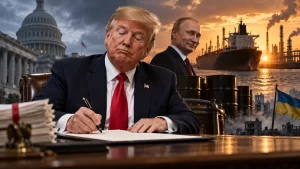
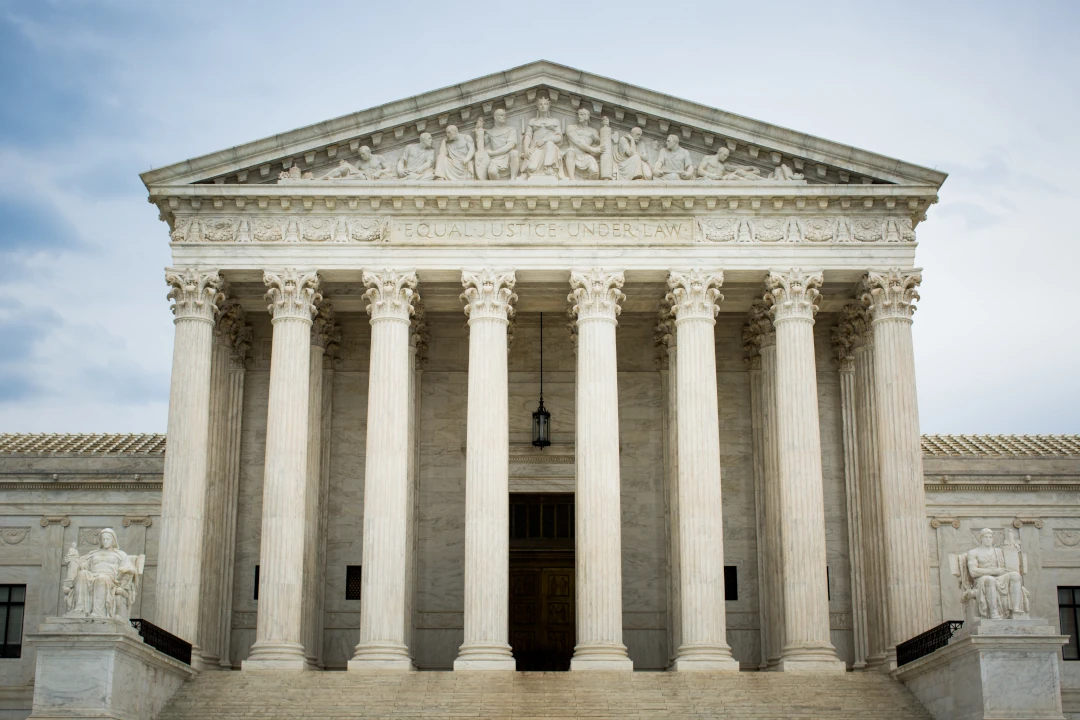
On the afternoon of June 30, six justices of the United States Supreme Court — writing across ideological lines and led by Chief Justice John Roberts himself — told Donald Trump that his executive order stripping citizenship from American-born babies could not stand. Thirty-seven days later, standing behind the Resolute Desk with Deputy Chief of Staff Stephen Miller at his shoulder, the president signed two more executive orders attempting to accomplish, category by category, exactly what he had been forbidden from doing. He called the Court’s ruling a “very unfortunate decision.” Then he signed his name to a document instructing federal agencies to work around it.
This is not, in any recognizable sense, a policy dispute. It is a test — a narrow, targeted, deliberately provocative test — of whether an American president can simply refuse to accept a Supreme Court ruling on a matter as foundational as who counts as an American. The answer the country produces in the coming months will matter far past the immigration debate that ostensibly caused it.
Because if the answer is yes, then the Fourteenth Amendment is negotiable. And if the Fourteenth Amendment is negotiable, so is everything after it.
I. What the President Actually Signed
Two orders. The first, titled “Continuing to Protect the Meaning and Value of American Citizenship,” instructs federal agencies to refuse recognition of U.S. citizenship for children born on American soil to four newly enumerated categories of parents: those the administration designates as “alien enemies” (including anyone in a designated Foreign Terrorist Organization); certain employees of foreign governments and international organizations beyond the diplomats already excluded under settled law; parents accused of belonging to a designated foreign terrorist group; and parents alleged to have engaged in a “commercial arrangement” to secure citizenship for the child.
The second order, “Ending Birth Tourism,” directs the Secretary of State and the Secretary of Homeland Security to prioritize denial of non-immigrant visas to any applicant suspected of entering the United States principally to give birth here.
The White House has framed both actions as narrow “adjustments” — the president’s own word — consistent with historical exceptions the Supreme Court acknowledged in the June ruling. Constitutional scholars, immigration lawyers, and even conservative originalists who have supported this administration have already begun explaining, on the record, why that framing is not credible.
“We had a very unfortunate decision in the Supreme Court concerning birthright. It was close, but a very, very unfortunate decision.”
— President Donald J. Trump, Oval Office, August 6, 2026
Read those words again. They were spoken by a sitting president to describe a 6–3 ruling by the highest court in the country reaffirming a right written into the Constitution 158 years ago. He did not say he disagreed. He did not say the reasoning was flawed. He said the decision was unfortunate — as though the Court were a weather system that had delivered rain on his parade — and then he signed two documents instructing the government to route around it.
II. What the Court Actually Said — and Why It Matters
On June 30, 2026, in Trump v. Barbara, the Supreme Court struck down the president’s original January 2025 birthright citizenship order 6–3. Chief Justice Roberts, writing for the majority, held that children born in the United States to parents “unlawfully or temporarily present” satisfy both elements of the Citizenship Clause. His conclusion, in five plain words that leave no wiggle room, was that under the Constitution, they are citizens at birth.
The ruling rested on 158 years of settled law. The Citizenship Clause was ratified in 1868 specifically to overrule Dred Scott and to establish, in the aftermath of a war fought over exactly this question, that birthright in America would no longer be contingent on the political status of one’s parents. Three decades later, in the 1898 case United States v. Wong Kim Ark, the Supreme Court applied that clause to a San Francisco-born son of Chinese immigrants and held that he was, as a matter of constitutional fact, a citizen. The exceptions the Wong Kim Ark Court identified were narrow and specific: the children of foreign diplomats, of hostile armies occupying American soil, and of tribal sovereigns. That list has been settled for more than 125 years.
The August 6 orders attempt to smuggle four expansive new categories into those three narrow historical exceptions. The American Civil Liberties Union, which litigated Barbara, responded within hours. Its deputy director for immigrants’ rights, Cody Wofsy, said in a statement that any new executive order attempting to rewrite birthright citizenship will meet the same fate as the last one.
Rachel Rosenbloom, an immigration law professor at Northeastern University, put it more bluntly to Reuters: the new exclusions are “clearly unconstitutional.” Ilya Somin, a right-of-center constitutional law professor at George Mason, wrote in a widely-circulated Volokh Conspiracy post that the order is “unconstitutional” and asks courts to punish children for the alleged sins of their parents — precisely what the Fourteenth Amendment was written to prevent.
III. Whose Children, Exactly?
The abstract legal argument becomes concrete the moment you ask whose babies the administration is talking about. It’s worth doing that carefully, because the categories are designed to sound narrow and reasonable and are, on inspection, neither.
Consider what Category One means in practice. The United Nations sits on East 42nd Street in Manhattan. The World Bank and the IMF are in Washington. Foreign embassies employ American-based staff — accountants, cultural attachés, procurement officers — many of whom are here lawfully, some for decades. Their children born in New York and D.C. hospitals have always been American, without controversy, because they are born on American soil and are subject to American law. The order proposes to change that with no legislation, no constitutional amendment, and no basis in the June ruling that it purports to implement.
IV. The Phantom Crisis of “Birth Tourism”
The second executive order rests on a moral panic dressed as a national-security problem. Understanding how manufactured that panic is matters, because the administration is using it to justify a broader assault on the constitutional order.
How many people actually travel to the United States on non-immigrant visas primarily to give birth? The most rigorous recent analysis, a June 2026 Penn State research brief using National Center for Health Statistics data, found roughly 5,000 to just under 10,000 such births per year — approximately 0.3 percent of the 3.6 million babies born annually in the United States. The nonpartisan Migration Policy Institute, using a different methodology, finds that even the most expansive estimates put birth tourism at less than 2 percent of U.S. births.
The Trump administration’s own preferred number — the high-end 22,000–26,000 figure — comes from the Center for Immigration Studies, an advocacy group founded to lobby for lower immigration. Even that number, taken on its face, is still under one percent of American births.
The most revealing moment on this question came during April’s Supreme Court oral argument. Chief Justice Roberts asked Solicitor General John Sauer how big the birth tourism problem actually was. Sauer, according to FactCheck.org’s transcript, admitted from the podium of the United States Supreme Court that no one knows for sure. The government’s own top appellate lawyer, arguing in defense of a policy the administration called an urgent constitutional crisis, could not tell the Chief Justice how large the problem was.
This is what the administration has offered as the factual predicate for restructuring an American constitutional right. A number no one can quantify, in defense of a “crisis” that even by the most inflated estimate touches less than one American birth in fifty.
Get Involved Today
Contribute to our mission and turn your concerns into action.
V. The Pattern: A Timeline of Defiance
The August 6 orders are not an isolated event. They are the latest step in a chain of executive action that federal courts, at every level, have repeatedly declared unconstitutional. The pattern itself is the story.
Every institution the American constitutional order supplies to say no to a president has already said no. Federal district judges said no. Federal appeals courts said no, twice, on both coasts. The Supreme Court said no by a supermajority in an opinion written by a Chief Justice appointed by a Republican president. And on August 6, in the Oval Office, on camera, the president signed his name to a document instructing the federal government to proceed as if all of that had never happened.
That is not policymaking. That is a stress test.
When a President Cannot Faithfully Execute the Law, the Constitution Has an Answer
Section 4 of the Twenty-Fifth Amendment, ratified in 1967, provides a specific constitutional mechanism for a moment in which the President of the United States is unable to discharge the powers and duties of the office. It requires the Vice President and a majority of the Cabinet to transmit a written declaration to Congress. Upon that transmittal, the Vice President immediately assumes the powers of the presidency as Acting President.
The mechanism was designed for exactly the situation the country now inhabits: a president who has demonstrated, on the public record, that he does not accept the binding force of a Supreme Court ruling on the meaning of the Constitution. That is not a policy disagreement. It is a claim of authority the Constitution does not grant to any occupant of the Oval Office.
Lawmakers have already begun raising this question. In April 2026, more than 70 Democratic lawmakers publicly called on Vice President JD Vance and the Cabinet to invoke Section 4 after the president threatened, on Truth Social, to “kill an entire civilization” over Iran. Rep. Raja Krishnamoorthi of Illinois demanded immediate invocation. On April 14, Rep. Jamie Raskin, top Democrat on the House Judiciary Committee, introduced legislation with 50 Democratic co-sponsors to establish a formal Commission on Presidential Capacity to assess the president’s fitness. In May, more than thirty psychiatrists and neurologists submitted a statement to the Congressional Record declaring the president “mentally unfit” and citing his fixation on perceived enemies, impaired judgment, and grandiose beliefs.
The barriers to invocation are real, and worth naming honestly. Vice President Vance will not lead this effort. The current Cabinet, staffed with loyalists after the purges of the first six months of the second term, will not vote to invoke Section 4. Sen. Sheldon Whitehouse of Rhode Island, one of Congress’s most careful constitutional voices, acknowledged in April that the Cabinet would never act — that invocation, at this moment, “is not realistic.”
But the barriers are political, not constitutional. Section 4 exists precisely because the framers of the amendment understood that a president might one day refuse to be bound by the Constitution he swore to uphold. The August 6 orders — signed with cameras rolling, five weeks after the Supreme Court told this president in plain language that he cannot do what he is now doing — are the constitutional case for Section 4 in the clearest form the country has yet seen. That the current political configuration will not act on that case does not diminish the case. It only clarifies who, in this moment, is protecting the Constitution and who is not.
VI. What This Means for the Average American
It is tempting to read a story like this and file it away as someone else’s problem — a fight over immigration, or over unfamiliar categories of people, or over technical points of constitutional law. That instinct is a mistake. The Fourteenth Amendment’s guarantee of birthright citizenship is not a benefit reserved for immigrants. It is the mechanism by which every American who is not descended from someone naturalized becomes American in the first place. A president who claims the power to write new exceptions into that clause is claiming the power to define citizenship — anyone’s citizenship — by decree.
Sen. Alex Padilla of California, the son of Mexican immigrants and himself an American by birth, said it plainly on Thursday: Trump does not understand the Constitution — but the Fourteenth Amendment’s promise of birthright citizenship speaks for itself.
The immediate victims of the August 6 orders will be, as always, the least powerful people the state can reach: the American-born infant of a foreign consular clerk, denied a Social Security number; the American-born infant of a woman who came here on a visa the administration retroactively decides was pretextual, saddled with statelessness from her first breath. But the precedent the orders establish reaches further. A presidency that can rewrite the Citizenship Clause today can rewrite the Due Process Clause tomorrow. A presidency that treats a 6–3 Supreme Court ruling as an inconvenience can treat any ruling as an inconvenience.
This is what “constitutional crisis” actually looks like when it arrives. Not tanks in the streets. Not a coup on a Tuesday afternoon. An executive order, signed in an ordinary office, on an ordinary Thursday, five weeks after the highest court in the country told the man behind the desk that he did not have the power to sign it.
Editorial Conclusion
The Fourteenth Amendment is not a suggestion. The Supreme Court is not a focus group. A president who signs an executive order five weeks after the highest court in the land tells him he cannot — and who calls that ruling “very unfortunate” while doing so — has told the country exactly what he thinks the rule of law is worth to him. The answer is: nothing.
Birthright citizenship remains the constitutional order of the United States. The courts will strike these orders down, and they should. But no court can restore what a president gives away when he decides in public that Supreme Court rulings apply only when he likes them.
What is now at stake is not immigration policy. It is whether the Constitution binds the office of the presidency, or whether it binds only presidents who choose to be bound. There is only one honest answer to that question, and every American who values the document we all live under is required to give it.
Sources & References
- Trump v. Barbara, 609 U.S. ___ (2026) — Full opinion of the Supreme Court, June 30, 2026Supreme Court of the United States
- Supreme Court strikes down Trump’s order ending birthright citizenshipSCOTUSblog · Amy Howe · June 30, 2026
- Supreme Court upholds birthright citizenship on constitutional groundsNPR · Nina Totenberg · June 30, 2026
- US Supreme Court rules against Trump order to end birthright citizenshipAl Jazeera · June 30, 2026
- Trump signs executive orders that target birthright citizenshipABC News · August 6, 2026
- Trump signs new orders targeting birthright citizenship, weeks after Supreme Court rulingNPR · August 6, 2026
- Trump Seeks to Restrict Birthright Citizenship With New OrdersTIME · August 7, 2026
- Trump again tries to curb birthright citizenship and ‘birth tourism’ through executive actionCNN Politics · August 6, 2026
- Continuing to Protect the Meaning and Value of American Citizenship — Executive Order textThe White House · August 6, 2026
- Trump Issues Another Unconstitutional Executive Order Targeting Birthright CitizenshipThe Volokh Conspiracy · Ilya Somin · August 6, 2026
- Trump Thinks He Can Defy the Supremes on Birthright CitizenshipThe New Republic · August 7, 2026
- Analysis: Trump’s new attack on birthright citizenship faces uphill legal battleReuters (via Yahoo News) · August 7, 2026
- Though Rare, Birth Tourism to the United States Sparks Outsized ConcernMigration Policy Institute
- Trump allies blame birthright citizenship for ‘birth tourism.’ Here’s what the data showsPolitiFact · July 1, 2026
- What Do We Know About ‘Birth Tourism’?FactCheck.org · April 16, 2026
- A look back at the Wong Kim Ark decisionNational Constitution Center
- Supreme Court upholds birthright citizenship, rejects Trump orderBrookings Institution · July 3, 2026
- Supreme Court Rules to Protect Birthright Citizenship in Landmark CaseAmerican Civil Liberties Union · June 30, 2026
- Raskin offers bill setting up 25th Amendment process to remove Trump from officeMSNBC · April 14, 2026
- Krishnamoorthi Calls for President Trump’s Removal Under 25th AmendmentOffice of Rep. Raja Krishnamoorthi · April 7, 2026
- Concerns Grow Over Trump’s Mental Fitness for PresidencyThe Hill · June 10, 2026
- How The 25th Amendment Could Be Used To Remove Trump — And Who’s Supporting ItForbes · April 7, 2026
Related News