Korea Pulls Back the Fuel, and America Discovers the Real Cost of a War of Choice
South Korea — our single largest source of imported jet fuel — has quietly slashed shipments to the United States by nearly 40 percent. The reason is not malice. It is math. And the math indicts a presidency that even its own allies in Congress are now openly discussing how to remove.
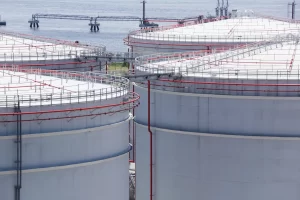
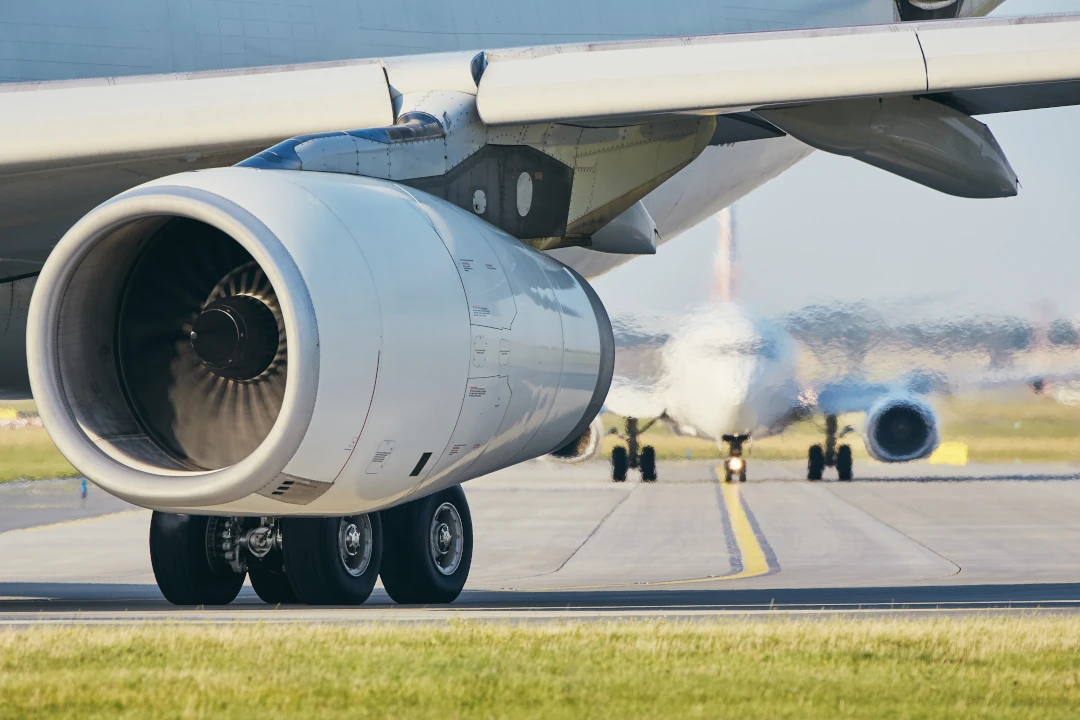
There is a particular kind of national humiliation that arrives not through a speech or a tweet, but through a shipping manifest. This week, the Korea JoongAng Daily reported that South Korean refiners — the suppliers of roughly 70 percent of America’s imported jet fuel, and as much as 85 percent of West Coast supply — have redirected their tankers away from American ports. Jet fuel exports to the United States plunged 39 percent in March and April. Gasoline shipments collapsed by half. The cargo is now flowing toward Japan and other Asian buyers willing to pay more for less risk.
This is what diplomatic credibility looks like when it is being repriced in real time. South Korea has not announced a boycott. It has not delivered a démarche. It has simply allowed its refiners to make the rational decision that the United States — under Donald Trump’s second-term war in Iran — is no longer the most reliable market on Earth. The market is voting with cargo, and the verdict is unflattering.
The cost will arrive at the gate counter, at the supermarket shelf, and, eventually, at the ballot box. But the deeper story is a presidency whose decisions are now actively reshaping the global energy map against American interests, even as a growing roster of lawmakers — joined by 36 physicians from Harvard, Tufts, Columbia, and George Washington University — has begun to publicly question whether the man making those decisions is constitutionally fit to make them at all.
1. The 39 Percent Retreat
The numbers, drawn from the Korea National Oil Corporation and reported by the Korea JoongAng Daily, are stark. In March and April of 2026 — the first two months after Trump launched Operation Epic Fury against Iran — Korean petroleum shipments to the United States fell 40 percent year-over-year. Jet fuel alone dropped from 6.86 million barrels to 4.19 million barrels. Gasoline plunged 50 percent. Korea’s average jet fuel export price reached an all-time high of $197.26 per barrel — a 137 percent increase over the prior year.
A source at a major Korean refining company, speaking to the JoongAng Daily, explained the calculus plainly: “Stronger margins in nearby markets” have reduced the incentive to ship cargo across the Pacific. With China and Thailand restricting their own jet fuel exports to manage domestic supplies, neighboring Asian buyers will pay premium prices Korean refiners cannot ignore. The U.S. market — historically Korea’s largest jet fuel customer at 41 percent of total exports — has been outbid.
This is not the temporary supply hiccup the administration has tried to characterize it as. The Iran war began on February 28, 2026, with joint U.S.-Israeli strikes on Iranian nuclear and missile infrastructure. The Diplomat reported in March that the KOSPI — South Korea’s main stock index — suffered its largest-ever decline when markets opened after the war, falling 18 percent in two days. Seoul subsequently capped exports of gasoline, kerosene, and diesel at 2025 monthly levels to manage domestic supplies. The redirection of jet fuel away from American buyers is a logical extension of an ally protecting itself from the disorder we exported.
2. Who Pays — The American Passenger, the American Family
Every American who flies for work, who saves for a vacation, who ships a package, or who buys an item moved by air freight will pay for this. The aggregate numbers have already started to land. According to CNBC, the average round-trip domestic flight cost $361 as of April 20 — up 8 percent from $335 just before the Iran war began, and up 19 percent year-over-year. Fares to Europe, the top summer travel destination for Americans, climbed 9 percent. Hopper estimates that higher fuel costs have already pushed summer airfare up roughly 10 percent relative to expectations.
The Bureau of Transportation Statistics, as reported by CNBC, found that U.S. airlines spent 56.4 percent more on jet fuel in the month after the war started than they did the same month a year earlier. Spirit Airlines collapsed under the weight of those costs, with the carrier citing the surge in jet fuel prices as the reason it could not emerge from bankruptcy as planned. American Airlines CEO Robert Isom, speaking at the JP Morgan Industrials Conference, disclosed a roughly $400 million quarterly hit to the company’s expenses. Reuters has estimated that the “big four” U.S. airlines — United, American, Delta, and Southwest — could collectively face an additional $5.8 billion in fuel costs if prices stay elevated.
Those costs are not absorbed by executive bonuses. They are passed to passengers, to small businesses that ship by air, to grocery prices for goods moved by jet cargo. The Bipartisan Policy Center notes that diesel and jet fuel price differentials are likely to persist even after the conflict is resolved — a structural shift, not a temporary inconvenience. This is the household budget of working Americans being reorganized to subsidize a war that Congress never authorized and that the president cannot coherently explain.
“This war is unlawful. It is unnecessary. And it will be catastrophic.”
— Rep. Alexandria Ocasio-Cortez, on Operation Epic Fury, March 2026
3. A Foreign Policy That Repels Allies
The Korean retreat is not occurring in isolation. It is the predictable consequence of a foreign policy whose central feature is unpredictability. Operation Epic Fury was launched in the early hours of February 28, 2026 — two days after, per the Center for International Policy, the most substantive U.S.-Iran nuclear negotiations in years had concluded in Geneva, with both parties agreeing to continue talks. Within hours of those assurances, the bombs fell. Iran’s Supreme Leader was killed. A strike on a girls’ primary school in Minab reportedly killed one hundred and twenty children. The administration’s own Congressional Research Service has documented that the operation cost $11.3 billion in its first six days, with a $200 billion supplemental request reportedly under preparation.
Senate Minority Leader Chuck Schumer described the operation as having been launched “without a plan, without an endgame” and without congressional authorization. Rep. Gregory Meeks, the top Democrat on the House Foreign Affairs Committee, called it “a political and strategic disaster.” Even Rep. Thomas Massie, a Kentucky Republican, broke with his party on day one, posting bluntly on X: “I am opposed to this War.” When Republicans abruptly canceled a scheduled war powers vote in May because, in Meeks’s account reported by Time, they “knew they were going to lose it,” the House later passed a resolution on June 3 limiting Trump’s war authorities — a remarkable bipartisan rebuke, even if procedurally limited.
Allies notice this. Allies price this. South Korea’s refiners are not making a political statement; they are protecting their bottom lines from a country whose commander-in-chief, in the span of a single April week, threatened that “a whole civilization will die,” ranted about combat missions at the White House Easter Egg Roll, and unleashed a profane tirade on Easter morning — conduct reported across mainstream outlets and cited verbatim in the formal letter Rep. Jamie Raskin sent to the White House physician demanding a cognitive evaluation. When the leader of the world’s largest economy behaves this way, the world’s traders adjust accordingly. They are doing so now.
Get Involved Today
Contribute to our mission and turn your concerns into action.
4. A Timeline of Erosion
The cascade from launch to allied retreat to constitutional challenge has unfolded with documentary clarity. The record is on the public ledger:
A “rapidly worsening, reality-untethered, increasingly dangerous decline.”
— Statement of 36 physicians, entered into the Congressional Record by Sens. Whitehouse and Reed, April 30, 2026
5. The Constitutional Question
The Founders, who knew that elections do not always deliver competent leadership and that competence can deteriorate within a term, built a remedy into the Constitution. It does not require crime. It does not require corruption. It requires only that the people closest to the president, in good conscience, judge him unable to discharge the duties of his office. That is the 25th Amendment. And it is now, openly, the subject of legislation and physician testimony before Congress.
“Unable to discharge the powers and duties of his office.”
Section 4 of the Twenty-Fifth Amendment, ratified in 1967, provides that the Vice President and a majority of the Cabinet — or “such other body as Congress may by law provide” — may transmit a written declaration to congressional leadership that the President is unable to discharge his duties. Upon transmission, the Vice President immediately assumes the powers of the office as Acting President.
The amendment was the constitutional response to a question that haunted the country after the Kennedy assassination: what happens if the head of state survives but is incapacitated? Its drafters understood “inability” to encompass not only physical incapacity but also psychological deterioration that renders the president unable to perform the office’s duties. The Iran war — launched without congressional authorization, conducted with public statements that even members of the president’s own coalition describe as alarming — is precisely the kind of high-stakes context the framers of the amendment foresaw.
The named record is no longer a whisper. Rep. Jamie Raskin (D-MD), Ranking Member of the House Judiciary Committee, has introduced legislation establishing the independent commission contemplated by Section 4. Rep. Raja Krishnamoorthi (D-IL) has publicly called on the Cabinet to act. Sens. Sheldon Whitehouse and Jack Reed (D-RI) entered into the Congressional Record a formal statement from 36 named physicians, including specialists in cognitive disorders, urging removal “with the greatest urgency.” Sen. Ed Markey (D-MA) and Reps. Eric Swalwell (D-CA), Sydney Kamlager-Dove (D-CA), and Yassamin Ansari (D-AZ) have separately joined those calls. The argument is on the floor of the United States Congress, in the language of physicians, in the printed record of the Republic.
The Practical Barrier
The honest assessment, as CNN noted, is that Section 4 requires Vice President JD Vance and a majority of the Cabinet to act — and there is no public indication any of them will. Trump can also unilaterally challenge any declaration, forcing a four-day reassessment window. The political path is uphill, possibly impassable.
But the constitutional and moral case does not depend on its political success. A Cabinet that refuses to act when the medical and behavioral record warrants action is not a defense of the president. It is a failure of those officers. The remedy is on the books precisely so that history may record who recognized the moment, and who looked away. The barrier is the Cabinet, not the Constitution. And the Cabinet’s silence is itself a piece of evidence about the state of the Republic.
6. The Larger Verdict
Set aside, for a moment, the question of whether Section 4 can be successfully invoked. Consider only what is now beyond dispute: a war started without congressional authorization. A Pentagon cost climbing toward a $200 billion supplemental. A jet fuel supply chain rerouting away from American ports because foreign refiners can no longer price the United States as a stable buyer. A Spirit Airlines bankruptcy. A 19 percent year-over-year jump in airfare. A statement from 36 named medical professionals, entered into the Congressional Record by sitting United States Senators, describing the commander-in-chief as mentally unfit.
The American family looking at a summer plane ticket sees one part of this story. The Korean refiner adjusting its export schedule sees another. The Democratic congressman drafting 25th Amendment legislation sees a third. All three are looking at the same fact pattern: a presidency whose decisions have outrun any plausible theory of competent leadership, and whose costs are being borne, in fuel and ticket prices and lost lives, by people who never agreed to bear them.
That the political path to accountability is hard does not mean the moral path is unclear. The Republic has tools. It has the War Powers Resolution. It has impeachment. It has elections. And it has the 25th Amendment. These tools exist for moments like this one. The fact that no Cabinet officer has yet been willing to use one of them is not an argument against using it. It is an argument about the people who currently hold those offices.
Editorial Conclusion
When America’s largest jet fuel supplier quietly turns its tankers around, that is not a diplomatic incident. It is a market verdict on a presidency. The cost will land in every airline ticket, every shipped good, every family budget in this country.
The Republic is not without remedies. The 25th Amendment exists for this moment. Two named United States Senators, dozens of credentialed physicians, and a growing number of representatives have already placed the question into the public record. Whether the Cabinet acts or not, history will read that record. The constitutional case is no longer hypothetical. It is documented.
The remaining question is whether the people sworn to defend this Constitution remember what it asks of them — or whether the next manifest, the next ticket price, the next late-night threat from the Oval Office finally clarifies for the rest of us what the Founders understood when they wrote Section 4.
Sources & References
- Korea JoongAng DailyExclusive: Korea slashes jet fuel exports to U.S. amid Iran war uncertainties
- The DiplomatThe Economic Consequences of the Iran War Reverberate in South Korea
- CNBCAirfare amid Iran war: Buy now or wait out the conflict?
- CNBCAirlines spent 56.4% more on jet fuel after Iran war started, U.S. says
- NPRJet fuel prices double, leading airlines to increase baggage fees, raise fares
- NPRHow the war in Iran is affecting jet fuel prices and flights
- Oxford EconomicsA conflict-driven fuel-price surge is raising airfares and slowing global air-travel demand
- Bipartisan Policy CenterWhy the Iran Conflict Is Affecting Diesel and Jet Fuel Prices More Than Gasoline
- Congressional Research ServiceU.S. Conflict with Iran — March 26, 2026 Report (PDF)
- TimeDemocrats Criticize Republicans for Canceling Iran War Powers Vote
- CNN PoliticsHouse votes to limit Trump’s Iran war powers in remarkable rebuke
- CNN PoliticsRaskin calls for Trump to take cognitive test in wake of Iran threats
- House Judiciary DemocratsRaskin Demands White House Physician Evaluate Trump’s Cognitive Fitness
- House Judiciary DemocratsRaskin Introduces Legislation Establishing Independent Commission on Presidential Capacity
- Rep. KrishnamoorthiKrishnamoorthi Calls for President Trump’s Removal Under 25th Amendment
- The HillConcerns Grow Over Trump’s Mental Fitness for Presidency
- AxiosRaskin demands Trump cognitive test in 25th Amendment push
- Just SecurityOn the State Department Memorandum “Operation Epic Fury and International Law”
Related News