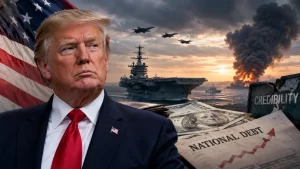
The Alliance Unravels:
A Pentagon Memo, a Punished Ally, and a President Unfit to Lead
A leaked internal email authored by Trump’s own top policy adviser outlines plans to punish democratic allies for refusing to join a unilateral war — proving once again that this administration mistakes coercion for leadership, and tantrum for strategy. The fallout threatens 76 years of Western solidarity.
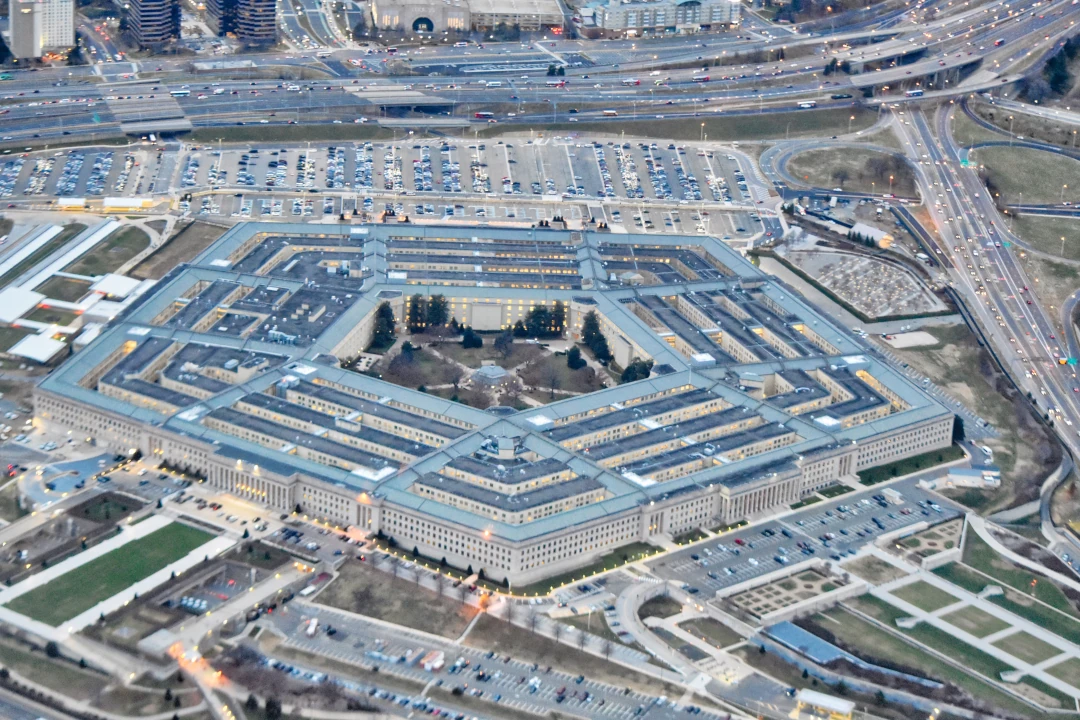
On April 24, 2026, Reuters reported the contents of an internal Pentagon email — authored by Elbridge Colby, the Department of Defense’s top policy adviser — that outlines options to punish NATO allies the Trump administration believes failed to sufficiently support U.S. military operations in the war with Iran. The proposals are breathtaking in their recklessness: suspending Spain from the North Atlantic Treaty Organization, removing “difficult” countries from key alliance positions, and — most alarmingly — threatening to reverse 44 years of settled American policy on Britain’s sovereignty over the Falkland Islands. These are not the strategic deliberations of a functioning executive branch. They are the grievances of a man who started a war without consulting his allies and now blames them for refusing to join it.
The email, which circulated at high levels in the Pentagon, was prepared in response to Spain’s refusal to allow U.S. military aircraft to use its jointly operated bases — Naval Station Rota and Morón Air Base — or its airspace in operations against Iran. Spanish Prime Minister Pedro Sánchez has consistently described the U.S.-Israeli war on Iran as “unjustifiable” and “dangerous,” and has maintained that his country’s military cooperation must remain “within the framework of international legality.” The Trump administration’s response, rather than diplomatic engagement, has been to treat a democratic ally’s principled legal objection as an act of treachery warranting institutional punishment.
1. The Memo and Its Meaning
Colby’s email makes its premise clear: access, basing, and overflight rights — known in NATO parlance as ABO — are “just the absolute baseline for NATO,” according to the official who described it to Reuters. In other words, the Trump administration is declaring that any ally unwilling to grant the U.S. military unfettered access to launch offensive attacks on a sovereign nation — a war the international community did not sanction and the United Nations Charter does not authorize — is, in Trump’s formulation, a “paper tiger” undeserving of its alliance privileges.
The problem is that there is no mechanism in the NATO Founding Treaty to suspend or expel a member state. A NATO official confirmed to TIME that “NATO’s Founding Treaty does not foresee any provision for suspension of NATO membership, or expulsion.” Article 13 of the treaty permits only voluntary withdrawal. Threatening to suspend Spain is not a legal option — it is theater, intended, as the email itself acknowledges, to send a “strong signal” designed to decrease “the sense of entitlement on the part of the Europeans.” What an extraordinary phrase: democratic nations exercising their sovereign right to refuse participation in an undeclared war are accused of “entitlement.” The memo’s language reveals an administration that has confused partnership with subordination.
“We do not work off emails. We work off official documents and government positions, in this case of the United States.”
— Spanish Prime Minister Pedro Sánchez, responding to the leaked Pentagon memo
Pentagon Press Secretary Kingsley Wilson did not deny the email’s existence, and the administration’s non-denial was revealing. Wilson told reporters that “the War Department will ensure that the President has credible options to ensure that our allies are no longer a paper tiger.” The use of “War Department” — the Trump administration’s preferred renaming of the Defense Department — is itself a tell: this White House does not think of the military as an instrument of diplomacy and deterrence. It thinks of it as a weapon to be wielded, allies be damned.
2. The Cascading Damage to Allied Trust
The Spain crisis is not an isolated incident. It is the most visible rupture in a pattern of systematic alliance destruction that has accelerated since the U.S.-Israeli air war on Iran began on February 28, 2026. The Strait of Hormuz — a waterway through which roughly one-fifth of global oil supply flows — was subsequently closed, triggering oil and gas price increases of up to 60 percent in some regions and prompting the International Monetary Fund to project global economic growth at only 2.5 percent this year, down from 3.4 percent in 2025.
Britain, France, and other European powers have stated that joining the U.S. naval blockade would constitute entry into active hostilities — a position entirely consistent with international law. France has been in diplomatic talks with approximately 35 nations on a mission to reopen the strait once hostilities cease. These are not acts of cowardice. They are the responses of governments bound by constitutional obligations, public opinion, and international legal frameworks that the Trump administration has chosen to ignore entirely.
Trump’s treatment of British Prime Minister Keir Starmer has been particularly corrosive. The president has repeatedly called Starmer a coward, declared him “No Winston Churchill,” and mocked Britain’s aircraft carriers as “toys.” The Pentagon email reportedly proposes that the U.S. reverse its longstanding recognition of British sovereignty over the Falkland Islands — a position the U.S. has maintained since Argentina’s defeat in 1982. Far-right Argentine President Javier Milei, a close Trump ally, publicly celebrated the threat. A spokesperson for Starmer responded that British sovereignty over the islands is “unchanged” and “will remain the case.”
Spain Closes Bases & Airspace
Spain barred U.S. military access to Naval Station Rota and Morón Air Base for Iran operations, then closed its airspace entirely to U.S. aircraft involved in the conflict — citing international law and the UN Charter.
NATO Has No Expulsion Mechanism
A NATO official confirmed to TIME that the Founding Treaty “does not foresee any provision for suspension of NATO membership, or expulsion.” The threat is legally void — and strategically destructive.
Reversing 44 Years of U.S. Policy
The Pentagon email proposes reviewing Washington’s recognition of British sovereignty over the Falkland Islands — rewarding Trump ally Javier Milei and punishing the UK for not joining the Iran war, per Foreign Policy.
IMF Downgrades Global Outlook
The International Monetary Fund projected global growth at just 2.5% in 2026, citing the Iran war. The UK’s growth forecast was slashed to 0.8%, down from a projected 1.3%, deepening pressure on the Starmer government.
3. A Timeline of Alliance Destruction
The U.S.-Israeli air war on Iran begins without international authorization, allied consultation, or a UN mandate — shocking European capitals and closing the Strait of Hormuz to global shipping.
Trump demands NATO allies send navies to reopen the Strait of Hormuz, threatening that those who refuse will face a “very bad” future. European governments respond with caution and resistance, citing inability to join an active war.
In a remarkable admission, Trump tells reporters: “I can’t say what we’re going to do because if I did, they’d probably institute the 25th Amendment,” — suggesting even he recognizes his conduct as beyond established boundaries of rational executive leadership.
In a Reuters interview, Trump says of a potential U.S. withdrawal from NATO: “Wouldn’t you if you were me?” — confirming that abandonment of the 76-year alliance is an active consideration.
Trump posts an Easter Sunday threat warning that “a whole civilization will die tonight” if Iran does not comply with his ceasefire demands — prompting bipartisan calls for his removal, including from conservative commentator Candace Owens.
Rep. Jamie Raskin introduces legislation establishing an independent 17-member Commission on Presidential Capacity, with 50 Democratic co-sponsors, after more than 85 House and Senate Democrats call for Trump’s removal via impeachment or the 25th Amendment.
Reuters reports the Elbridge Colby memo circulating at senior Pentagon levels, outlining plans to punish Spain, the UK, and other “difficult” allies — crystallizing a foreign policy doctrine built on retribution rather than partnership.
4. What This Tells Us About His Leadership
The Colby memo is not an aberration. It is a policy document — authored by a senior official, circulated at the highest levels of the Pentagon — that treats sovereign democratic governments as subordinates who failed to follow orders. Secretary of State Marco Rubio has said the administration will “have to reexamine the value of NATO” if the alliance is “just about defending Europe.” Defense Secretary Pete Hegseth has declared that European allies should “get in a boat” and stop “having fancy conferences.” This is the language of resentment, not statecraft.
Get Involved Today
Contribute to our mission and turn your concerns into action.
What the Trump administration cannot acknowledge — or simply does not understand — is that NATO allies like Spain and the United Kingdom are not refusing to help the United States. They are refusing to be conscripted into a war they did not consent to, launched without international legal framework, against a nation that poses no direct threat to NATO’s collective security. A CNN analysis of polling data found that nearly six in ten Americans still view NATO favorably. The 2023 law co-sponsored by Rubio himself requires congressional approval before any U.S. president can withdraw from the alliance — a constraint the Trump administration seems determined to circumvent through unilateral pressure.
“Trump’s repeated questioning of the alliance weakens deterrence, shakes European security planning, and emboldens adversaries.”
— Analysts cited in TIME, April 2026
The geopolitical consequences are already severe. Thomas Wright of the Brookings Institution has noted that allies had previously managed to “muddle through” Trump’s disruptions via personal relationships and accommodations. That buffer is now gone. Russia, meanwhile, is the primary strategic beneficiary: oil revenues have surged, Western attention has been diverted from Ukraine, and NATO’s mutual defense guarantee looks shakier by the week. Russian state media is openly celebrating. This is what reckless unilateralism produces.
When Impulsivity Becomes Incapacity: The Case for Presidential Fitness Review
The Twenty-Fifth Amendment to the U.S. Constitution, ratified in 1967, provides in Section 4 that the Vice President and a majority of the Cabinet — or “such other body as Congress may by law provide” — may transmit to Congress a declaration that the President is unable to discharge the powers and duties of his office. Upon such declaration, the Vice President assumes presidential powers. This provision was designed precisely for moments when the executive’s judgment becomes so impaired, so divorced from constitutional norms and factual reality, that the constitutional order itself is at risk.
Rep. Jamie Raskin (D-Md.), ranking member of the House Judiciary Committee and a constitutional law professor, introduced legislation on April 14, 2026 establishing an independent 17-member commission authorized under Section 4. The bill carries the signatures of 50 co-sponsors. Raskin has argued for nearly a decade that Congress should establish such a body for precisely this kind of moment — when a Cabinet filled with loyalists cannot be expected to act. More than 85 House and Senate Democrats have now called for Trump’s removal via impeachment or the 25th Amendment, with Rep. Yassamin Ansari (D-Ariz.) declaring that the President is “a deranged lunatic and a national security threat,” and Rep. Melanie Stansbury (D-N.M.) stating plainly: “The emperor has no clothes. Time for the #25thAmendment.”
The legal case rests on a documented pattern of conduct: threatening to “destroy entire civilizations” in social media posts, launching a war without allied consultation or congressional declaration, demanding that democratic partners violate their own legal frameworks on pain of institutional retribution, reversing longstanding U.S. foreign policy via email, and — most damningly — publicly admitting on March 26 that he cannot share his war strategy because “they’d probably institute the 25th Amendment.” That is not the statement of a president who believes his own judgment is sound.
The practical barriers are real and must be named honestly. Vice President J.D. Vance is a Trump loyalist who would need to sign off on any commission findings. A Republican-controlled Congress is unlikely to pass Raskin’s bill. Trump could veto it. These obstacles do not negate the constitutional case — they simply expose the degree to which institutional safeguards have been captured by the very administration they were designed to check. The American constitutional system anticipated a rogue executive. What it did not fully account for was a political party willing to subordinate the republic to a single man’s impulsive will.
The 25th Amendment argument is not about partisan advantage. It is about the plain question the amendment was designed to answer: Is this president capable of discharging the duties of his office without threatening the security of the United States and its allies? The Colby memo — threatening illegal punishments against sovereign democracies, reordering 44 years of foreign policy via email, and treating allies as vassals — makes that question impossible to avoid.
5. The Global Standing of the United States
The damage being done to America’s global standing is not hypothetical. It is being measured in real time. A Pew Research survey found Trump’s approval ratings in more than a dozen allied countries at 35 percent or below. German Chancellor Friedrich Merz has confirmed that Spain’s NATO membership is “not in question” — pointedly declining to endorse the Trump administration’s framing. Canadian Prime Minister Mark Carney, elected on an explicitly anti-Trump platform, has begun speaking openly about building a security architecture that does not depend on the United States as its central pillar.
The European Commission moved immediately to defend Spain against Trump’s threats of trade cutoffs, signaling that the EU will treat any economic coercion of a member state as an attack on the bloc’s collective trade interests. This is what strategic isolation looks like in practice: the United States threatening its own allies while adversaries — Russia, which benefits from surging oil prices and NATO distraction; Milei’s Argentina, which stands to reclaim disputed territory — cheer from the sidelines.
Former U.S. Ambassador to NATO Ivo Daalder has warned that even if European nations honor their new defense spending commitments, it could take a decade to fully replace the American security guarantee that Trump is now holding hostage. The alliance that defeated Soviet expansionism, that responded collectively to September 11th, that has sustained the rules-based international order for 76 years — that alliance is being dismantled by a man who ran on the promise of American greatness and has delivered American isolation.
Editorial Conclusion
What the Colby memo confirms is not a disagreement about strategy. It is a diagnosis of a presidency in constitutional crisis. A president who launches a unilateral war, threatens democratic allies with institutional punishment for refusing to join it, reverses a half-century of settled foreign policy via internal email, and openly muses that his own actions might warrant removal under the 25th Amendment is not conducting statecraft — he is conducting a slow demolition of the architecture that has kept the Western world secure since 1949. Congress must act: not merely through messaging bills, but through the full weight of oversight authority, subpoena power, and the constitutional mechanisms available to a co-equal branch. The alliance can be repaired. Democratic legitimacy, once surrendered, is far harder to restore. The stakes are not partisan. They are civilizational.
Sources & References
- Reuters via CNBC — Pentagon Email Floats Suspending Spain From NATO, Other Steps Over Iran Rift
- Euronews — Pentagon Email Floats Punishing NATO Allies Over Iran War, Including Spain Suspension
- Al Jazeera — U.S. Considers Suspending Spain From NATO; Reported Internal Email
- TIME — Is the U.S. Trying to Suspend Spain From NATO? Sánchez Addresses Pentagon Email
- Foreign Policy — U.S. Floats Suspending Spain From NATO for Refusing to Join Iran War
- The Japan Times — Pentagon Email Weighs Suspending Spain From NATO Over Iran War
- Honolulu Star-Advertiser — Pentagon Email Weighs Suspending Spain From NATO
- The Globe and Mail — Pentagon E-mail Floats Suspending Spain From NATO, Punishing Allies Over Iran Rift
- Al Jazeera — How Are NATO Allies Pushing Back Against Trump’s Iran War Demands?
- CNN — Analysis: U.S. Allies Won’t Join Trump’s War — But They Can’t Escape the Fallout
- CNN — Analysis: Trump Is Bullying NATO Again. But Americans Like the Alliance
- Axios — Trump Threatens to Break NATO’s Promise Over Iran War
- Deseret News — Democrats Introduce 25th Amendment Commission Bill After Trump Iran Rhetoric
- Axios — House Democrats File Long-Shot 25th Amendment Bill Targeting Trump
- TIME — Rep. Jamie Raskin on Trump, the 25th Amendment, and Impeachment
- TIME — What to Know About the 25th Amendment as Lawmakers Call for Trump’s Removal
Related News