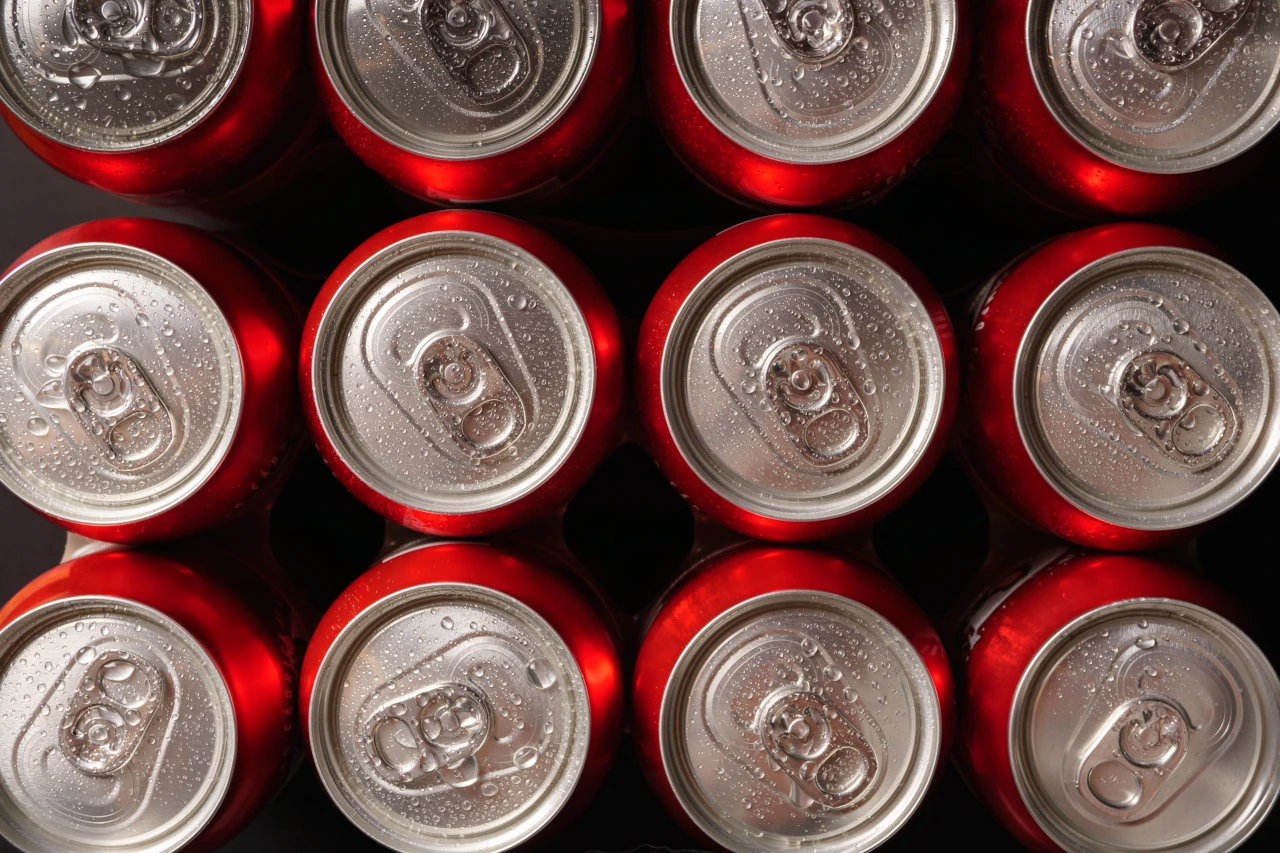
Donald Trump believes diet soda kills cancer cells. His own CMS (Centers for Medicare & Medicaid Services) administrator confirmed it. The science says the opposite — and the pattern of magical thinking now radiating from the Oval Office raises urgent constitutional questions about who, exactly, is protecting the health of the nation.
It began, as so many of this administration’s most revealing episodes do, not in a policy meeting or a congressional hearing, but in a podcast studio. On Monday, April 14, 2026, Dr. Mehmet Oz — the former television personality now serving as Administrator of the Centers for Medicare and Medicaid Services — appeared on Donald Trump Jr.’s program, “Triggered.” There, Oz recounted an anecdote about seeing the President of the United States nursing a Fanta orange soda aboard Air Force One and defending the habit with a logic that would embarrass a first-grader: diet soda kills grass, therefore it must kill cancer cells inside the body. The president of a nation of 335 million people believes that reasoning about lawn care constitutes a theory of oncology.
The medical community’s response was swift and unambiguous. Dr. Owais Durrani, an emergency medicine physician who interned at the White House during the Obama administration, posted a video stating flatly: “Friendly reminder from a doctor, diet soda or soda does not kill cancer cells.” The University of Texas MD Anderson Cancer Center, one of the nation’s foremost cancer institutions, has been equally direct: the less soda consumed — diet or otherwise — the better. There is no ambiguity in the science. There is only the president, grinning from behind a Fanta, convinced he has cracked the code.
What makes this moment more than an occasion for grimly amused commentary is its precise context. Trump does not merely hold private, eccentric health beliefs. He has repeatedly acted on those beliefs — publicly, consequentially, and at enormous cost to the health of the American people. The diet soda incident is not a gaffe. It is a data point in a now well-established record of presidential medical reasoning that defies evidence, ignores expertise, and endangers the public he was elected to serve.
1. What the Science Actually Says About Aspartame
The ingredient at the center of Trump’s theory is aspartame, the artificial sweetener found in most diet sodas. The scientific record on aspartame is nuanced — but it does not support anything remotely resembling the president’s claim.
In July 2023, the World Health Organization’s International Agency for Research on Cancer (IARC) completed its first-ever formal evaluation of aspartame’s carcinogenicity. The result: IARC classified aspartame as “possibly carcinogenic to humans” — Group 2B — based on limited evidence for an association with hepatocellular carcinoma, a form of liver cancer. At the same time, the WHO’s Joint Expert Committee on Food Additives reaffirmed an acceptable daily intake threshold and concluded that the evidence of a causal link between aspartame and cancer “is not convincing” at typical consumption levels.
The careful reader will notice what is not in that scientific record: any suggestion — anywhere, in any peer-reviewed literature — that aspartame or diet soda kills cancer cells. The American Cancer Society has reviewed the same body of evidence and reached no conclusion that diet sodas have anti-cancer properties. The scientific debate is whether the sweetener may cause cancer — not whether it cures it.
“Your dad argues that diet soda is good for him because it kills grass — if poured on grass — so, therefore, it must kill cancer cells inside the body.”
— Dr. Mehmet Oz, CMS Administrator, to Donald Trump Jr. on the “Triggered” podcast, April 14, 2026
2. A Pattern of Presidential Medical Misinformation
The diet soda claim is remarkable not because it stands alone, but because it fits so precisely into a documented pattern of the president advancing medically unfounded ideas to the American public — often from positions of maximum authority and maximum damage.
The most consequential prior episode came in April 2020, at the height of the COVID-19 pandemic. Trump, at a White House briefing watched by millions, floated the idea of injecting disinfectants into the body as a potential coronavirus treatment. Though Trump later characterized the remarks as “sarcastic,” poison control centers across at least five states reported sharp spikes in calls within 18 hours — including documented cases of people ingesting bleach and gargling cleaning agents. The consequences of presidential health misinformation are not theoretical. They are measurable in emergency room visits and poison control calls.
That same year, Trump touted hydroxychloroquine as a potential COVID “game changer” against the explicit cautions of public health officials. He has also told The Wall Street Journal that he routinely ignores his physicians’ advice on daily aspirin use — dosing himself at 325mg per day, more than four times the recommended dose for seniors, because he “wants nice, thin blood pouring through my heart.” He famously believes the human body functions like a battery with a finite energy supply — that vigorous exercise depletes that energy and therefore should be avoided.
Each of these beliefs is empirically false. Each one has been contradicted by the president’s own physicians. Each one has been stated publicly by a man who exercises broad executive authority over the nation’s public health infrastructure — including the agencies that determine what information reaches the American public on food safety, drug approval, and medical guidance.
3. A Timeline of Presidential Health Misinformation
4. The Architecture of Denial: When the White House Laughs It Off
The White House’s response to the diet soda episode is itself instructive. Press Secretary Karoline Leavitt laughed off the claim at a briefing on April 16, saying she had “heard the president make the same joke before” and attributing it to his “very good sense of humor.” This framing — that dangerous medical misinformation is merely a presidential quirk, harmlessly comedic — is a specific and deliberate rhetorical strategy, and it has been deployed repeatedly.
The problem with calling it a joke is that Oz, his own appointee to run Medicare and Medicaid, did not describe it as a joke. Oz’s account on the “Triggered” podcast placed the comment in the context of the president defending his soda habit aboard Air Force One — not in the context of stand-up comedy. When a president says something self-servingly, in a private setting, to an ally, and the ally characterizes it as the president’s “belief,” the White House’s post-hoc rebranding as humor is not a clarification. It is damage control.
Get Involved Today
Contribute to our mission and turn your concerns into action.
More critically: even if the remark were genuinely meant as humor, the president of the United States has now twice been publicly associated with the idea that his dietary choices confer cancer-fighting benefits — once in Oz’s own telling and once in Donald Trump Jr.’s delighted response that perhaps his father was “onto something.” As MSNBC’s Steve Benen noted in his analysis, the truly unfunny part is that the person harboring these ideas “nevertheless claims broad authority on matters of public health, to the point that he’s urged Americans to follow his terrible advice.”
“Far less funny is the person who harbors these bizarre ideas [who] claims broad authority on matters of public health, to the point that he’s urged Americans to follow his terrible advice.”
— Steve Benen, MSNBC / MaddowBlog, April 15, 2026
5. The Institutional Collapse: Who Is Guarding Public Health?
The diet soda story is not merely an embarrassment. It is a symptom of a structural failure in America’s public health leadership. The man appointed to run the Centers for Medicare and Medicaid Services — the largest single health care payer in the world, covering over 150 million Americans — is not correcting the president’s medical misinformation. He is amplifying it for entertainment on a podcast, and defending Trump’s fast-food diet in the same breath by arguing that chain restaurant “quality control” constitutes sound nutritional guidance.
Meanwhile, HHS Secretary Robert F. Kennedy Jr., himself a long-documented purveyor of anti-vaccine and anti-scientific medical misinformation, oversees the agencies that are supposed to provide the public with accurate health information. The FDA, the CDC, and the NIH all fall under his jurisdiction. These are the institutions that determine which foods are safe, which drugs are approved, and which public health guidance reaches American families.
When the president jokes — or doesn’t joke — that diet soda cures cancer, and when the apparatus surrounding him laughs and nods, the question is not merely about one man’s dietary preferences. It is about whether the federal government retains the institutional credibility and the operational independence to protect the health of the American people. The evidence accumulating across this administration suggests that it does not.
The Fitness Question the Constitution Already Anticipated
The 25th Amendment to the United States Constitution, ratified in 1967 in the aftermath of President John F. Kennedy’s assassination, was written precisely to address the scenario its framers feared: a president who is, for whatever reason, unable to discharge the powers and duties of his office. Section 4 — the most consequential provision — allows the Vice President and a majority of the Cabinet, or a body authorized by Congress, to declare the president incapacitated and assume executive authority.
The standard is not criminal wrongdoing. It is not failure to follow protocol. It is incapacity to discharge the duties of the office. Those duties include the protection of the public health and welfare of the United States — a constitutional obligation embedded in the President’s oath to “faithfully execute the Office” and “preserve, protect and defend the Constitution.”
The case for invoking that provision has been articulated with mounting urgency by Rep. Jamie Raskin (D-MD), the Ranking Member of the House Judiciary Committee. On April 10, 2026, Raskin wrote directly to White House Physician Capt. Sean Barbabella demanding a comprehensive cognitive and neurological evaluation of the president, with full public disclosure. He followed that letter on April 14 with a bill — the Commission on Presidential Capacity to Discharge the Powers and Duties of Office Act — co-sponsored by 50 Democratic colleagues, which would establish a 17-member bipartisan panel of physicians and senior officials empowered to evaluate presidential fitness under Section 4.
Rep. Raskin’s stated justification has focused on Trump’s alarming Iran rhetoric and broader erratic behavior in April 2026. But the diet soda episode, the disinfectant episode, the documented pattern of ignoring medical advice, and the White House’s repeated failure to accurately report on the president’s health — culminating in a July 2025 annual physical that declared “blood flow to his extremities is unimpaired” weeks before a chronic venous insufficiency diagnosis — form a coherent and troubling picture. House Democratic leadership has signaled openness to the 25th Amendment push, and dozens of lawmakers have backed formal removal proceedings.
The practical barriers to Section 4 are real and significant. It requires the Vice President’s agreement. It requires a Cabinet majority that has shown no independent will. It invites a constitutional confrontation if the president challenges the declaration before Congress. Raskin’s own bill acknowledges these structural difficulties by proposing a supplementary panel mechanism precisely because the current Cabinet pathway is effectively inoperative.
But those barriers do not constitute a rebuttal to the underlying constitutional argument. The Amendment exists. Its text is unambiguous. And the moral and civic case for its invocation — when a president publicly endorses nonsensical medicine, ignores his own physicians, and presides over a dismantled public health apparatus — does not become weaker simply because the political pathway is obstructed. A constitution that provides no practical remedy for the scenario it explicitly anticipated has not failed. The officials obligated to act under it have.
Editorial Conclusion
A president who believes that diet soda kills cancer cells is not merely wrong. He is wrong in a context where his wrongness has direct consequences for the health infrastructure of 335 million people. The agencies that should correct presidential health misinformation are led by his appointees. The physician who should evaluate his fitness reports to him. The Cabinet that holds the constitutional authority to act has shown no will to use it. The 25th Amendment was written for precisely this kind of institutional paralysis. The question before Congress, before the Cabinet, and before the American people is not whether the constitutional mechanism exists — it does — but whether those with the authority to use it have the courage to do so before the cost of inaction becomes irreversible.
Sources & References
- The Hill — “Oz says Trump defended diet soda habit, joking it ‘kills cancer cells'” (April 2026)
- MSNBC / MaddowBlog — “Mehmet Oz says Trump told him that diet soda might help kill cancer cells” (April 2026)
- CNN Politics — “Dr. Oz says Trump thinks diet soda ‘must kill cancer cells'” (April 2026)
- Daily Voice — “Trump Claims Diet Soda Kills Cancer Cells, White House Responds” (April 2026)
- World Health Organization — “Aspartame hazard and risk assessment results released” (July 2023)
- IARC — Aspartame Hazard and Risk Assessment Results (July 2023)
- American Cancer Society — “Aspartame and Cancer Risk”
- Texas A&M Stories — “Aspartame and Cancer: A Nutritionist’s Perspective” (July 2023)
- House Judiciary Democrats — Rep. Raskin demands Trump cognitive evaluation (press release) (April 10, 2026)
- MSNBC — “Raskin offers bill setting up 25th Amendment process to remove Trump” (April 14, 2026)
- FOX 11 LA — “25th Amendment: Raskin bill proposes new panel to help declare presidential fitness” (April 2026)
- Axios — “House Democratic leadership signals openness to 25th Amendment push” (April 2026)
- NBC News — “Dozens of Democrats call for Trump’s removal after his Iran threats” (April 2026)
- Scientific American — “What Is Chronic Venous Insufficiency, Trump’s Blood Vessel Condition?” (July 2025)
- PBS NewsHour — “4 things to know about Trump’s diagnosis of chronic venous insufficiency” (July 2025)
- NBC News — “Trump suggests ‘injection’ of disinfectant to beat coronavirus” (April 2020)
- Michigan Poison & Drug Information Center — “At least 5 states report increase in calls to poison control after Trump’s disinfectant remarks”
- PolitiFact — “In Context: What Donald Trump said about disinfectant, sun and coronavirus” (April 2020)
Related News