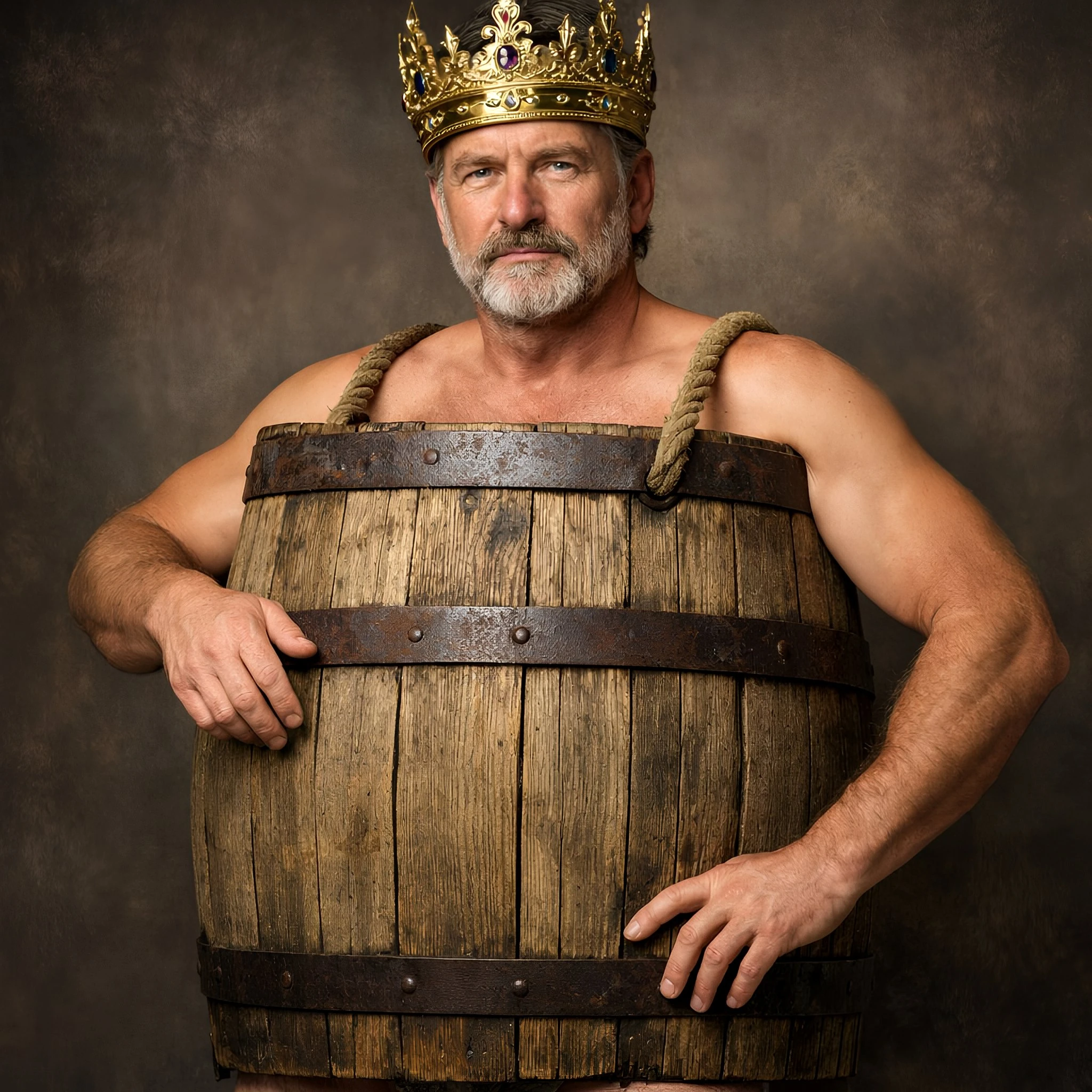
Donald Trump’s presidency has entered a phase in which the gap between his self-proclaimed mastery and the observable reality of his conduct can no longer be papered over by staff, spin, or loyal surrogates. From a Davos stage where he confused Greenland with Iceland four times, to Truth Social posts threatening to annihilate “a whole civilization,” the 79-year-old president is displaying a pattern that lawmakers, physicians, and now the broader public can no longer ignore — and the Constitution provides a remedy that Congress has, until now, refused to finish building.
There is a fable most children know. A vain emperor parades through his kingdom in clothes that do not exist, sewn by swindlers who told him only the wise could see them. His courtiers — desperate to appear wise themselves — praise his magnificent robes. The fraud ends only when a child, unburdened by the social cost of honesty, calls out what everyone can see: the emperor is naked. The United States of America is living that fable right now. The child has finally spoken. The question is whether the courtiers in the Cabinet Room, the West Wing corridors, and the Republican cloakroom on Capitol Hill will keep praising invisible fabric — or whether the constitutional mechanisms the Founders designed for precisely this moment will finally be engaged.
This is not a matter of partisan disagreement about policy. Reasonable people differ on tax rates, trade policy, and immigration enforcement. What is on display in 2026 is something categorically different: a pattern of cognitive disorganization, emotional volatility, and detachment from shared reality that is documented in public, on camera, and on the president’s own social media feed — and that is now prompting formal legislative action from members of Congress who have concluded that the nation has arrived at a constitutional inflection point.
1. The Public Record of Decline
The evidence does not come exclusively from Democratic opposition researchers or partisan commentators. It is visible in the transcript of Trump’s January 21 Davos address, where, before the assembled leadership of the global economy, the president referred to Iceland four consecutive times when he plainly meant Greenland — the territory whose annexation has become a cornerstone of his foreign policy. “Our stock market took the first dip yesterday because of Iceland,” he told the crowd. “Iceland has already cost us a lot of money.” Press Secretary Karoline Leavitt subsequently told reporters the slip had not happened. The video, which is publicly archived, shows that it had — four times.
It is visible in longitudinal YouGov polling data showing that the share of Americans who believe Trump is suffering a cognitive decline has risen from 40 percent before the 2024 election to 49 percent — with Independents’ concerns surging from 34 percent to 51 percent over the same period. It is visible in a Reuters-Ipsos survey finding that 61 percent of Americans — including 30 percent of self-identified Republicans — agree that Trump has “become erratic with age.” It is visible in the fact that a CNN poll tracking confidence in Trump’s “stamina and sharpness to serve effectively as president” has fallen from 53 percent in late 2023 to 46 percent today.
“The ramblings of a man who has lost touch with reality.”
— Sen. Chris Murphy (D-CT), Member, Senate Foreign Relations Committee, on Trump’s “Dear Jonas” letter to Norwegian Prime Minister Jonas Gahr Støre
Senator Chris Murphy of Connecticut, a member of the Senate Foreign Relations Committee, characterized Trump’s written diplomatic demands on Norway — in which the president cited his perceived snub for the Nobel Peace Prize as a driver of escalating Greenland tensions — as the product of someone who has lost his grip on reality. Senator Andy Kim of New Jersey described the same letter as “unhinged and embarrassing.” Medical professionals have gone further. Dr. Vin Gupta, the medical analyst for NBC News, stated publicly that Trump’s behavior warranted “a more thorough public assessment of his neurological fitness,” noting that the pattern of communication was consistent with markers of early Alzheimer’s disease or frontotemporal dementia.
Linguistic analysis of Trump’s public speeches, conducted independently of any political actor, documented a 13 percent increase in all-or-nothing terminology such as “always” and “never,” a 32 percent increase in negative word usage compared to his 2016 baseline, and a 69 percent increase in profanity — all of which experts on cognitive aging identify as potential indicators of declining executive function and behavioral disinhibition. These are not insults. They are measurable linguistic data points.
At the World Economic Forum in Davos, Trump confused Greenland with Iceland four times before world leaders. His press secretary denied the documented errors despite publicly available video evidence.
Trump posted an expletive-filled Easter message threatening Iran, then escalated to warning “a whole civilization will die tonight.” The UN posted a reminder of the Geneva Conventions in direct response.
A YouGov survey found that majorities of Americans say Trump’s health and age are affecting his ability to govern, and that a majority do not trust White House information about his health.
Former White House physician Dr. Jeffrey Kuhlman, who served under Presidents Clinton, George W. Bush, and Obama, stated that Trump “exhibits cognitive decline in reasoning, memory, and processing speed.”
Trump was administered the Montreal Cognitive Assessment in 2018 and 2025. Despite claiming he “aced” the test, his scores have not been disclosed. The MoCA is a dementia screening tool, not — as Trump repeatedly describes it — an “IQ test.”
Rep. Jamie Raskin introduced legislation to establish a Commission on Presidential Capacity under Section 4 of the 25th Amendment, with 50 Democratic co-sponsors. More than 85 House and Senate Democrats have called for Trump’s removal.
2. The Iran Crisis: Leadership Unraveling in Real Time
Nothing has made the case more viscerally than the events of the week of April 5, 2026. On Easter Sunday, the President of the United States, from his official social media account, posted an expletive-laden ultimatum to the government of Iran, demanding they “Open the F**kin’ Strait, you crazy bastards, or you’ll be living in Hell.” [censored] This was not a classified diplomatic cable. It was a public post, visible to every government, ally, adversary, and jihadist recruiter on earth. Two days later, he escalated, declaring on Truth Social that “a whole civilization will die tonight, never to be brought back again” — and adding, with an almost casual cruelty, “I don’t want that to happen, but it probably will.”
Get Involved Today
Contribute to our mission and turn your concerns into action.
The United Nations Secretary-General António Guterres, without naming Trump directly, stated that “no military objective” can justify attacks on civilian infrastructure — a response to the explicit threat, which international law experts described as a potential war crime. Former House Speaker Nancy Pelosi stated plainly that Trump’s “instability is more clear and dangerous than ever,” and called on the Cabinet to invoke the 25th Amendment if Republicans would not reconvene Congress to end the war. More than 70 Democratic lawmakers posted calls for removal or impeachment within hours of the “civilization” post.
“We are at a dangerous precipice, and it is now a matter of national security for Congress to fulfill its responsibilities under the 25th Amendment.”
— Rep. Jamie Raskin (D-MD), Ranking Member, House Judiciary Committee, April 14, 2026
The Iran war itself — launched in late February 2026 — has killed more than 3,400 people across the Middle East, including 13 American service members, and has shut down most oil transit through the Strait of Hormuz, triggering a historic global energy price shock. That war, conducted without a formal Congressional declaration, has been guided by a president whose own administration cannot fully account for his daily schedule, whose work hours have reportedly been compressed, and whose public communications vacillate between apocalyptic threats and breezy optimism within hours. Representative Ro Khanna of California wrote that “threatening war crimes is a blatant violation of our constitution and the Geneva Conventions” and called on Congress to use all available options to remove the president.
3. A Timeline of Unmistakable Signs
4. The Courtiers and the Invisible Clothes
What makes this moment so precisely analogous to Andersen’s fable is not simply that the emperor is unclothed. It is that the court knows it. The courtiers — the Cabinet secretaries, the Republican congressional leadership, the White House staff — are aware of what they see. They are choosing, for reasons of political survival, institutional loyalty, or ideological investment, to keep praising the fabric. White House spokesperson Davis Ingle responded to Raskin’s 25th Amendment legislation by calling him “a stupid person’s idea of a smart person” and asserting that “President Trump’s sharpness, unmatched energy, and historic accessibility stand in stark contrast” to what he claimed Democrats had hidden about Joe Biden.
This deflection — pointing backward to Biden — is the last refuge of a court with nothing else to say. It is also, constitutionally, irrelevant. The 25th Amendment does not ask whether a previous president was also unwell. It asks whether the current president is “unable to discharge the powers and duties of his office.” That question is answered not by comparison, but by evidence. And the evidence, accumulating in public, is substantial. Professor Ronald Pruessen of the University of Toronto, writing in The Conversation, noted that while prior presidents have faced health questions, “none have raised the concerns so evident in 2026.”
Dr. John Gartner, psychotherapist, author, and founder of the organization Duty to Warn — established in 2017 by mental health professionals to alert the public to the risks of Trump’s presidency — raised the specific concern that a president exhibiting Trump’s behavioral profile uniquely controls the nuclear codes, the world’s most consequential arsenal. That is not an academic point. It is the precise scenario for which the 25th Amendment was designed.
An Amendment Written For This Moment — And Never Finished
The 25th Amendment to the United States Constitution, ratified in 1967 in the wake of President Kennedy’s assassination and the national anxiety about unresolved succession, contains four sections. The first three govern voluntary transfers of power and vice-presidential vacancies. Section 4 is the emergency provision: it allows the Vice President, acting together with either a majority of the Cabinet or “such other body as Congress may by law provide,” to transmit a written declaration to Congress stating that the president is “unable to discharge the powers and duties of his office.” Upon that declaration, the Vice President immediately becomes Acting President.
Here is what Congress — across 59 years — never did: it never established the independent body that Section 4 explicitly authorized. The amendment was ratified. The body was never built. Rep. Raskin’s April 14, 2026, legislation would remedy this directly, creating a 17-member Commission on Presidential Capacity, composed of physicians, psychiatrists, and former senior statespeople chosen by bipartisan congressional leadership.
Lawmakers who have invoked the 25th Amendment: Rep. Jamie Raskin (D-MD) introduced the formal commission legislation with 50 co-sponsors. Rep. Ro Khanna (D-CA) called explicitly for invocation following the Iran threats. Former Speaker Nancy Pelosi demanded Cabinet action under the amendment after the “civilization will die” post. Sen. Chris Murphy and Sen. Andy Kim both raised fitness questions publicly in response to Trump’s diplomatic communications. More than 85 House and Senate Democrats formally called for 25th Amendment action or impeachment in the week of April 7, 2026.
The legal mechanism: If Raskin’s bill passed and the commission found the president unable to serve, the Vice President would still need to concur. JD Vance — a Trump loyalist — would be extraordinarily unlikely to do so. That is the central practical barrier. But the constitutional and moral argument does not dissolve because it faces a hard political road. Woodrow Wilson’s incapacitation lasted 18 months while his wife managed executive gatekeeping with no constitutional authorization whatsoever. The country survived — barely. The difference in 2026 is that the stakes involve active military conflict, nuclear posture, and a global economic shock. The 25th Amendment’s barriers do not make the case weaker. They make the demand for Cabinet transparency stronger.
Why the barriers don’t negate the constitutional imperative: The purpose of introducing the Raskin commission bill, demanding a public cognitive evaluation from the White House physician, and placing 85 lawmakers formally on the record is not naive optimism that Vance will act. It is the exercise of constitutional responsibility itself — establishing, for the historical record, that the co-equal branch of government saw what was happening, named it, and acted within its authority. History will judge not only the president, but those who chose to stay silent.
5. What Transparency Would Require
On April 10, 2026, Rep. Raskin wrote directly to White House Physician Captain Sean Barbabella, demanding that the doctor provide a comprehensive cognitive and neurological evaluation of President Trump, make himself available for questioning under oath by committee members about the president’s health, and publicly release the findings — all by April 24. That letter noted that in October 2025, Barbabella had issued a statement declaring Trump in “excellent overall health,” and asked whether, in light of Trump’s behavior in the intervening months, Barbabella still stood by that assessment.
This is not an unreasonable demand. The American people have an established expectation that their commander-in-chief’s health — particularly cognitive health — be evaluated transparently. Trump himself volunteered a Montreal Cognitive Assessment in 2018 and again in April 2025. He has not released the scores from either test. Experts note that the MoCA is a dementia screening instrument with a maximum score of 30, and that scores below 25 suggest mild to severe cognitive issues — but that it does not evaluate the higher-order executive reasoning, problem-solving, and judgment that the presidency demands. Those capacities have never been formally tested in Trump, as far as the public knows.
What the White House has offered instead is performance: 82-minute rallies (longer than in 2016, but more linguistically disorganized), a State of the Union address that broke duration records but failed to quiet polling concerns, and a press secretary willing to tell reporters not to believe their own ears. A White House that is genuinely confident in its president’s fitness has no reason to refuse an independent cognitive evaluation. The refusal itself is a data point.
Editorial Conclusion
The emperor has no clothes. The fable ends not when the child speaks — it ends when the crowd stops pretending they cannot hear the child. What is being asked of this moment is not that Republicans instantly abandon their president, nor that the 25th Amendment be invoked by magic. What is being asked is honesty: that the White House physician tell the truth under oath, that the Cabinet acknowledge what the camera already shows, and that the Republican members of Congress who have whispered their concerns in private find the courage to speak them in public. The 25th Amendment is not a political weapon. It is a constitutional instrument written for a constitutional crisis. Every day that passes without transparency about this president’s neurological fitness is a day the republic operates in the dark, with nuclear codes in hands whose steadiness no independent authority has confirmed. The constitutional record will not be kind to those who saw the evidence and chose the fabric.
Sources & References
- Wikipedia — Age and Health Concerns About Donald Trump (comprehensive chronology)
- Axios — “House Democrats file long-shot 25th Amendment bill targeting Trump” (April 14, 2026)
- House Judiciary Committee Democrats — Raskin Press Release on Commission Legislation (April 14, 2026)
- The Daily Beast — “Trump, 79, Faces Congressional Bid to Invoke 25th Amendment” (April 14, 2026)
- NBC News — “Dozens of Democrats call for Trump’s removal after his Iran threats” (April 2026)
- NBC News — Live Blog: Trump announces two-week Iran ceasefire after threatening massive attacks (April 7–8, 2026)
- TIME — “Trump Says a ‘Whole Civilization Will Die Tonight’ If Iran Misses Deal Deadline” (April 7, 2026)
- CNBC — Iran updates: Pakistan seeks 2-week pause after Trump’s deadline ultimatum (April 7, 2026)
- PBS NewsHour — “Trump pulls back on Iran threats” (April 2026)
- House Judiciary Democrats — Raskin Letter to White House Physician Barbabella (April 10, 2026)
- YouGov — “Concerns about Trump’s age and health have grown since the start of his second term” (September 2025)
- Raw Story / CNN — “Polls show concerns about Trump’s mental acuity approaching same levels as Biden” (February 27, 2026)
- The Conversation (Prof. Ronald Pruessen, U. of Toronto) — “Health and competence are shaping Trump’s presidency” (January 22, 2026)
- Snopes — “Did Trump confuse Greenland with Iceland at Davos?” (January 23, 2026)
- Poynter Institute — “Trump misspoke at Davos. Karoline Leavitt told reporters not to believe their ears.” (January 22, 2026)
- Inkl / International Business Times — “Is Donald Trump Experiencing Cognitive Decline in 2026?” (April 2026)
- Between the Lines Radio — Interview with Dr. John Gartner, Founder, Duty to Warn (December 2025)
- The Orlando Advocate — “Project 2025 and Trump’s Cognitive Decline” (November 2025)
Related News