A Congress That Can No Longer Look Away:
Democrats Move to Complete What the Forefathers Left Unfinished
For 59 years, Section 4 of the 25th Amendment has sat dormant — a constitutional emergency brake with no mechanism attached. Rep. Jamie Raskin’s new legislation would finally build it, as a president’s behavior makes the case for its necessity in real time.
On April 14, 2026, Rep. Jamie Raskin of Maryland — the top Democrat on the House Judiciary Committee — introduced legislation that is both long overdue and urgently timely. The bill, backed by 50 Democratic co-sponsors, would establish a Commission on Presidential Capacity to Discharge the Powers and Duties of Office: the standing, independent body that Section 4 of the 25th Amendment has always required Congress to create — and that Congress, for nearly six decades, has simply failed to build.
The timing is not incidental. It follows days of behavior by President Donald Trump that have alarmed constitutional scholars, allied heads of state, military ethicists, and — in a remarkable departure from partisan loyalty — even some of his own former supporters. A sitting president publicly threatened to annihilate an ancient civilization. He circulated an AI-generated image depicting himself as Jesus Christ. He publicly berated the newly elected American pope. He initiated a major military engagement without congressional authorization. The body politic is not dealing with ordinary executive controversy. It is confronting something the drafters of the 25th Amendment anticipated and tried to address: a president who may be fundamentally unable to discharge the powers and duties of his office.
1. What the Bill Does — And Why It Took 59 Years
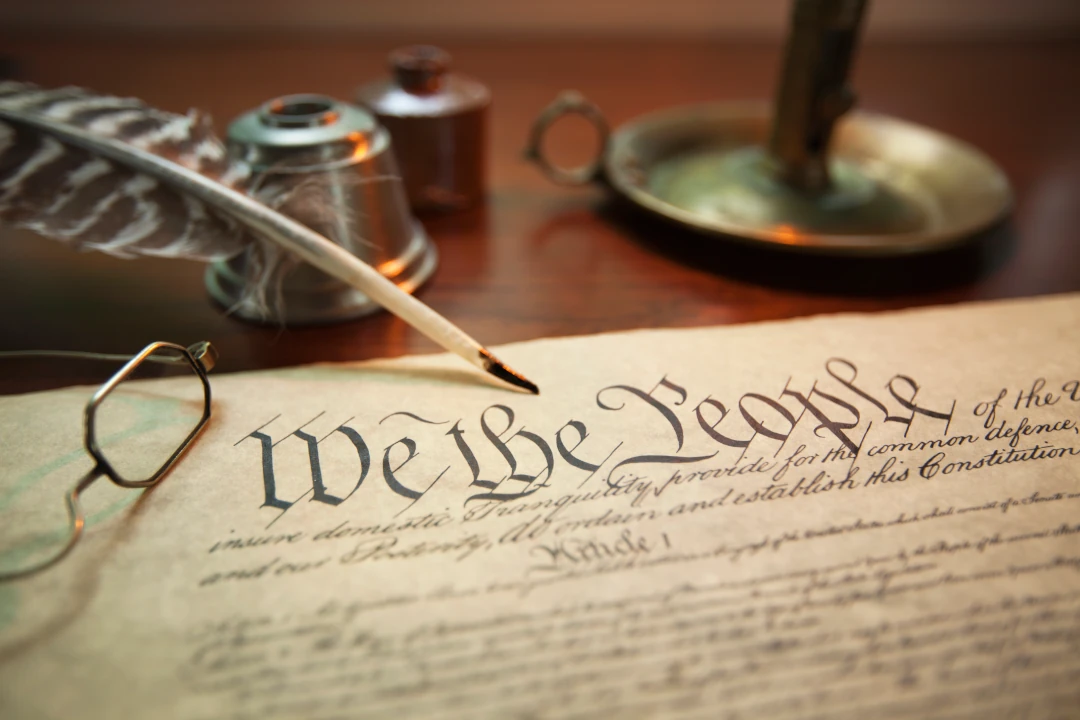
The 25th Amendment, ratified in 1967 in the wake of President Kennedy’s assassination, created a framework for addressing presidential incapacity. Section 4 — its most powerful and most neglected provision — permits the Vice President, acting with either a majority of the Cabinet or a congressional body of Congress’s own design, to temporarily transfer executive power when a president is unable to fulfill the duties of office. The critical phrase is “such other body as Congress may by law provide.” Congress never provided it.
Raskin’s legislation corrects that delinquency. As outlined in co-sponsor Rep. Jimmy Panetta’s press release, the bill would establish a 17-member, nonpartisan commission composed of physicians, psychiatrists, and former high-ranking executive branch officials — including former vice presidents, Secretaries of State and Defense, attorneys general, and surgeons general. Congressional leadership from both parties would each appoint members; the 16 appointed commissioners would then select a 17th to serve as chair. If Congress passes a concurrent resolution triggering the commission, the panel would be required to complete a medical examination within 72 hours and report its findings to Congress within 72 hours thereafter.
The commission’s findings would only carry legal force if the Vice President concurred — preserving the constitutional structure’s existing check. This is not a tool for political removal. It is, precisely as Rep. Greg Stanton characterized it, a mechanism to ensure the “successful continuity of government” when a president’s capacity is genuinely in question.
“We’ve never in the history of this country seen spending like this, paid for by slashing health care, education and housing.”
— Rep. Jamie Raskin (D-MD), Ranking Member, House Judiciary Committee, April 14, 2026
2. The Pattern of Conduct That Made This Necessary
To understand why this legislation arrives now, one must reckon with what the past several weeks have produced from the Oval Office. The precipitating incidents are not isolated gaffes or rhetorical excesses easily explained as negotiating theater. They constitute a pattern — documented, timestamped, and internationally witnessed — of conduct that raises serious and legitimate questions about the President’s capacity to exercise sound judgment in matters of war and peace.
On April 7, Trump posted on Truth Social that “A whole civilization will die tonight, never to be brought back again.” The statement — issued as a military deadline — prompted human rights expert Kenneth Roth of Human Rights Watch to tell NBC News that it constituted a threat of collective punishment, which is a war crime under the Fourth Geneva Convention.
Trump posted — then deleted — an AI-generated image depicting himself in the likeness of Jesus Christ. Rev. James Martin, editor-at-large of the Catholic magazine America, told CNN (as reported by Fox News) that it was “the most Jesus-looking picture I think I could imagine,” while conservative Protestant writer Megan Basham called on the president to “ask for forgiveness from the American people and then from God.”
After the image was removed, Trump pivoted to sharing what the Irish Star described as “late night hate messages” directed at the newly elected Pope Leo XIV — the first American pope — calling him “weak on crime” and “terrible on foreign policy.” The pontiff responded with characteristic composure: “I have no fear of the Trump administration.”
The ongoing military conflict with Iran — initiated in late February — was launched without a congressional declaration of war or formal authorization. As Rep. Raskin’s press statement makes plain, Trump has been “violating Congressional war powers” throughout the engagement, a constitutional breach that compounds the questions about presidential judgment and restraint.
Prior to the two-week ceasefire, Trump issued multiple escalating deadlines to Iran — each extended, walked back, or reframed — PBS NewsHour documented at least three instances of Trump setting and then delaying ultimatums, a pattern of contradiction that allied governments and military planners were forced to navigate in real time.
In a social media post issued on Easter Sunday, Trump demanded that Iran “Open the F**kin’ Strait, you crazy bastards, or you’ll be living in Hell,” [censored] according to CNBC. The post — issued on one of Christianity’s holiest days, in expletive-laden language, as a precursor to military threats — drew international condemnation and domestic alarm.
3. Who Is Calling for Action — And Why That Matters
What distinguishes this moment from prior episodes of Democratic criticism is the political breadth of alarm. When former Rep. Marjorie Taylor Greene — a long-standing Trump loyalist — posted “25TH AMENDMENT!!!” on social media with the message that “we cannot kill an entire civilization” and that the situation was “evil and madness,” it reframed the conversation entirely. As NBC News reported, her call came before the ceasefire announcement, in the heat of the crisis. This was not opposition politics. It was a reckoning.
Senate Minority Leader Chuck Schumer characterized Trump as “an extremely sick person.” House Minority Leader Hakeem Jeffries called on every Republican to “put patriotic duty over party and stop the madness.” Rep. Rashida Tlaib invoked the 25th Amendment on social media, citing what she described as a threat of genocide. Rep. Jim McGovern stressed that the military is “required to disobey illegal orders” — a statement of extraordinary gravity from a sitting member of Congress about a sitting commander-in-chief.
Get Involved Today
Contribute to our mission and turn your concerns into action.
And then there is the international dimension. France’s Foreign Minister Jean-Noël Barrot warned that targeting civilian infrastructure is “barred by the rules of war and international law.” Great Britain declined to allow American use of its bases for operations against civilian targets. Pope Leo XIV — the American pontiff Trump was simultaneously attacking on social media — urged “all people of good will to reject war.” The United Nations Secretary-General raised concerns. JPMorgan analysts warned in client notes that the administration was misreading Iran’s strategic position. The consensus of allied governments, international law experts, and global financial institutions was that the President of the United States was behaving in ways that posed an acute risk to regional and global stability.
“We are at a dangerous precipice, and it is now a matter of national security for Congress to fulfill its responsibilities under the 25th Amendment to protect the American people from an increasingly volatile and unstable situation.”
— Rep. Jamie Raskin (D-MD), April 14, 2026
4. A Chronology of Escalation
U.S. and Israel launch military operations against Iran without a formal congressional declaration or authorization. The conflict begins an unprecedented disruption of global oil markets via the Strait of Hormuz.
Trump issues the first of several escalating deadlines to Iran to reopen the Strait of Hormuz, with threats to destroy civilian infrastructure including bridges and power plants — actions international law experts describe to NBC News as potential war crimes.
Easter Sunday: Trump posts an expletive-laden message demanding Iran open the strait, and separately posts an AI image depicting himself as Jesus Christ. Democratic lawmakers and conservative Christian figures alike express alarm.
Trump posts that “A whole civilization will die tonight, never to be brought back again” — prompting Rep. Rashida Tlaib, Marjorie Taylor Greene, Rep. Alexandria Ocasio-Cortez, and dozens of other lawmakers to publicly call for the 25th Amendment. Senate Minority Leader Schumer calls Trump “an extremely sick person.”
Trump announces a two-week ceasefire with Iran, brokered through Pakistan, subject to the Strait of Hormuz being reopened. The crisis pause brings temporary relief — but does not diminish the severity of the conduct that preceded it.
Raskin calls on the White House physician to conduct a “comprehensive cognitive evaluation” of President Trump, citing signs “consistent with dementia and cognitive decline.” The White House dismisses the request with a personal insult directed at Raskin.
Rep. Raskin introduces the Commission on Presidential Capacity bill with 50 Democratic co-sponsors. For the first time in American history, Congress is formally moving to create the body Section 4 of the 25th Amendment has always required.
5. The Politics of Obstruction
The bill will not pass. This is not pessimism — it is arithmetic. Republicans control both chambers of Congress, and the House majority has shown no appetite for constraining a president they have treated as synonymous with the party’s political identity. Rep. Marlin Stutzman of Indiana dismissed calls for the 25th Amendment by writing on social media that Trump is “one of the greatest presidents our nation has ever seen.” The White House’s response to Raskin’s legislation — calling him “a stupid person’s idea of a smart person” — is the language of a political operation, not a serious engagement with a constitutional question.
The Axios report on the bill noted the obvious irony the White House was eager to exploit: that Democrats failed to act on credible evidence of President Biden’s cognitive decline during his tenure. That critique is not without merit, and intellectual honesty requires acknowledging it. Democrats must reckon with the double standard they created. The lesson, however, is not that the 25th Amendment should never be taken seriously. The lesson is that it should have been taken seriously sooner — and that the country needs a standing, nonpartisan mechanism that operates above partisan self-interest. That is precisely what Raskin’s bill would create.
The Body Congress Never Built — And Why That Must Change Now
What Section 4 Actually Says: The 25th Amendment, ratified February 10, 1967, provides in Section 4 that “Whenever the Vice President and a majority of either the principal officers of the executive departments or of such other body as Congress may by law provide” transmit a written declaration that the President is unable to discharge his duties, the Vice President shall immediately assume the role of Acting President. The critical phrase — “such other body as Congress may by law provide” — has remained an uncompleted constitutional assignment for 59 years.
The Lawmakers Who Have Publicly Supported Action: Rep. Jamie Raskin (D-MD) introduced the bill and has called publicly for a cognitive evaluation of the President. Rep. Jimmy Panetta (D-CA) is among the 50 co-sponsors, calling the commission “a bipartisan opportunity.” Rep. Greg Stanton (D-AZ) cited Trump’s “erratic conduct” as raising serious capacity questions. Senate Minority Leader Chuck Schumer and House Minority Leader Hakeem Jeffries have both publicly called on Republicans to “put patriotic duty over party.” Outside Congress, former Rep. Marjorie Taylor Greene and Rep. Alexandria Ocasio-Cortez have both separately called for the 25th Amendment’s invocation.
The Constitutional and Legal Argument: The bill does not create a new power. It fulfills an existing constitutional obligation. Section 4 explicitly anticipates a congressional body; the Forefathers’ intent was to provide a non-Cabinet option precisely to protect against situations where Cabinet loyalty to a president might override the national interest. A nonpartisan commission of physicians and former senior officials is exactly the kind of body the amendment envisioned — one insulated from the political pressures that make Cabinet invocation nearly impossible in practice.
The Practical Barriers: Without Republican support, the bill cannot advance. Even if it did, Section 4 requires Vice President JD Vance’s concurrence — and Vance has given no indication he would exercise that authority. And even if a declaration of incapacity were transmitted, the President could contest it, at which point a two-thirds majority of both chambers would be required to sustain the finding. The political pathway is, at present, closed.
Why the Barriers Do Not Negate the Moral and Constitutional Case: The 25th Amendment exists because the Forefathers understood that political loyalty can overwhelm institutional responsibility. The barriers to action are a feature of the amendment’s design — safeguards against frivolous removal. But the existence of those safeguards cannot be permitted to serve as an excuse for permanent inaction. Congress has a constitutional duty to create this commission. Raskin’s bill discharges that duty. Whether the commission is ever triggered is a separate question. But the scaffolding must exist before the emergency arrives. It has not, for 59 years. That failure is its own dereliction — and one this legislation, at last, seeks to remedy.
Editorial Conclusion
The Commission on Presidential Capacity bill is not a political stunt. It is the belated fulfillment of a constitutional obligation that 59 years of congressional negligence has left undone. The conduct that prompted its introduction — threats of civilizational destruction, a president likening himself to Jesus Christ, late-night attacks on an American pope, an unauthorized war, and erratic reversals that left allied governments unable to plan — represents an unprecedented accumulation of evidence that something has gone deeply wrong at the apex of executive power. The 25th Amendment exists for moments precisely like this one. Congress has a solemn duty to build the body that amendment requires — not when the next crisis arrives, but now, before one arrives from which there is no ceasefire to announce. The republic does not have the luxury of another 59 years of delay.
Sources & References
- House Judiciary Democrats — Raskin Introduces Commission on Presidential Capacity Legislation (April 14, 2026)
- Axios — House Democrats File Long-Shot 25th Amendment Bill Targeting Trump (April 14, 2026)
- NBC News — Raskin Offers Bill Setting Up 25th Amendment Process to Remove Trump (April 14, 2026)
- Cleveland 13 News — House Democrats Propose Commission to Judge Presidential Fitness (April 15, 2026)
- The New Republic — Democrats Formally File 25th Amendment Bill to Get Rid of Trump (April 14, 2026)
- Deseret News — A Medical Check for the Commander-in-Chief? Democrats Introduce Trump Fitness Bill (April 14, 2026)
- Rep. Jimmy Panetta — Press Release on Co-Sponsoring Presidential Capacity Legislation (April 14, 2026)
- Rep. Greg Stanton — Press Release on Commission on Presidential Capacity Legislation (April 14, 2026)
- Al Jazeera — Trump on Iran: ‘A Whole Civilisation Will Die Tonight’ (April 7, 2026)
- NBC News — Trump Announces 2-Week Iran Ceasefire After Threatening Civilizational Annihilation (April 7–8, 2026)
- CBS News — Democrats Pan Trump’s Latest Iran Rhetoric; Schumer Calls President “An Extremely Sick Person” (April 7, 2026)
- CNBC — Iran Updates: Trump Warns ‘Whole Civilization Will Die’ If No Deal by Deadline (April 7, 2026)
- PBS NewsHour — Trump Pulls Back on Iran Threats After Warning ‘A Civilization Will Die Tonight’ (April 8, 2026)
- The Hill — Trump Defends ‘Whole Civilization Will Die’ Message to Iran: ‘I’m Fine With It’ (April 13, 2026)
- Fox News — From Iran to the Fake Jesus Image, Trump Is Facing a Growing Backlash for His Inflammatory Rhetoric (April 2026)
- Irish Star — Trump Dementia Fears at All-Time High After Bizarre Excuse for Jesus AI Post (April 2026)
- NBC News — Iran War Live Blog: Kenneth Roth on Collective Punishment and War Crimes Threat (April 7, 2026)
- IBTimes UK — Trump Faces 25th Amendment Bill As 50 House Democrats Launch Removal Push (April 14, 2026)
- Newsner — What Will Happen Now as Democrats File Bill to Issue 25th Amendment to Remove Trump? (April 15, 2026)
- Fox News — House Dems Unveil Bill to Examine Removing Trump Using 25th Amendment (April 14, 2026)
Related News