A Child in the Back Seat, Bullets Through the Car — and a Body Count No One in Washington Will Own
Thursday’s shooting in the Bronx was not a return of ICE violence. The violence never left; the cameras did. Since January 2025, immigration agents have killed people on American streets, record numbers have died behind detention walls, and Congress has handed the agency more money and no new strings. Less than four weeks before the midterms, the question is no longer whether this is happening — it is whether anyone will be made to answer for it.
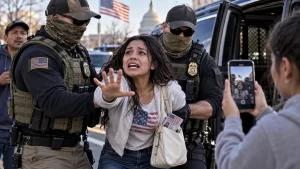
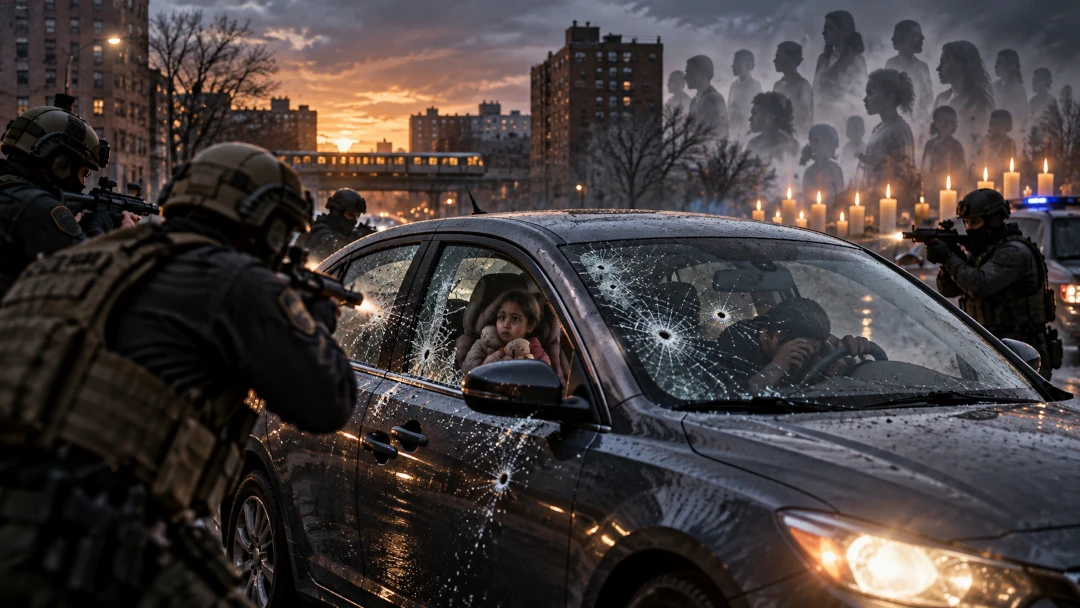
At about four o’clock on Thursday afternoon, in Marble Hill — the sliver of Manhattan that sits on the Bronx side of the river — federal immigration officers surrounded a car. Inside were a man and a five-year-old child. Moments later, an officer opened fire. According to FOX 5 New York’s reporting, Mayor Zohran Mamdani said early accounts showed agents encircling the man and the child before firing several rounds. CNN reported, citing a law enforcement official, that the shots went into the vehicle while the little one sat in the back seat. The child, by every account, was physically unhurt. The man was hospitalized, conscious, his name not yet released.
The New York Police Department said its officers neither witnessed nor took part in the shooting, and an FBI evidence team arrived to “support” the Department of Homeland Security. DHS, for its part, issued a statement that read less like an incident report than a press release: the man, it said, was a Dominican national with a prior grand larceny conviction, multiple past arrests and alleged gang ties; an officer “discharged his weapon”; and the real culprit was “reckless Democrat sanctuary policies.” What the statement did not say is what threat, if any, the man posed in the instant the trigger was pulled — or why a car with a kindergartener inside was a reasonable place to fire.
Mamdani’s answer was blunt: “Get ICE off our streets. Get ICE away from our children.” Governor Kathy Hochul said New Yorkers “deserve to know exactly what happened.” Councilmember Tiffany Cabán called ICE “this rogue agency” and noted, pointedly, that it had shot one of the city’s neighbors “yet again.”
I. The Same Shooting, Over and Over
If Thursday’s incident feels familiar, that is because it is. Firing into vehicles has become the signature use of force of this immigration crackdown. Analysts compiling the public record count at least 41 shootings by immigration agents between January 2025 and July 2026, with 11 deaths, and note an unusually large share involving moving cars. The Wall Street Journal identified at least 13 instances of officers firing at or into civilian vehicles between July 2025 and January 2026 alone. In many cases, DHS’s first account — the driver “weaponized” the car, tried to “ram” agents — was later contradicted by video.
That is not a partisan characterization; it is DHS’s own rulebook. The department’s 2023 use-of-force policy generally prohibits deadly force solely to stop a fleeing person and bars firing to disable a moving vehicle. Many police departments, and the Justice Department itself, train officers to step out of a car’s path and take the plate number. After ICE agents killed two men during traffic stops within a week in July — Lorenzo Salgado Araujo in Houston and Johan Sebastián Durán Guerrero in Biddeford, Maine — Sen. Angus King’s office told NPR that ICE would pause non-urgent vehicle stops. NPR also reported that only about half of ICE field officers even had body cameras. Three months later, an officer in the Bronx fired into a car with a child inside.
The Bronx shooting was the twelfth time a person was shot by federal immigration agents in 2026, by Newsweek‘s running tally; the eleventh was a 28-year-old Venezuelan DoorDash driver, Wilber Rafael Garces Perez, wounded by an ICE agent in Austin on September 20. Most Americans never heard his name.
II. The Toll, By the Numbers
The deadliest fiscal year in ICE’s history, per a Bloomberg Law investigation — up from 33 the year before and 11 in fiscal 2024. ICE recorded 26 deaths across the entire Biden presidency.
An ACLU review of more than 1,200 enforcement operations in eight states found nearly a third involved force or the threat of it, including incidents involving children, citizens and journalists.
After a closed-door briefing in July, House Democrats said ICE identified just one officer referred for discipline over use of force across an agency of 20,000-plus.
People held in ICE detention, with more than 48,000 arrests in September alone — near the agency’s monthly record, NBC News and Telemundo reported.
The trend line predates the headlines. Internal records obtained by American Oversight showed ICE leadership knew by spring 2025 that use-of-force incidents had spiked nearly 400 percent — months before agents killed two U.S. citizens in Minneapolis. The ACLU’s Naureen Shah warned in July that more killings were likely as enforcement money flowed. The administration’s reply, delivered to Axios, was that there had been “NO spike in deaths,” and that mortality rates were steady. Even taken at face value, that defense concedes the point: a steady death rate applied to a detention population that has nearly doubled means more people die. That is not a statistic. It is a policy choice.
Below is the chronology of every fatal shooting by ICE or its investigative arm since the inauguration, alongside the most consequential non-fatal ones.
III. The Quiet Season Was Not Peace
Between the Minneapolis killings last winter and Thursday’s shooting, many Americans could be forgiven for thinking the worst had passed. National coverage receded; the masked convoys left the evening news. On MS NOW’s Clock It podcast, hosts fielded a listener’s question that captures the national mood: people with no criminal records are still being detained, so why has the media stopped talking about it? Their answer spread the blame widely — commercial incentives in newsrooms, public fatigue, and Democratic leaders who changed the subject.
The data answer the question more precisely: the violence did not subside. It went quiet. ICE made a record 50,925 arrests in August and more than 48,000 in September, and NBC News reported that the surge came without the military deployments and televised raids of the winter. Instead, tactics shifted toward street arrests, jail transfers, courthouse and check-in arrests, and operations spread across Houston, New York, Memphis, San Francisco and Atlanta. Researcher Austin Kocher, tracking ICE’s own figures, observed that the less spectacular tactics under Secretary Markwayne Mullin have produced more arrests with less public backlash — and that ICE’s numbers resurfaced only “after months of data silence.”
Meanwhile, two of the summer’s deadliest episodes — the back-to-back killings in Houston and Maine — drew a fraction of the attention Minneapolis did. Neither victim was a U.S. citizen, and neither death came with the kind of viral video that seized the nation in January. Journalism researchers have documented that violence in communities of color gets less coverage; the immigration crackdown has followed that pattern exactly. And the government has made the counting harder on purpose: in June, ICE stopped reporting the deaths of people who die shortly after release from its custody. Researchers have no comprehensive federal use-of-force dataset to check. What the public does not see, it cannot be outraged by. That is the strategy.
Get Involved Today
Contribute to our mission and turn your concerns into action.
IV. Congress: Demands Made, Leverage Spent
Democrats did not ignore the killings. After Alex Pretti’s death in January, Senate Minority Leader Chuck Schumer united his caucus behind a simple formula — “We want masks off, body cameras on” — and declared the Homeland Security funding bill dead until ICE was reined in. House Minority Leader Hakeem Jeffries put the demands in writing: a mask ban, judicial warrants, independent investigations when agents break the law, use-of-force protocols, mandatory body cameras and an end to raids at schools, churches and hospitals. “ICE is completely out of control and the American people know it,” Jeffries said.
The standoff produced the longest shutdown in DHS history — 76 days. And then Republicans simply routed around it. The rest of DHS was funded in a bill that included body-camera money, detention oversight and de-escalation training. ICE and Border Patrol were carved out and funded separately through budget reconciliation, which needs only a simple majority. On June 9, the House passed roughly $70 billion for enforcement through the end of President Trump’s term — more than triple ICE’s annual budget, NPR reported — without a mask ban, without judicial warrants, and without even the body-camera mandate that had bipartisan support. “Democrats got absolutely nothing,” Speaker Mike Johnson crowed.
Other efforts remain stranded in committee: the DHS Use of Force Transparency Act from Reps. Dave Min and Ayanna Pressley; the Bivens Act, which would let victims sue federal officers the way they can sue local police; and letters, like one from Sens. Jon Ossoff and Raphael Warnock, documenting that ICE issued a 48-hour death notice in only 15 of 49 custody deaths. The lesson of 2026 is hard but clear: a minority party can delay, but it cannot govern. Leverage that ends in a reconciliation workaround is not leverage. It is a speech.
Four rights in the line of fire — and the legal walls built around the shooters
Fourth Amendment · Deadly force is a seizure
Shooting someone is the most extreme “seizure” the Constitution regulates, and the Supreme Court’s standard asks whether force was objectively reasonable in the moment. Firing into a car to stop it from leaving — let alone a car with a child inside — fails DHS’s own 2023 policy, which bars deadly force solely to prevent escape. When video repeatedly shows drivers turning away from agents, “reasonable fear” stops being a legal conclusion and becomes a talking point.
Fifth Amendment · Due process behind bars
In July 2025, ICE reinterpreted a 1996 law to deny bond hearings to immigrants arrested anywhere in the country, not just at the border. Nine federal appeals courts have ruled the policy unlawful while two have upheld it, and the Supreme Court agreed on October 1 to decide the question. Detention without any chance to show you are neither dangerous nor a flight risk is the opposite of due process.
First Amendment · The right to watch
Renée Good was described by Rep. Ilhan Omar as a legal observer; Alex Pretti was filming when he was tackled and shot. Recording law enforcement in public is protected expression. Yet the courts have shut the main door to redress: in Egbert v. Boule (2022), the Supreme Court held that people generally cannot bring constitutional damages claims against federal immigration officers, and explicitly rejected First Amendment retaliation claims of this kind. As The Boston Globe noted, that ruling all but closes the civil courthouse to the families of Good and Pretti.
The Supremacy Clause · “Immunity” is not impunity
Vice President JD Vance claimed Jonathan Ross had “absolute immunity,” a remark he later walked back. The real doctrine, dating to In re Neagle (1890), shields federal officers from state prosecution only for acts that are “necessary and proper” to their federal duties. An unjustified killing is neither. State prosecutors can charge; agents can seek removal to federal court, where a judge decides.
The statute book
Federal civil rights prosecutions under 18 U.S.C. § 242 require proof that an officer acted willfully — a bar so high it is rarely cleared, and only if the Justice Department chooses to try. Federal law at 18 U.S.C. § 592 makes it a crime to station “troops or armed men” at polling places. And Congress’s 2018 DHS appropriations law requires ICE to make in-custody death reports public within 90 days — a requirement ICE’s reporting delays and its June rollback on post-release deaths have steadily hollowed out.
V. Accountability, or Its Absence
The most significant criminal case against an ICE officer for an on-duty shooting in this crackdown did not come from Washington. In May, Hennepin County Attorney Mary Moriarty charged ICE officer Christian Castro with four counts of second-degree assault and false reporting for shooting Julio Sosa-Celis, saying Castro was “absolutely not under any physical threat.” Castro was arrested in Texas — and then released after Texas’s governor declined to promptly sign the extradition warrant. Only afterward did federal prosecutors charge Castro with lying to investigators — not for the shooting itself.
For the killings, there is less. The FBI took sole control of the Renée Good investigation and shut Minnesota investigators out; the Justice Department has investigated Pretti’s death but not Good’s, and Moriarty has had to issue formal demands just to obtain the evidence. ProPublica identified the two agents who shot Pretti. Newsweek reported in September that two agents involved faced use-of-force charges — but no one has been charged with killing him. Seven months after his death, his parents said publicly they had seen no sign of an active federal probe.
“There is no absolute immunity for federal agents.”
— Hennepin County Attorney Mary Moriarty
Moriarty’s office says it is investigating at least 17 potential crimes by federal agents during Minneapolis’s “Operation Metro Surge,” including one involving former Border Patrol commander Gregory Bovino. DHS calls the inquiry “unlawful.” Inside the agency, then–acting ICE Director Todd Lyons told senators in February that ICE had opened 37 use-of-force investigations; by July, members of the House Homeland Security Committee said only one officer had been referred for discipline. “It just defies belief,” said Rep. Seth Magaziner. The ranking member, Rep. Bennie Thompson, said ICE could not even say consistently who investigates its shootings — sometimes the FBI, sometimes ICE’s own Homeland Security Investigations.
That is the architecture of impunity: federal investigators who answer to the same administration that labeled the dead “domestic terrorists” within hours; a Supreme Court that has closed the civil courthouse; a Justice Department that declines to prosecute; and an agency that investigates itself. Into that vacuum have stepped local prosecutors and a few states — Illinois became the first to let people sue federal agents in state court for constitutional violations, and lawmakers in California, New York, Virginia, Maryland and Connecticut are pursuing similar laws.
VI. A Chilling Strategy: Blue Cities and the Ballot Box
The geography of this crackdown is not random. Its signature operations — “Midway Blitz” in Chicago, “Metro Surge” in Minneapolis, and threatened surges in New York — have targeted cities governed by the President’s political opponents. A study of crowd-control force at immigration protests found that more than 90 percent of incidents occurred in just five cities, and that force rose in waves that tracked Bovino’s arrival in each. In July, White House border czar Tom Homan answered Mayor Mamdani’s defense of sanctuary policy with a promise: “there’s going to be a surge, and there needs to be a surge,” he told Fox News. When the President threatened during the 2025 campaign to have Mamdani arrested if he interfered with ICE, Mamdani read the message plainly: if you speak up, they will come for you.
Now the midterms are 24 days away. In February, Steve Bannon declared on his show that the administration would have ICE “surround the polls come November.” The White House press secretary said she could not guarantee agents would stay away. At his confirmation hearing, DHS Secretary Mullin said ICE could appear at voting sites in the event of a “specific threat.” A DHS official has since told state election officials that agents will not be stationed at polling places. But in August, according to records compiled by Democracy Forward, ICE announced plans for a contract worth up to $5 million to obtain voter registration and voter history files, and its investigators launched a “voter fraud surge initiative” in nine states.
Deploying armed agents to polling places is a federal crime, as the Brennan Center and even an FBI agent responding to a Missouri election official have noted. But intimidation does not require a deployment. It requires uncertainty — the lingering possibility that a naturalized citizen, a Latino voter, or a mixed-status family will decide the trip to the polls is not worth the risk. That is why Virginia, California and New Mexico lawmakers have moved to bar immigration enforcement near voting sites. The chilling effect is the point, and it does not stop at the ballot box: every shooting in a Democratic city, followed by a DHS statement blaming “sanctuary politicians,” is a message to local leaders about the price of resistance.
VII. Inside the Walls: The War on Detainee Rights
If the streets are where ICE’s violence is visible, detention is where it is hidden. Fiscal 2026 ended on September 30 with 37 deaths in custody, the most ever recorded. Among them: Geraldo Lunas Campos, whose death at El Paso’s Camp East Montana was ruled a homicide by asphyxia after a witness said guards choked him; Emmanuel Clifford Damas, whose family says he died of an untreated tooth infection; Royer Pérez Jiménez, just 19; and Mohammad Nazeer Paktyawal, an Afghan who had worked alongside the U.S. military and died less than 24 hours after his arrest.
The administration’s response has not been to fix the conditions. It has been to dismantle the instruments that measure them. DHS gutted the offices that investigate deaths and civil rights abuses in detention — employees warned NPR that the cuts could lead to more deaths. In June, a memo from acting ICE Director David Venturella rescinded the rule requiring ICE to investigate and report deaths within 30 days of release — a rule written precisely because ICE had released dying detainees so their deaths would not count. UCSF epidemiologist Sanjay Basu said the change will “make the mortality statistics appear lower without any actual improvement in care.” At the same time, the mandatory-detention policy keeps tens of thousands locked up for months without a hearing, and Congress has authorized $45 billion for detention through 2029, with the stated goal of 100,000 beds.
Consider what that says about priorities. An administration that could not find the will to require body cameras found $70 billion for enforcement. A Justice Department that has charged no one with killing Renée Good or Alex Pretti found time to charge the people its agents shot — Marimar Martinez, Julio Sosa-Celis, Carlos Mendoza Hernández — often on accounts that later collapsed. An agency that cannot say who investigates its shootings has a clear plan to buy voter files. A government reveals its values in what it chooses to count, and this one has chosen to count arrests, beds and deportations — not bodies.
VIII. Say Their Names
Numbers numb. Names do not. Below are the people known, from public records and reporting by the National Immigration Project, compiled ICE death notices, Newsweek and the Associated Press, to have died in ICE custody or by the gunfire of federal immigration agents since January 20, 2025. Every list is incomplete; ICE no longer reports some deaths at all, and tallies differ by source and by how “custody” is defined. Each name below was a person with a family that is still waiting for answers.
“What did he do to deserve to be murdered?”
— The family of Alex Pretti, August 2026
Killed by federal immigration agents’ gunfire
ICE and its Homeland Security Investigations arm, unless noted.
- Ruben Ray Martinez U.S. citizen · South Padre Island, TX · Mar 15, 2025 · HSI
- Silverio Villegas González Franklin Park, IL · Sep 12, 2025
- Keith Porter Los Angeles, CA · Dec 31, 2025 · off-duty ICE agent
- Renée Nicole Good U.S. citizen · Minneapolis, MN · Jan 7, 2026
- Alex Pretti U.S. citizen · Minneapolis, MN · Jan 24, 2026 · Border Patrol
- Jonah Neal Memphis, TN · May 20, 2026 · HSI agent on task force; cause under investigation
- Lorenzo Salgado Araujo Houston, TX · Jul 7, 2026
- Johan Sebastián Durán Guerrero Biddeford, ME · Jul 13, 2026
Border Patrol agents have also killed others in border-area encounters, including Ophelia Bauckholt in a January 2025 Vermont shootout in which Agent David Maland was also killed, and a 31-year-old Mexican man identified by The Week as Isaías Sánchez Barboza near Rio Grande City in December 2025. Several of those cases involved people agents say shot at or stabbed them; we note them here for completeness.
Died in ICE custody · 2026 (28)
Two (marked ‡) died immediately after ICE marked them “released” — deaths ICE no longer reports.
- Geraldo Lunas Campos 55 · Cuba · Jan 3 · ruled homicide
- Luis Gustavo Núñez Cáceres 42 · Honduras · Jan 5
- Luis Beltrán Yáñez-Cruz 68 · Honduras · Jan 6
- Parady La 46 · Cambodia · Jan 9
- Víctor Manuel Díaz 36 · Nicaragua · Jan 14
- Heber Sánchez Domínguez 34 · Mexico · Jan 14
- Lorth Sim 59 · Cambodia · Feb 16
- Jairo García-Hernández 27 · Guatemala · Feb 16
- Alberto Gutiérrez Reyes 48 · Mexico · Feb 27
- Pejman Karshenas Najafabadi 59 · Iran · Mar 1
- Emmanuel Clifford Damas 56 · Haiti · Mar 2
- Mohammad Nazeer Paktyawal 41 · Afghanistan · Mar 14
- Royer Pérez Jiménez 19 · Mexico · Mar 16
- José Guadalupe Ramos-Solano 52 · Mexico · Mar 25
- Tuan Van Bui 55 · Vietnam · Apr 1
- Alejandro Cabrera Clemente 49 · Mexico · Apr 11
- Aled Damien Carbonell-Betancourt 27 · Cuba · Apr 12
- Denny Adán González 33 · Cuba · Apr 28
- Mamuka Artmeladze 43 · Georgia · Jun 4
- Félix Alcorta-Rodríguez 63 · Mexico · Jun 19
- Adrian Andreas Florian 85 · Germany · Jun 24
- Jesús Manuel Arenas-Silva 45 · Venezuela · Jul 13
- José Chajón-Raxón ‡ 39 · Guatemala · Jul 22
- Prisciliano Trejo ‡ 29 · Mexico · Jul 24
- Edwin López-Cornejo 41 · El Salvador · Aug 1
- Lianyong Wei 51 · China · Aug 23
- Carlos Josué Marchena-Marchena 36 · Costa Rica · Sep 18
- Julián Curo-Churata 47 · Peru · Sep 29
Died in ICE custody · 2025 (31, from January 20)
Two (marked †) were killed by an outside gunman who attacked the Dallas ICE field office in September 2025 while they sat in a transport van.
- Genry Ruiz Guillén 29 · Honduras · Jan 23
- Serawit Gezahegn Dejene 45 · Ethiopia · Jan 29
- Maksym Chernyak 45 · Ukraine · Feb 20
- Juan Alexis Tineo-Martínez 44 · Dominican Republic · Feb 23
- Brayan Rayo-Garzón 27 · Colombia · Apr 8
- Nhon Ngoc Nguyen 55 · Vietnam · Apr 16
- Marie Ange Blaise 44 · Haiti · Apr 25
- Abelardo Avelleneda-Delgado 68 · Mexico · May 5
- Jesús Molina-Veya 45 · Mexico · Jun 7
- Johnny Noviello 49 · Canada · Jun 23
- Isidro Pérez 75 · Cuba · Jun 26
- Tien Xuan Phan 55 · Vietnam · Jul 19
- Chaofeng Ge 32 · China · Aug 5
- Lorenzo Antonio Batrez Vargas 32 · Mexico · Aug 31
- Óscar Duarte Rascón 58 · Mexico · Sep 8
- Santos Reyes-Banegas 42 · Honduras · Sep 18
- Ismael Ayala Uribe 39 · Mexico · Sep 22
- Norlan Guzmán-Fuentes † 37 · El Salvador · Sep 24
- Huabing Xie 53 · China · Sep 29
- Miguel Ángel García-Hernández † 31 · Mexico · Sep 29
- Leo Cruz-Silva 34 · Mexico · Oct 4
- Hasan Ali Moh’D Saleh 67 · Jordan · Oct 11
- Gabriel García-Avilés 56 · Mexico · Oct 23
- Kai Yin Wong 63 · China · Oct 25
- Francisco Gaspar-Andrés 48 · Guatemala · Dec 3
- Pete Sumalo Montejo 72 · Philippines · Dec 5
- Shiraz Fatehali Sachwani 48 · Pakistan · Dec 6
- Jean Wilson Brutus 41 · Haiti · Dec 12
- Fouad Saeed Abdulkadir 46 · Eritrea · Dec 14
- Delvin Francisco Rodríguez 39 · Nicaragua · Dec 14
- Nenko Stanev Gantchev 56 · Bulgaria · Dec 15
Also dead in connection with enforcement: Jaime Alanís García, who fell during a July 2025 farm raid in Camarillo, California; José Castro-Rivera, struck on a Norfolk, Virginia, highway in October 2025 while fleeing ICE officers; and Daphy Michel, a Haitian woman whose March 2026 death in Pittsburgh, three days after her release from ICE custody, was ruled a homicide. ICE reported 33 detainee deaths for calendar 2025; the 31 listed here are those publicly identified after the inauguration.
IX. What This Means for Every American
It is tempting to believe this is someone else’s story — that it happens to “criminal aliens,” as DHS’s statements insist. The record says otherwise. At least three of the people killed by immigration agents’ gunfire since January 2025 — Ruben Ray Martinez, Renée Good and Alex Pretti — were U.S. citizens. Marimar Martinez and Carlos Jimenez, both citizens, were shot and survived. An analysis of ICE’s own data by researcher Austin Kocher found that 92 percent of detention growth early in this fiscal year came from people with no criminal convictions. Observers, neighbors, delivery drivers and a five-year-old in a back seat have all been in the line of fire.
When a federal agency can shoot first, characterize the dead as threats within hours, shut state investigators out, and face no civil liability because the courts have closed the door, the protections every American assumes — that the government must justify force, that a judge must authorize entry into your home, that someone answers when an agent kills — become privileges extended at the government’s discretion. Rights that depend on your immigration status today depend on your politics tomorrow. That is why this is not an immigration story. It is a story about whether the Constitution still binds the people who carry badges in its name.
X. What You Can Do
An honest assessment: nothing on this list will stop an armed agent in the moment, and observing enforcement carries real risk — Renée Good and Alex Pretti were killed while doing it. The strongest levers are legal preparation, community networks, and the political power to change who writes the next appropriations bill. Use them all.
Know your rights — and carry them
You have the right to remain silent and the right not to open your door unless agents show a warrant signed by a judge; an ICE administrative form is not one. The Immigrant Legal Resource Center offers free, printable “red cards” in many languages that let you assert these rights without speaking. Print a stack for neighbors.
Find your rapid response network
Most metro areas now have hotlines that verify reported ICE activity, send trained legal observers, and alert families. The ILRC maintains a national directory. Save your local number now, and if you choose to document an operation, take a local training first and keep a safe distance.
Make a family preparedness plan
If anyone in your household or circle is at risk, prepare now: emergency contacts who are citizens, signed childcare authorizations, copies of key documents, and the name of an immigration attorney. Use ICE’s online detainee locator if someone disappears, and file habeas petitions quickly — federal courts have ordered thousands of releases.
Put the demands on the record
Call your representative and senators and ask, by name, whether they support the Bivens Act, the DHS Use of Force Transparency Act, a mask ban and judicial warrants. Ask your state legislators to follow Illinois in letting victims of federal agents sue in state court, and to bar armed immigration enforcement near voting sites.
Vote on November 3 — and protect others’ votes
Make a plan to vote early if you can. Sign up as a poll worker or nonpartisan election observer. If you see armed federal agents at or near a polling place, report it immediately to your local election officials; stationing “armed men” at the polls is a federal crime. The single most consequential check on ICE in 2027 is which party controls the House oversight and appropriations committees.
Editorial Conclusion
A five-year-old sat in the back seat while a federal officer fired into the car. That sentence should end careers, trigger investigations and change laws. Instead it arrived as one more line in a ledger the government has stopped wanting to keep.
The violence did not pause this summer; the attention did. Since January 2025, immigration agents have killed U.S. citizens and immigrants alike, a record number of people have died in detention, and Congress responded by funding the agency through 2029 without a single meaningful restraint. An administration that measures success in arrests and beds while erasing the dead from its own reports has told the country exactly what it values.
What is required is not complicated: masks off, cameras on, warrants signed by judges, independent prosecutors for every shooting, and a law that lets victims sue the agents who harm them. A democracy in which armed agents of the state answer to no court, no legislature and no voter is not a democracy at all. On November 3, Americans will decide whether that remains true.
Sources & References
- CNN — Man shot by federal immigration agents in the Bronx; 5-year-old in back seat (Oct. 8, 2026)
- FOX 5 NY — Shooting involving ICE agents near the Bronx; Mamdani, Hochul, Cabán and DHS statements
- Wikipedia (compiled from AP, NYT, WSJ and others) — List of shootings by U.S. immigration agents in the second Trump administration
- Newsweek — Full list of ICE, Border Patrol shootings in 2026
- National Immigration Project — Mourning those who have died in ICE custody (updated Oct. 5, 2026)
- Wikipedia (compiled from ICE death notices) — List of deaths in ICE detention
- MNTV, summarizing Bloomberg Law — ICE custody deaths hit a record in fiscal 2026
- Associated Press / AJC — ICE will no longer report deaths of detainees recently released from custody
- NPR — The use of force has become a “default tool” for ICE officers, ACLU report finds
- Associated Press / KSAT — Democrats press ICE on oversight, say 1 officer referred for discipline
- Office of Democratic Leader Hakeem Jeffries — Statement on DHS funding bill and ICE accountability
- NPR — ICE is now funded through end of Trump’s term, raising worries about oversight
- JURIST — Minnesota county prosecutor files charges against ICE agent
- Associated Press / FOX5 Las Vegas — ICE officer charged with lying to investigators in shooting of Venezuelan man
- Associated Press / News Tribune — Pretti’s family gives emotional first interview
- The Boston Globe — Do ICE agents have immunity? (The Gavel)
- Brennan Center for Justice — Sending ICE to polling places is illegal
- Democracy Forward — Exposing federal attempts to interfere in the 2026 midterm elections
- NBC News / Noticias Telemundo — ICE arrested more than 48,000 immigrants in September
- Immigrant Legal Resource Center — Know Your Rights: red cards and rapid response network directory
Additional reporting linked in the text: Axios, Stateline, The Hill, Fox News, Al Jazeera, OPB/NPR, KPBS/NPR, American Oversight, Yahoo News/Minnesota Star Tribune, the office of Rep. Dave Min, and Austin Kocher’s immigration data newsletter. Death tallies differ across ICE, advocacy trackers and news outlets depending on date ranges and how “custody” is defined; where sources disagree, we have used the more conservative figure or noted the discrepancy.
Related News