6.3%: The Bill Comes Due for a Congress That Gave Away the Purse
Producer prices just posted their sharpest climb since the inflation wave of 2022, and economists say much of it has not yet reached store shelves. The president says inflation is barely there. The House left town a month ago. The question is no longer whether Americans are paying — it is who let this happen, and who will stop it.
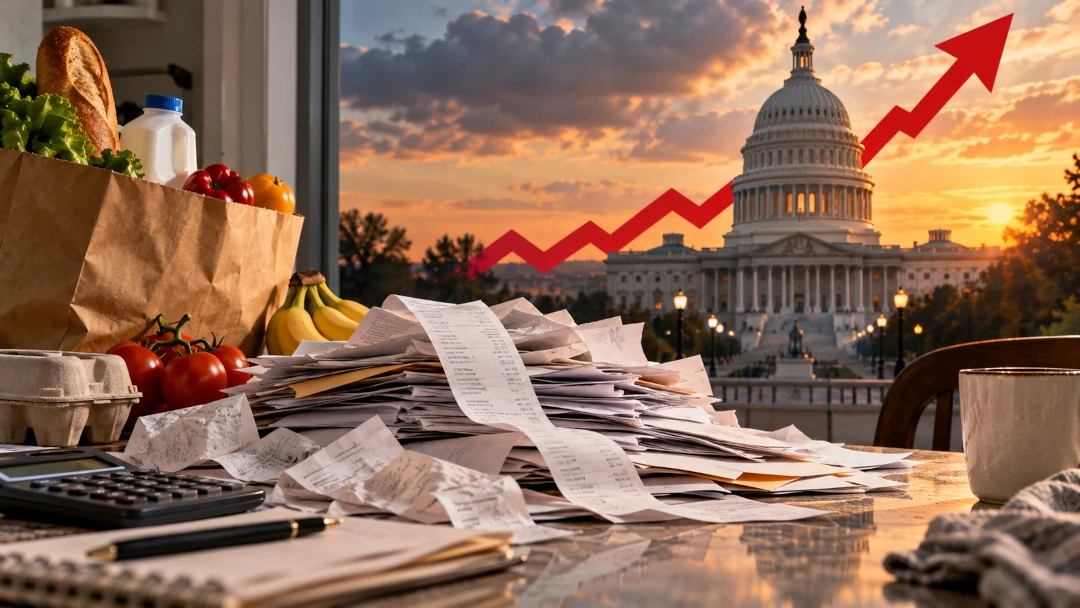
The prices American businesses pay to make and move things just jumped by the most in four and a half years. According to the Bureau of Labor Statistics data reported Thursday, the Producer Price Index for final demand rose 1.3 percent in September alone — the largest one-month gain since March 2022 — and 6.3 percent over the past year, up from 5.6 percent in August and the highest annual rate since December 2022. Economists polled by Reuters had expected roughly a third of that monthly increase. As NBC News reported, businesses are now absorbing inflation at levels not seen since the pandemic supply-chain crisis.
This is not an abstraction. Wholesale prices are the prices that become your prices. And they are arriving in a country whose president insists there is no problem, whose House of Representatives has been on a campaign break since mid-September, and whose Republican congressional majority spent the last two years handing away — power by power — the constitutional tools it was elected to use on your behalf.
I. What 6.3 Percent Actually Means
The Producer Price Index measures what domestic producers receive for their goods and services — the cost of things before they reach the checkout line. It is, in effect, a forecast. When a trucking company pays more for diesel, a farm pays more for fertilizer transport, or an airline pays more for jet fuel, those costs move down the chain and land, weeks or months later, on the consumer.
September’s driver was energy. The BLS attributed more than 80 percent of the rise in final-demand goods to a 10.8 percent surge in energy prices — the biggest energy jump since March, when the Iran war began. But this is no longer only a gasoline story. Core wholesale prices, which strip out food and energy, rose 0.7 percent for the month — their fastest pace in five months — pushing the annual core rate to 5 percent, the highest since January 2023. Oliver Allen, senior U.S. economist at Pantheon Macroeconomics, told CNN that fuel-sensitive transportation categories, including airfares, did much of that lifting. Joe Brusuelas, chief economist at RSM US, said September’s consumer and producer reports together hand policymakers exactly the evidence of persistent inflation they had been watching for.
And businesses are telling us what comes next. Heather Long, chief economist at Navy Federal Credit Union, said it is “inevitable” that companies will pass these elevated costs on to consumers. The same report notes something sobering: the last time producer prices spiked this sharply, in early 2022, consumer inflation hit a 40-year high just months later.
II. Getting Worse, Not Better
The honest answer to whether inflation is improving is no. Wholesale inflation started 2026 near 3 percent. It has more than doubled since. Consumer prices tell the same story: the September Consumer Price Index rose 0.6 percent in a single month and 3.7 percent from a year earlier, up from 3.4 percent in August. Underlying consumer inflation also firmed, and University of Michigan survey director Joanne Hsu told CNBC that frustration over the cost of living is mounting among consumers across the political spectrum.
The trajectory is not random. It tracks, almost month by month, a chain of political decisions:
III. The Fed: Caught Between a War and a White House
The central bank has already moved. On September 16, the Federal Open Market Committee voted 12–0 to raise its benchmark rate a quarter point, to a range of 3.75 to 4 percent — its first hike in more than three years — and 16 of 19 officials projected at least one more increase before year’s end. The minutes of that meeting, released October 7, showed most participants judging another hike likely appropriate by December, with inflation now above the Fed’s 2 percent target for more than five years running.
The question is timing. The next meeting falls on October 27–28. As of Wednesday afternoon, the CME FedWatch tool put the odds of a hold at roughly 66 percent, with about a 63 percent chance of a hike in December. Other gauges were closer to a coin flip. Sam Williamson, senior economist at First American, told Scotsman Guide that the hotter data puts an October hike back in play — and warned it could extend the wait for lower mortgage rates. Thursday’s wholesale report only adds pressure.
Here is the trap. Interest rates are a blunt instrument. The Fed cannot reopen the Strait of Hormuz, cannot repeal a tariff, and cannot end a war. All it can do is make borrowing more expensive until demand cools — meaning higher costs on credit cards, car loans, and mortgages for families already losing ground. When inflation is driven by supply shocks that a president chose to create, the remedy falls hardest on the people who had no say in creating them.
IV. What It Means at the Kitchen Table
For working families, the numbers behind the numbers are what matter most:At the Pump
Paychecks Falling Behind
The War Tax on Gas
Beyond Gasoline
The Cost of Borrowing
The Verdict of Voters
“We have very little inflation.”
— President Donald Trump, at a campaign rally hours after the CPI release · via Yahoo News
At the same event, the president claimed recent inflation had fallen to 1.7 percent from 19 percent. Neither figure is real; U.S. consumer inflation has never reached 19 percent in recorded history.
V. The President’s Response: Denial, Deals, and Demands
Confronted with the worst inflation data of his second term, the president chose denial. Speaking to reporters after a rally, he said the country is doing great and blamed inherited inflation on Joe Biden — nearly two years into his own term. White House spokesperson Matthew Middleton defended what he called an “aggressive, pro-growth economic agenda”. House Speaker Mike Johnson and the president have repeatedly insisted the price spikes are temporary and will ease once Iran reopens the Strait of Hormuz — conceding, in effect, that the president’s war is the cause.
What is the plan? So far it is a collection of announcements. In August the president touted a Venezuela oil agreement he said would substantially lower gas prices, but analysts told TIME it covers undeveloped fields requiring billions in investment before a single gallon reaches American pumps. Last week he announced that Vladimir Putin would export diesel to world markets — a small volume relative to U.S. demand that, as The Washington Post reported, effectively aligns Washington with Moscow against Ukraine’s campaign to strike Russian refineries. Earlier, his proposal to suspend the 18-cent federal gas tax went nowhere; Senate Democratic Leader Chuck Schumer argued it was a rounding error next to the roughly $1.50 a gallon the war had added.
And then there is the Fed. After the September hike, the president declared that interest rates “should be 1%, or less” and admitted he had discussed Chair Kevin Warsh’s vote with him in advance. Two weeks later, he told TIME that the Fed governors are “a very hostile board” motivated by animus toward him. Slashing rates into 6.3 percent wholesale inflation would be pouring gasoline on a fire. A president who wanted to lower prices would end the war, lift the tariffs, and leave the central bank alone. This one is doing none of the three.
VI. The Debt Trap He Built
Suppose a responsible government wanted to cushion families from this shock — energy assistance, targeted relief, investment in domestic clean power that is immune to Gulf blockades. It would run straight into a wall of interest payments.
The Congressional Budget Office projects net interest costs of $1.0 trillion in 2026 — 3.3 percent of GDP — doubling to $2.1 trillion by 2036. In August, annual interest payments crossed $1 trillion for the first time, running nearly 9 percent above last year. By one estimate, 19 cents of every federal revenue dollar now goes to interest. Every Fed hike to fight war-driven inflation makes that number worse.
A major reason the debt is this large is a choice made in July 2025. The One Big Beautiful Bill Act adds an estimated $4.1 trillion to deficits over the decade, pushing the debt past $53 trillion by 2034. Its benefits are lopsided: the Tax Policy Center found 60 percent of the tax benefits flow to the top quarter of earners, and the Budget Lab at Yale estimated that, combined with the 2025 tariffs, the law reduces incomes for the bottom 90 percent of households while raising them for the top 10 percent. The CBO found the poorest tenth of households would end up worse off because of cuts to Medicaid and food assistance. Higher rates compound the damage: the Economic Policy Innovation Center calculates that rates just one point above CBO’s baseline would add $3.2 trillion in interest over a decade.
That is what priorities look like when they are written into law. Tax relief for the wealthiest was paid for with borrowed money; the borrowed money now costs more; and the cost is crowding out the very relief working families need. Leadership is the art of choosing. This president chose.
Get Involved Today
Contribute to our mission and turn your concerns into action.
VII. A Congress on Vacation
Where is the institution the Constitution charged with the purse? Gone. The House departed September 16 for a seven-week campaign break after spending less than two weeks in session during August and September. Speaker Johnson canceled the next day’s votes outright, and both chambers remain on recess until November. The government is not shut down — but, as Federal News Network noted, it is not fully funded either, and the administration used the empty chamber to file pocket rescissions now being challenged in courts across the country.
Democrats, in the minority, cannot call the House back into session; only the Speaker controls the floor. What they have done is keep the pressure on. House Democratic Leader Hakeem Jeffries has used the recess to press the affordability case on national television, and has accused the GOP majority of behaving like “a wholly owned subsidiary of the Trump administration.” Sen. Elizabeth Warren has hammered how little seniors’ benefits now stretch against the cost of a tank of gas, pairing it with her push to lift the Social Security payroll cap and expand benefits. Democratic committee staff have released district-by-district cost data so voters can see what the war and tariffs have cost their own communities.
Before the recess, Democrats forced the issues Republican leaders wanted to avoid. Sen. Mark Kelly introduced the Gas Prices Relief Act of 2026, and Schumer pressed for a release from the Strategic Petroleum Reserve. The House has now passed Iran war powers resolutions three times; the latest, 220–204 on September 15, drew seven Republican votes. In the Senate, however, a binding joint resolution died 47–49 in July. The pattern is consistent: Democrats propose, a handful of Republicans defect, and the majority holds the line for the president.
“This Congress has not authorized a war with Iran.”
— Rep. Gregory Meeks (D-N.Y.), Ranking Member, House Foreign Affairs · The Hill
Meeks noted the war has cost 19 American service members their lives, wounded more than 750, and consumed billions in unbudgeted spending.
VIII. The Surrender of Article I
Strip away the daily noise and the cause of this crisis is structural. Every major driver of September’s inflation — the war, the tariffs, the starving of programs Congress funded — runs through a power the Constitution gives not to the president, but to Congress. The Republican majority was sent to Washington to wield those powers. It gave them away.
Four Powers Congress Was Elected to Use — and Didn’t
Art. I, §8, Cl. 1 — The Power to Tax & Lay Duties
Tariffs are taxes, and the power to tax belongs to Congress — the Supreme Court said as much in striking down the president’s emergency tariffs in February. Yet the administration simply re-routed through other statutes: a 150-day global surcharge that the Court of International Trade found exceeded the president’s authority, then new Section 301 tariffs on 60 economies. The effective tariff rate stood at 7.1% in August versus 2.3% in January 2025. The Republican Congress could have reclaimed this authority with a single bill. It never held the vote.
Art. I, §8, Cl. 11 — The Power to Declare War
The War Powers Resolution of 1973 requires withdrawal within 60 days absent congressional authorization. The president has never sought approval, asserting that an April ceasefire satisfied the law even as fighting continued. Rep. Brian Fitzpatrick (R-Pa.), one of the few Republicans to break ranks, explained his vote plainly: “we have to follow the law.” Most of his colleagues would not.
Art. I, §9, Cl. 7 — The Power of the Purse
The Impoundment Control Act, passed after Nixon’s abuses, bars a president from refusing to spend what Congress appropriates. GAO has repeatedly found violations — including illegally withheld school energy-efficiency grants and more than $1 billion in EPA climate-resilience grants. It concluded the latest pocket rescissions would, in its words, “cede Congress’s power of the purse.” USAID funds and clean-energy investments Congress ordered spent have been frozen, clawed back, or allowed to expire.
Art. II, §2 — Treaties & Alliances (Senate Advice and Consent)
The Framers made foreign commitments a shared power so no single officeholder could upend the nation’s alliances. Tariffs slapped on partners and a diesel arrangement that sides with Moscow against Ukraine are the predictable result when the Senate stops asserting its role.
IX. The Other Side of the Argument
Fairness requires stating the opposing case. The White House argues its tax cuts, deregulation, and “energy dominance” agenda are pro-growth and that the current spike is a temporary war shock that will reverse once the Strait of Hormuz reopens. Republicans who opposed the war powers resolutions argue the conflict was necessary given Iran’s past attacks on Americans and that tying the president’s hands mid-war would be dangerous. The Wall Street Journal editorial board, in a piece Speaker Johnson promoted on his website, argues that Democratic proposals such as higher minimum wages and business taxes would raise costs too. And economists note that not all inflation is political: the AI data-center build-out is also adding pressure.
Some of this deserves a hearing. Energy shocks are global, and the AI investment boom is real. But the core defense collapses on its own terms. If the war is the cause, then the war was a choice — made without Congress. If the tariffs are a growth strategy, they are one the Supreme Court found the president had no power to impose, and that Congress never voted to ratify. And if the spike is “temporary,” it has now lasted more than seven months and is accelerating, not fading. A temporary crisis that keeps getting renewed by the same decisions is not temporary. It is policy.
X. What You Can Do
Voting on November 3 matters enormously. But it is not the only lever, and the next three weeks are not empty. Here is a plain-language look at the options — and an honest assessment of each.Demand Congress come back to work
Call your House member and both senators (Capitol switchboard: 202-224-3121). Ask one specific question: will they return before the election to vote on war powers and on the pocket rescissions? Specific asks get recorded; general anger does not.
Honest takeOnly the Speaker can recall the House. Pressure works best on swing-district Republicans — seven broke ranks on the latest Iran vote, up from four earlier this year.
Push GAO to enforce the law it already has
Urge your senators — especially members of the Appropriations Committees — to publicly call on the Comptroller General to use the ICA’s lawsuit authority against illegal impoundments, and to prioritize confirming a permanent GAO head.
Honest takeSlow and procedural, but it is the one enforcement tool the statute expressly provides. Public pressure is how dormant powers get used.
Back the watchdogs and the litigants
Organizations challenging unlawful impoundments and tariffs in court depend on public support and on plaintiffs — states, cities, grantees, and small importers — willing to bring cases.
Honest takeCourts have narrowed who has standing to sue over withheld funds, and appeals take months. Litigation preserves the law; it rarely delivers fast relief.
Press for relief where you live
States can act when Washington won’t. Ohio has suspended its fuel taxes for 90 days, and West Virginia Democrats are pressing their governor for a special session to do the same. Ask your governor and legislators what they are doing on energy bills and heating assistance this winter.
Honest takeState relief is real but modest, and gas-tax holidays trade short-term savings for road and bridge funding. They treat symptoms, not causes.
Know where rate hikes will hit your household
Credit cards, home-equity lines, and adjustable-rate loans reprice when the Fed moves. Knowing which of your debts are variable lets you plan before the October 28 decision and a likely December hike. Ask your utility now about winter payment plans and any heating-assistance programs in your state.
Honest takeThis is defense, not a solution — and we are not financial advisors. But families who plan for higher rates are less exposed when they arrive.
Editorial Conclusion
A 6.3 percent jump in wholesale prices is not bad luck. It is the bill for a war Congress never authorized, tariffs Congress never voted for, and a tax law that borrowed trillions for the wealthy and left the country too indebted to protect everyone else. The president denies it. His party in Congress has gone home.
The Constitution does not ask Congress to be loyal to a president. It asks Congress to govern — to tax, to spend, to declare war, and to check the executive when it overreaches. A legislature that refuses those duties has not merely failed politically. It has abandoned the oath.
The remedy is a Congress that reclaims its Article I powers: one that ends unauthorized wars, takes back the tariff power, enforces the laws on spending, and puts working families ahead of the wealthiest. Nothing less will bring prices — or the republic — back into balance.
Sources & References
- NBC News — Business inflation hits highest level since 2022
- The Globe and Mail / Reuters — U.S. producer prices jump at fastest rate in more than four years
- CNN — Wholesale inflation surged in September
- UPI — Wholesale prices took biggest jump since 2022
- WRIC / Nexstar — Producer prices see largest jump in four years
- CNBC — September 2026 inflation breakdown in one chart
- Charles Schwab — Fed hikes in 12–0 vote, commits to inflation fight
- CNBC — Fed officials see another hike coming, minutes show
- Forbes — Fed 66% likely to hold rates steady after inflation data
- Scotsman Guide — Hot CPI print puts October rate hike in play
- Yahoo News — Trump’s midterms pitch clashes with inconvenient truths
- Newsweek — Trump suffers inflation nightmare weeks before midterms
- The Daily Beast — Trump dealt blow by brutal affordability report
- Yahoo Finance — Trump slams the Fed rate hike
- Moneyweb / Bloomberg — Trump says Warsh should have voted against hike
- The Washington Post — Trump announces diesel deal with Russia
- TIME — Trump’s Venezuela oil deal and gas prices
- The Hill — House passes Iran war powers resolution, 220–204
- American Society of International Law — Congress passes resolution to end U.S. involvement in Iran
- Congressional Budget Office — Director’s statement on the Budget and Economic Outlook, 2026–2036
- Peter G. Peterson Foundation — Monthly interest tracker: national debt
- Peter G. Peterson Foundation — Fiscal and distributional effects of the OBBBA
- Penn Wharton Budget Model — Effective tariff rates and revenues (Oct. 14, 2026)
- TIME — What is a pocket rescission?
- Federal News Network — Congress may be in recess, but unfinished business is piling up
- Federal News Network — Is Congress losing control of the power of the purse?
- Spectrum News — House Democrats say they are fighting for affordability
- Roll Call — Rising pump prices draw calls to action from Democrats
Related News